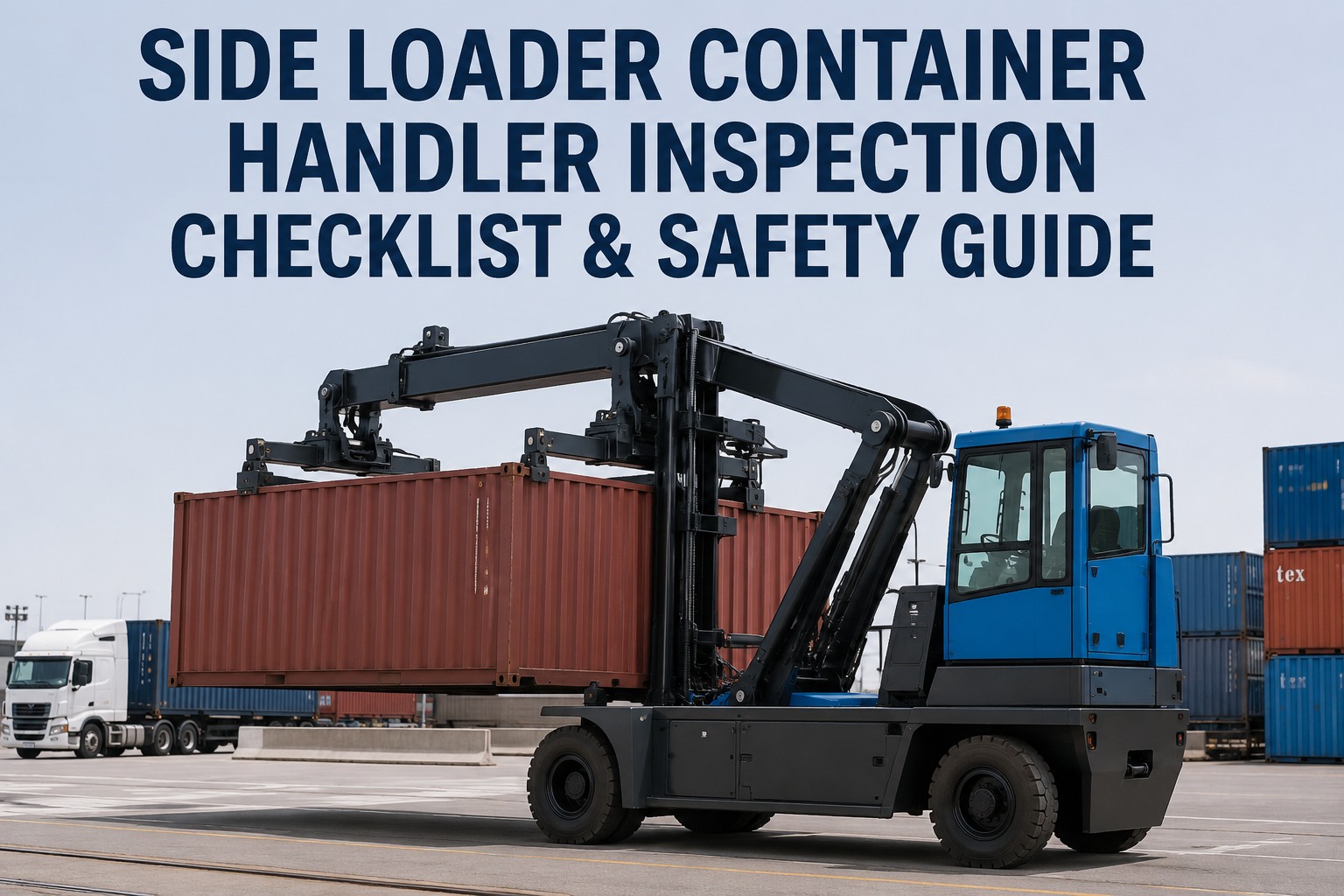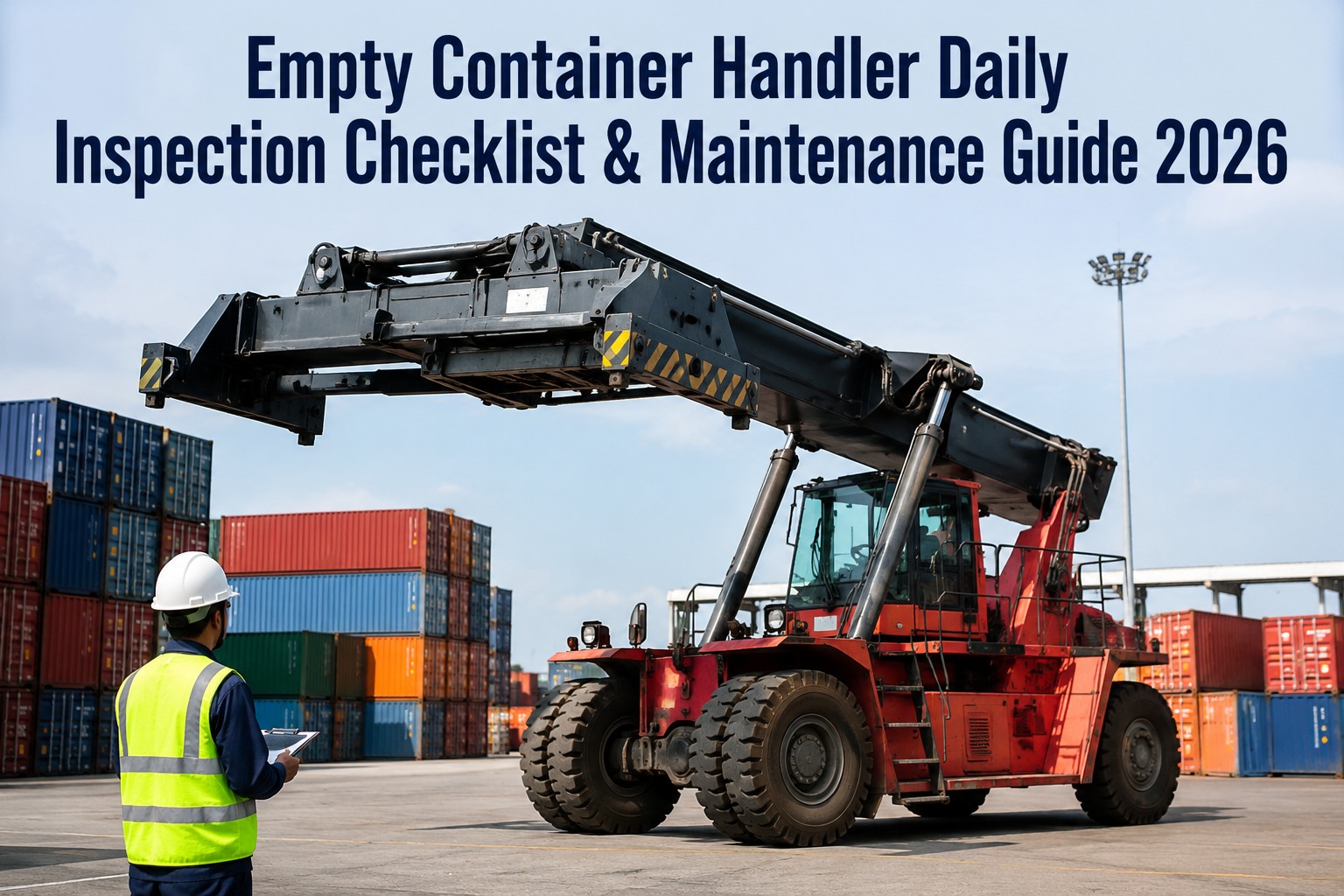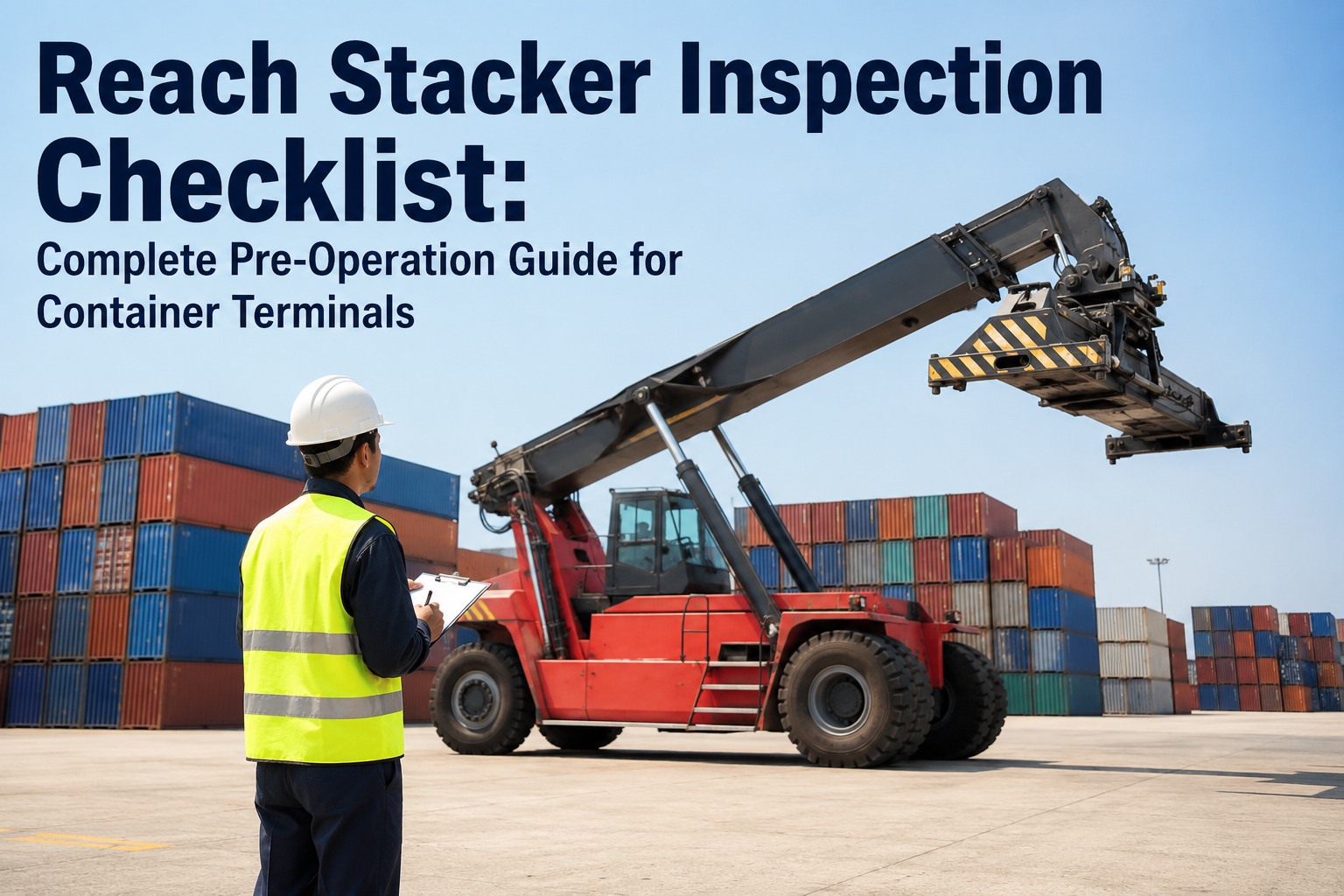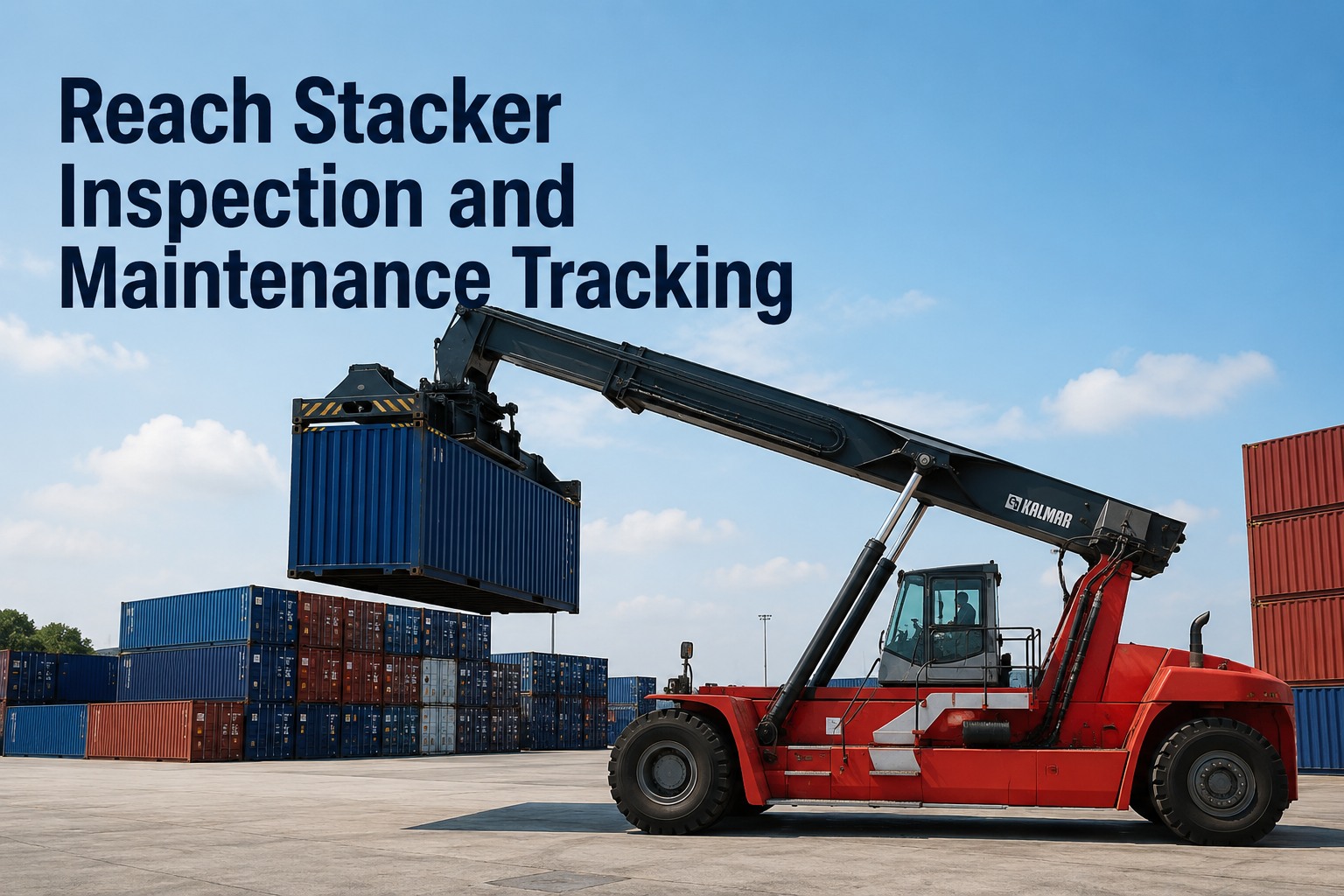
A reach stacker is the workhorse of a container terminal — a single machine that telescopes a boom out and up to pluck a loaded box off a stack five-high and three-rows deep, then pivots and places it on a chassis, hundreds of times a shift. Everything about that job rides on four systems working in concert: the telescopic boom that provides the reach, the spreader that grips the container, the hydraulics that power every motion, and the twistlocks — the four rotating pins that are the only thing holding tons of container in the air. That last system is where reach stacker safety lives and dies. A twistlock that reports "locked" when it isn't, or fails to engage fully, is the direct path to a dropped container — which is why modern spreaders treat the locked-state signal as a hard safety interlock that must be confirmed before the machine moves. None of these systems tolerates a missed inspection: a cracked boom weld, a worn spreader bearing, a leaking lift cylinder, or a sticky twistlock can each take a reach stacker out of service and stall a terminal's flow. A structured reach stacker maintenance program turns inspection into tracked, documented service that keeps the machine lifting. This guide covers the four critical systems, the twistlock safety layer, and the PM schedule.
The Four Critical Systems
A reach stacker comes down to four systems that decide whether a lift is safe and the machine is available. Each has a distinct wear pattern and a distinct consequence — and the spreader and twistlocks carry the safety weight.
Telescopic Boom
The reach. Extends and elevates to reach across rows and up the stack. Carries the full load moment — the most safety-critical structure on the machine.
Care: inspect for cracks, bends, and weld repairs; verify smooth extension and retraction without jerking; check wear pads, the lift cylinder, and the load moment indicator.
Spreader
The grip. Telescopes 20–40 ft to match container length, with sideshift (±800 mm) and full rotation to align with the box. The interface between machine and load.
Care: check for wear, damage, and misalignment; verify telescoping, sideshift, and rotation operate smoothly; inspect bearings, guides, and the floating-twistlock float (±10 mm).
Hydraulics
The power. Drives lifting, telescoping, tilting, sideshift, rotation, and the twistlocks themselves. Every motion on the machine flows through it.
Care: check for leaks, scuffed or dry/cracked hoses, and cylinder rod and seal condition; operate all functions under load watching for hesitation or abnormal noise; service filters and fluid on interval.
Twistlocks
The hold. Four rotating pins that lock into the container's corner castings — the only thing securing the load. Electro-hydraulic, with mechanical safety locking.
Care: verify full engagement and disengagement, check for wear and deformation, confirm the locked/unlocked sensors report accurately, and test the mechanical safety lock.
The Twistlock: The Interlock That Prevents a Dropped Container
Of all reach stacker systems, the twistlock is the one that turns a maintenance lapse into a dropped-load incident. It's not just a latch — it's a monitored safety interlock, and every part of that chain has to be inspected.
Full Engagement
Each of the four twistlocks must rotate fully into the container's corner casting and lock. Partial engagement on even one corner compromises the entire lift.
Locked-State Signal
Sensors report locked/unlocked status to the controller, and the machine shouldn't move until "locked" is confirmed — a hard interlock. A false signal is the worst failure mode; verify the sensors read true.
Mechanical Safety Lock
A mechanical backstop holds the twistlock locked independent of hydraulics, so a pressure loss can't release the load. Confirm it sets and holds every inspection.
Wear & Deformation
Twistlocks wear and can deform under repeated heavy loads. Inspect the pins for wear, cracks, and bending; a worn lock may not seat fully or may report a false lock.
The Reach Stacker PM Schedule
Container terminals run reach stackers hard, so service follows hour-based intervals on top of the daily operator check. The daily catches the immediate hazards; the deeper services keep boom, spreader, hydraulics, and twistlocks reliable.
From Daily Check to Documented Uptime
The payoff of a tracked program is the loop: inspect daily, schedule by hours, fix early, and document — so the twistlocks get verified, the boom gets serviced on time, and the machine keeps lifting.
Inspect Daily
Operator runs the guided four-system check on a phone — twistlocks, boom, spreader, hydraulics — with photos on any defect.
Schedule by Hours
Greasing, hydraulic, and twistlock services track by engine hours; the work order fires before each interval is due.
Fix & Document
A flagged defect becomes a routed work order; every inspection and service logs to the machine's record, audit-ready.
Keep Every Reach Stacker Lifting, Not Sidelined
Guided daily inspections for boom, spreader, hydraulics, and twistlocks; hour-based PM scheduling; twistlock and safety-interlock verification; defect-to-work-order routing; and timestamped records — built for container terminal fleets running Kalmar, Konecranes, and Hyster. Catch the cracked weld and the failing twistlock before they drop a box. Trusted by 25,000+ users worldwide.