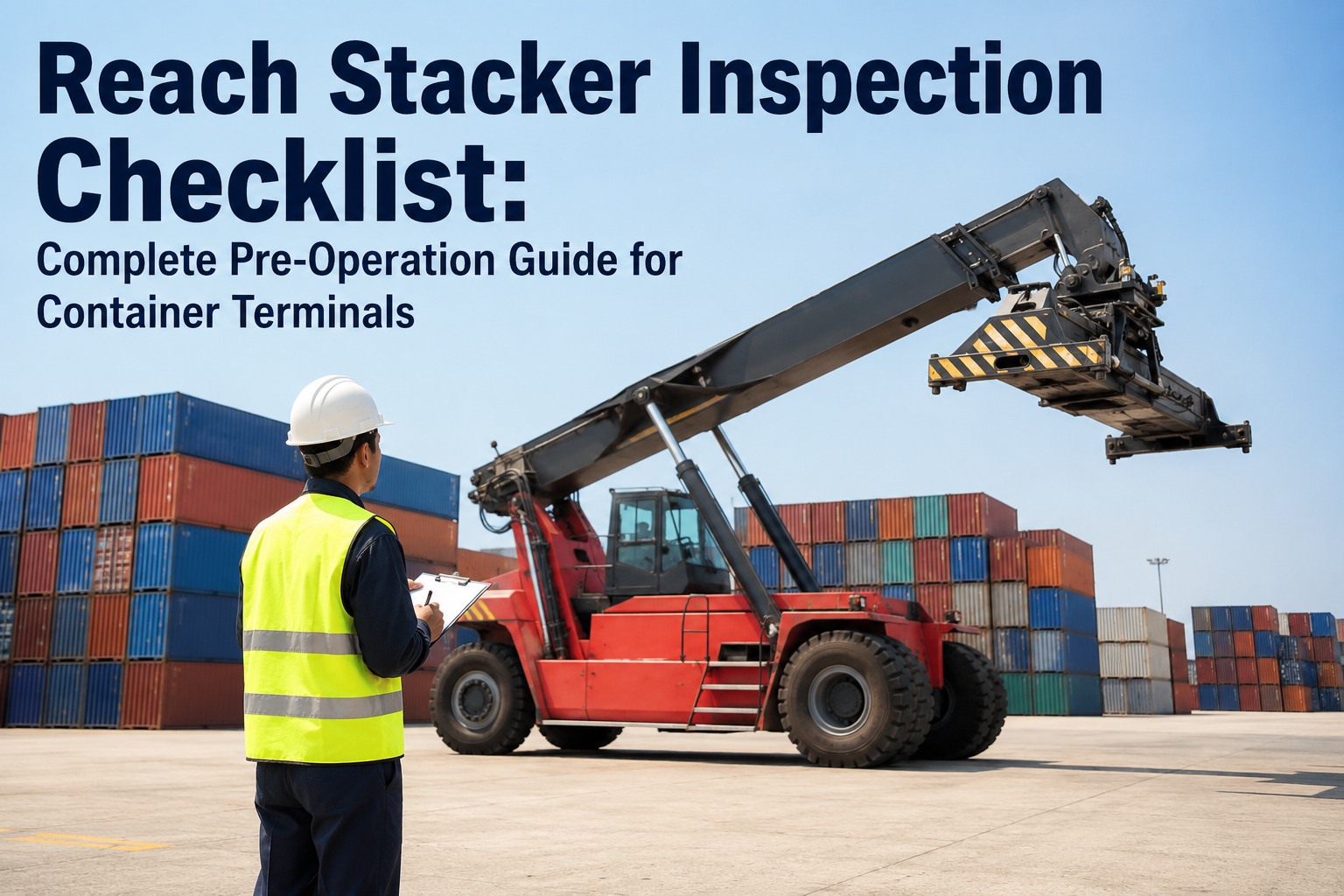
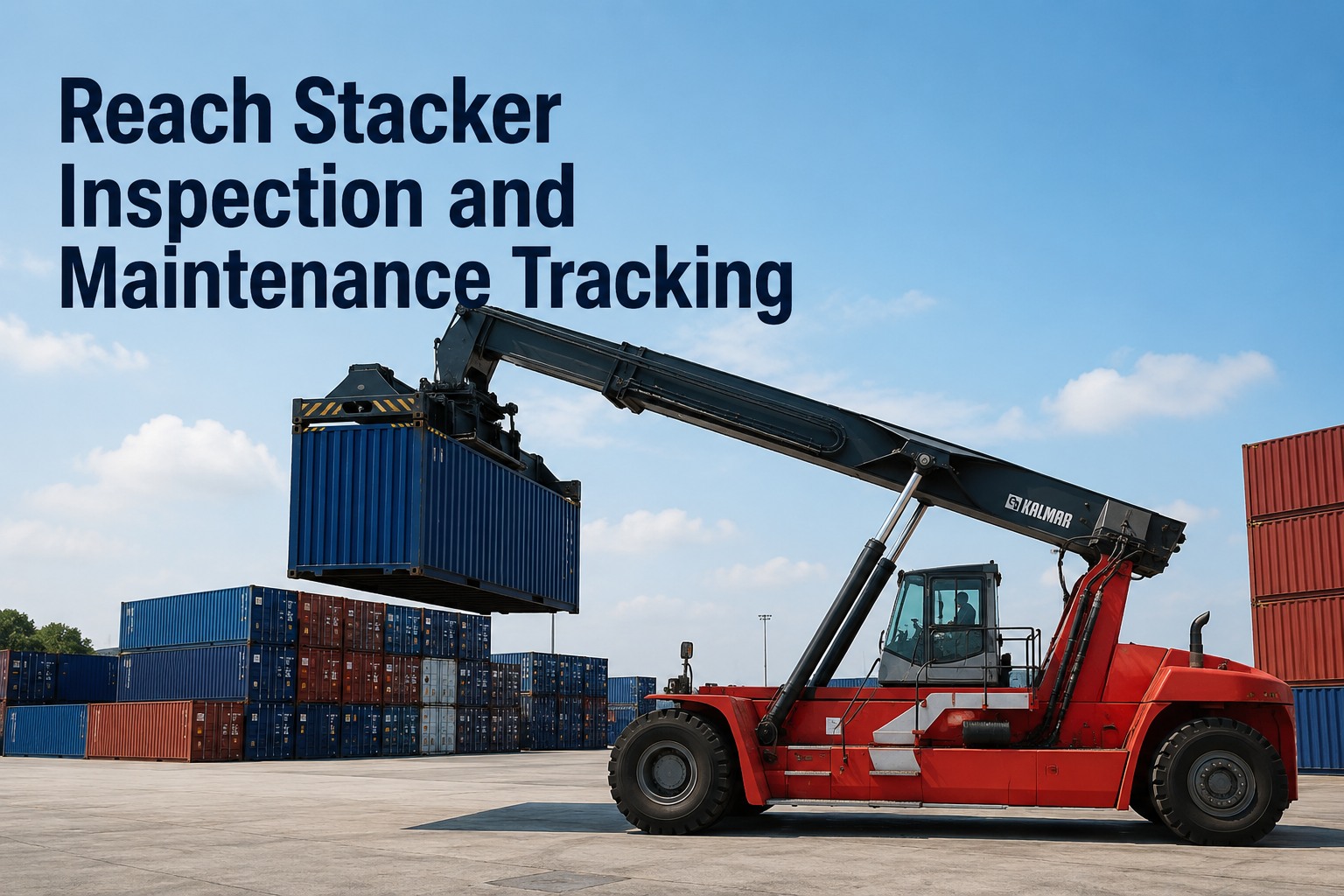
A reach stacker is the most versatile machine in a container yard — lifting 30 to 45 tons on the first row, telescoping over stacks, and rotating containers into tight blocks. That capability rides on a chain of components where one worn link is dangerous: a twistlock that reports ocked when it isn't can drop a loaded container, and a hydraulic leak under high-duty cycles can derate the machine mid-lift. The pre-operation inspection exists to catch those failures in the yard, before the lift — and because reach stacker wear is driven by duty cycle rather than the calendar, a high-duty quay-yard shuttle burns through tyres and hydraulics far faster than hours alone suggest. This 2026 guide walks the complete walkaround, section by section, the way an operator actually moves through the machine: external, spreader, cabin, then operational checks. Pair it with HVI inspection and maintenance software to run the checklist on a phone, flag defects with photos, and tie every check to the machine's history. Always follow your manufacturer's manual for model-specific items.
The Walkaround, Four Zones
A reach stacker inspection isn't random — it follows a path around and through the machine so nothing is missed. Work these four zones in order, every shift, before the first lift.
External & Structural
Walk the machine: boom, chassis, counterweight, tyres, hydraulics, and leaks underneath.
Spreader & Twistlocks
The load-critical attachment: twistlock engagement, lock feedback, and spreader condition.
Cabin & Controls
Inside: gauges, load chart, safety devices, visibility, controls, and the logbook.
Operational & Load
Running checks: engine, transmission, brakes, hydraulic functions, then a test lift.
Zone 1 · External & Structural
Start outside the machine, working the structure and running gear where the heaviest stresses show first.
Telescopic Boom
Look for cracks, bends, rust, or weld repairs along the boom and superstructure. Check for smooth extension and retraction without jerking, and confirm no loose parts.
Chassis & Counterweight
Inspect for cracks, corrosion, or signs of past heavy impacts. Check the rear counterweight for integrity and secure mounting — it's what balances every load.
Tyres & Wheels
Check tyre pressure and condition, sidewall damage, and wheel-nut security. Under high-duty quay-yard shuttling, tyres are a top lifecycle cost — catch wear early.
Hydraulic Rams & Hoses
Inspect cylinder rods, seals, hoses, and fittings for leaks, scuffs, or dry/cracked lines. Heat-related derates and leaks are expected in high-duty cycles — find them parked, not lifting.
Leaks & Fluid Levels
Check the ground for leaks and confirm engine oil, hydraulic, transmission, coolant, brake, and power-steering fluid levels are all correct before start-up.
Cabin Structure / ROPS & FOPS
Inspect the rollover and falling-object protective structures, overhead guard, windows, and mirrors for damage, security, and cleanliness.
Zone 2 · Spreader & Twistlocks
This is the load-critical heart of the machine. A spreader fault doesn't just stop work — it can drop a container. Treat every item here as non-negotiable.
Twistlock Lock Feedback
The single most safety-critical check. Confirm twistlocks engage and disengage cleanly and that the locked-state signal is reported before any lift — incomplete locks from wear or misalignment are a leading drop cause. Never lift on an unconfirmed lock.
Spreader Condition & Alignment
Check for wear, damage, or misalignment in the spreader frame, and confirm corner-fitting contact to ISO 1161. Verify it adjusts correctly across 20ft, 40ft, and 45ft positions.
Rotation & Hydraulics
On rotating spreaders, test smooth rotation and side-shift. Inspect the spreader's own hydraulic components and signalling lamps for leaks and correct function.
Pre-Lift Self-Test
Where fitted, run the spreader self-test logic that requires twistlock-closed feedback before lift. Schedule preventive cleaning and inspection tied to lift counts, not just dates.
Zone 3 · Cabin & Controls
From the seat, confirm the operator has every instrument, safety device, and document needed to work safely.
Gauges & Instruments
Confirm fuel, engine temperature, and hydraulic-pressure gauges all read and function. A digital display showing fault codes should be clear of active alarms.
Load Chart & Safety Devices
Verify the load chart is present and legible, and that load-moment/anti-tip indicators and stability systems are active. These are what keep a reach lift from tipping.
Horn, Alarms & Extinguisher
Test the horn, reversing and motion alarms, lights, and signalling lamps. Confirm the fire extinguisher is charged, in date, and accessible.
Logbook & Compliance
Confirm the logbook, service history, and inspection certificates are present and current, and that engine hours match the maintenance schedule.
Zone 4 · Operational & Load Test
With the visual checks done, start the machine and confirm it performs under power — finishing, where possible, with a controlled test lift.
Engine & Transmission
Start and run: listen for knocking, rough idle, or hard starting; watch for oil/coolant leaks or excessive smoke. Check shifting in all gears and forward/reverse.
Brakes & Hydraulics
Test service and park brake response and pedal pressure. Operate lifting, telescoping, and tilting functions, watching for hesitation or abnormal noise.
Controlled Test Lift
Where possible, lift and move a load to observe smoothness, noise, and vibration — and confirm lock status holds throughout. Any issue takes the machine out of service.
Paper Checklist vs. HVI
Four zones, fifty-plus items, a load-critical spreader, and duty-cycle-based service — this is exactly the inspection load digital tools were built to carry.
PAPER OR CLIPBOARD
HVI INSPECTION SOFTWARE
Run Every Reach Stacker Check in One System
HVI gives container terminals a guided pre-operation checklist for reach stackers — external, spreader, cabin, and operational zones — with photo-flagged defects, defect-to-work-order routing, duty-cycle hour tracking, and a full history per machine. Catch faults in the yard, keep loaded lifts safe, and cut downtime. Trusted by 25,000+ users worldwide.
.png)