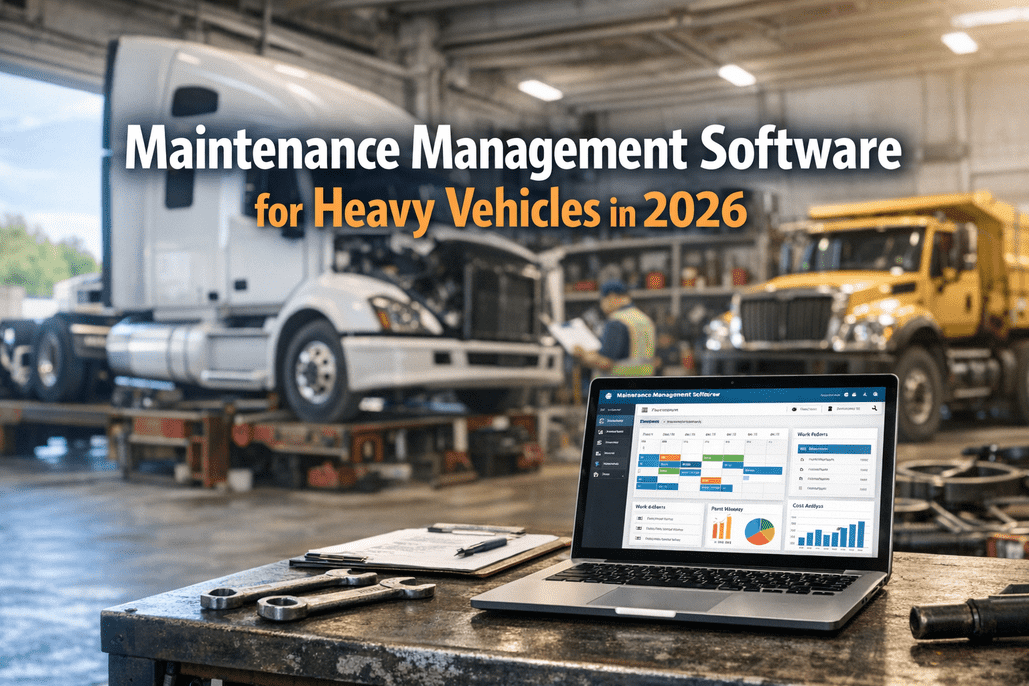
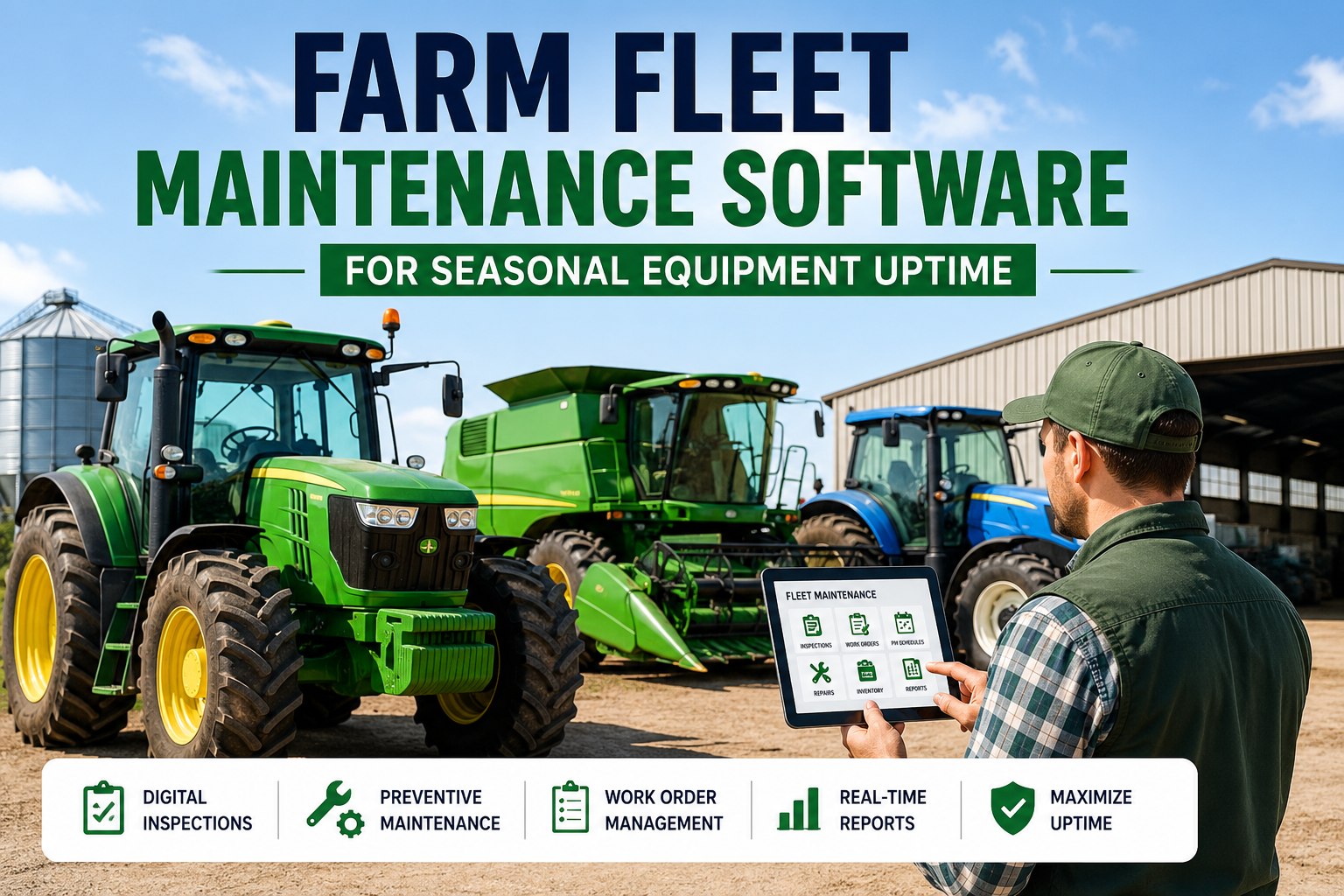
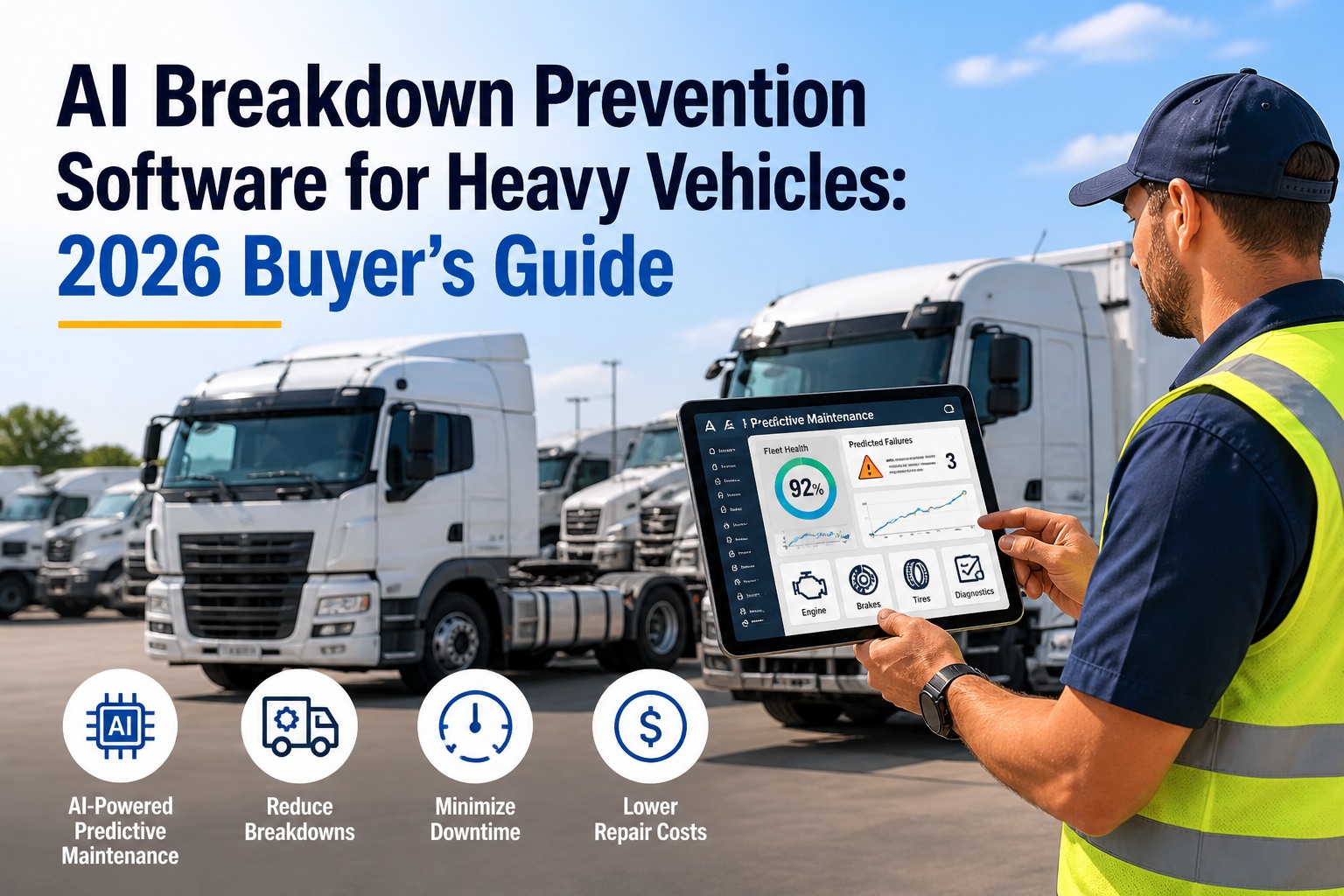
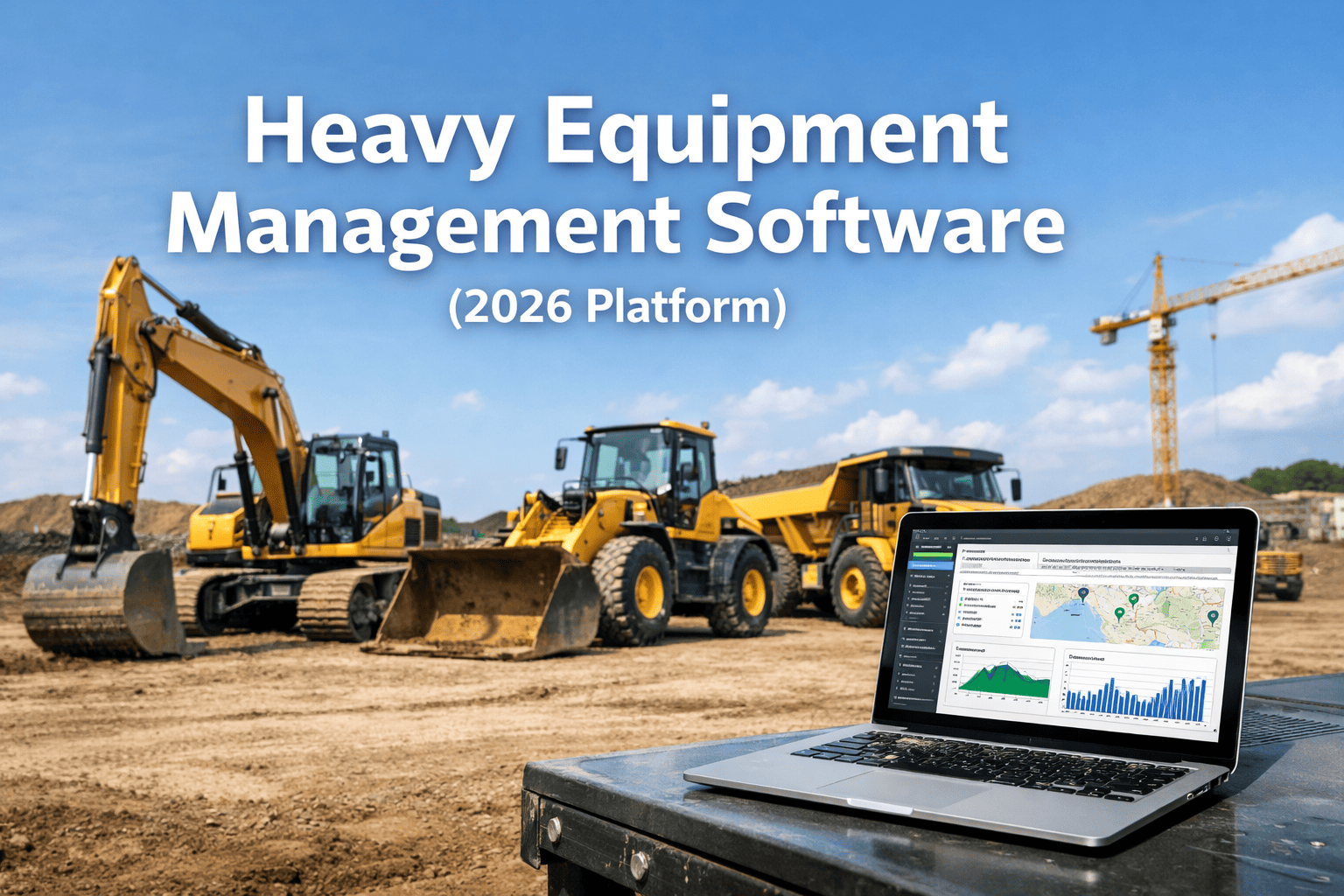
Maintenance management software for heavy vehicle fleets is the central nervous system that connects every inspection, every work order, every PM schedule, every parts transaction, and every cost calculation into one operational platform. Without it, fleet maintenance is a collection of disconnected activities — paper DVIRs in cabs, PM schedules on wall calendars, work orders on whiteboards, parts in unmarked bins, and costs estimated from memory. With it, every maintenance activity is scheduled, documented, tracked, and measured. The operational difference is measurable: fleets using digital maintenance management achieve 25-30% lower annual maintenance costs, 75% reduction in unplanned downtime, 3-month average payback on software investment, and the compliance documentation that DOT auditors expect. Yet the majority of fleets still manage maintenance manually — experiencing 40% higher equipment failure rates and building zero actionable data from years of maintenance activity. The heavy vehicle maintenance software market has matured dramatically: platforms now handle everything from FMCSA-compliant DVIRs to predictive maintenance powered by telematics data. This guide covers the five core modules every platform must include, how to assess your maintenance maturity, the cost impact of switching from manual to digital, compliance integration, and what makes HVI purpose-built for heavy vehicle operations.
Five Core Modules: What the Platform Must Include
Maintenance management software for heavy vehicles isn't a single feature — it's five interconnected modules working as one system. Data flows between modules: an inspection defect becomes a work order, a work order consumes parts from inventory, parts costs feed analytics, and analytics inform PM scheduling adjustments. If any module is missing or disconnected, you have gaps that create the same problems paper does.
What it does: Digital pre-trip/post-trip DVIRs, equipment inspections, and annual DOT inspection tracking. Guided checklists by vehicle type, photo capture, digital signatures, and automated defect routing to maintenance.
Feeds into: Work Order module (defects auto-generate WOs), Analytics module (defect trends, completion rates), Compliance module (DVIR retention, signature chain).
Without it: Paper DVIRs sit in cabs for hours. Defects discovered at roadside instead of during inspections. Audit citations for missing signatures and incomplete records.
What it does: Automated preventive maintenance scheduling by mileage, engine hours, calendar, or whichever-comes-first. PM-A through PM-D tiers with vehicle-specific intervals. Lookahead alerts at 90/60/30 days. Auto-generate work orders when PM is due.
Feeds into: Work Order module (PM-triggered WOs), Parts module (anticipated parts for upcoming PMs), Analytics module (PM completion rate, on-time percentage).
Without it: Missed PM intervals. Reactive-dominated maintenance (55:45 vs. 80:20 target). Accelerated wear, premature failures, and higher lifecycle costs.
What it does: Create, assign, track, and close every maintenance task. Multiple sources: inspection-triggered, PM-triggered, operator request, telematics fault code. Labor time tracking, parts consumption, repair documentation, and digital sign-off.
Feeds into: Parts module (inventory deduction), Analytics module (cost per WO, MTTR, FTFR), Inspection module (repair certification flows back to DVIR).
Without it: Work falls through cracks. No labor or cost tracking. No visibility into backlog. Mechanics fix what's loudest, not what's most important.
What it does: Track parts inventory with min/max reorder points. Link parts consumed to each work order and vehicle. Auto-deduct from inventory when used. Purchase order management. Vendor tracking. Warranty recovery identification.
Feeds into: Work Order module (parts availability check at assignment), Analytics module (parts cost per vehicle, inventory turnover), PM module (anticipated parts for scheduled PMs).
Without it: Repairs stall waiting for parts. Unknown inventory levels lead to emergency orders at premium cost. No parts cost data for lifecycle analysis.
What it does: Fleet-wide dashboards: vehicle availability, maintenance CPM, planned-vs-reactive ratio, MTTR, PM completion rate, defect trends, and cost-per-asset. Compliance scorecards. Capital replacement analysis. Custom reports exportable for management review.
Feeds into: PM module (interval adjustments based on failure data), capital planning (repair-vs-replace decisions), budget forecasting (maintenance spend projections).
Without it: Management decisions based on gut feel. No data to justify capital requests. Can't identify the 10% of vehicles causing 50% of costs. Flying blind.
HVI delivers all five modules on one platform — inspection management, PM scheduling, work orders, parts tracking, and fleet analytics — purpose-built for heavy vehicle operations.
Book a demo to see all five modules connected. Or
start free.
Maintenance Maturity: Where Does Your Fleet Stand?
Not every fleet starts at the same place. Understanding your current maintenance maturity helps you prioritize which modules to implement first and set realistic improvement targets. Most heavy vehicle fleets fall somewhere between Level 1 and Level 3 — the jump from Level 2 to Level 3 delivers the highest ROI.
Level 1
Reactive
Fix when broken. No scheduled PM. Paper records or none. Drivers report defects verbally. Parts purchased on emergency basis. No cost tracking. No compliance program.
Availability: <80% | Planned ratio: <30% | MTTR: 24+ hrs | No KPIs
Start with: Digital inspections (DVIRs) + basic PM scheduling. Immediate compliance improvement and defect visibility.
Level 2
Scheduled
Basic PM schedules exist (wall calendar or spreadsheet). Paper work orders. Some compliance documentation. Parts tracked informally. Cost data incomplete or unavailable.
Availability: 80-85% | Planned: 40-55% | MTTR: 12-18 hrs | Basic tracking
Upgrade to: Digital work orders + automated PM triggers + inspection-to-WO integration. This is where the biggest ROI jump happens.
Level 3
Automated
Digital inspections, automated PM scheduling, work order management, and parts tracking on one platform. Compliance documentation automated. Fleet dashboards with KPIs. Defect-to-repair chain digitized.
Availability: 90-95% | Planned: 70-80% | MTTR: 6-10 hrs | Full dashboard
Optimize with: Telematics integration, predictive analytics, lifecycle replacement modeling, and continuous improvement programs.
Level 4
Predictive
Telematics-fed condition monitoring. DTC codes and sensor data trigger maintenance before driver reports. Oil analysis trends predict component failures. AI-assisted fleet optimization. Data-driven replacement timing.
Availability: 95%+ | Planned: 80%+ | MTTR: 2-6 hrs | Predictive analytics
Industry leaders: Continuous refinement of PM intervals, predictive models, and capital investment strategy based on comprehensive fleet data.
The Cost Impact: Manual vs. Digital Maintenance
The financial case for maintenance management software is built on multiple compounding savings streams — not just fewer breakdowns. HVI users report an average 3-month payback and 25% annual maintenance cost reduction.
3-9x
Reactive vs. Planned Cost
Emergency repairs cost 3-9x more than planned maintenance. Premium labor, expedited parts, overtime, and collateral damage. Every defect caught by scheduled inspection that prevents a breakdown is direct cost avoidance.
25%
Annual Maintenance Cost Reduction
HVI users report 25% reduction in annual maintenance costs through planned PM schedules, defect-to-work-order automation, parts tracking, and the elimination of paper-based administrative waste.
75%
Downtime Reduction
Leading platforms deliver 75% reduction in unplanned downtime through proactive defect detection, automated PM scheduling, and parts availability planning. Downtime costs $448-$760+ per vehicle per day.
3 mo
Average Payback Period
HVI's average payback is 3 months — recovered through reduced breakdowns, lower parts costs (warranty recovery, inventory optimization), and labor efficiency from digital workflows.
40%
Higher Failure Rate Without Software
Manual tracking produces 40% higher equipment failure rates vs. digitally managed fleets. Paper misses service intervals, loses defect reports, and produces zero trend data for predictive intervention.
50-67%
Faster Inspections
Digital inspections take 5-10 minutes vs. 15-30 minutes paper. Multiply across inspections per day across fleet = significant labor savings plus better documentation quality.
Compliance Integration: FMCSA, OSHA, and Beyond
Heavy vehicle maintenance software must handle regulatory compliance as a built-in function — not an afterthought. Different regulations apply to different vehicle types and operations, and the software must enforce the correct requirements for each.
FMCSA 49 CFR 396.11
Daily DVIRs for CDL vehicles
Digital DVIR with 3-signature chain enforcement. Auto-generated work orders from defects. 90-day retention. eDVIR authorized March 23, 2026.
FMCSA 49 CFR 396.17
Annual DOT inspection every 12 months
Automated 90-day lookahead calendar. Inspector qualification tracking. 14-month report retention. Sticker/report on vehicle verified.
FMCSA 49 CFR 396.3
Systematic maintenance program with records
Complete per-vehicle maintenance files: ID record, PM schedule, service history, linked inspections. Service life + 6 months retention.
OSHA 29 CFR 1910/1926
Equipment inspection requirements
Customizable equipment inspection templates: cranes (ASME B30), forklifts (1910.178), powered platforms. Pre-shift and periodic schedules.
CSA 2026 Scoring
Vehicle Maintenance BASIC (Standard + Driver Observed)
Inspection quality data feeds CSA score management. "Driver Observed" category directly reflects DVIR thoroughness. OOS violations carry severity weight 2.
HVI handles FMCSA DVIRs, annual inspections, maintenance records, OSHA equipment checklists, and CSA score tracking on one platform — with the correct templates and retention rules for each regulation.
Book a demo. Or
start free.
Why HVI for Heavy Vehicle Maintenance
HVI was designed from the ground up for heavy vehicle fleets — not adapted from a generic CMMS, ELD platform, or light-duty tool. The platform connects the five core modules with the compliance requirements that heavy vehicle operations demand.
Built for Heavy Vehicles
Vehicle-type-specific templates for Class 8 tractors (37+ items), trailers (28+ items), straight trucks, buses, reefers, construction equipment, cranes (70 items/7 systems), forklifts, and specialty equipment. Not a one-size-fits-all form adapted from light-duty.
Inspection-to-Maintenance Chain
The complete loop: driver inspection → defect with photo → auto-generated work order → mechanic repair with certification → next-driver acknowledgment → asset history updated → trend data fed to analytics. Every link enforced digitally.
Multi-Trigger PM Scheduling
PM-A through PM-D tiers with triggers by mileage, engine hours, calendar, or whichever-comes-first. Different triggers for different vehicle types: mileage for road vehicles, hours for heavy equipment, calendar for seasonal fleet. Lookahead alerts prevent missed intervals.
Multi-Regulation Compliance
FMCSA DVIRs (396.11/396.13), annual DOT inspections (396.17), maintenance records (396.3), OSHA equipment inspections (1910/1926), ASME B30 crane checklists, and CSA score tracking — all on one platform with correct templates per regulation.
25,000+ Users Worldwide
Trusted by fleets across construction, transportation, mining, municipal, energy, and rental operations. From 5-truck operations to 500+ vehicle fleets. 3-month average payback. 25% average maintenance cost reduction. 95%+ user adoption rates.
Mobile-First, Offline-Capable
Full functionality on any iOS or Android device without specialized hardware. Complete inspections, update work orders, and document repairs without cellular signal — auto-sync when connectivity returns. Built for the shop floor, the job site, and the cab.
Fleet Maintenance Software Market Maturing Rapidly
The fleet management software market reached $32.36 billion in 2025 and is projected to hit $152.89 billion by 2034. Heavy vehicle maintenance is a fast-growing segment as construction, transportation, and municipal fleets digitize programs that were paper-based for decades. Predictive maintenance implementations deliver 2-4x ROI within 12-24 months.
AI Moving from Dashboards to Maintenance Decisions
In 2026, AI in fleet maintenance recommends actions — not just reports history. Predictive models flag vehicles likely to fail before symptoms appear. Exception-based alerts highlight specific assets needing attention. Natural-language queries ("Show me vehicles with rising brake costs") are entering production platforms.
Book a demo.
eDVIR Authorization Accelerating Digital Adoption
FMCSA's February 2026 final rule (effective March 23, 2026) explicitly authorizing eDVIRs removes the last hesitation for carriers still using paper. When inspections go digital, the natural next step is connecting them to digital work orders, PM scheduling, and cost tracking — making maintenance management software the logical platform extension.
Platform Consolidation: One System Replacing Five Tools
Fleets are consolidating from separate tools for inspections, work orders, PM scheduling, parts, and compliance into unified platforms. Data silos between disconnected tools create the same problems as paper — information exists but doesn't flow. HVI connects all five modules so every data point feeds every decision.
The Platform Is the Maintenance Program
Maintenance management software isn't a tool you add to your maintenance program — it IS the maintenance program. Every inspection, every PM service, every work order, every parts transaction, every cost calculation, every compliance record flows through the platform. The fleets achieving 95%+ availability, 80:20 planned-to-reactive ratios, declining cost-per-mile, and clean DOT audits aren't running a separate "software initiative" — they're running their entire maintenance operation through a system that schedules, documents, tracks, and learns from every activity. HVI provides that system for heavy vehicle operations: five core modules connected by the inspection-to-maintenance chain that makes every other function work.
All-in-One Maintenance Management for Heavy Vehicles
HVI connects inspections, PM scheduling, work orders, parts tracking, and fleet analytics on one platform — purpose-built for heavy vehicle operations and trusted by 25,000+ users worldwide.
Frequently Asked Questions
Q: What is heavy vehicle maintenance management software?
A digital platform that centralizes five core functions: inspection management (DVIRs, equipment checks), PM scheduling (automated by mileage/hours/calendar), work order management (create, assign, track, close), parts and inventory tracking, and analytics/reporting. It replaces paper, spreadsheets, and disconnected tools with one system where every maintenance activity is documented and every data point feeds every decision.
Q: What ROI can I expect?
HVI users report 3-month average payback, 25% annual maintenance cost reduction, and 75% reduction in unplanned downtime. Industry benchmarks show 2-4x ROI within 12-24 months from predictive maintenance implementations. Primary savings: eliminated emergency repairs (3-9x cheaper planned), improved parts management, labor efficiency, and reduced compliance violations.
Start free with HVI.
Q: How does this handle FMCSA compliance?
HVI manages DVIRs (396.11 with 3-signature chain enforcement), annual DOT inspections (396.17 with 90-day lookahead), maintenance records (396.3 per-vehicle files), and inspector qualifications (396.19). eDVIRs explicitly authorized by FMCSA effective March 23, 2026. The CSA 2026 "Driver Observed" split makes DVIR quality directly visible in your safety scores.
Q: Can one platform handle different vehicle types?
Yes — with customizable templates. HVI provides vehicle-type-specific checklists for Class 8 tractors, trailers, straight trucks, buses, construction equipment, cranes, forklifts, and specialty equipment. Each type gets the correct inspection items, PM intervals, and regulatory requirements. Multi-trigger scheduling applies mileage for road vehicles, hours for equipment, and calendar for seasonal fleet.
Q: How long does implementation take?
Most fleets complete paper-to-digital transition in 2-4 weeks. Week 1-2: asset import, template configuration, PM schedules. Week 2-3: operator training (one 30-minute session), pilot with 5-10 vehicles. Week 3-4: full rollout, retire paper. Companies achieving 90%+ adoption invest in change management — sharing early wins with drivers and management to build momentum.
Q: What KPIs should I track?
Start with the Big 5: vehicle availability (target 95%+), planned-vs-reactive ratio (target 80:20), PM completion rate (target 95%+), MTTR (target under 6 hours), and maintenance cost per mile (track trend by vehicle age). Add: first-time fix rate (90%+), parts inventory turnover (4-6x), and DVIR completion rate (100% for CDL vehicles). These metrics connect every module to fleet performance outcomes.