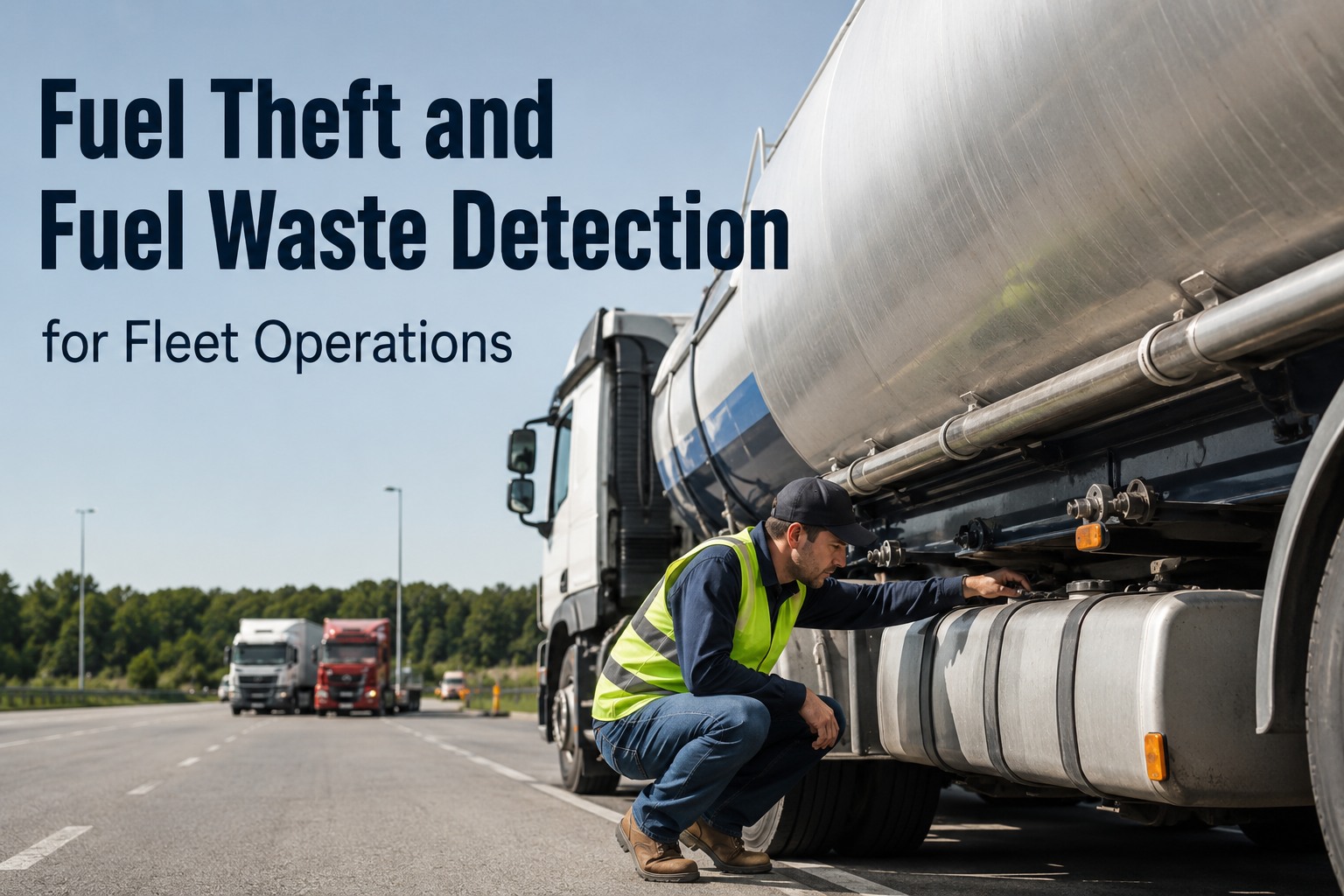
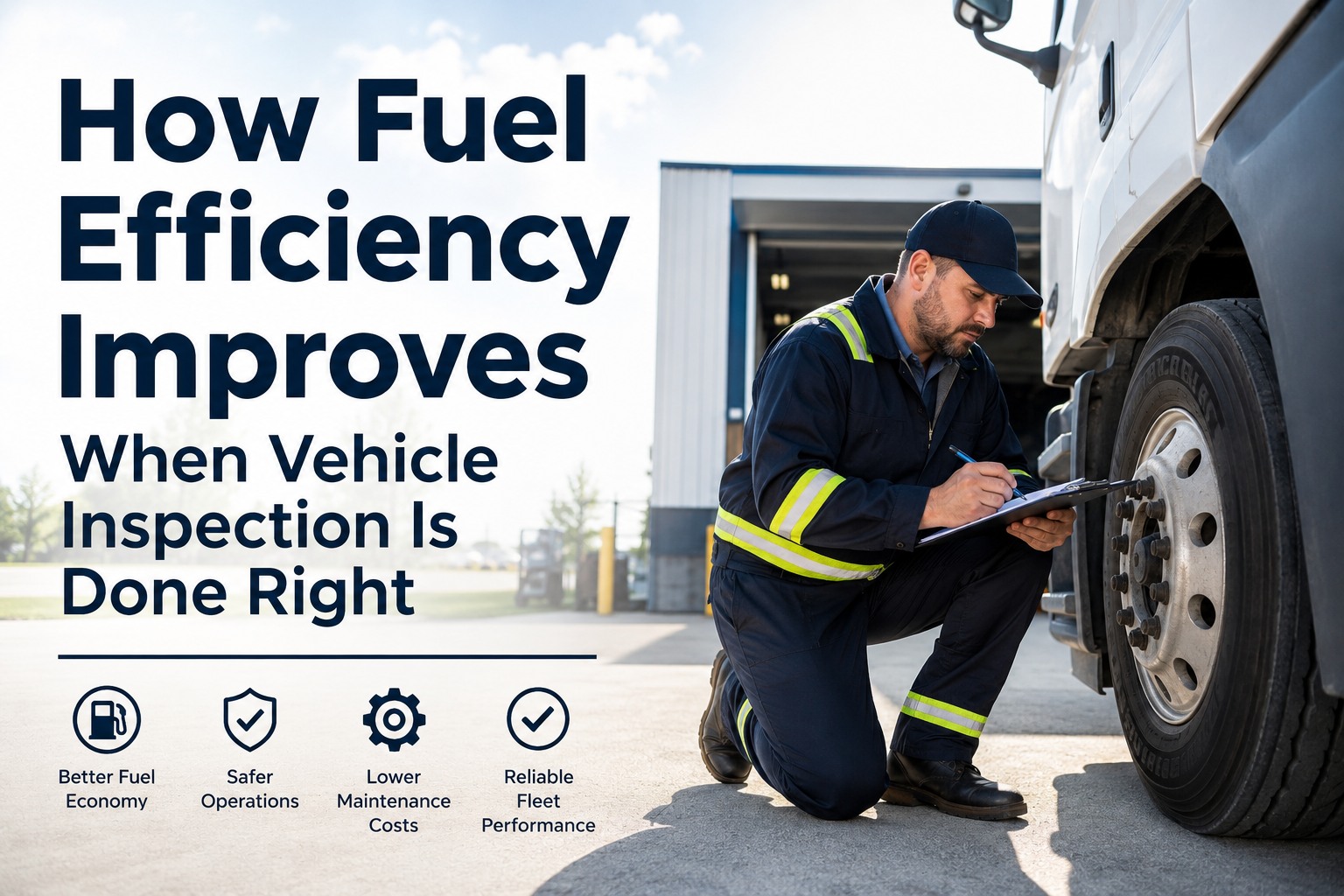
Fuel is the largest controllable line on a fleet's budget — 21 to 30% of total operating cost — and a startling share of it disappears before a single productive mile is driven. Industry research puts the loss to theft, fraud, and unmonitored waste at 6 to 15% of the annual fuel budget, and the numbers behind it are worse than most managers assume: in 2025, 73% of commercial fleets experienced fuel theft, and internal theft accounted for 62% of incidents. The problem splits into two very different halves that need two different defenses. Theft is deliberate — siphoning from parked tanks overnight, card fraud, buddy fueling, ghost transactions. Waste is unintentional — engines idling for hours, inefficient routes, and mechanical problems quietly burning extra diesel. The trap most fleets fall into is managing fuel the way they managed inspections a decade ago: receipts in a folder, a spreadsheet updated weekly, and a vague sense that something doesn't add up — which means theft and waste alike surface only at monthly reconciliation, long after the fuel and the evidence are gone. Detecting fuel theft and waste requires catching anomalies as they happen and connecting fuel data to vehicle health and driver behavior. This guide breaks down both halves, the detection signals for each, and how to close the gap.
6–15% of Your Fuel Budget Vanishes Before a Productive Mile
HVI connects fuel logs to inspections, vehicle health, and driver behavior — flagging the overnight tank-level drop, the fill that exceeds tank capacity, the idling outlier, and the mechanical issue burning extra diesel — so theft and waste surface as they happen, not at month-end reconciliation.
Where the Fuel Goes: Theft vs. Waste
The losses split into two categories with different causes and different fixes. Telling them apart is the first step — you can't coach away theft, and you can't lock up waste.
THEFT — DELIBERATE
Fuel taken or paid for fraudulently. Often internal — 62% of incidents.
Siphoning from parked tanks, often overnight
Fuel card fraud & unauthorized purchases
Buddy fueling & personal-vehicle fills
Ghost transactions & inflated fill volumes
Fix: anomaly detection & transaction verification
WASTE — UNINTENTIONAL
Fuel burned needlessly. Behavioral and mechanical, 15–20% of consumption.
Excessive idling — engines running, going nowhere
Inefficient routing adding unnecessary miles
Hard acceleration & speeding habits
Mechanical issues — clogged filters, bad injectors
Fix: behavior coaching & maintenance detection
Detecting Theft: The Signals
Theft leaves fingerprints in the data — if you're watching in real time. These are the anomalies that catch it as it happens, not at month-end when the trail is cold.
Overnight Tank-Level Drops
A fuel level that falls while the vehicle is parked and off is the classic siphoning signal. An abnormal stationary drop should trigger an alert within minutes — before the event is even complete.
Fill Exceeds Tank Capacity
If a truck with a 120-gallon tank records a 170-gallon purchase, the extra 50 gallons went somewhere else. A fill-versus-capacity check flags the impossible transaction instantly.
GPS-Transaction Mismatch
A fuel card used where the vehicle isn't — 200 miles from any truck — is fraud. Matching each transaction's location and time to the vehicle's GPS exposes the mismatch.
Consumption Anomalies
A vehicle whose fuel use jumps above its route-adjusted benchmark, with no mechanical cause, points to small repeated siphoning that no single transaction would reveal.
Detecting Waste: The Signals
Waste is bigger than most fleets realize — idling and inefficiency can burn 15–20% of total consumption. Unlike theft, it's fixed by visibility and coaching, and a lot of it traces back to the vehicle itself.
Excessive Idle Time
An idling engine burns fuel going nowhere. Idle tracking — separating productive PTO use from pure waste — and per-driver idle leaderboards turn an invisible drain into a coachable number.
Per-Driver MPG Variance
The same truck on the same route gets different mileage with different drivers. Ranking drivers by fuel efficiency surfaces the hard-acceleration and speeding habits quietly burning diesel.
Mechanical Fuel Burn
A clogged air filter, dragging brakes, low tires, or failing injectors raise consumption. A fuel-economy drop with no behavior change points straight to a maintenance issue — caught by inspection.
Route Inefficiency
Unnecessary miles are wasted fuel. Comparing actual mileage against planned routes surfaces the detours and backtracking that add cost without adding productive work.
Why Monthly Reconciliation Fails
The core problem isn't that fleets don't look at fuel — it's when they look. Catching a loss 30 days late is barely catching it at all. The difference between reconciliation and real-time detection is the whole game.
MONTHLY RECONCILIATION
Loss discovered 30 days after it happened
Evidence is cold; patterns buried in totals
Siphoning already complete and repeated
No way to tie a loss to a driver or event
REAL-TIME DETECTION
Alert fires within minutes of the anomaly
Evidence captured live with GPS & time
Siphoning flagged before it's even finished
Loss tied to vehicle, location, and driver
Traditional methods identify theft only during monthly reconciliation — long after the fuel and money are gone. The act of measurement itself drives much of the savings: when drivers know fuel use is tracked and visible, behavior improves before any coaching conversation happens.
The Detection Workflow
Catching theft and waste comes down to one connected loop: capture every gallon, compare against what's expected, and flag the gap — turning fuel from a blind line item into a monitored one.
1
Capture Every Gallon
Log fuel per vehicle — fills, levels, transactions — tied to GPS, engine hours, and the inspection record, so nothing is untracked.
2
Compare to Expected
Measure against tank capacity, route-adjusted benchmarks, GPS location, and the vehicle's own history to spot what doesn't fit.
3
Flag & Act
An anomaly triggers an alert with evidence; theft goes to investigation, waste to coaching or a work order — fixed while it matters.
See Exactly Where Your Fuel Is Going
Fuel logging tied to GPS, engine hours, and inspections; real-time anomaly detection for siphoning, card fraud, and over-capacity fills; idle and per-driver MPG tracking; and maintenance-linked consumption alerts that catch the mechanical issues burning diesel. Turn 6–15% of vanishing fuel budget into your biggest savings opportunity. Trusted by 25,000+ users worldwide.
Frequently Asked Questions
How much fuel do fleets lose to theft and waste?
Industry research consistently puts the loss at 6–15% of a fleet's annual fuel budget through theft, fraud, and unmonitored waste — and some studies cite ranges up to 15–25% when all unauthorized usage is counted. Given that fuel is 21–30% of total operating costs, even a modest loss rate is a large dollar figure: a 6% theft rate on a $750,000 fuel spend is about $45,000 gone. The scope is wide too — in 2025, 73% of commercial fleets experienced fuel theft, with internal theft accounting for 62% of incidents. Most fleets underestimate their losses because traditional tracking only surfaces them at monthly reconciliation.
Sign up for a free HVI trial to see your real losses.
What's the difference between fuel theft and fuel waste?
Theft is deliberate — fuel taken or paid for fraudulently, including siphoning from parked tanks (often overnight), fuel card fraud, buddy fueling, personal-vehicle fills, and ghost or inflated transactions. About 40% of fleet fuel theft is internal. Waste is unintentional — fuel burned needlessly through excessive idling, inefficient routing, aggressive driving habits, and mechanical problems like clogged filters or failing injectors, and it can account for 15–20% of total consumption. The distinction matters because the fixes differ: theft is addressed with anomaly detection and transaction verification, while waste is addressed with behavior coaching and maintenance — you can't coach away theft or lock up waste.
Schedule a demo to tackle both.
How is fuel siphoning detected?
The clearest signal is a fuel-level drop while the vehicle is parked and switched off. Monitoring tank level and flagging an abnormal stationary decrease can trigger an alert within minutes — often before the siphoning event is even complete — so a manager is notified while there's still a chance to act, rather than discovering the loss weeks later. Small, repeated siphoning that's too minor to catch on any single event shows up a second way: as a vehicle's overall consumption creeping above its route-adjusted benchmark with no mechanical cause. Combining real-time tank monitoring with consumption-anomaly detection catches both the obvious and the subtle cases.
Sign up for a free HVI trial to detect siphoning.
How do you detect fuel card fraud?
With two cross-checks. First, a fill-versus-capacity check: if a truck with a 120-gallon tank records a 170-gallon purchase, the extra fuel physically couldn't have gone into that vehicle, so the transaction is flagged instantly. Second, a GPS-to-transaction match: every fuel card transaction's location and time is compared to where the assigned vehicle actually was, so a card used 200 miles from any truck, or two cards used simultaneously in different places, surfaces immediately. Together these catch personal-vehicle fueling, buddy fueling, cloned cards, and ghost transactions — the bulk of card fraud — within minutes instead of at quarterly reconciliation.
Schedule a demo to see fraud detection.
Can fuel data reveal maintenance problems?
Yes — and it's one of the most valuable and overlooked connections. A drop in a vehicle's fuel economy with no change in route or driver is frequently the first measurable symptom of a developing mechanical issue: a clogged air filter, low tire pressure, dragging brakes, or failing fuel injectors all raise consumption before they cause an obvious breakdown. When fuel data and the daily inspection are connected, an unexplained consumption rise can trigger a maintenance check that catches the problem early, while it's a cheap fix. This is why treating fuel purely as a cost line — separate from vehicle health — misses both waste and an early-warning system for maintenance.
Sign up for a free HVI trial to connect fuel and maintenance.