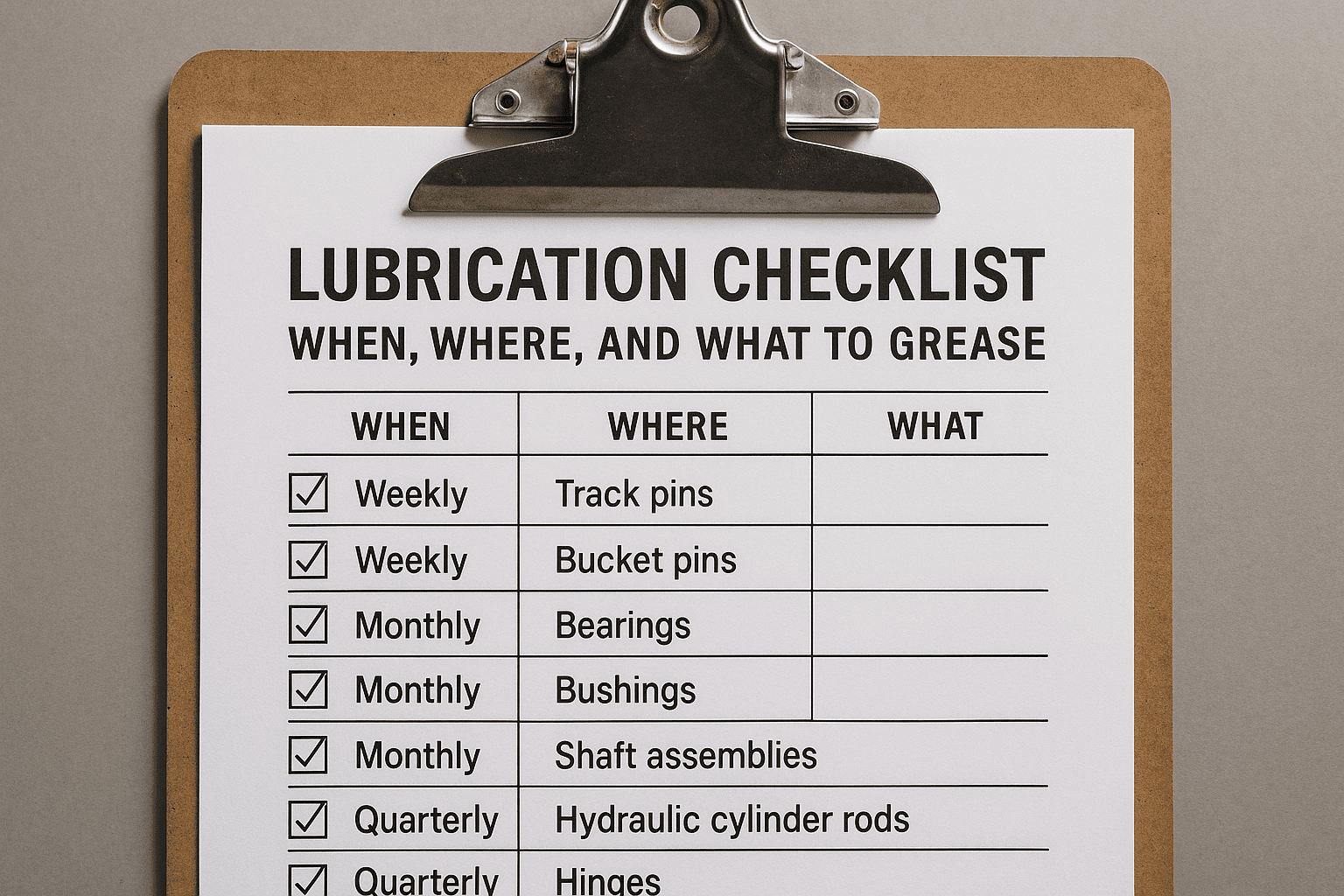
Equipment lubrication failures cost US construction companies an average of $95,000 annually per machine through premature component replacement, with poorly maintained lubrication systems causing 78% of bearing failures and 65% of hydraulic system breakdowns. Industry data reveals that 84% of construction companies still rely on inadequate lubrication practices that create catastrophic equipment damage, missed lubrication intervals, and emergency repair costs. Systematic lubrication checklist implementation can reduce component failures by 78%, extend equipment life by 45%, and decrease maintenance costs by 60% while ensuring operational reliability and maximum asset protection across demanding construction environments.
The Hidden Crisis: Critical Lubrication Failures in Heavy Equipment Operations
Modern construction equipment depends on sophisticated lubrication systems operating under extreme conditions, where inadequate greasing practices can escalate into complete component failures that halt project progress and devastate operational budgets. Lubrication checklist deficiencies cascade throughout equipment systems, affecting bearing life, hydraulic performance, and total cost of ownership.
Bearing System Degradation
89% of bearing failures show detectable lubrication deficiencies 2-6 weeks before breakdown, including inadequate grease quantity, contaminated lubricants, and missed service intervals that cost $45+ thousand when unaddressed.
Hydraulic System Contamination
Hydraulic lubrication problems manifest through fluid contamination, seal degradation, and component wear that indicate impending system failures costing $65+ thousand for complete rebuilds.
Drive System Failures
Transmission and drivetrain lubrication deficiencies create gear wear, clutch problems, and performance degradation before complete failure requiring $85+ thousand replacement costs.
Engine Lubrication Issues
Engine oil system problems show early indicators through contamination, degradation, and inadequate circulation before major damage requiring $95+ thousand for complete engine rebuilds.
Cooling System Lubrication
Cooling system lubrication failures create overheating risks, component damage, and cascading system problems potentially destroying multiple components simultaneously costing $125+ thousand in repairs.
Structural Component Wear
Pin and bushing lubrication deficiencies compromise equipment stability and operational capability, with systematic greasing preventing premature replacement and extending service life by 50%.
The Financial Impact of Inadequate Lubrication Practices
Before implementing systematic lubrication checklists, construction equipment operations experience significant inefficiencies that impact both operational performance and financial results:
- Component replacement costs consuming 45% of maintenance budgets through premature failures and emergency repairs
- Equipment downtime averaging 35-40% of available hours due to lubrication-related failures and reactive maintenance
- Maintenance cost unpredictability making budget planning difficult and causing project delays and financial penalties
- Secondary system damage with 65% of lubrication failures causing collateral damage to related components
- Warranty voiding risks from improper lubrication practices that can result in $85+ thousand liability exposures
Protect your equipment investments with professional lubrication management systems
Getting Started Book a DemoFoundation Elements: Comprehensive Lubrication Checklist Framework
Professional lubrication checklist systems provide the systematic framework necessary for optimal equipment protection, incorporating manufacturer specifications, operational conditions, and environmental factors into unified lubrication protocols that maximize component life before failures occur.
Core Lubrication Components and Architecture
Effective lubrication checklist frameworks integrate multiple lubrication streams and application criteria to create comprehensive protection systems that balance thoroughness with operational efficiency.
Grease Point Identification Matrix
Comprehensive mapping systems including bearing locations, pivot points, hydraulic fittings, and drive components that enable precise lubrication application and interval management.
Lubrication Schedule Protocols
Detailed timing procedures, quantity specifications, lubrication types, and application methods for all equipment components from daily services to annual overhauls.
Quality Control Framework
Multi-variable analysis systems incorporating contamination testing, viscosity verification, and performance monitoring to ensure optimal lubrication effectiveness.
Documentation Integration
Comprehensive tracking systems, service records, and compliance verification to ensure systematic application and warranty protection maintenance.
Advanced Digital Integration and Automation Capabilities
Smart Lubrication and Monitoring Integration
Modern lubrication checklist management transcends manual tracking to incorporate automated monitoring systems, digital documentation, and predictive analytics that optimize lubrication timing and application accuracy.
Automated Lubrication Systems
Centralized lubrication distribution networks that automatically deliver precise grease quantities to critical components, eliminating manual application errors and ensuring consistent protection.
Digital Tracking Platforms
Mobile applications and cloud-based systems that track lubrication schedules, document service completion, and provide real-time compliance status across equipment fleets.
Condition Monitoring Integration
Sensor networks that monitor lubrication effectiveness through temperature, vibration, and contamination analysis to optimize service intervals and prevent failures.
Predictive Analytics Engine
Machine learning systems that analyze lubrication performance data and operating conditions to recommend optimal service timing and lubrication specifications.
Implementation Methodology and Best Practices
Phased Deployment Strategy for Lubrication Excellence
Successful lubrication checklist implementation requires systematic deployment approaches that minimize operational disruption while maximizing protection effectiveness and compliance consistency across diverse equipment types and operational environments.
Phase 1: Equipment Assessment
Comprehensive lubrication point identification, manufacturer specification review, current practice evaluation, and system customization based on specific equipment types and operating conditions.
Phase 2: System Development
Custom checklist creation, lubrication schedule optimization, quality control establishment, and documentation system integration with existing maintenance protocols.
Phase 3: Pilot Testing
Limited deployment with selected equipment, technician training, effectiveness validation, and protocol refinement to optimize system performance before fleet-wide implementation.
Phase 4: Full Implementation
Fleet-wide deployment, comprehensive training programs, performance monitoring, and continuous improvement based on operational feedback and equipment performance data.
Change Management and Adoption Strategies
Lubrication checklist implementation success depends heavily on technician adoption and systematic compliance, requiring comprehensive training programs and quality control measures that encourage consistent application practices.
Technician Training Program Development
Comprehensive education covering lubrication principles, application techniques, quality control procedures, and equipment-specific requirements for optimal protection.
Quality Control Implementation
Systematic inspection protocols, performance verification, and compliance tracking that ensure consistent application and identify improvement opportunities.
Performance Incentive Systems
Recognition programs and accountability structures that reward proper lubrication practices and systematic compliance with established protocols.
Continuous Improvement Process
Regular system evaluation, protocol updates, and performance optimization based on equipment feedback and operational experience.
Accelerate your lubrication excellence with expert implementation support
Getting Started Book a DemoAnalytics and Performance Monitoring Capabilities
Advanced Lubrication Analytics and KPI Tracking
Lubrication checklist analytics transform maintenance data into actionable insights that enable continuous improvement, cost optimization, and predictive planning across equipment fleets and operational environments.
Real-Time Compliance Dashboards
Executive and operational dashboards providing immediate visibility into lubrication status, schedule compliance, and performance effectiveness across all equipment categories.
Predictive Failure Analysis
Advanced analytics identifying lubrication-related failure patterns, system effectiveness trends, and optimization opportunities based on historical and operational data.
Cost Optimization Analytics
Comprehensive analysis covering lubrication costs, component life extension, and maintenance savings that quantify system value and ROI measurement.
Quality Assurance Systems
Automated quality tracking ensuring lubrication activities meet manufacturer specifications, warranty requirements, and operational standards with exception reporting.
ROI and Operational Excellence Outcomes
Quantifiable Financial Benefits and Equipment Protection
Systematic lubrication checklist implementation delivers measurable financial returns through multiple value streams that extend beyond direct maintenance cost savings to encompass equipment longevity, operational reliability, and competitive advantage benefits.
Operational Efficiency and Competitive Advantages
Comprehensive lubrication checklist systems create operational advantages that enhance competitive positioning through improved equipment reliability, predictable maintenance costs, and enhanced project delivery capabilities.
- Improved equipment availability with predictable lubrication schedules and minimal lubrication-related breakdowns
- Enhanced component life averaging 45-65% extension compared to informal lubrication practices
- Reduced warranty risks through documented compliance with manufacturer lubrication requirements
- Increased equipment values with comprehensive lubrication documentation and proven component protection
- Better operational predictability through systematic lubrication management and cost control
Compliance and Regulatory Alignment
Regulatory compliance requirements make systematic lubrication checklist implementation essential for construction operations, with safety standards, environmental regulations, and warranty requirements demanding proper lubrication management and documented maintenance programs.
Manufacturer Warranty Protection
Equipment warranties requiring systematic lubrication compliance and documentation, with proper practices protecting coverage and reducing replacement costs that can exceed $200+ thousand per unit.
Environmental Regulation Compliance
EPA standards for lubricant management and waste disposal requiring proper handling and documentation to ensure regulatory compliance and environmental responsibility.
Safety Standard Requirements
OSHA regulations requiring proper equipment maintenance and lubrication to ensure worker safety and reduce liability exposure from equipment failures.
Insurance and Risk Management
Insurance carrier requirements for systematic maintenance and lubrication programs, with proper practices reducing premiums and claim exposures significantly.
Future Outlook and Innovation Roadmap
The lubrication checklist landscape continues evolving with emerging technologies that promise enhanced accuracy, automated application capabilities, and predictive lubrication management that will further improve equipment protection and operational efficiency.
Automated Lubrication Systems
Advanced automatic lubrication networks providing precise, scheduled application without manual intervention, reducing labor costs while improving consistency.
Smart Lubrication Monitoring
IoT sensors and analytics platforms providing real-time lubrication condition monitoring and predictive maintenance recommendations based on actual operating conditions.
AI-Powered Optimization
Artificial intelligence systems analyzing equipment performance and environmental conditions to optimize lubrication schedules and specifications for maximum protection.
Digital Documentation Integration
Blockchain and advanced digital systems providing immutable lubrication records and automated compliance verification for warranty and regulatory requirements.
Frequently Asked Questions
Ready to implement comprehensive lubrication checklist management for your construction fleet?
Getting Started Book a Demo