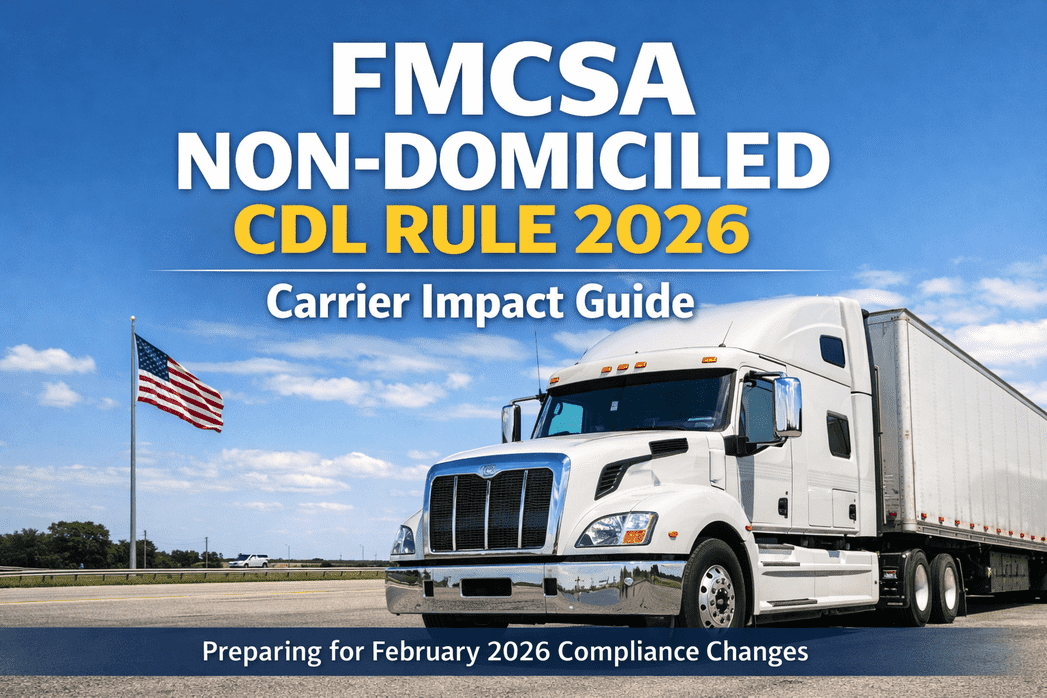
On March 16, 2026, FMCSA's final rule "Restoring Integrity to the Issuance of Non-Domiciled Commercial Driver's Licenses" took effect — fundamentally changing which non-U.S. citizens can hold a CDL. The rule limits non-domiciled CDL eligibility to holders of three specific employment-based visa categories: H-2A (temporary agricultural workers), H-2B (temporary non-agricultural workers), and E-2 (treaty investors). Employment Authorization Documents (EADs) alone are no longer accepted. DACA recipients, asylum seekers, refugees, TPS holders, and most other immigration categories are excluded from new CDL issuance. FMCSA cited a "critical safety gap" — domestic CDL applicants face rigorous history checks through CDLIS and PDPS databases, while non-domiciled applicants had no equivalent foreign driving history verification, effectively shielding unsafe driving behaviors that occurred outside U.S. databases. The agency cited 17 fatal crashes in 2025 resulting in 30 deaths involving non-domiciled CDL holders who would not have qualified under these standards. Approximately 194,000 current non-domiciled CDL holders could eventually be affected as licenses come up for renewal. For carriers employing non-domiciled CDL drivers — particularly in heavy vehicle operations including dump trucks, tankers, flatbeds, and equipment haulers — this rule requires immediate workforce assessment, documentation verification, and compliance planning. Book a demo to see how HVI tracks driver qualification compliance.
FMCSA Final Rule
Restoring Integrity to the Issuance of Non-Domiciled Commercial Driver's Licenses
Federal Register: 91 FR 7044 | Docket: FMCSA-2025-0622 | Published: Feb 13, 2026 | Effective: March 16, 2026
What Changed: Before vs. After the Final Rule
Before March 16, 2026
Non-domiciled CDLs available to a broad range of immigration statuses
Employment Authorization Documents (EADs) accepted as proof of eligibility
No equivalent driving history check for foreign applicants vs. domestic CDLIS/PDPS
States used inconsistent standards — FMCSA found "systemic noncompliance"
CDL validity could exceed the expiration of lawful presence documents
"Limited term" printed on some credentials instead of required "non-domiciled"
After March 16, 2026
Eligibility restricted to three visa categories only: H-2A, H-2B, E-2
Unexpired foreign passport + I-94 with approved status required — EADs insufficient
Consular vetting and interagency screening serve as proxy for history verification
SAVE system verification mandatory for every licensing transaction
Maximum CDL term capped at 1 year — cannot exceed I-94 Admit Until Date
"Non-domiciled" must appear on the face of every CLP and CDL
Who Can Still Get a Non-Domiciled CDL?
The final rule limits eligibility to three employment-based nonimmigrant visa categories. FMCSA selected these because they involve enhanced consular vetting and interagency screening that serves as a functional substitute for the driving history checks domestic applicants undergo.
H-2A
Temporary Agricultural Workers
Seasonal agricultural workers sponsored by U.S. employers. Subject to Department of Labor and consular screening. CDL-relevant for hauling equipment, grain trucks, livestock transport, and agricultural vehicles over 26,001 GCWR.
H-2B
Temporary Non-Agricultural Workers
Seasonal or temporary non-agricultural workers. CDL-relevant for dump truck operators, equipment haulers, concrete truck drivers, and heavy vehicle operators on temporary construction or industrial assignments.
E-2
Treaty Investors
Foreign nationals who invest substantial capital in a U.S. business. Must be nationals of a treaty country. Covers owner-operators who have invested in their own trucking business under treaty provisions.
Required Documentation for All Three Categories
Unexpired foreign passport (EADs alone no longer sufficient)
Form I-94 or I-94A with unexpired Admit Until Date showing H-2A, H-2B, or E-2 status
CDL validity cannot exceed the earlier of: 1 year from issuance OR the I-94 Admit Until Date
SAVE system verification of lawful immigration status by the SDLA
All licensing transactions must be conducted in person
SDLAs must retain all supporting documents for at least 2 years
Who Is Excluded Under the Final Rule?
The following immigration categories are no longer eligible for new non-domiciled CDL issuance, renewal, upgrade, or transfer after March 16, 2026. Existing CDLs issued under prior rules generally remain valid until expiration, but renewal requires meeting current standards.
DACA Recipients
Asylum Seekers
Refugees
TPS Holders
EAD-Only Holders
Parolees
U-Visa / T-Visa
Withholding of Removal
Canadian / Mexican Citizens
Canadian and Mexican citizens cannot be issued a U.S. non-domiciled CDL under this rule (unless they hold DACA status). However, existing licensing reciprocity agreements for drivers licensed in Canada or Mexico remain in effect — those drivers operate under their home country CDL, not a U.S. non-domiciled CDL.
Impact on Carriers and Heavy Vehicle Fleets
⚠
194,000 CDL Holders Potentially Affected
FMCSA estimates 194,000 non-domiciled CDL holders could be affected. Most current CDLs have validity periods up to 5 years — the driver pool reduction will be gradual as licenses reach renewal. Any licensing transaction (even an address change) triggers the new verification requirements.
⚠
Workforce Planning Required Now
Carriers should audit their driver roster immediately: identify every non-domiciled CDL holder, determine their immigration status category, check CDL expiration dates, and assess which drivers will qualify for renewal. Drivers who cannot renew must be replaced before their current CDL expires.
⚠
DQ File Documentation Burden Increases
For eligible drivers, carriers must verify unexpired passport, I-94 status, and CDL validity that does not exceed the Admit Until Date — annually, since the maximum CDL term is now 1 year. This adds a recurring compliance task to driver qualification file management.
⚠
Out-of-Service Risk for Non-Compliant CDLs
If a driver's CDL was issued longer than their lawful presence allowed, FMCSA strongly encourages states to revoke it immediately. A roadside inspection revealing a non-compliant non-domiciled CDL triggers out-of-service violations and CSA score impact for both driver and carrier.
Do You Know Which Drivers in Your Fleet Hold Non-Domiciled CDLs?
HVI's driver qualification file system tracks CDL type, expiration dates, immigration status documentation, and renewal deadlines for every driver. When CDL renewals approach, HVI alerts you 90/60/30 days in advance — so you know which drivers qualify under the new standards and which need workforce planning before their current CDL expires.
Carrier Action Plan: 6 Steps to Comply
1
Audit your driver roster for non-domiciled CDLs
Pull every driver's CDL and identify any marked "non-domiciled" or "limited term." Determine the immigration status category. Flag drivers whose status falls outside H-2A, H-2B, or E-2.
2
Check CDL expiration dates and I-94 Admit Until Dates
Any CDL expiring beyond the I-94 Admit Until Date was non-compliantly issued and may be revoked. For compliant CDLs, note when renewal is required under the new 1-year maximum term.
3
Verify eligible drivers have correct documentation
For H-2A, H-2B, and E-2 drivers: confirm unexpired foreign passport and I-94 showing correct status. Ensure documents are in the DQ file. Document SAVE system verification from the SDLA.
4
Plan for non-eligible driver transitions
Drivers who will not qualify for renewal need workforce planning: recruit replacement drivers, adjust route assignments, or explore whether any drivers can transition to an eligible visa category through employer sponsorship.
5
Update DQ file management for annual renewal cycle
Non-domiciled CDLs now have a maximum 1-year term. Add annual CDL renewal tracking to your DQ file workflow. HVI automates this with 90/60/30-day alerts tied to each driver's CDL and I-94 expiration.
6
Monitor legal developments and state implementation
A new D.C. Circuit challenge has been filed. State implementation varies — some may pause non-domiciled CDL issuance until achieving compliance. Monitor FMCSA updates and state DMV advisories.
Dalilah's Law: What Comes Next
Dalilah's Law is a Senate bill that would make the non-domiciled CDL restrictions permanent federal law — and adds requirements going significantly beyond FMCSA's final rule. Named after five-year-old Dalilah Coleman, critically injured in a June 2024 crash caused by an unlicensed foreign national driving an 18-wheeler, the bill represents the legislative branch reinforcing what the executive branch has done through regulation.
Legal Challenge Timeline
Sep 29, 2025
FMCSA publishes Interim Final Rule (IFR) restricting non-domiciled CDLs — effective immediately without public comment
Oct 2025
Multiple lawsuits filed — DACA recipients, owner-operators, unions, King County (WA) challenge the rule in D.C. Circuit
Nov 10, 2025
D.C. Circuit grants administrative stay — pauses IFR enforcement. 13+ states had objected to implementation.
Nov 28, 2025
Public comment period closes with thousands of comments from drivers, carriers, civil rights groups
Feb 13, 2026
FMCSA publishes Final Rule (91 FR 7044) — largely unchanged from IFR despite objections. Declines most changes.
Mar 16, 2026
Final Rule takes effect. States must comply for all new issuances, renewals, upgrades, and transfers.
Mar 2026+
New D.C. Circuit challenge filed against Final Rule. Dalilah's Law advances in Senate. Outcome could modify enforcement.
How HVI Helps Carriers Stay Compliant
CDL Type and Status Tracking
Every driver's CDL type (domiciled/non-domiciled), class, endorsements, restrictions, and expiration date tracked in their digital profile. Non-domiciled CDLs flagged for enhanced monitoring and annual renewal compliance.
Immigration Document Management
Store and track passport, I-94, visa status, and SAVE verification notes in each driver's DQ file. Expiration alerts for immigration documents tied to CDL validity — when the I-94 expires, HVI flags the CDL.
Automated Renewal Alerts
90/60/30-day alerts before CDL expiration, medical cert renewal, MVR pull deadlines, and Clearinghouse query dates. For non-domiciled CDLs with 1-year maximum terms, annual renewal tracking is critical.
Complete DQ File Integration
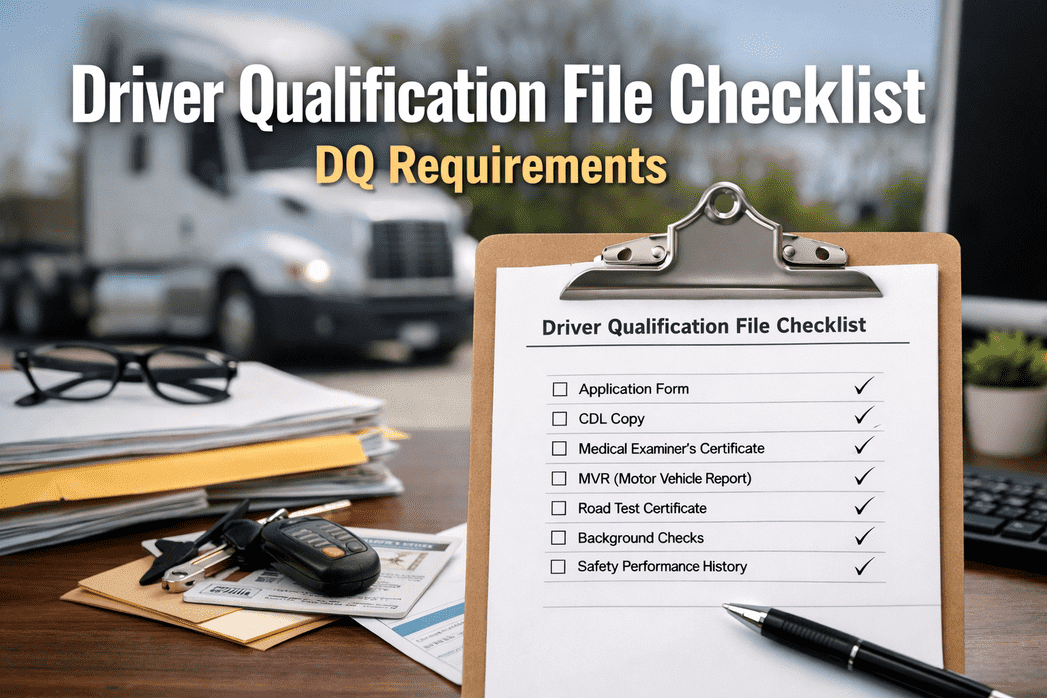
Non-domiciled CDL compliance is one component of the DQ file. HVI manages the entire file — application, MVRs, medical cert, Clearinghouse, road test, employment verification — plus DVIRs and maintenance.
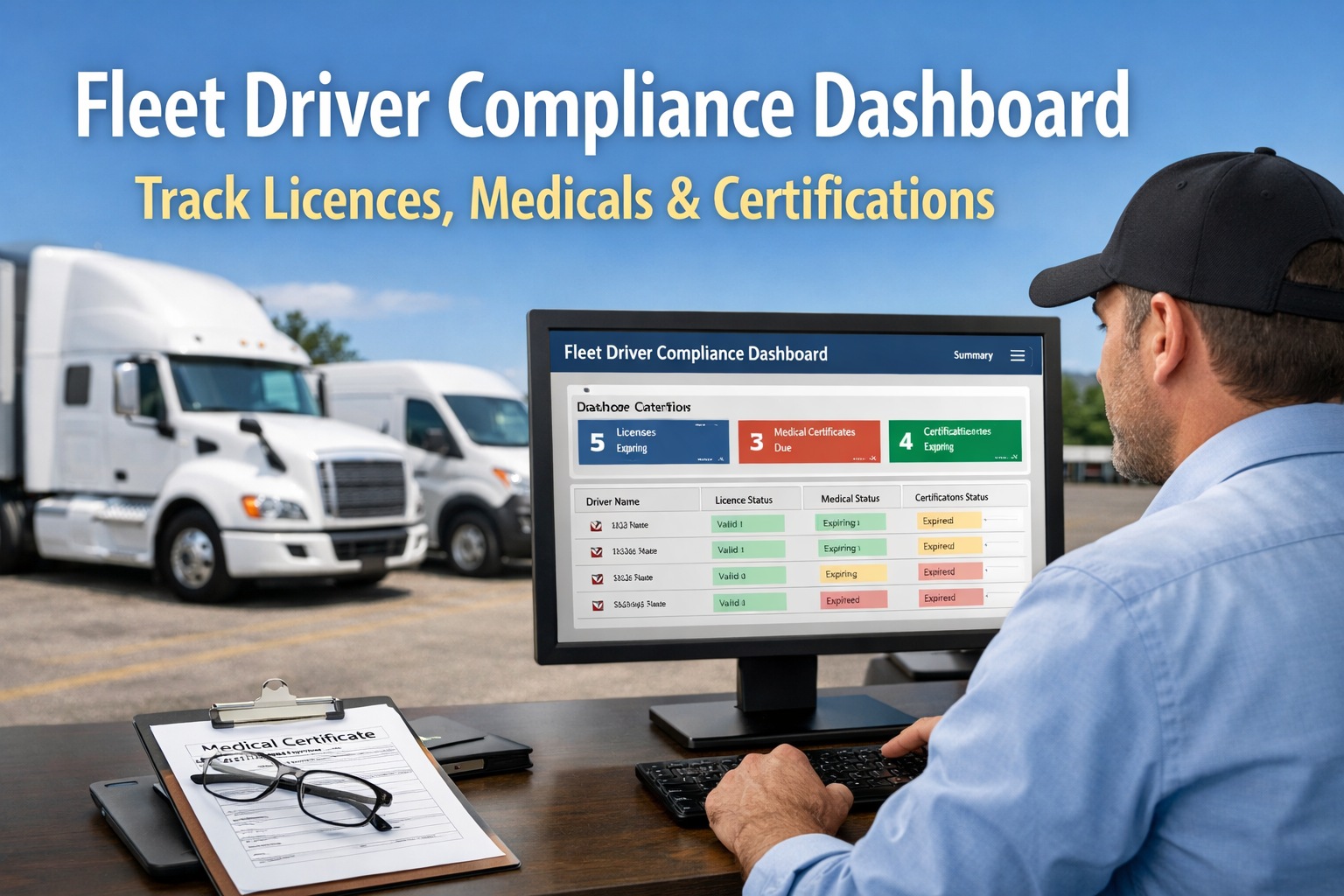
Fleet Compliance Dashboard
See which drivers hold non-domiciled CDLs, their visa category, CDL expiration dates, and renewal eligibility at a glance. Identify at-risk drivers before CDLs expire. Plan transitions with data.
Audit-Ready Documentation
Produce every driver's complete file instantly — CDL copy, immigration docs, SAVE verification, DQ file, compliance history. One-click export for FMCSA portal upload. 48-second retrieval.
Frequently Asked Questions
Q: Are existing non-domiciled CDLs automatically revoked on March 16, 2026?
Not automatically. CDLs legally issued under prior rules generally remain valid until expiration. However, FMCSA "strongly encourages" states to audit all unexpired non-domiciled CDLs and revoke any that were non-compliantly issued. At renewal, upgrade, transfer, or even some administrative transactions, drivers must meet the new eligibility standards or face downgrade/revocation.
Q: Can a driver with a current EAD but no H-2A/H-2B/E-2 visa still drive commercially?
If they currently hold a valid non-domiciled CDL, they can continue driving until that CDL expires. But they cannot renew, upgrade, or transfer it under the new rule unless they qualify under H-2A, H-2B, or E-2 status. EADs alone are no longer accepted as proof of eligibility for any non-domiciled CDL transaction.
Q: What about drivers licensed in Canada or Mexico?
Canadian and Mexican citizens cannot be issued a U.S. non-domiciled CDL under this rule. However, existing licensing reciprocity agreements remain in effect — drivers holding valid CDLs issued by Canada or Mexico can continue operating in the U.S. under their home country license.
Q: How does this affect carriers who rely on non-domiciled CDL drivers?
The impact is gradual but significant. With 194,000 non-domiciled CDL holders potentially affected and maximum CDL terms now 1 year, carriers will see a shrinking pool at each renewal cycle. Audit your roster now, identify non-domiciled CDL holders, assess visa status, and begin workforce planning.
Book a demo to see how HVI tracks CDL and visa compliance.
Q: Could the rule be overturned by the courts?
A new legal challenge has been filed in the D.C. Circuit. The court could modify or delay enforcement. However, FMCSA issued the Final Rule specifically to strengthen its legal position after the IFR stay. Carriers should comply with the current rule while monitoring developments — preparing for both outcomes is prudent.
Q: What is Dalilah's Law and how does it differ from the FMCSA rule?
Dalilah's Law is a Senate bill making the restrictions permanent federal law. It adds English language requirements for all CDL tests, mandatory state audits within 1 year, 8-12% federal highway funding loss for non-compliant states, carrier hiring restrictions, and bans on foreign dispatch services. If passed, it locks in the restrictions regardless of future regulatory changes.
Ensure Every Driver in Your Heavy Vehicle Fleet Is Legally Qualified
The non-domiciled CDL rule is one piece of a larger driver qualification puzzle. HVI manages the complete driver qualification file — CDL verification, immigration documentation, medical certification, Clearinghouse queries, MVR tracking, and employment verification — alongside daily vehicle inspections, DVIRs, maintenance records, and fleet compliance. One platform for your entire fleet's driver and vehicle compliance.