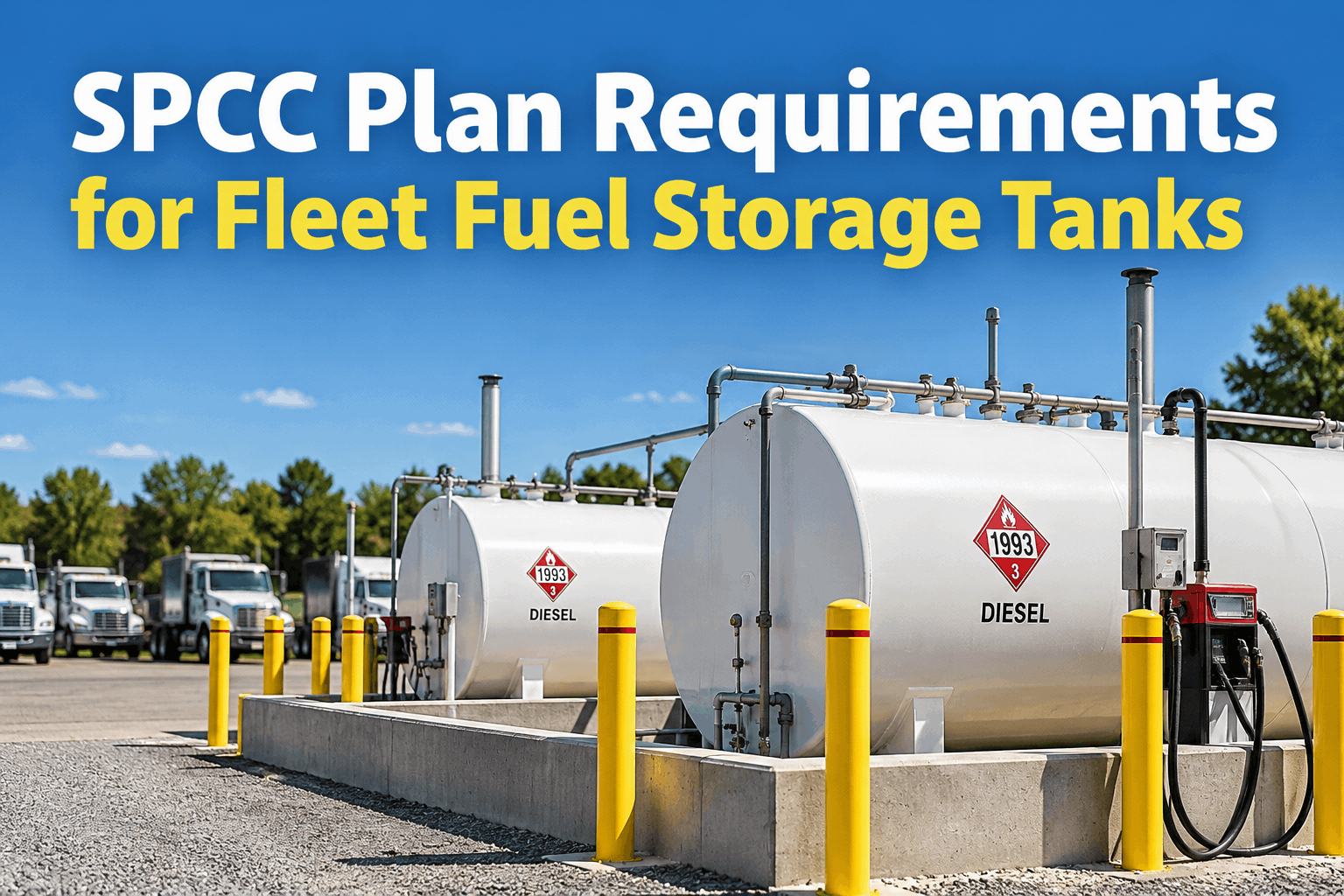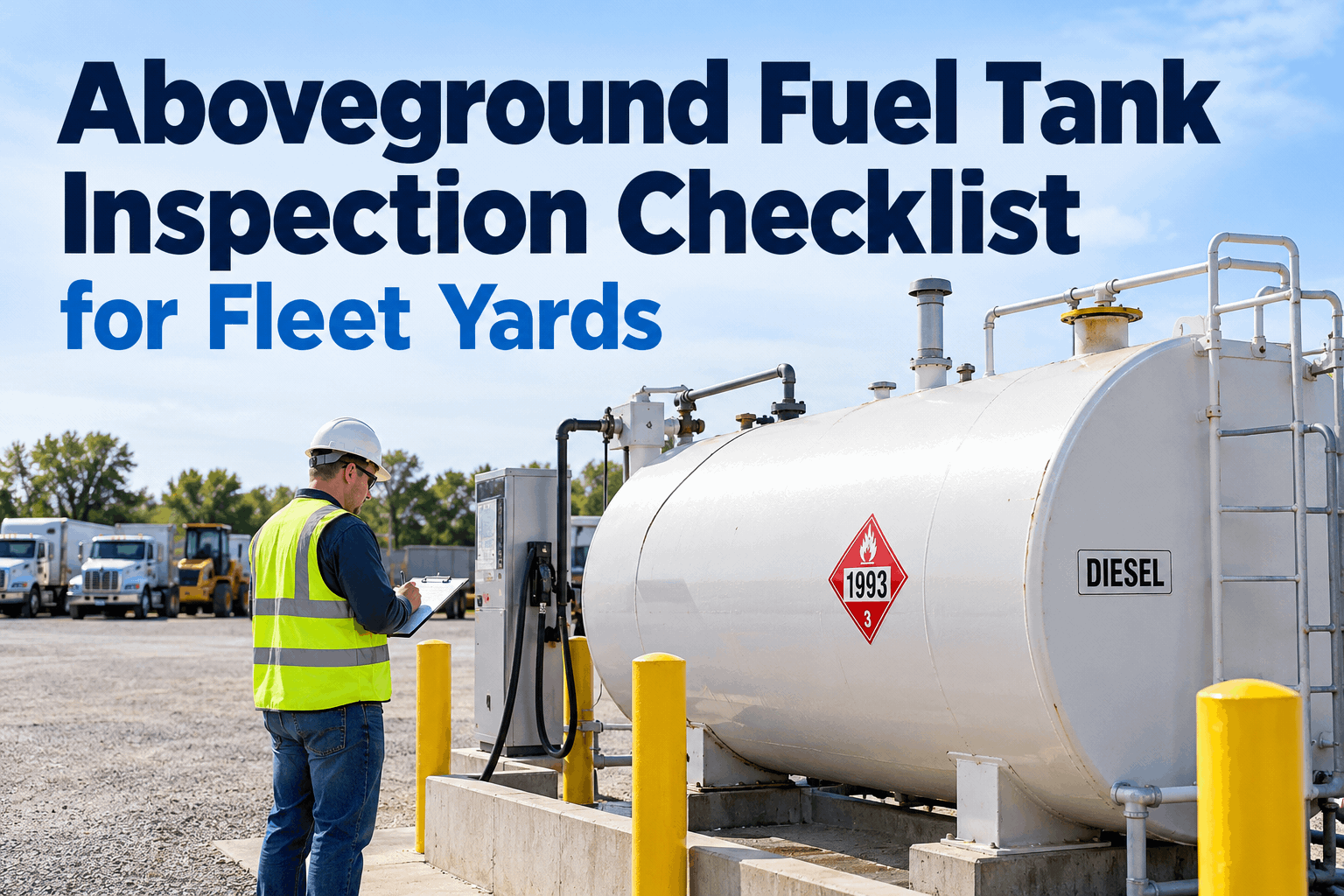
An aboveground fuel tank inspection is the cheapest insurance on your whole yard — and the one most fleets do from memory instead of from a record. That bulk diesel tank feeding your trucks is a slow-moving risk: a seam weeping at the base, a rusting support, a containment dike with a drain valve someone left open. None of it announces itself, and when a spill or a fire-marshal visit finally does, the first question is always the same — show me your inspection log. Sign up free and log your first tank inspection.
Your Bulk Fuel Tank Fails From the Bottom Up
Most aboveground tank failures start at the parts nobody looks at — the base, the supports, the containment. Here's the anatomy of what a real inspection walks, point by point.
The frustrating truth of an aboveground fuel tank inspection is that the tank almost never fails on the day you look at it. It fails three months after the support started corroding — on a walk nobody logged. The regulation doesn't ask you to be a tank engineer. It asks you to look, on a schedule, and prove you looked. That second half is where most fleets quietly slip out of compliance.
Do you fall under it?the SPCC thresholds that pull a fuel tank into the rules
Before the checklist matters, one question decides how much of this applies to you: is your yard under the federal SPCC rule? It's a capacity test, not a guess. Run your total oil and fuel storage against these lines.
Any container holding 55 gallons or more, fully aboveground, counts as an aboveground storage tank.
Aggregate aboveground oil storage at or above 1,320 gallons puts the facility under the SPCC rule — a single bulk diesel tank usually clears this alone.
One container larger than 660 gallons can bring you in on its own, depending on your total storage picture.
If you're in, the SPCC rule makes a point that surprises people: it doesn't set the inspection frequency itself. Instead it requires you to adopt a recognized standard — for most shop-built fleet tanks that's STI SP001 — and write that schedule into your SPCC Plan. The plan is your commitment; the inspection record is your proof you kept it. See how digital inspection checklists capture that proof.
Who checks whatthe two tiers of aboveground fuel tank inspection
Here's the distinction that keeps fleets out of trouble: not every inspection needs a certified specialist. Under STI SP001 there are two very different jobs, and confusing them either wastes money or leaves a gap. One tier is yours to run every month. The other you call a professional for, years apart.
Periodic inspection
A visual walk-around of the tank, supports, containment, piping, and gauges — done by your own operator personnel who know the tank. No certification required. This is the routine that actually catches problems early.
- Performed by trained yard/operator staff
- Documented every time, kept on file
- Where leaks and corrosion get caught first
Formal / integrity inspection
A formal external or internal integrity inspection by a certified STI SP001 or API 653 inspector. The interval depends on the tank's risk category — driven by whether it has spill control and leak detection.
- Performed by a certified tank inspector
- Frequency set by tank category & size
- HVI schedules it — it doesn't replace it
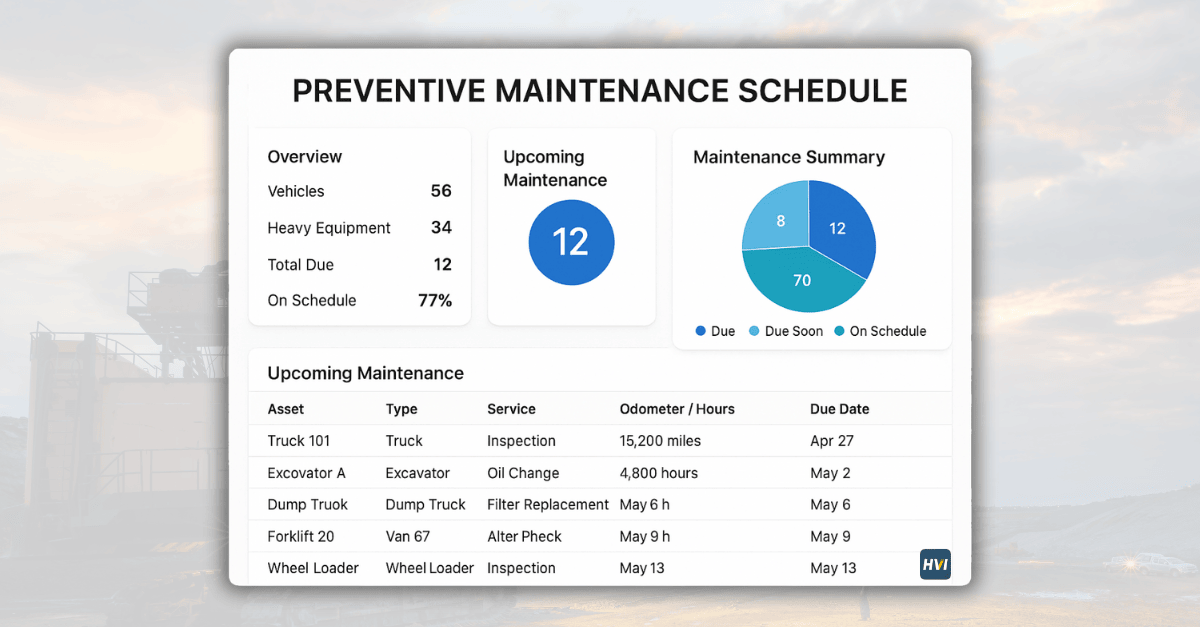
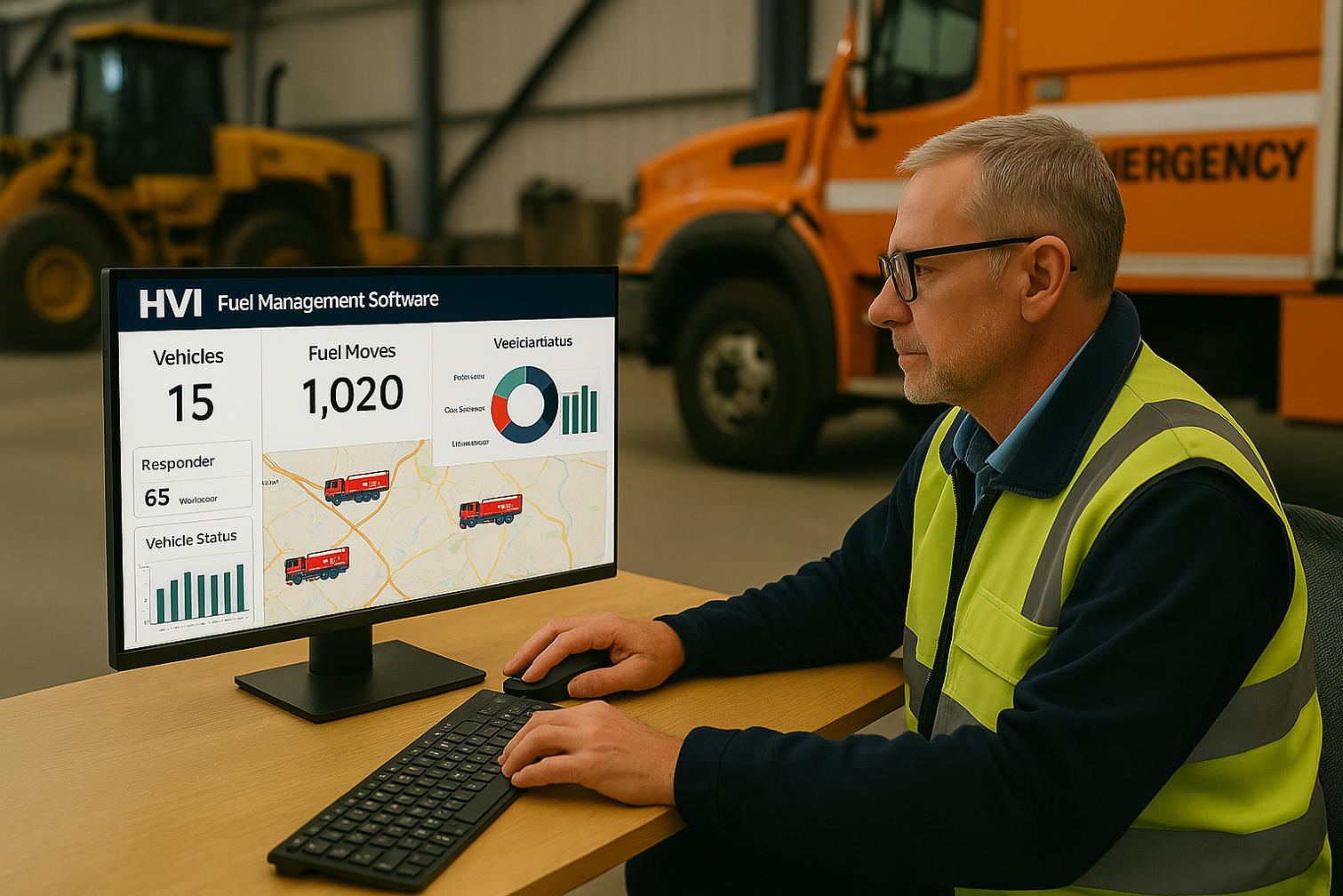
HVI lives in the first tier — the recurring operator inspections and the records behind them — and makes sure the formal inspection date never sneaks up on you. It is not a substitute for the certified inspector. Explore scheduling recurring tank inspections, and Book a demo of the inspection cadence.
The walkthe aboveground fuel tank inspection checklist
This is the monthly visual your operator should run, grouped by zone the way you'd physically move around the tank. Every unchecked line is a finding — better caught here by you than later by an inspector. Build it as a digital template and each line becomes a photo-backed pass/fail.
- No visible leaks, drips, or staining on shell, seams, or welds
- No bulging, dents, pitting, or failing paint/coating
- Corrosion protection intact; no bare rusting metal
- Supports and saddles sound, no corrosion or cracking
- Foundation level; no settling, washout, or ponding beneath
- No tank-to-ground contact causing hidden under-tank corrosion
- Dike/berm intact, no cracks or breaches, capacity unobstructed
- Drain valve closed and locked; no free product in containment
- Interstitial monitor (double-wall) clear — no alarm or product
- Piping, valves, and connections leak-free and supported
- Vents clear and unobstructed; flame arrester in place if required
- Dispenser nozzle, hose, and emergency shut-off functional
- Level gauge reads and moves correctly; no stuck float
- Overfill alarm / shut-off tested and operational
- Fill point labeled; audible/visual overfill signal working
- "No Smoking" and product-ID signage posted and legible
- Spill kit stocked and accessible near the tank
- Area clear of debris, vegetation, and ignition sources
Any fail becomes a tracked defect with a work order attached, so nothing gets written down and then forgotten. Explore how findings become maintenance records. Sign up free and load this tank checklist.
The slow failureswhat a missed fuel tank inspection lets happen
The two failure modes that cost fleets the most both develop invisibly over months. Neither is dramatic on any single day — which is exactly why the recurring inspection matters more than the one big annual one.
The tank sits on its supports for years. Moisture collects where the shell meets the saddle or slab, and corrosion eats from the outside in — or worse, from the underside you can't see. By the time it weeps, the metal loss is done.
A dike cracks, or a drain valve gets left open after rain. The secondary containment that's supposed to catch a spill quietly stops working — and you only find out when the primary tank finally leaks and there's nothing underneath to hold it.
Both are boring to catch and expensive to miss. That's the whole case for a logged monthly walk over an occasional glance — and it's a fuel-storage version of the same yard-wide discipline covered in our Read our fleet yard stormwater compliance guide. Book a demo of defect tracking on tank findings.
From a fuel yard manager running bulk diesel storage
We'd been doing tank checks — I just couldn't prove it. The guys walked the tank, maybe scribbled on a clipboard that lived in the shop. When our SPCC review came up, that gap was the problem, not the tank. Putting the monthly inspection on the same app the drivers use fixed it overnight: a corroding support gets flagged, photographed, and turned into a work order, and I've got a clean twelve-month record sitting there when anyone asks.
Aboveground fuel tank inspection — FAQs
How often should an aboveground fuel tank be inspected?
Under the STI SP001 standard, operator personnel perform monthly and annual visual inspections, while a certified inspector does a formal external or internal inspection on a multi-year cycle set by tank category. SPCC itself requires you to document your chosen schedule in your plan.
Does my fleet yard fall under the SPCC rule?
Generally yes if your aggregate aboveground oil and fuel storage is 1,320 gallons or more, or you have a single container over 660 gallons. A typical bulk diesel tank usually clears the threshold on its own, pulling the yard under 40 CFR Part 112.
Who can perform the monthly tank inspection?
The monthly and annual periodic inspections can be done by your own trained personnel who understand the tank and its components — no certification needed. Only the formal integrity inspection requires a certified STI SP001 or API 653 inspector.
What are the most important things to check on a fuel tank?
Leaks and staining, shell corrosion and pitting, foundation and support condition, intact secondary containment with a closed drain valve, clear vents, and working gauges and overfill protection. The hidden under-tank and support areas fail most often.
How does HVI help with fuel tank inspections?
HVI runs the recurring operator inspections as digital checklists, turns any finding into a tracked defect and work order, schedules the cadence so nothing is missed, and retains exportable records. It supports the formal certified inspection rather than replacing it.
Make every tank inspection prove itself
You know what to look for. HVI makes the proof automatic — recurring tank inspections, findings tracked to a verified fix, and a complete exportable history. The same app your crews already use for trucks now covers the fuel yard too.
No credit card · No hardware · Inspection records from day one