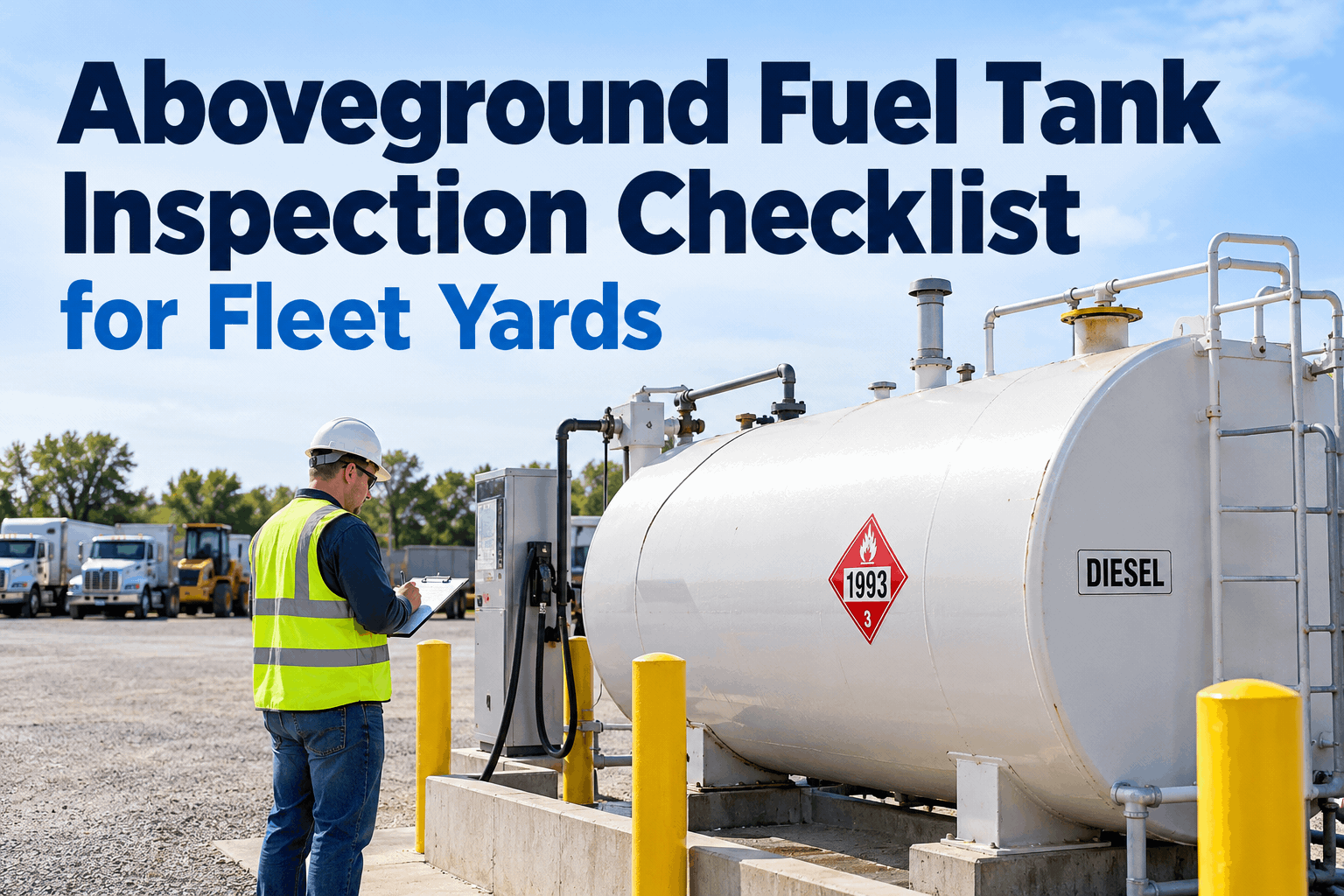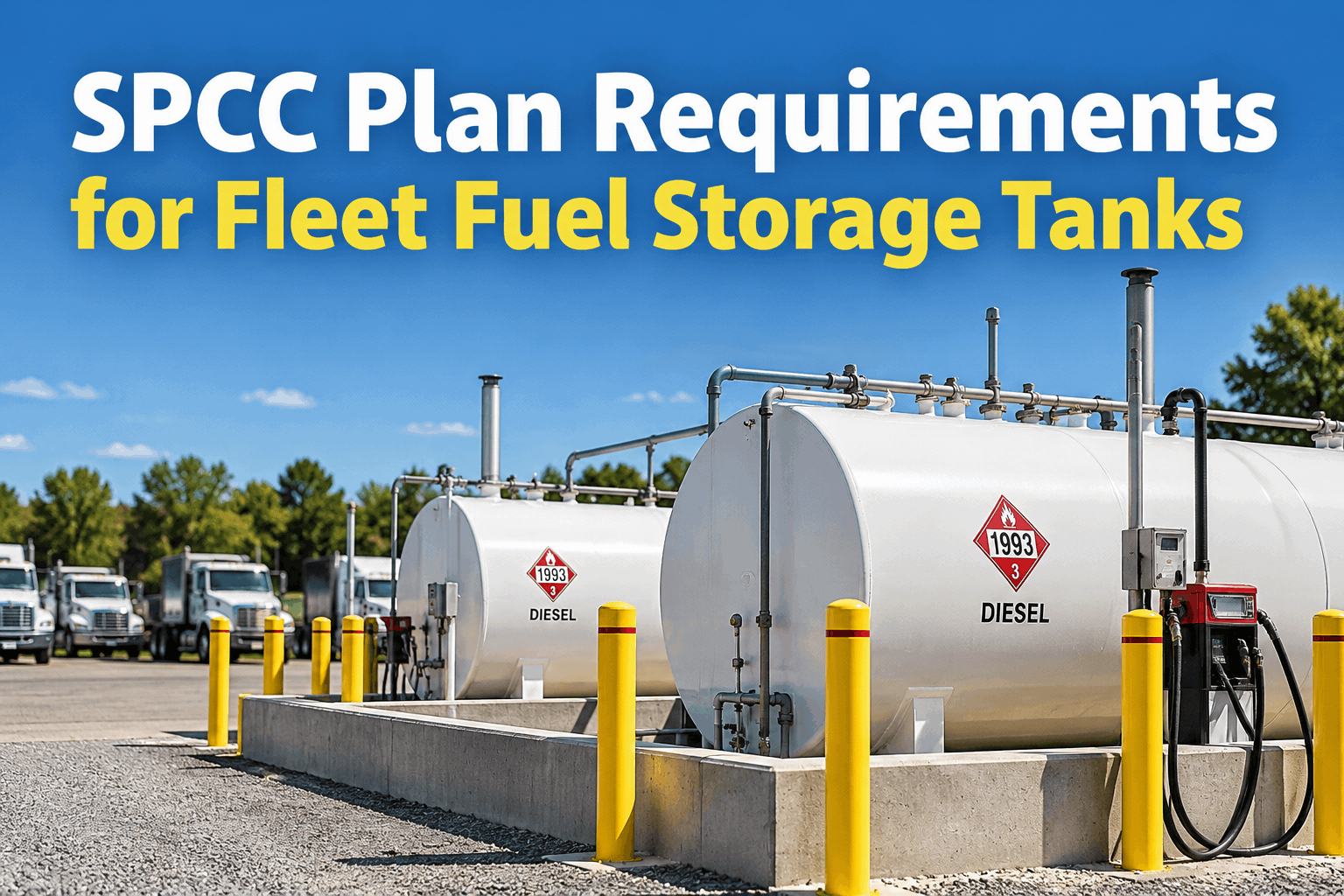
SPCC plan requirements catch a lot of fleet yards by surprise, because the trigger isn't a giant refinery tank — it's the ordinary bulk diesel storage most yards already have. Store more than 1,320 gallons of oil and fuel aboveground with any chance of it reaching water, and the EPA expects a written Spill Prevention, Control, and Countermeasure plan on site. The plan itself is only half the job; the inspections and records it commits you to are what an auditor actually checks. Book a demo of SPCC inspection recordkeeping.
An SPCC Plan Is a Promise You Have to Keep on Record
The document says what you'll do to prevent an oil spill. The compliance lives in proving you did it — inspections run, findings fixed, records retained. Here's a plan that stays provably alive.
Most fleets think of SPCC as a binder you write once and forget. That's exactly the mindset that fails an inspection. The plan is a standing commitment — to inspect on a schedule, to fix what you find, to brief your people, to keep signed records for years. A perfect plan with no proof of execution is a finding waiting to happen. This page walks the requirements that actually get checked.
Are you in?the two conditions that make SPCC plan requirements apply
SPCC isn't about being a "fuel company." It's a capacity-plus-risk test, and a surprising number of ordinary fleet and equipment yards clear it. Both conditions have to be true.
Aggregate aboveground oil and fuel storage over 1,320 gallons (or more than 42,000 gallons completely buried). Only containers of 55 gallons and up count toward the total.
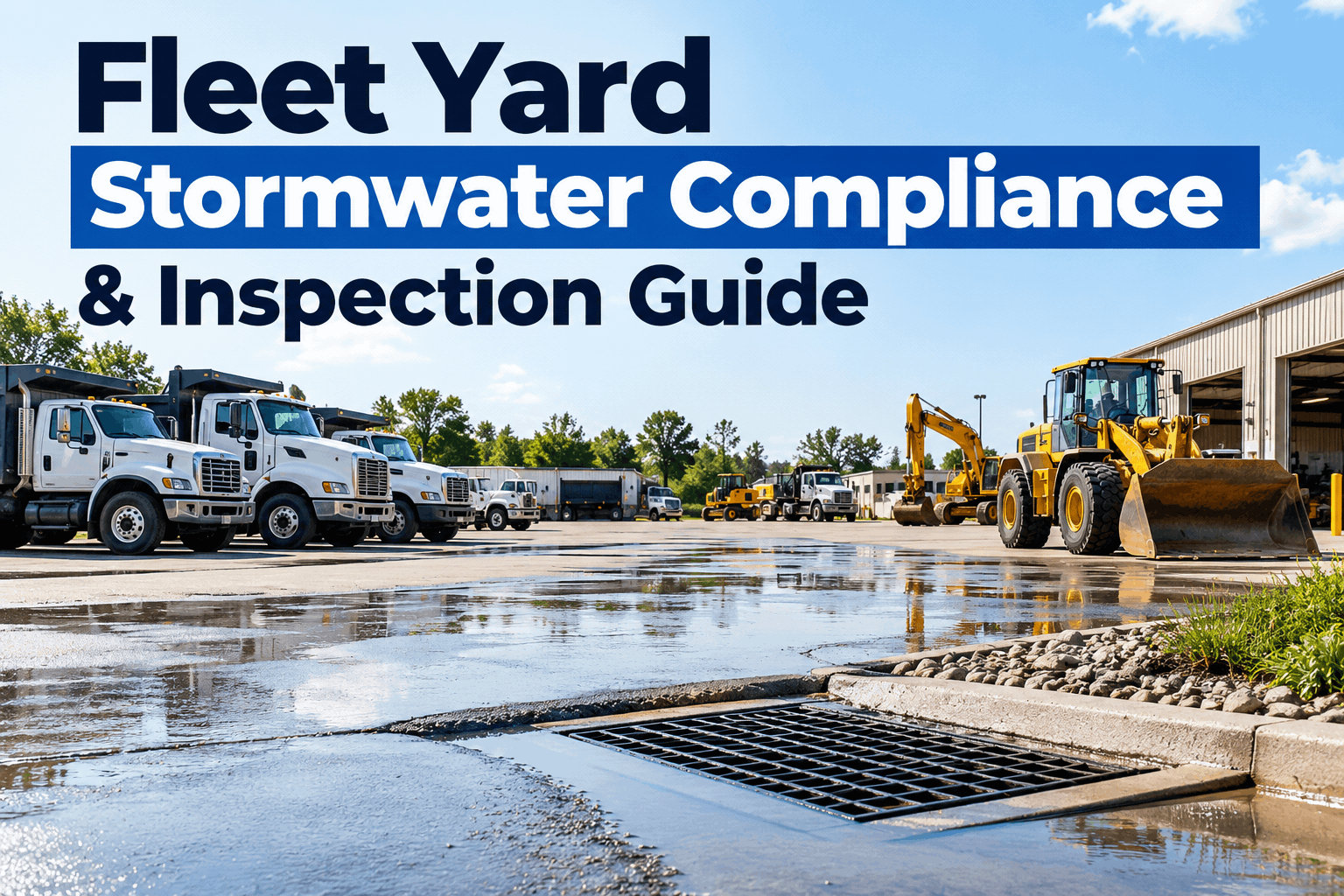
There's a reasonable expectation a discharge could reach navigable waters or adjoining shorelines — via a storm drain, ditch, or surface runoff. For most yards, that's a yes.
Diesel, gasoline, used oil, new oil, hydraulic and lube oil all count toward the total — it adds up faster than people expect once you tally the bulk tank, drums, and totes together. If both conditions hold, you need a plan. The next question is who gets to sign it. This sits alongside the physical side of the job covered in our Read our aboveground fuel tank inspection guide.
Who signs itthe three certification paths — and the one most fleets qualify for
Here's the part that saves fleets real money: you may not need a Professional Engineer. The EPA created "qualified facility" tiers that let smaller operations self-certify their own plan. Which path you're on depends on your storage size and spill history.
-
T1Tier I — self-certify with templatemost small yards
Aggregate aboveground storage of 10,000 gallons or less, no single tank over 5,000 gallons, and a clean recent spill history. You complete and sign EPA's Tier I template yourself — no engineer needed.
≤10,000 gal totalno tank >5,000 galself-certify -
T2Tier II — self-certify a full planone large tank
Still 10,000 gallons or less aggregate, but you have at least one individual container over 5,000 gallons. You self-certify, but prepare a complete plan rather than the short template.
≤10,000 gal totala tank >5,000 galself-certify -
PEPE-certified planlarger facilities
Over 10,000 gallons aggregate, or a disqualifying spill history. A licensed Professional Engineer must review and certify the plan, confirming it's adequate and built to good engineering practice.
>10,000 gal totalor spill historyneeds a PE
Whichever path you're on, the eligibility rests partly on spill history — which means your inspection and corrective-action records aren't just paperwork, they're what keeps you in the cheaper self-certify tier. Explore keeping that inspection history clean, and Book a demo of SPCC inspection scheduling.
What's insidethe required elements of an SPCC plan
Whether self-certified or PE-signed, every SPCC plan has to contain the same core elements under 40 CFR 112.7. These are what an inspector cross-references against your actual yard. Two of them — inspections and recordkeeping — are where plans most often fall apart in practice.
The two amber elements above are the operational heartbeat — and the ones a binder can't satisfy on its own. A plan that lists "monthly tank inspection" with no signed records to back it is the single most common SPCC gap. See how digital checklists turn those two elements into live records.
Keeping it livethe SPCC plan review and amendment rules
An SPCC plan isn't "done" when it's signed. The rule builds in two update triggers, and missing either quietly puts you out of compliance even if your yard is spotless.
-
5yrFive-year reviewon a clock
Review and re-evaluate the entire plan at least once every five years, whether anything changed or not, and document that you did. A lapsed review is a finding on its own.
-
ChgAmend on material changewithin 6 months
Add a tank, move the fueling point, change containment or operations — and the plan must be amended, generally within six months. A PE-certified plan needs the PE to recertify the technical change.
Both triggers are about your yard changing faster than your binder. When inspections, work orders, and asset changes all live in one system, the "material change" that should prompt an amendment is visible instead of buried in a drawer. Explore keeping asset and inspection history in one place.
The proof checkthe SPCC readiness checklist an inspector works from
When an inspector arrives, they don't just read the plan — they test whether it's being lived. Run this checklist against your own program. Every line is something you want to answer "yes, and here's the record" before someone else asks.
- Current signed SPCC plan is on site and accessible
- Correct certification path for your storage size and history
- Five-year review completed and logged; amendments current
- Inspections done on the plan's schedule, every cycle
- Signed inspection and test records retained at least 3 years
- Findings tracked to a documented corrective action
- Secondary containment in place and sized correctly
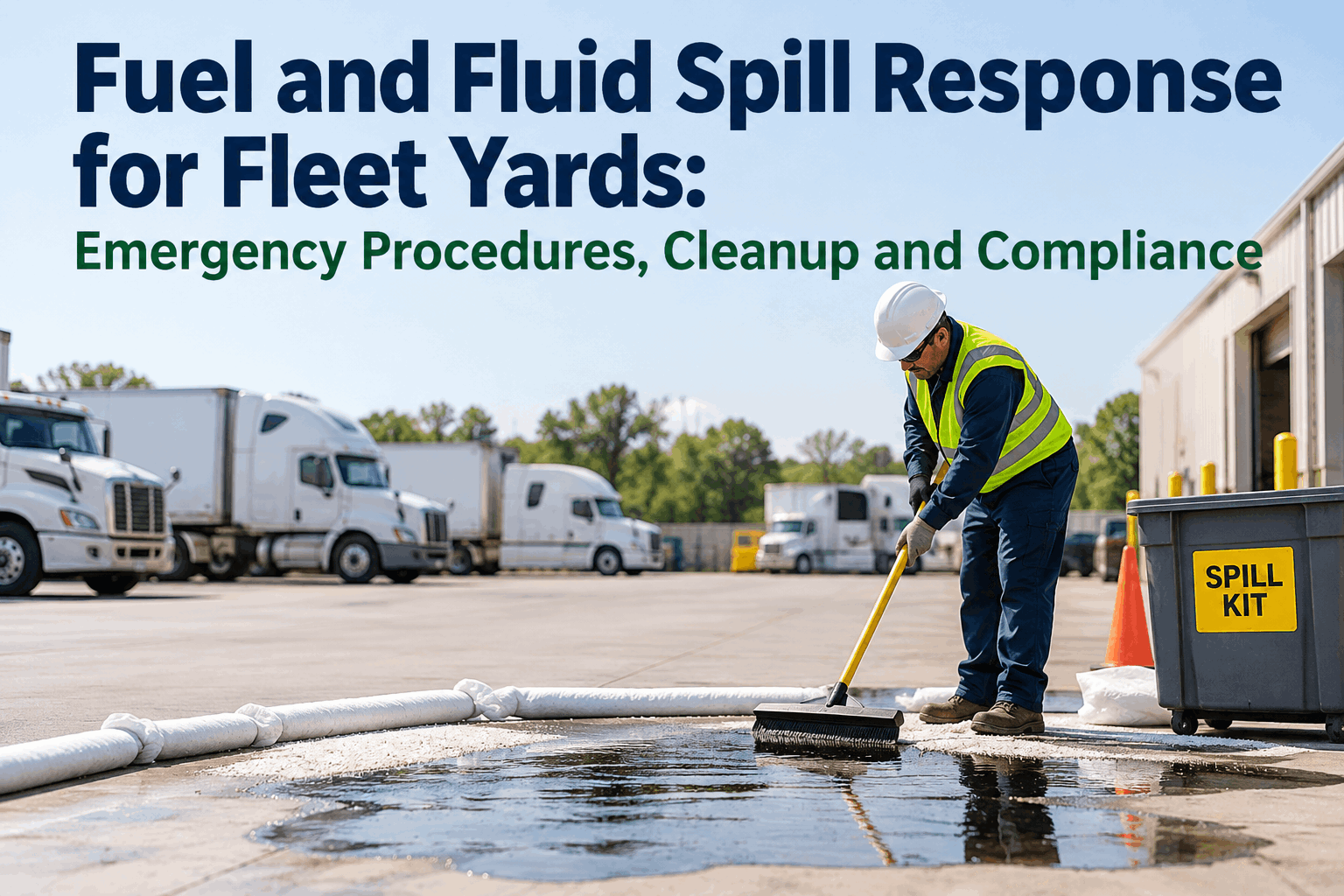
- Spill kits stocked; response procedures posted and known
- Facility diagram matches the yard as it stands today
- Oil-handling staff trained on the plan and procedures
- Annual discharge-prevention briefing conducted and logged
- Named pollution-prevention responsibilities assigned
The lines that trip fleets up are almost always in the second group — the records. That's precisely what HVI is built to produce automatically. Explore turning plan commitments into retained records. Sign up free and build your SPCC inspection routine.
From an EHS manager who's been through an EPA SPCC inspection
Our plan was textbook — a PE signed it, it was beautiful. What nearly sank us was proving the monthly inspections in it actually happened. The inspector flipped straight to the records, and we were reconstructing them from memory. We moved the whole inspection and corrective-action side onto HVI, and now the plan and the proof travel together: scheduled checks, flagged defects, work orders, three years of signed history I can export on the spot.
SPCC plan requirements — FAQs
When does a fleet yard need an SPCC plan?
When aggregate aboveground oil and fuel storage exceeds 1,320 gallons and a discharge could reasonably reach navigable waters. A typical bulk diesel tank plus drums usually clears the threshold, pulling the yard under 40 CFR Part 112.
Can I write my own SPCC plan, or do I need an engineer?
If you qualify as a Tier I or Tier II facility — generally 10,000 gallons or less aggregate with a clean spill history — you can self-certify, using EPA's template for Tier I. Larger facilities need a Professional Engineer to review and certify the plan.
How often must an SPCC plan be reviewed or updated?
Review and re-evaluate the full plan at least once every five years. Separately, amend it within about six months of any material change — a new tank, moved fueling point, or altered containment. PE-certified plans need PE recertification for technical amendments.
How long do SPCC inspection records have to be kept?
Signed, written records of SPCC inspections and tests must be kept for at least three years. These records are typically the first thing an inspector asks for, and missing them is a common citation even when the yard itself is in good shape.
How does HVI help with SPCC compliance?
HVI doesn't write or certify the plan — it executes the commitments inside it. It schedules the required inspections, turns findings into tracked defects and work orders, and retains signed exportable records, so the proof your plan demands is always ready.
Make your SPCC plan provable, not just present
You know what the plan has to contain. HVI makes the hardest part automatic — the recurring inspections it commits you to, the corrective actions, and three years of signed, exportable records. The same app your crews already use for trucks now backs your fuel storage compliance.
No credit card · No hardware · Inspection records from day one