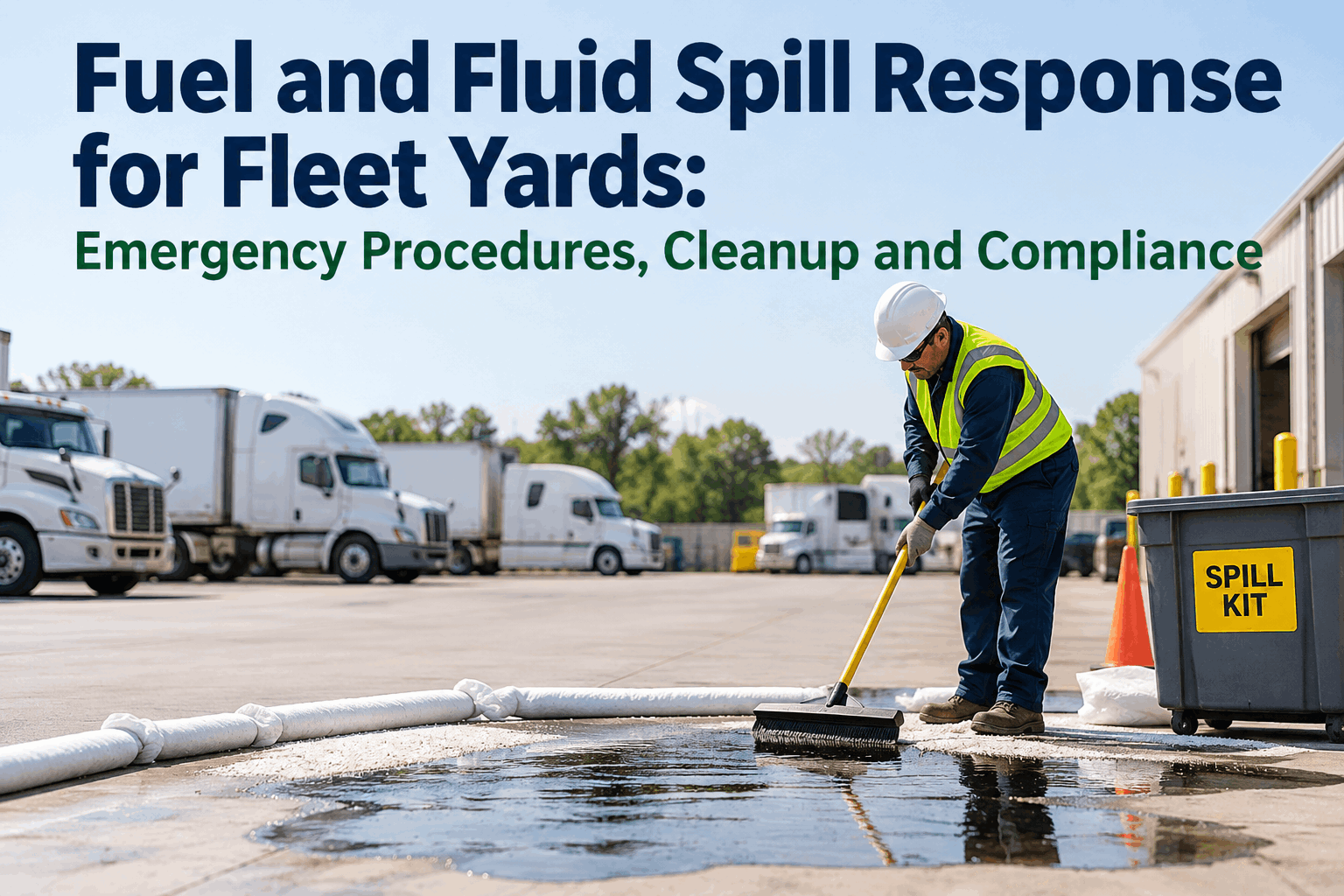
A fuel or hydraulic-fluid spill in a fleet yard can quickly create slip hazards, fire risks and environmental exposure. A practical spill response plan tells drivers and shop teams when to raise the alarm, who may contain a release and what must be documented afterward. This guide covers the response sequence, spill-kit readiness and inspection records that help prevent the same leak from happening again.
Fuel & Fluid Spill Response: From First Alert to Final Record
Make the next spill less confusing. Establish safe response boundaries, protect drains and connect every equipment-related leak to a documented follow-up.
A Spill Response Plan That Works Under Pressure
Start with a clear sequence, not a long policy nobody can find. The actions below are a planning framework; your site-specific plan and trained responders control what happens during an actual incident.
Recognize and alert
Warn nearby workers, identify the likely material if safe and notify the designated supervisor or response contact.
Isolate the area
Keep vehicles and pedestrians away. Escalate immediately if there is fire, vapor, exposure or uncontrolled-release risk.
Assess response limits
Determine whether the release is incidental or needs trained emergency responders. Never ask untrained staff to manage hazardous conditions.
Contain only if authorized
Trained personnel may use suitable absorbents or drain protection when the situation and site plan permit safe action.
Recover and dispose
Arrange appropriate cleanup, label contaminated materials and follow waste-handling requirements for the substance involved.
Document and prevent
Record the incident, review any reporting duties and create maintenance follow-up for leaking equipment.
After the immediate response, use HVI safety management to support consistent inspection and incident documentation.
Have trouble keeping pre-shift safety checks consistent? Book a demo with HVI to see fleet-yard safety inspection checklists.
Incidental Spill or Emergency? The Difference Matters
A small visible spill is not automatically safe, and a larger spill is not judged by volume alone. Substance hazards, exposure potential and the ability to control the release determine the appropriate response.
Use the approved local procedure
Only designated, trained personnel use suitable protective equipment and spill materials. Document cleanup and check the source.
Isolate, evacuate and escalate
Activate the emergency plan and contact the appropriate responders. Do not attempt an unsafe cleanup.
For routine readiness checks, sign up free to organize your yard safety inspection records in HVI.
What a Fleet Yard Spill Kit Inspection Should Cover
A spill kit is useful only when staff can find it and its contents are suitable for the materials stored on site. Make readiness checks part of your routine yard inspections.
Example kit illustration — contents must match the site's material hazards and response plan.
Five readiness checks
Use HVI's configurable inspection features to build recurring spill-kit readiness checks and retain inspection results.
Want a repeatable record of stocked kits and missing supplies? Book a demo with HVI for digital spill-kit readiness checks.
Turn Your Spill-Kit Checklist Into a Digital Inspection
Keep inspection forms, findings and follow-up work organized instead of relying on loose paper records.
Common Fleet Yard Spill Sources and the Checks That Help
Response planning should connect with routine equipment inspections. Many recurring yard spills begin as small defects that need maintenance attention.
Fueling area
Inspect hoses, nozzles, fittings and storage-area containment. Record damaged equipment and follow approved shutdown procedures.
Hydraulic systems
Look for damaged lines, seepage and fitting problems on trucks, lifts and service equipment.
Maintenance bays
Check fluid transfer, used-oil containers, storage practices and housekeeping around drains.
HVI supports inspection-to-work-order maintenance workflows, helping teams follow up on equipment leaks after a response.
If vehicle leaks keep returning, book a demo with HVI to track vehicle leaks and repair follow-up.
What to Record After a Fuel or Fluid Spill
Good documentation shows what happened, how the team responded and what changed afterward. Reporting requirements vary by substance, location, discharge pathway and applicable law.
Need inspection and repair records connected to the right vehicle? Book a demo with HVI to organize spill incident follow-up records.
Seven Items Every Fleet Yard Spill Response Plan Should Address
Use this as a planning checklist for your safety team, then adapt it to the materials, drainage layout and response resources at your own facility.
Want to standardize the inspection side of your plan? Sign up for HVI and start organizing fleet-yard safety checks.
Fuel and Fluid Spill Response FAQs
What is a spill response plan for a fleet yard?
It is a site-specific procedure describing how employees recognize, report, isolate and respond to releases of fuel, oil or other fluids. It should define response limits, trained personnel, contacts, cleanup methods and documentation responsibilities.
Can any employee clean up a small diesel or oil spill?
No. Whether cleanup is appropriate depends on the substance, exposure risk, potential for escalation, available equipment and employee training. Staff should only perform actions authorized by the site plan and their training.
Does every fuel spill have to be reported to the EPA?
No universal gallon threshold applies to every situation. Federal reporting can depend on whether oil reaches navigable waters or adjoining shorelines and other legal criteria. Additional state or local requirements may apply.
How often should fleet yard spill kits be inspected?
Set a schedule based on site hazards, kit manufacturer guidance, use frequency and company policy. Check kits after any use and replenish missing or damaged supplies promptly.
How can HVI help with spill response documentation?
HVI offers digital inspections, incident-report records and maintenance work-order capabilities. These can support readiness checks, equipment-leak findings and corrective-action follow-up; they do not replace emergency response services or regulatory submissions.
Make Spill Prevention and Follow-Up Easier to Manage
Keep fleet-yard inspections, equipment defects and maintenance records connected. Start with HVI's digital inspection tools and build a more consistent safety routine.