Diesel fuel theft costs commercial trucking billions every year — and without a systematic prevention checklist in place, it's the one line item most fleets never fully quantify because it hides across dozens of small transactions rather than one visible incident. Fuel disappears from tanks in unattended yards, gets siphoned at overnight stops, and walks off through fuel card fraud until someone notices the MPG doesn't match the mileage. Industry estimates put fleet fuel loss to theft and fraud at 6–15% of the annual fuel budget — on a 50-truck fleet spending $500,000/year on diesel, that's $30,000–$75,000 disappearing every year. This diesel fuel theft prevention checklist walks the three-layer defense framework every fleet needs — physical security, real-time monitoring, and driver policy — plus the five warning signs of active theft and the 3-stage response protocol. Book a demo after you see how integrated fuel monitoring catches theft the day it happens.
3 Defense Layers Against Diesel Fuel Theft
No single control stops fuel theft. It takes physical security, real-time monitoring, and driver policy working together. Skip any one layer and thieves — internal or external — find the gap.
Physical Security
Anti-siphon devices, locking caps, tank cages, CCTV, and controlled yard access — the barriers that make physical theft harder than it's worth.
Real-Time Monitoring
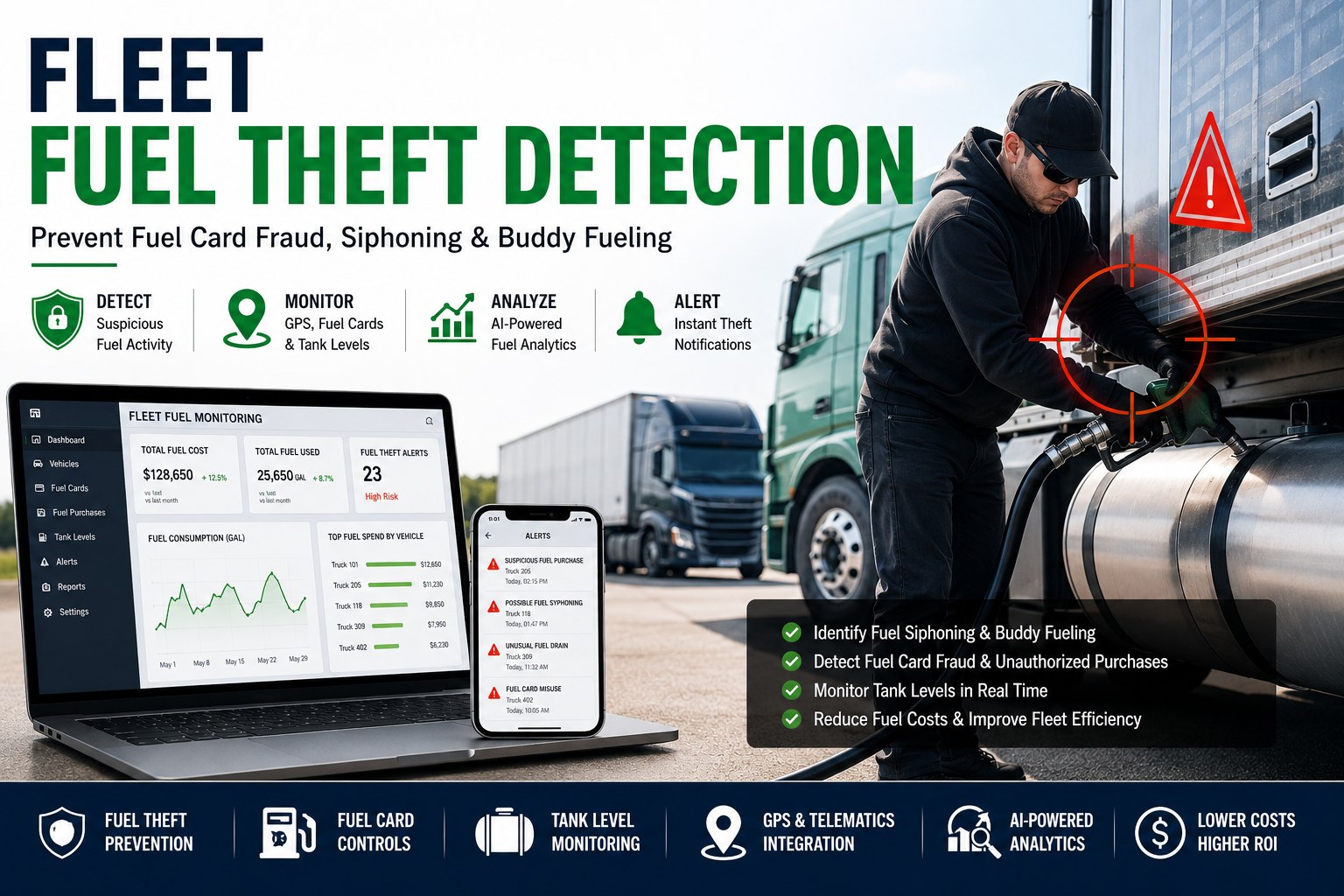
Fuel level sensors, GPS integration, MPG variance alerts, and transaction reconciliation — the systems that surface theft the day it happens, not months later.
Driver Policy
Card PINs, authorized locations, odometer entry at pump, transaction limits, and audit protocols — the rules that close the internal-fraud gap most fleets underestimate.
The three defense layers above form the framework. Below is the checklist for each — every action item every fleet should have in place, plus the warning signs of active theft and the response protocol when you spot one.
Layer 1 — Physical Security Checklist
Physical controls make external siphoning harder than the payoff justifies. Every item below is a one-time investment that keeps paying back every quarter it's in place.
Physical security actions
7 itemsPhysical controls alone don't stop internal fraud — but they eliminate the majority of the external theft threat. Book a demo to see integrated yard fuel monitoring
Layer 2 — Monitoring & Detection Checklist
Real-time monitoring turns fuel data into an alarm system. Every item below closes a gap where theft otherwise hides inside "normal variance" on the monthly fuel invoice.
Monitoring & detection actions
7 itemsFleets switching from monthly reconciliation to real-time telematics-integrated fuel tracking typically identify $8,000–$22,000 in previously undetected losses within the first seven days — not because the losses were new, but because nobody had looked at the daily data before. Start free and see your first 7 days of fuel data
Layer 3 — Driver Policy Checklist
Physical and monitoring layers stop external theft. Policy closes the internal-fraud gap that accounts for the largest share of losses in modern fleets. All seven items below cost nothing to implement but require written enforcement.
Driver policy actions
7 itemsAll seven policy items can be rolled out in a single week with zero capital investment — and they close the internal-fraud gap that physical and monitoring layers can't reach on their own. Book a demo to see policy enforcement built into the fuel dashboard
5 Warning Signs of Active Fuel Theft
Theft rarely announces itself. It shows up as small anomalies in the daily data. Every warning sign below is a pattern fleet managers should treat as an alarm — not "wait and see."
Sudden MPG drop on a specific vehicle
Vehicle averaging 6.5 MPG for six months suddenly runs 5.8 MPG for two weeks with no route change and no maintenance flag.
Fuel purchase timestamp doesn't match GPS location
Card charged $180 at a station 40 miles from where the truck was parked at that timestamp.
Multiple small transactions in unfamiliar locations
Six transactions of 8–12 gallons each within a week, all outside normal route corridors and normal working hours.
Card gallons don't match tank capacity increase
Card charged 40 gallons but in-tank sensor shows tank level rose only 32 gallons at the same timestamp.
Fuel missing from yard storage between meter readings
Storage tank level dropped 200 gallons overnight but no dispensing event was recorded on any vehicle's fuel log.
Any single warning sign warrants investigation. Two or more from the same vehicle or driver, in the same week — treat as confirmed theft until proven otherwise. Book a demo to see the alert dashboard
3-Stage Response Protocol When You Spot Theft
The moment a warning sign fires, three things need to happen — in this order. Skipping the sequence risks destroying evidence, tipping off the perpetrator, or missing the recovery window.
Detect & preserve
Investigate
Prevent recurrence
Every theft incident, handled correctly, teaches the fleet something and closes the gap that allowed it. Every theft incident handled poorly leaks intelligence to the perpetrator and invites repeat. Start free and put the response protocol on autopilot
From a fleet operations director after year one of active monitoring
We thought our fuel loss was maybe 2% — the number our fuel invoice always seemed to hover around. First month of live monitoring, we found it was closer to 9%. Two drivers had been using cards at personal pickups for eighteen months. A pump at one of our approved stations was over-dispensing by roughly 2%. And roughly 400 gallons a month were walking out of our yard storage overnight.
Total year-one recovery: $118,000 across 44 tractors. Two terminations, one criminal referral, one station relationship ended, one fence and camera upgrade at the yard. Everything on the checklist above — we now have in place, all three layers.
Frequently asked questions
How much does diesel fuel theft cost commercial fleets annually?
Industry estimates consistently place diesel fuel loss to theft and fraud at 6–15% of the annual fleet fuel budget. For a 50-truck fleet spending $500,000 per year on diesel, that translates to $30,000–$75,000 disappearing every year across dozens of small incidents rather than one visible event. The US trucking industry loses an estimated $2.5 billion annually to fuel theft. Fleet card fraud alone averages about 5 gallons per vehicle monthly according to Fleetcor data — small enough to hide in monthly reconciliation, large enough to add up to real dollars across a fleet. The losses are usually invisible not because they're hard to find, but because most fleets aren't looking at the right data at the right time. Switching from monthly reconciliation to real-time telematics-integrated fuel tracking typically surfaces $8,000–$22,000 in previously undetected losses within the first seven days.
What is the most common way diesel fuel is stolen from commercial trucks?
In modern fleets, fuel card misuse has overtaken physical siphoning as the largest single source of fuel loss. The classic pattern is a driver using the fleet fuel card to fill a personal vehicle or a portable container on weekends, or a driver sharing a card PIN with an outside party who uses it during off-hours. About 71% of fleets have terminated an employee for fuel card misuse at some point. Physical siphoning is still significant, especially at unattended yard fuel storage and overnight parking — about 12% of fleet fuel theft happens over weekends when yards are unattended, and a single siphoning event can drain 100–150 gallons from an unlocked tank in under 30 minutes. Pump-side fraud (skimming devices, meter over-dispensing, split transactions) sits between these two as the third major category. Any comprehensive prevention plan needs to address all three, which is why the 3-layer defense framework in this checklist covers physical, monitoring, and policy simultaneously.
How can I detect fuel theft in my fleet?
Detection relies on comparing fuel data across multiple independent sources so a discrepancy in any one triggers an alert. The five most reliable detection signals are: (1) sudden MPG drop on a specific vehicle with no route or maintenance change, indicating siphoning or card misuse; (2) fuel purchase timestamp that doesn't match GPS location, indicating card fraud; (3) multiple small transactions in unfamiliar locations, indicating "smurfing" pattern of personal-vehicle fills; (4) card gallons that don't match the tank capacity increase from the in-tank sensor, indicating pump fraud or split delivery; (5) fuel disappearing from yard storage between meter readings with no dispensing event logged, indicating external siphoning. Any single signal warrants investigation. Two or more from the same vehicle or driver in the same week should be treated as confirmed theft until proven otherwise. Real-time monitoring platforms surface all five automatically — manual monthly reconciliation catches almost none of them.
Are fuel cards a bigger theft risk than physical siphoning?
In modern commercial fleets, yes. Fuel cards make transactions frictionless for legitimate refueling, but they also make internal fraud frictionless if the card, PIN, and vehicle-verification controls aren't tight. About 71% of fleets have terminated an employee for fuel card misuse. Card fraud takes many forms: filling personal vehicles, buying gasoline instead of diesel (implying re-sale), sharing PINs with outside parties, splitting one legitimate fill with one personal fill, or systematic small-transaction "smurfing" at unauthorized locations. Physical siphoning is still a significant risk, especially at unattended yard storage and overnight parking, but modern anti-siphon devices, locking caps, and CCTV materially reduce that threat. Card fraud reduction requires policy controls (unique PINs, odometer entry, station whitelisting, per-transaction limits) plus real-time transaction monitoring with GPS location matching. The layered approach in this checklist addresses both categories in parallel.
What's the single best way to prevent diesel fuel theft in a fleet?
There isn't a single best control — effective fuel theft prevention requires all three defense layers working together. Physical security stops external theft. Real-time monitoring surfaces both external and internal theft the day it happens. Driver policy closes the internal-fraud gap that physical and monitoring layers can't reach alone. Skipping any single layer creates the gap thieves — internal or external — find. Fleets that implement all three layers typically reduce fuel loss by 60–80% within the first year and see insurance premium reductions of 10–15%. The complete 21-item checklist above covers all three layers, with implementation typically taking 30–90 days depending on fleet size — and the policy layer deployable in a single week at zero capital cost.
Turn all 21 checklist items into one automated fuel security workflow
HVI ingests fuel level sensor data, matches every card transaction against GPS location and odometer, surfaces MPG variance alerts, and enforces driver policy at the pump. Live in under two weeks — and typical fleets identify $8,000–$22,000 in existing losses in the first seven days.
No credit card · No hardware · Fuel monitoring dashboard ready day one