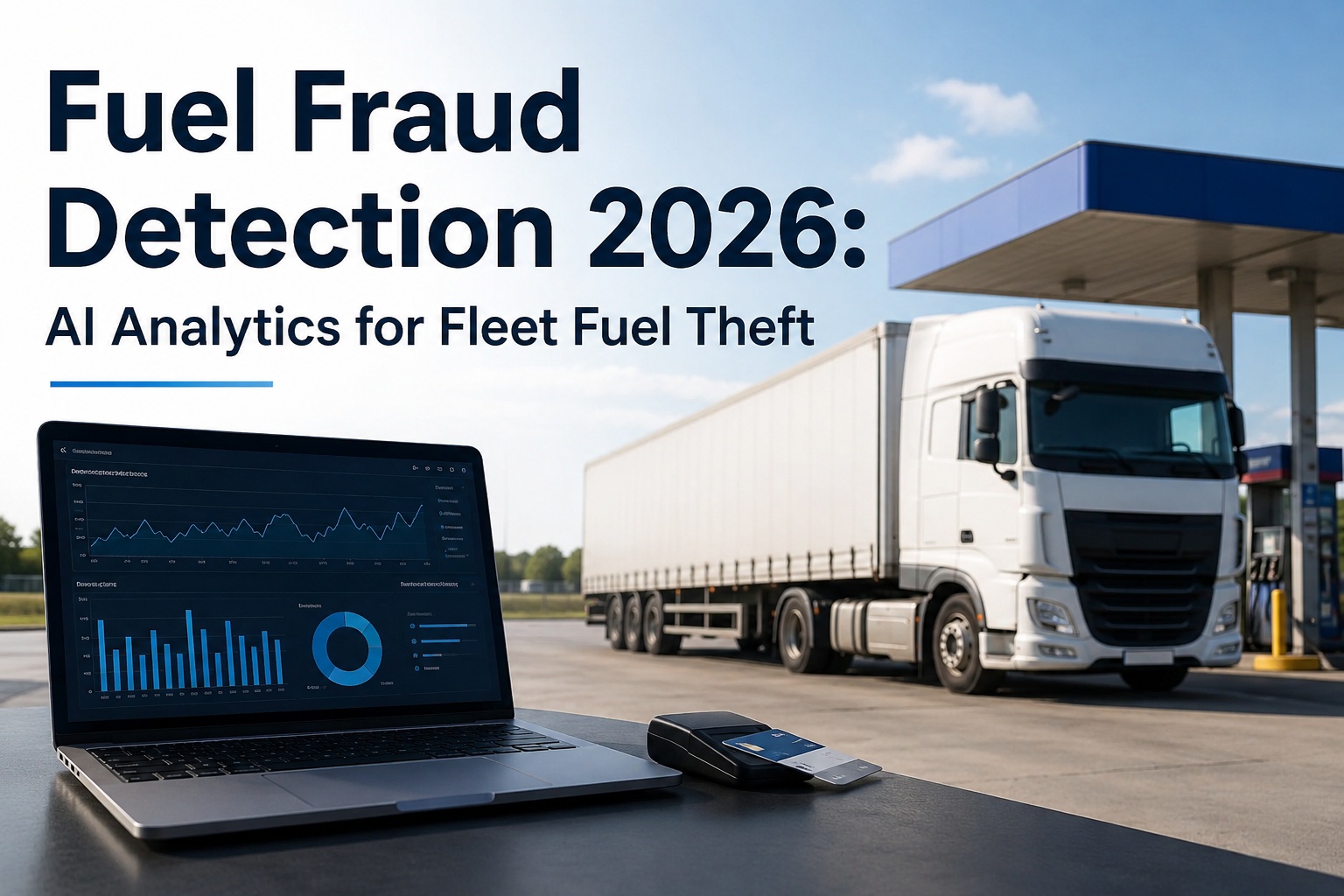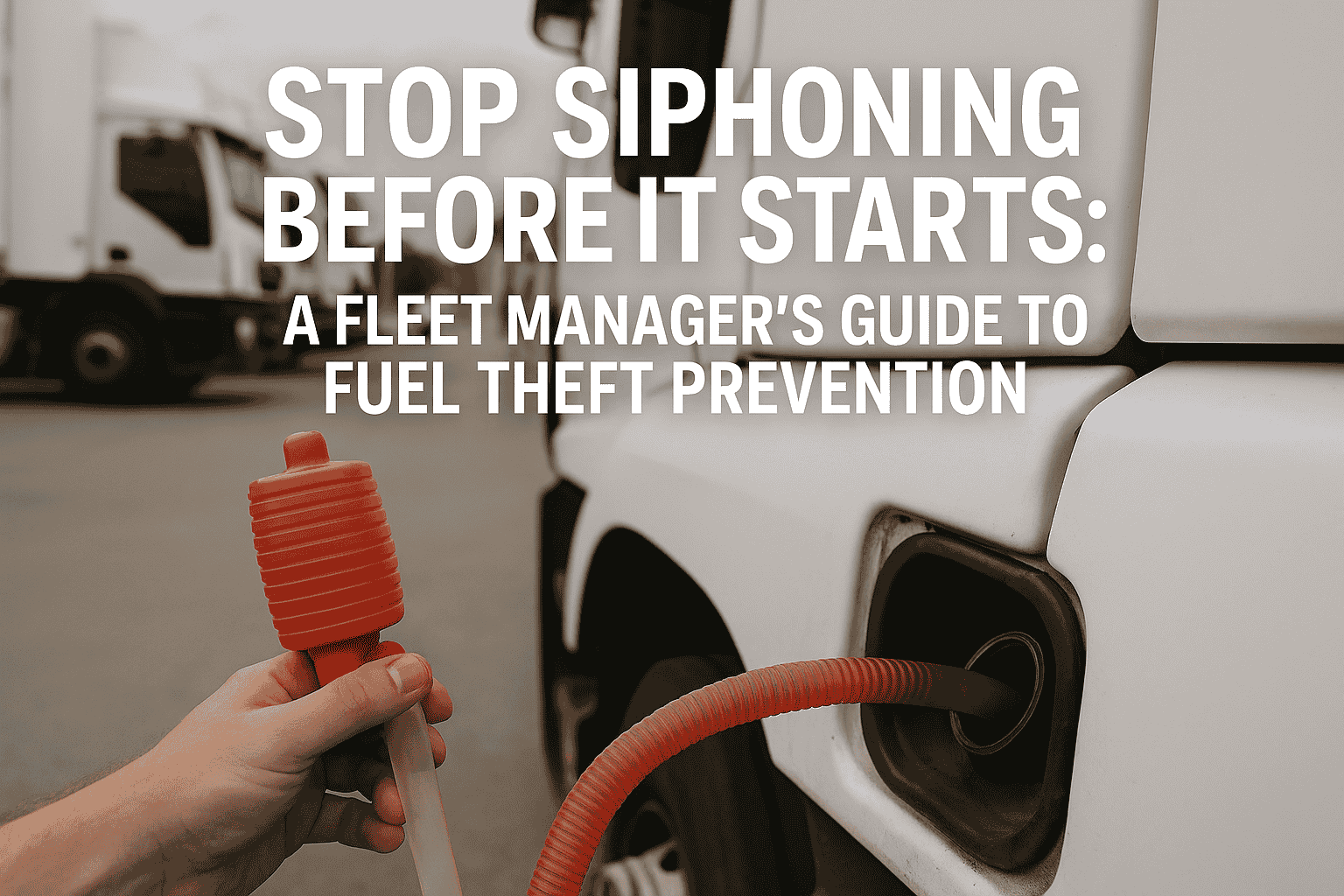
The tank was full when the driver clocked out. By morning it's down forty gallons, the truck never moved, and the fuel-card statement looks perfectly normal. That's the frustrating thing about fuel theft — it hides inside your single biggest variable cost, and by the time it shows up on a monthly reconciliation, the fuel and the money are long gone. Fleet fuel theft detection is about closing that gap: catching siphoning, fuel card fraud, and buddy fueling as anomalies in your data instead of discovering them weeks later. This guide breaks down how each type of theft happens and the specific signal that exposes it. Book a 30-minute walkthrough to see fuel anomalies surface in your own logs.
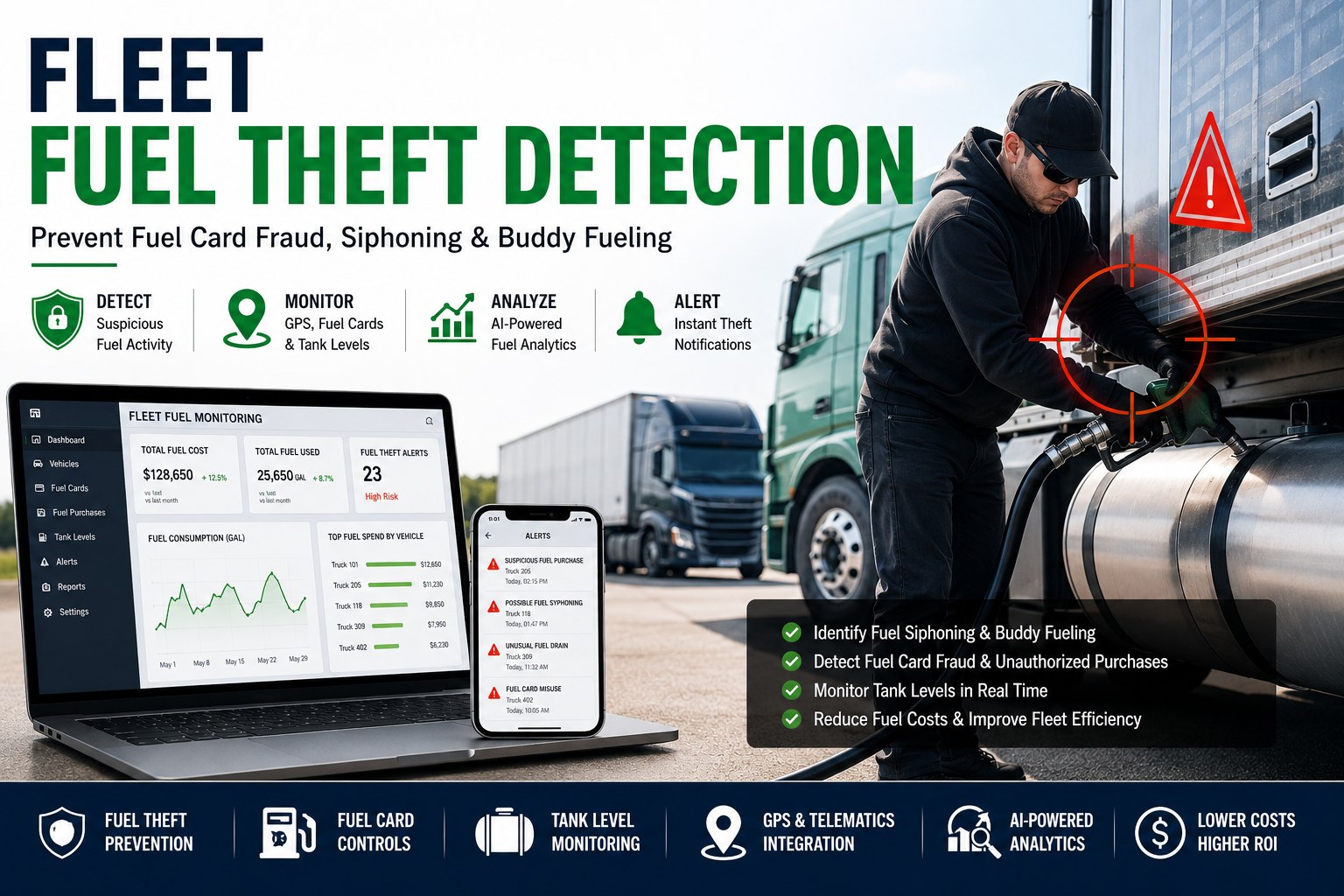
Fleet Fuel Theft Detection: Catch Fraud, Siphoning & Buddy Fueling
Fuel is a quarter of your operating cost and the easiest to steal. Here's how siphoning, fuel card fraud, and buddy fueling actually happen — and the data signals that expose each one before it drains your budget.
Unit 42 · Overnight, yard
- Tank drop
- −40 gal
- Vehicle moved
- No
- Card swipe
- None matched
- Verdict
- Siphoning
Flagged for investigation
-
21–25%
of total fleet operating cost is fuel — the biggest variable line item
industry cost data -
73%
of commercial fleets experience fuel theft in a given year
HVI fleet data, 2025 -
62%
of fuel-theft incidents are internal — not outside thieves
HVI fleet data, 2025 -
~78%
average theft reduction fleets report in the first year of monitoring
HVI fleet data, 2025
Why fuel theft is so hard to see
Fuel theft is uniquely invisible because it hides inside a cost that's supposed to fluctuate. Diesel prices move, routes change, loads vary, so a fuel bill that's a few percent high never looks like theft — it looks like a bad week. That's exactly why it persists: with fuel running 21 to 25% of total operating cost, even a modest theft rate quietly siphons real money, and most fleets only spot it during a monthly reconciliation, long after the fuel and the culprit are gone. The uncomfortable part is where it comes from. Internal theft — drivers and staff, not outside criminals — accounts for the majority of incidents. That means the fix isn't a better lock; it's better visibility into your own fuel data. See how HVI turns fuel logs into an early-warning system
The four ways fuel gets stolen
Fuel theft isn't one problem — it's four, each with its own method and its own tell. Knowing which you're up against determines which signal will catch it.
-
Siphoning
Fuel physically drained from a tank — a hose into a portable container, usually overnight or at a remote site. Slow, quiet, and cumulative; a few gallons a night adds up to real losses no one notices.
-
Fuel card fraud & skimming
Card details stolen or misused for unauthorized purchases. The transaction posts as a legitimate fuel buy, so it clears the statement cleanly — only its location or timing gives it away.
-
Buddy fueling
A driver uses the company card to fill a co-worker's tank, a personal vehicle, or portable cans. The card is valid and the pump is real — but far more fuel is dispensed than the assigned truck can hold.
-
Internal fraud & log manipulation
Padded fuel logs, phantom fill-ups, or cash-advance abuse on the card. Because the paperwork is written by the person committing it, only cross-checking against independent data exposes the gap.
The common thread: every one of these looks legitimate in isolation. The theft only becomes visible when you compare fuel data against something the thief can't fake — vehicle location, tank capacity, or historical consumption. Start logging fuel against those baselines
The detection signals that expose each type
Every theft type leaves a fingerprint in the data. Match the signal to the method — and note that no single one catches everything, which is why layering them matters. Use the filter to see which signal beats which theft.
-
GPS-verified transactions
Catches: card fraud, buddy fuelingMatch every fuel-card purchase to the assigned vehicle's location and time. A swipe at a station 40 miles from where the truck actually was is a fraudulent or personal purchase — the card is valid, but the vehicle wasn't there.
-
Tank-level monitoring
Catches: siphoning, phantom fillsWatch for tank-level drops with no corresponding trip, and card swipes that don't produce a matching rise in the tank. A 40-gallon overnight drop on a parked truck is siphoning; a logged fill that never raises the level is a phantom transaction.
-
Fill-versus-capacity checks
Catches: buddy fuelingCompare each purchase against the vehicle's tank size. A 120-gallon tank recording a 170-gallon fill means fuel went somewhere else — a second vehicle, a personal truck, or portable cans. The math simply doesn't fit the truck.
-
Consumption & MPG baselines
Catches: gradual theft, log paddingTrack actual miles-per-gallon per vehicle over time. When a unit's fuel burn suddenly diverges from its own history — more fuel for the same miles — something is leaving the tank that isn't going into the road.
-
Geofencing & time windows
Catches: after-hours & off-route theftRestrict and alert on fueling by location, time, vehicle, or driver. A fuel event outside approved zones or after hours — at a remote site with no scheduled work — gets flagged the moment it happens instead of at month-end.
-
Fuel-log audits & cross-checks
Catches: internal fraudPeriodically reconcile fuel logs against GPS, transaction records, and consumption. When the person writing the log is the one padding it, only cross-referencing independent data sources reveals the discrepancy.
The reason fleets get burned is relying on one signal. Fuel cards track transactions but can't confirm fuel entered the tank; tank readings miss off-site card fraud. Together, they close each other's blind spots. Book a demo to see the signals cross-referenced
The layered defense model
No single signal catches every theft type, so effective detection stacks them. Think of it as three layers — each closes the gaps the others leave open, and together they make theft nearly impossible to hide.
-
Fuel-card limits, driver PINs, and geofenced purchase rules by vehicle, time, and location. Stops the easy fraud before it happens and forces theft into detectable channels.
-
Match card swipes to GPS location, tank level, and fill-versus-capacity in real time. Any mismatch — wrong place, no tank rise, too much fuel — flags instantly.
-
Per-vehicle MPG baselines and fuel-log audits catch the slow, gradual theft that slips past individual transaction checks. The safety net under everything else.
Start with whichever layer closes your biggest gap. Most fleets already have fuel-card data and vehicle mileage — the fastest win is simply cross-referencing what you already collect. Sign up free and start cross-referencing your fuel data
The fuel theft prevention playbook
Detection tells you theft happened; prevention stops it recurring. The fleets that actually shrink their losses pair the technology with clear policy — here's the reactive approach versus the controlled one.
Reactive fleet
- Discovers theft on the monthly fuel reconciliation
- Fuel cards with no location or capacity checks
- Fuel logs taken on trust, never cross-checked
- No per-vehicle MPG baseline to compare against
- No evidence trail if theft goes to prosecution
Controlled fleet
- Anomalies flagged as they happen, not weeks later
- Card purchases matched to vehicle, capacity, and time
- Fuel logs reconciled against independent data
- MPG baselines that surface gradual theft early
- A timestamped record trail for every fuel event
Pair that with a clear written fuel policy and driver education, and theft stops being a mystery line item. Most losses come from internal actors, and visibility alone changes behavior. Book a demo to build your fuel-control workflow
Expert view
Lena M.
Fleet Operations Manager
Regional distribution fleet
95 vehicles
Our fuel spend was creeping up and everyone blamed diesel prices. It wasn't diesel. When we finally lined up card swipes against where the trucks actually were, we found one driver filling a personal pickup twice a week — valid card, real pump, wrong vehicle.
What got him wasn't a camera. It was the numbers not matching — too much fuel for that truck's tank, at a station the truck was nowhere near. Once drivers knew the fuel data was actually being cross-checked, our whole fuel bill came down, and not just from that one guy.
— Lena M., Fleet Operations Manager, regional distribution fleet
Frequently asked questions
How do you detect fuel theft in a fleet?
Fuel theft is detected by cross-referencing fuel data against information the thief can't easily fake: vehicle location, tank capacity, and historical consumption. The core signals are GPS-verified transactions (matching each fuel-card purchase to where the assigned vehicle actually was), tank-level monitoring (spotting drops with no trip, or card swipes that don't raise the tank), fill-versus-capacity checks (a purchase larger than the tank can hold), consumption and MPG baselines (a vehicle suddenly burning more fuel for the same miles), and geofencing with time windows. No single signal catches everything, so effective detection layers them together — for example, a card swipe that clears on its own may still be flagged because the vehicle was 40 miles away.
What is buddy fueling and how do you stop it?
Buddy fueling is when a driver uses a company fuel card to fill something other than their assigned vehicle — a co-worker's truck, a personal vehicle, or portable containers. It's hard to catch because the card is valid and the purchase is a real fuel transaction. The signal that exposes it is a fill-versus-capacity check: if a vehicle with a 120-gallon tank records a 170-gallon fill, roughly 50 gallons went somewhere else. GPS verification helps too, by confirming the assigned vehicle was actually at the pump. To stop it, combine capacity checks and location matching with fuel-card controls that limit purchases by vehicle, and make drivers aware that fuel data is being cross-referenced — visibility alone deters most of it.
How much does fuel theft cost fleets?
Fuel is roughly 21 to 25% of a fleet's total operating cost, making it the largest variable expense and a major target. Estimates of theft losses vary by source and method, ranging from a conservative few percent of the fuel budget up to 15 to 25% in heavily affected operations. Industry data indicates a large majority of commercial fleets — around 73% — experience some fuel theft in a given year, and that the majority of incidents are internal rather than from outside criminals. Because the loss hides inside a naturally fluctuating cost, most fleets underestimate it until they start cross-referencing fuel data and see the anomalies that reconciliation alone never surfaced.
Can fuel card data alone prevent fuel theft?
No — fuel cards are valuable but incomplete on their own. A fuel card records that a transaction happened and where, which helps flag purchases outside approved zones or times. But a card cannot confirm that the fuel actually went into the assigned vehicle's tank. Fraudulent swipes, buddy fueling, and skimming can all post as legitimate purchases. That's why card data has to be paired with other signals: matching the purchase to GPS location, checking the fill against tank capacity, and verifying that the tank level actually rose. Fuel-card controls plus data cross-referencing is far stronger than either alone, closing the blind spots that let single-method monitoring miss theft.
How does HVI help with fuel theft detection?
HVI's fuel management captures fuel logs, cost, and consumption for every vehicle and surfaces the anomalies that signal theft — miles-per-gallon that drifts off a vehicle's own baseline, fills that exceed tank capacity, and fuel-cost spikes that don't match the miles driven. Because it integrates with fuel cards and GPS/telematics, it lets you cross-reference transactions against vehicle location and consumption rather than trusting any single source. The result is that theft shows up as a flagged anomaly you can act on quickly, plus a timestamped fuel record for every vehicle that supports audits or, if needed, prosecution. It turns scattered fuel receipts and logs into a monitored, pattern-aware early-warning system.
Catch fuel theft in your data, not on next month's statement
HVI captures fuel logs, cost, and consumption per vehicle and flags the anomalies that signal siphoning, card fraud, and buddy fueling — MPG off baseline, fills over capacity, cost that doesn't match the miles. Integrated with your fuel cards and telematics, it turns your biggest variable cost into one you can finally see and control.
No credit card · No hardware · Live on your fleet in under two weeks