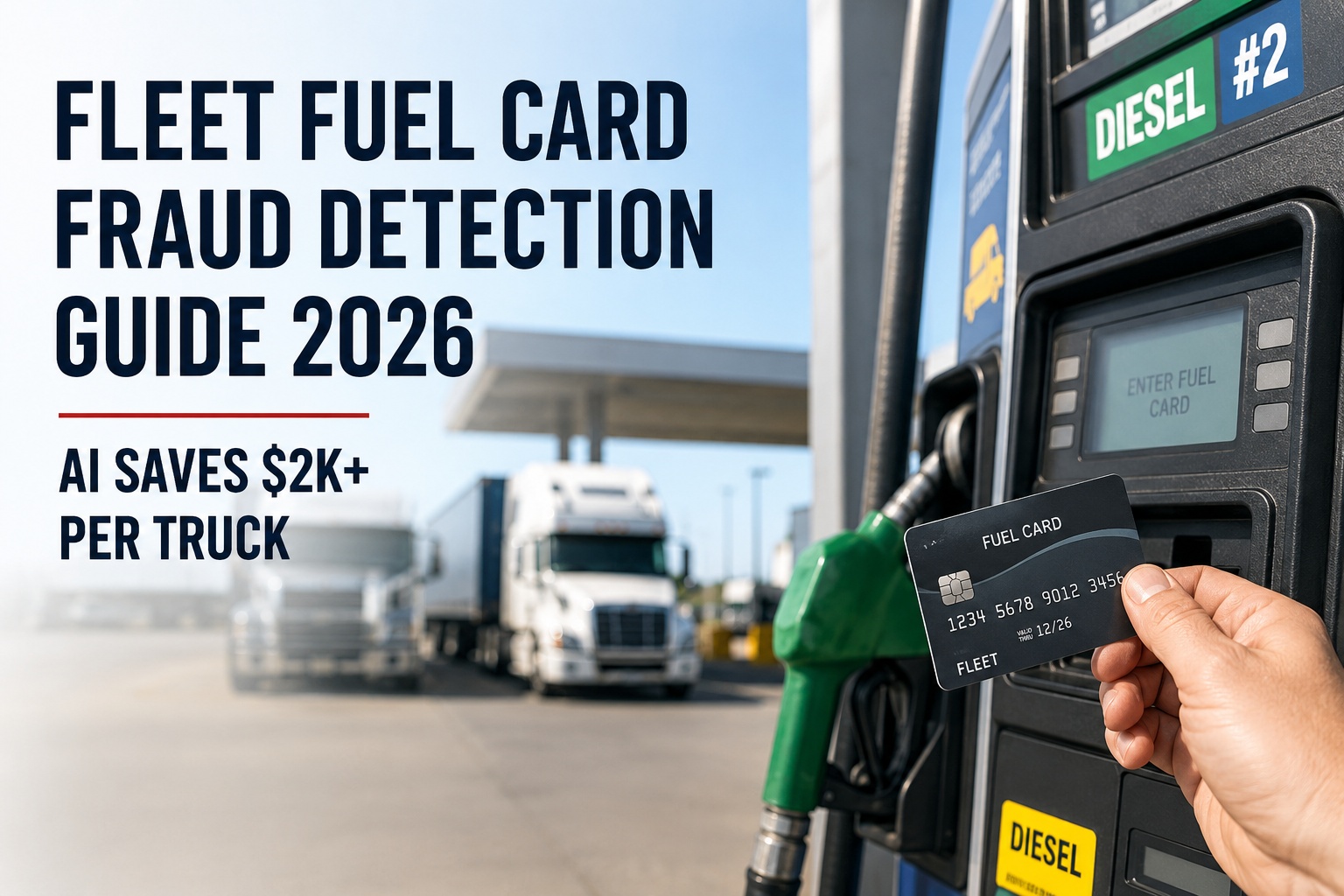
A cloned fuel card gets used for about three fill-ups before it's discarded. At $500 per fill on a Class 8 truck, that's $1,500 in fraud per stolen card — and the transactions clear because the network never checks whether your truck was at the pump. Fleet fuel card fraud is the largest invisible line item on most fleet P&Ls in 2026, costing $1,500–$2,800 per truck annually across unauthorized fills, buddy fueling, and duplicate transactions. AI catches the pattern in seconds. Book a demo
What fuel card fraud costs your fleet per truck — three detection tiers, three different bleed rates
Same fleet, same fuel spend. What changes is how fast fraud gets caught — and how much escapes into next quarter's P&L.
The gap between the worst and best columns is real cash: $2,600 per truck, per year. On a 100-truck fleet, that's $260,000 annually walking out of the fuel budget in ways nobody sees on a P&L until the year is closed. And that's before counting operational impact — time spent chasing fraud, driver disputes, card cancellation and reissue cycles, insurance implications, and the trust erosion inside a shop where nobody's sure who's stealing.
The six fraud patterns AI actually catches — and how each one leaves a trail
Fuel card fraud isn't one behavior. It's six distinct patterns with six different fingerprints, and each one requires a different detection signal. Understanding the taxonomy is what separates fleets that catch 90% of fraud from those that catch the obvious 20% and lose the rest.
Off-route / off-location fills
The card gets used at a station miles from where the truck actually is. Card network approves the transaction because it never checks the truck's GPS. Under manual review, the fill looks legitimate — correct card, correct fuel type, plausible amount.
Over-tank-capacity fills
Card charges more gallons than the truck's tank can physically hold. Typically means fuel is being pumped into a separate container, a personal vehicle, or a second tank not on the fleet's roster.
Duplicate or rapid-sequence transactions
Two large fills in short succession at the same or nearby stations. Sometimes a legitimate top-off; more often, card sharing between drivers or a driver fueling a personal vehicle immediately after the truck.
Off-hours fueling patterns
Fuel purchased on weekends, holidays, or outside driver work hours when the truck should be parked. Common with cards used by unauthorized secondary parties who have keys to the tractor.
Impossible-activity anomalies
Truck is showing telematics motion in Ohio while its card is used at a pump in Georgia. Or, DEF tank shows full while a large DEF purchase clears the card. Physical impossibilities the card network cannot detect.
Systematic small-dollar siphoning
Consistent per-fill overcharge of 3–8 gallons that stays below manual-review thresholds. Small enough to look like driving style variation; frequent enough to add $1,000+ per truck per year in aggregate.
The last one is the most-underestimated. Small-dollar systematic siphoning — the driver who consistently reports 3–5 extra gallons per fill — typically escapes every detection method except statistical pattern analysis. It's also the pattern that compounds the most over time, because the driver in question knows exactly where the manual-review threshold sits. Book a demo to see per-driver fuel deviation from fleet baseline surfaced automatically
Manual review vs AI detection — the same fraud, two different response speeds
The single biggest advantage AI-powered fuel fraud detection holds over manual reconciliation isn't accuracy. It's speed. Here's what happens to the same fraudulent transaction under each approach.
The speed gap is where AI detection's ROI actually lives. Catching fraud in seconds isn't just cheaper than catching it in weeks — it's the difference between preventing the pattern and cleaning up after it. A single cloned card frozen at fill #1 versus fill #3 saves $1,000 on its own. Across a fleet, the compounding difference is what makes the software pay for itself typically inside 90 days. Book a demo to see live GPS-vs-transaction cross-referencing on your fleet
Anatomy of a single AI-triaged transaction — what happens in those 10 seconds
Understanding the pipeline demystifies the "AI" part. Nothing about the analysis is exotic — it's a specific sequence of checks running against data your fleet already generates. Here's what fires during a single transaction cross-check.
-
Sec 0Transaction fires at the pump — ingestion begins
Fuel card processor (WEX, Comdata, EFS, etc.) sends transaction data via API: card ID, station location, timestamp, gallons, fuel grade, dollar amount, associated driver ID.
-
Sec 1–3GPS location cross-reference
Pull the assigned truck's real-time GPS position. Compare to station location within tolerance radius (typically 100–500 meters). If gap exceeds threshold — anomaly flag 1.
-
Sec 3–5Tank capacity & consumption sanity check
Compare transaction gallons to registered tank capacity minus estimated remaining fuel from last-known fill. Impossible over-fills flag anomaly 2. Verify DEF and additive purchases match sensor readings if available.
-
Sec 5–7Driver schedule & duty status cross-reference
Confirm transaction timestamp falls within the assigned driver's active duty window per ELD hours-of-service data. Off-hours transactions flag anomaly 3. Verify driver ID at pump matches assigned driver.
-
Sec 7–10Per-driver baseline deviation scoring
Compare transaction size, station type, and consumption pattern against the driver's 90-day baseline. Statistical outliers flag anomaly 4. Small-dollar systematic siphoning surfaces here even when individual transactions look normal.
-
Sec 10Alert routing & investigation package assembly
Combined anomaly score above threshold triggers push notification to fleet manager mobile app. Investigation package auto-assembles: transaction detail, GPS trail, driver ID and history, comparable past fills, one-click card freeze action.
The whole pipeline runs on data your fleet already produces — fuel card feeds, GPS from your existing telematics, driver ELD data, tank sensors where installed. Nothing exotic; nothing that requires new hardware on the truck. The AI part is the pattern recognition running across all four signals simultaneously in real time. That's what the card network can't do — and what manual reconciliation can't do fast enough to matter. Start free and connect your first fuel card feed on day one
The 90-day ROI math — when does AI fuel fraud detection pay for itself?
Every fuel management platform pitch eventually arrives at the ROI question. Here's the honest math on a 50-truck fleet spending $500,000 annually on diesel — a typical mid-market benchmark.
Two things about this math worth calling out. First: the week-1 recovery number ($8K–$22K) is not aspirational — it's what fleets typically discover in previously invisible losses within the first seven days of connecting their fuel card feed. Second: the software cost is trivial next to the recovery. At the high end of the pricing range ($15/vehicle/month for advanced AI analytics on a 50-truck fleet), annual cost is $9,000 against $40,000+ in recovered spend. Even at half the industry benchmark recovery rate, payback lands well inside 90 days. Book a demo to model per-truck ROI on your actual fuel spend
From a Fuel Manager who found $18,400 in week-one invisible losses
I'd been running fuel reconciliation on spreadsheets for six years. I thought I had it under control. When we flipped on AI cross-referencing, the first week surfaced $18,400 in fraud I'd been signing off on every month. Duplicate transactions I'd been treating as top-offs. Off-route fills I'd assumed were legitimate stops. One driver systematically overcharging 4 gallons per fill for eight months.
The one that hit hardest was a cloned card — two fills within three hours, 40 miles apart, both approved by the network. Under my old process I'd have caught that at month-end. Card was frozen inside ten minutes. Card network dispute filed same day. We recovered $780 on that one alone. My CFO stopped asking why we were paying for the analytics after month one.
Frequently asked questions
How much does fleet fuel card fraud actually cost?
Industry benchmarks place fuel card fraud, misuse, and theft at 6–15% of total fleet fuel spend for fleets without real-time GPS cross-referencing controls. Fleet Maintenance industry survey data suggests that 49% of fleet operators estimate up to 5% of their fuel spend is already fraudulent, and 55% cannot detect fraud while it's happening. Translated to per-truck dollars: fleets with no active detection typically lose $1,500–$2,800 per truck annually to some combination of unauthorized fills, card cloning, duplicate transactions, off-route fueling, and systematic small-dollar siphoning. Fleets running manual weekly reconciliation typically recover half of that exposure; fleets running AI-powered real-time cross-referencing typically drop losses below $200 per truck. On a 100-truck fleet spending $1M+ annually on diesel, moving from no detection to AI-powered detection recovers approximately $150,000–$260,000 per year in fuel that was previously walking out of the budget without appearing on any P&L line item. The financial exposure is compounded by operational costs: staff time chasing fraud, driver disputes and terminations, card cancellation and reissue cycles, insurance premium implications from repeated fraud events, and trust erosion in the workforce. AI fuel fraud detection typically pays for itself inside 90 days on any fleet with meaningful diesel spend.
How does AI detect fuel card fraud in real time?
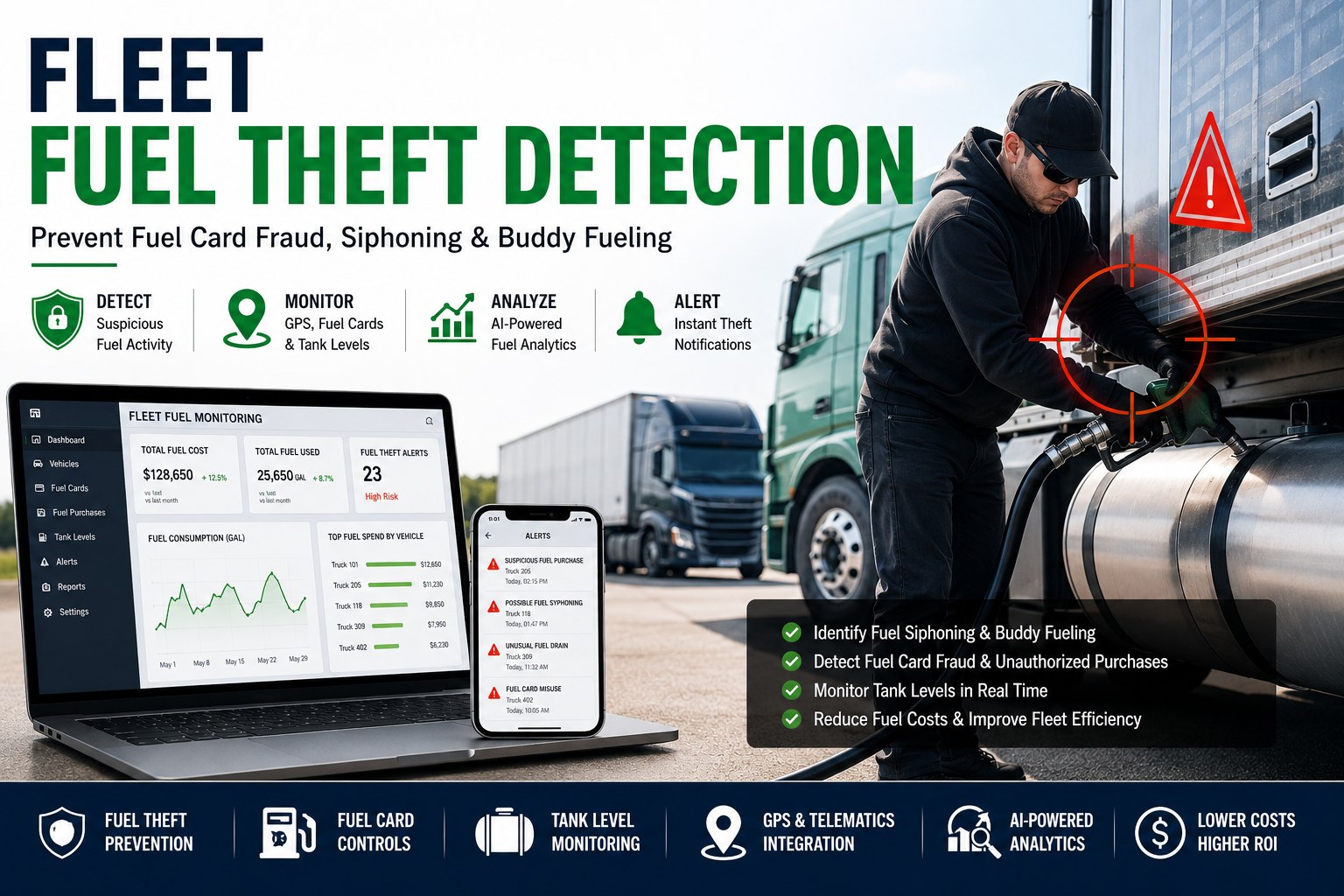
AI-powered fuel card fraud detection works by cross-referencing every card transaction against multiple real-time data streams within 5–10 seconds of the transaction firing at the pump. The pipeline: (1) the fuel card processor (WEX, Comdata, EFS, or others) sends transaction data via API within seconds of card swipe; (2) the AI platform pulls the assigned truck's real-time GPS position and compares to the fueling station location within a tolerance radius (typically 100–500 meters) — mismatches flag off-route fraud; (3) transaction gallons are checked against registered tank capacity minus estimated remaining fuel — impossible over-fills flag capacity fraud; (4) transaction timestamp is compared against the driver's active duty status per ELD data — off-hours transactions flag unauthorized use; (5) statistical baseline comparison per driver surfaces small-dollar systematic siphoning that individual-transaction checks miss. Anomaly scores above threshold fire push notifications to the fleet manager's mobile app, with a pre-assembled investigation package including the transaction detail, GPS trail, driver history, comparable past fills, and a one-click card freeze action. The entire pipeline runs on data the fleet already generates — card feed, telematics GPS, ELD driver data, tank sensors where installed — and requires no additional truck-side hardware. Best-in-class systems report 92–95% forecast accuracy on fraud pattern detection.
What are the most common fuel card fraud patterns?
Six fraud patterns dominate the fleet fuel card space, each with distinct detection requirements. Off-route/off-location fills: card used at a station miles from the assigned truck's actual GPS position; detected by GPS-vs-transaction cross-referencing. Over-tank-capacity fills: transaction gallons exceed physical tank capacity, indicating fuel pumped into a container or personal vehicle; detected by capacity vs. transaction volume checks. Duplicate or rapid-sequence transactions: two large fills in short succession, often card sharing or personal-vehicle fueling immediately after truck; detected by time-delta and volume analysis. Off-hours fueling: transactions on weekends, holidays, or outside driver duty windows when the truck should be parked; detected by timestamp vs. ELD duty status comparison. Impossible-activity anomalies: truck showing motion telemetry in one state while its card is used at a pump in another; detected by cross-checking transaction against ECM and GPS data in the same time window. Systematic small-dollar siphoning: consistent per-fill overcharge of 3–8 gallons that stays below manual-review thresholds but compounds to $1,000+ per truck per year; detected only by statistical pattern analysis of consumption vs. mileage regression. The last one is the most-underestimated because it looks like driving-style variation on any single transaction. Cloned fuel cards are typically used for approximately three fill-ups before being discarded — a compressed window that makes real-time detection especially valuable.
Does AI fuel fraud detection work with my existing fuel card provider?
Almost certainly, yes. Modern AI-powered fuel management platforms integrate with all major commercial fleet fuel card networks via standard APIs — including WEX, Comdata, EFS, FleetCor, U.S. Bank Voyager, and 15+ other providers active in the North American market. The integration requires no truck-side hardware and typically no changes to existing fuel card programs or driver workflows. Fleets keep their current fuel card relationships, discount networks, and per-gallon pricing structures — the AI platform sits alongside, ingesting transaction data via API and cross-referencing against GPS telematics, ELD data, and tank sensors. Setup typically completes within a few business days once fuel card API access is provisioned. Multi-provider fleets (common after acquisitions or as fleets diversify card providers to reduce concentration risk) benefit from unified fraud detection across all card sources in a single dashboard rather than each provider showing an isolated view. Before committing to any AI fuel fraud platform, confirm: (1) native integration with your specific fuel card provider(s) — not through a generic middleware layer that adds latency; (2) support for the specific telematics platform your fleet runs; (3) real-time transaction ingestion (some platforms only ingest at end-of-day batches, which defeats the seconds-to-detection value); (4) mobile alerts and one-click card freeze actions for fleet manager response.
How does HVI help fleets detect and prevent fuel card fraud?
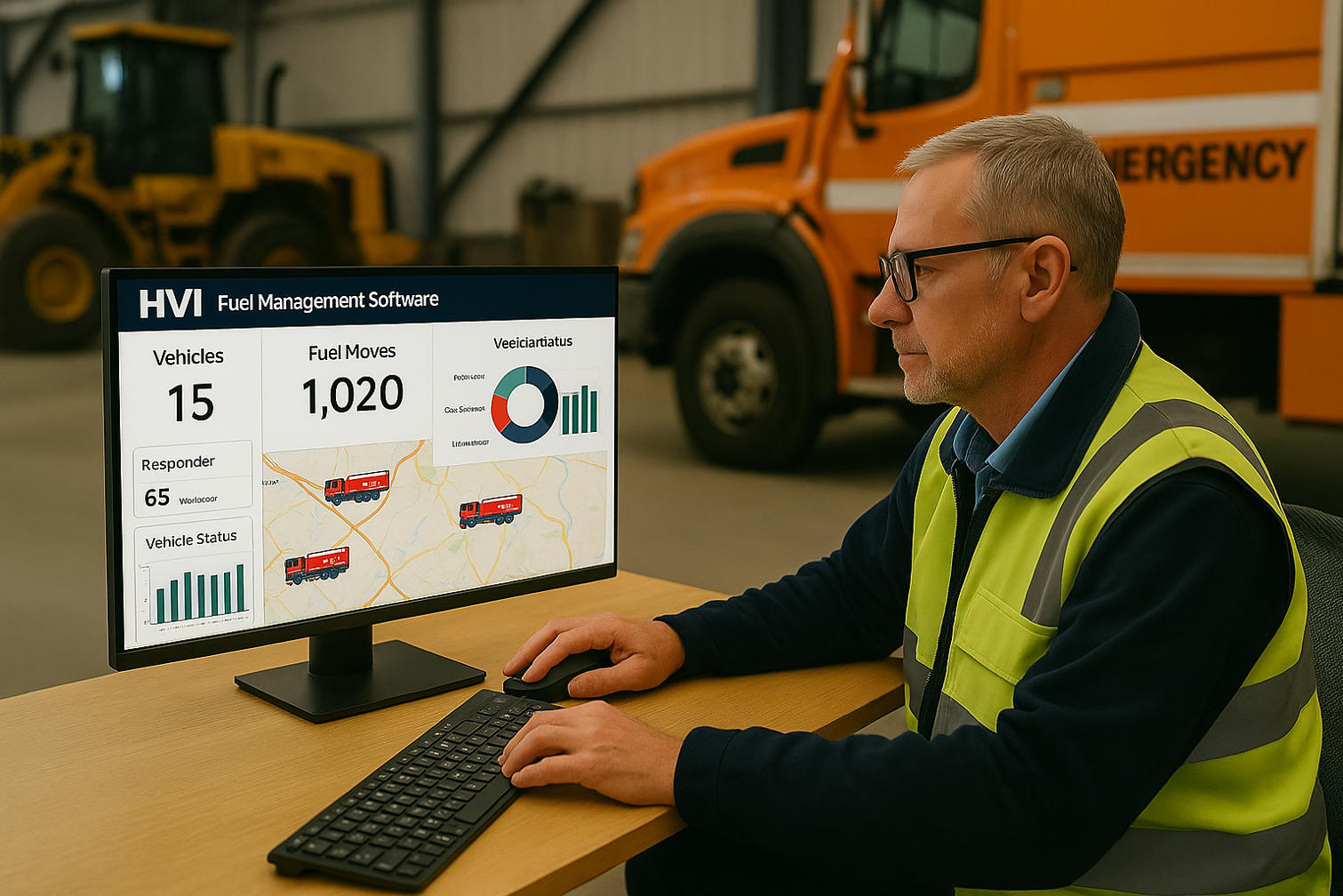
HVI runs AI-powered fuel card fraud detection as one integrated layer of the fleet management platform, cross-referencing every transaction against GPS location, tank capacity, driver schedule, and per-driver baseline consumption — on the same platform running DVIRs, PMs, work orders, and safety analytics. Integration works with all major fuel card providers (WEX, Comdata, EFS, FleetCor, and others) and telematics platforms; setup completes within a few business days without additional truck-side hardware. When a transaction fires at the pump, HVI's AI runs the full anomaly triage within 5–10 seconds: GPS mismatch check, tank capacity sanity check, driver duty status cross-reference, and statistical baseline deviation scoring. Anomalies above threshold fire mobile push notifications to fleet managers with a pre-assembled investigation package (transaction detail, GPS trail, driver history, comparable past fills, one-click card freeze). Fleets typically discover $8,000–$22,000 in previously invisible fraud within the first seven days of connecting their fuel card feed, and ongoing monthly recovery of $3,000–$4,000 continues indefinitely as the AI learns per-fleet patterns. Published customer data shows fleets on HVI report approximately 25% lower annual maintenance cost and typical payback around 3 months — and AI-powered fuel fraud detection consistently accelerates payback for fleets with meaningful diesel spend. Every dollar recovered from fraud lands directly in operations budgets rather than the "somebody stole from us this quarter" line nobody wants to explain.
Every fill that doesn't match the truck should trigger an alert. Right now, most of yours don't.
HVI connects to your existing fuel card provider and telematics in days, not weeks. Real-time GPS cross-referencing, statistical baseline analysis, and mobile card-freeze actions built in. First-week discovery of previously invisible fuel losses typically runs $8,000–$22,000 — before the ongoing monthly recovery starts compounding.
No credit card · WEX, Comdata, EFS integrations native · Live fraud alerts on day one