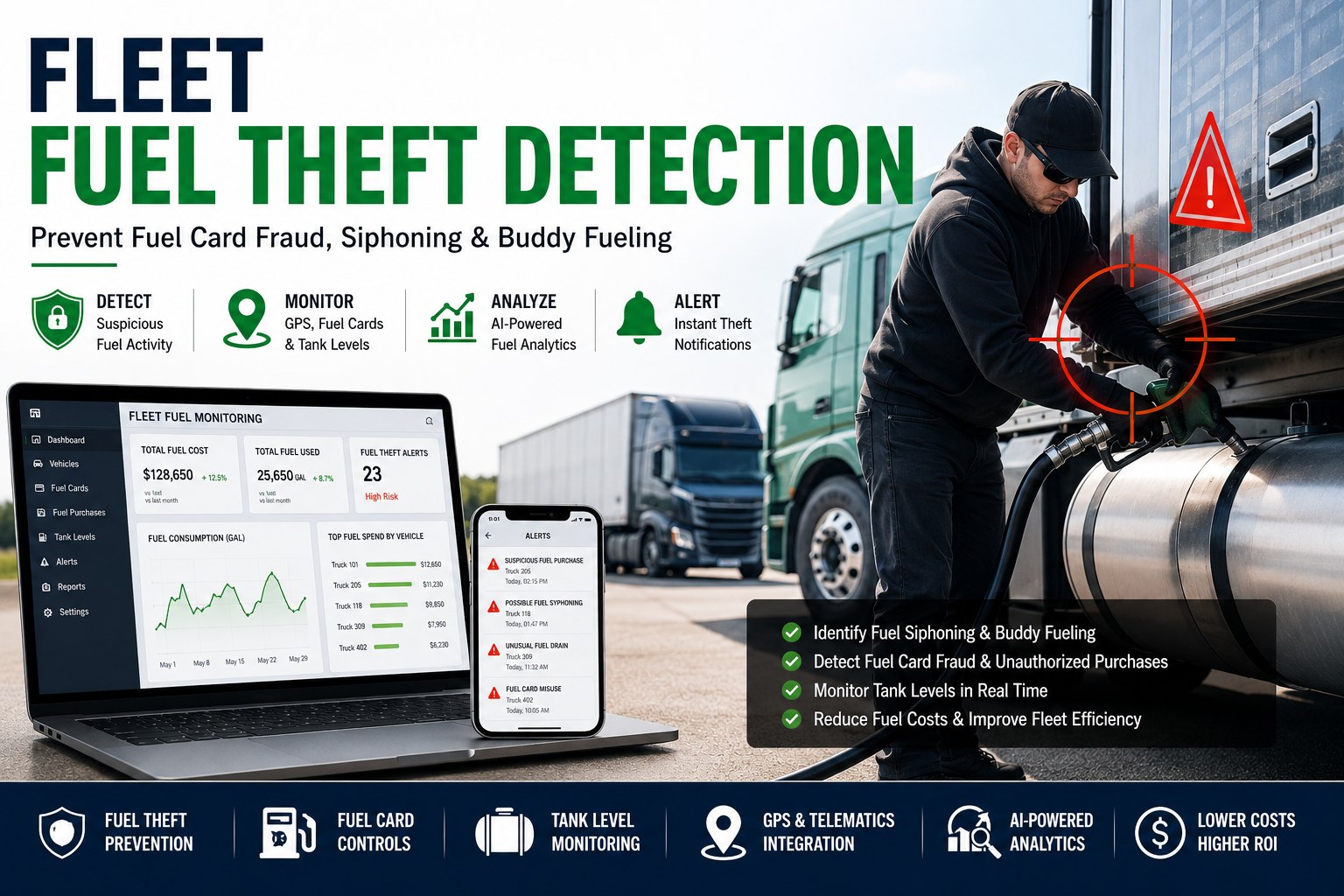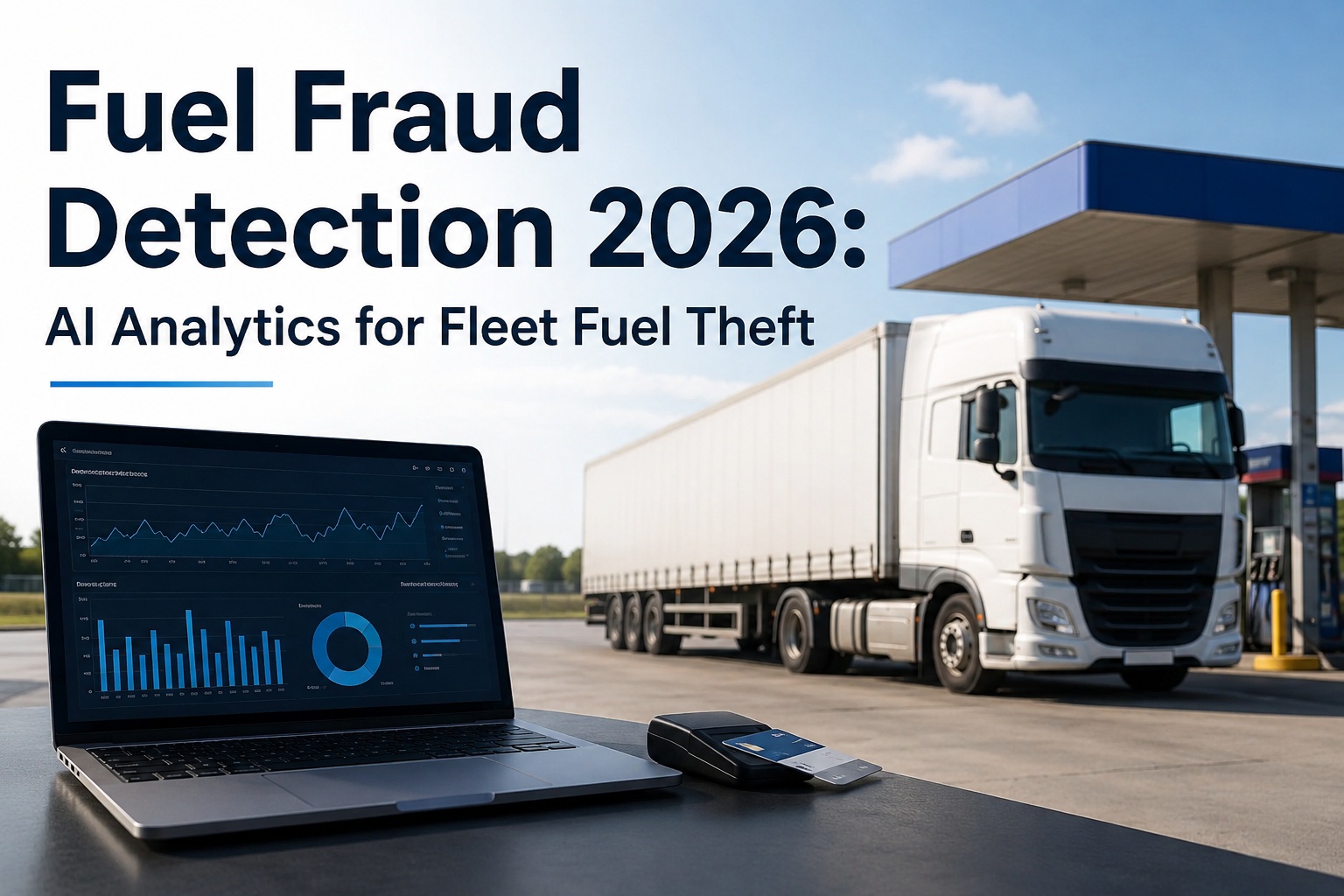
Fuel fraud detection is a cross-check problem, not a single-source problem. Card data alone tells you what was billed. GPS tells you where the truck was. Tank sensor tells you what fuel reached the vehicle. Any single source misses most fraud — ghost fills look normal on cards, split transactions look normal on GPS. AI-driven anomaly detection wins by cross-checking all 5 sources per transaction in seconds. This guide walks the 7 fraud patterns and the 5-source cross-check matrix — book a demo to detect suspicious fuel activity in HVI.
Fuel Fraud Detection — The 5-Source Cross-Check That Catches What Card Statements Miss
Every fraud pattern has a signature. Some show up in GPS. Some in tank sensor. Some in odometer. None show up in card data alone. This is why manual reconciliation catches 10% of fraud and AI cross-check catches 90%.
| Fraud pattern | Card txn | GPS | Tank sensor | Odometer | Route data |
|---|---|---|---|---|---|
| Ghost fillCard charged, no fuel delivered | – | – | ✓ | – | ∼ |
| Split transactionTruck tank + personal container | – | – | ✓ | ∼ | – |
| Personal-vehicle fillCard + PIN used on private truck | – | ✓ | ∼ | ∼ | ✓ |
| Card skimming / cloningExternal skimmer copies card + PIN | – | ✓ | ✓ | – | ✓ |
| Impossible-gallons fillFill volume exceeds tank capacity | ∼ | – | ✓ | – | – |
| Odometer inflationFalsified miles hide real MPG | – | ✓ | ∼ | ✓ | ∼ |
| Yard-tank siphoningPhysical theft from bulk storage | – | – | ✓ | – | – |
Notice: card transaction data alone has zero primary signals across all 7 fraud patterns. This is why statement reconciliation catches almost nothing — and why AI cross-check catches almost everything.
The rest of this page walks the industry loss scale (5-15% of fuel spend, up to 19% for enterprise fleets), the 4 detection methods that run in parallel on any effective platform, real-time alert vs monthly reconciliation timing (5-10 seconds vs 5-6 days), and how to structure a fuel-fraud detection program that starts producing findings in the first week. Book a 30-minute demo to see fuel-transaction cross-checking per unit in HVI.
The scale — why fuel fraud is a P0 for CFOs at $2M+ diesel spend
Industry studies put fuel fraud and misuse at 5-15% of a typical fleet's fuel budget, with enterprise fleets reporting 19% loss rates and small fleets around 16%. On a $500K annual diesel spend that's $25K-$95K per year vanishing into fraudulent transactions that look completely normal on the monthly statement. On a $2M annual spend it's $100K-$380K. On a $10M spend it's $500K-$1.9M. Every one of those dollars is pure margin loss — there's no revenue offset, no operational trade-off, no "cost of doing business" argument. It's leaked cash.
| Fleet size | Annual fuel spend | 5% loss | 10% loss | 15% loss |
|---|---|---|---|---|
| 25 trucks | ~$250K | $12,500 | $25,000 | $37,500 |
| 50 trucks | ~$500K | $25,000 | $50,000 | $75,000 |
| 100 trucks | ~$1M | $50,000 | $100,000 | $150,000 |
| 250 trucks | ~$2.5M | $125,000 | $250,000 | $375,000 |
| 500 trucks | ~$5M | $250,000 | $500,000 | $750,000 |
| 1000 trucks | ~$10M | $500,000 | $1,000,000 | $1,500,000 |
Detection systems typically pay back in 3-5 months. Fleets switching from monthly reconciliation to live cross-check monitoring commonly uncover $8,000-$22,000 in existing, previously-invisible losses within the first week — not because the fraud started that week, but because it had been running undetected for months. The scale is what makes fuel fraud one of the highest single-point-of-return operational programs a CFO can approve. Book a demo to run the first-week detection audit on your current fuel data in HVI.
4 detection methods that run in parallel — the AI cross-check stack
Effective fuel fraud detection requires four methods running simultaneously, each catching a different subset of the fraud patterns. Any single method leaves large gaps. The four working together produce detection accuracy in the 90-94% range with false-alarm reduction of 70%+ compared to rule-only systems.
Real-time location verification
Every card transaction matched against the vehicle's GPS position and timestamp. Transactions more than 40 miles from truck location auto-flag as suspicious. Catches personal-vehicle fills, card cloning, off-network purchases. Detection in 5-10 seconds vs 5-6 days on monthly reconciliation.
Tank-level cross-check
In-tank sensor reading before and after each card transaction. Gallons billed must match tank level rise within a tolerance. Catches ghost fills (no tank rise), split transactions (rise less than billed), impossible-gallons fills (rise exceeds capacity). Requires OBD-II or dedicated tank sensor integration.
Consumption pattern analysis
AI baselines each vehicle's normal MPG per route, load, weather, and season, then flags statistical outliers. Sudden MPG drop with no route/load change indicates siphoning or hidden diversion. Distinguishes legitimate variation (empty vs loaded return) from actual fraud.
Exception pattern reports
Multi-transaction fraud detection catches patterns no single transaction reveals: off-hours purchases (2 AM), small repeated transactions ("smurfing"), unusual station sequences, weekend fills, statistically anomalous frequencies. AI recognises the pattern the human reviewer misses at scale.
The 4 methods complement each other. Method 1 catches location mismatches but misses ghost fills (truck was at station). Method 2 catches ghost fills but misses personal-vehicle fills at approved network stations. Method 3 catches gradual siphoning but misses one-off card cloning. Method 4 catches behavioural patterns but produces false alarms without vehicle-context input. Only all four cross-checking simultaneously produce production-grade detection. Book a demo to see all 4 methods running per transaction in HVI.
Real-time alerts vs monthly reconciliation — the 5-second vs 5-day difference
The most consequential difference between modern fuel fraud detection and legacy approaches is timing. Traditional reconciliation compares the monthly fuel-card statement against fuel logs and flags discrepancies days or weeks after the fact. By then the same fraudulent card or driver has typically committed 3-8 more fraudulent transactions. Real-time systems detect and alert within 5-10 seconds of the transaction posting — before the second fraud can occur.
5-10 second detection
- Card transaction posts
- Cross-check runs against 5 data sources
- Push alert to fleet manager if flagged
- Card can be suspended before next txn
Daily exception reports
- Overnight batch cross-check
- Morning email summary of flagged txns
- Catches most fraud within 1 business day
- Better than monthly but slower than live
Weekly manual review
- Fleet admin reviews Friday reports
- Catches obvious anomalies
- Misses ~40% of fraud patterns
- 7-day lag from txn to alert
Monthly reconciliation
- Statement received 5-10 days after month-end
- Cross-checked against fuel logs
- Catches ~10-20% of fraud patterns
- Same card typically used 3-8 more times
Timing determines whether detection is preventive or forensic. Live detection is preventive — the fraud is caught and the card suspended before the next fraudulent charge. Monthly reconciliation is forensic — the fraud is documented after the fact, and recovery from the driver or card provider is a separate (often unsuccessful) process. CFOs approving fuel fraud programs should specify live detection as a minimum requirement; anything slower converts the program from loss-prevention to loss-documentation. Start a free HVI trial to run live cross-check on your current fuel card data.
A CFO on the first-week findings that paid back the platform
We're a 74-tractor construction and aggregate hauler, US Great Lakes. Annual fuel spend $1.4M. I'd assumed we ran clean on fuel because no single monthly statement ever looked outrageous — nothing that jumped off the page. Our controller reconciled statements against fuel logs monthly and never flagged anything material.
Rolled out live cross-check detection September 2025. First week uncovered $14,300 in confirmed fraud: two drivers running personal pickup fills on their fleet cards ($8,200 over 6 months undetected), one skimmed card from a Cleveland truck stop ($3,900 in 4 unauthorized transactions across 3 days), and $2,200 in split transactions where drivers were topping off personal 5-gallon containers at the same pump as truck fills.
Extrapolated across the year that's $75K+ in previously invisible losses on a $1.4M spend — a 5.4% leak we didn't know existed. Platform cost $18K annually. Payback: 3 months. Ongoing recovery: about $60K/year net after subtracting the platform cost. The scary part is how normal every one of those transactions looked on the statement. Without the cross-check we'd still be losing that money and would never know.
Frequently asked questions
What is fuel fraud detection?
Fuel fraud detection is the systematic identification of suspicious or fraudulent fuel transactions through cross-referencing multiple data sources including fuel card transactions, vehicle GPS location, in-tank sensor readings, odometer entries, and route data. The core insight is that no single data source catches all fraud — a card transaction alone shows what was billed but not whether fuel reached the vehicle; GPS alone shows where the truck was but not what was purchased; tank sensor alone shows fuel volume but not the transaction. Cross-checking all sources per transaction surfaces mismatches that indicate ghost fills (card charged but no tank level rise), split transactions (truck tank plus personal container), personal-vehicle fills (truck was elsewhere during transaction), card skimming or cloning (transaction in different city from truck), impossible-gallons fills (volume exceeds tank capacity), odometer inflation (GPS miles do not match reported), and yard-tank siphoning (bulk tank drop with no dispense event logged). Industry estimates put fuel fraud losses at 5-15% of annual fuel budget, with enterprise fleets reporting up to 19% loss rates. AI-powered cross-check systems typically achieve 90-94% detection accuracy with 70%+ reduction in false alarms compared to rule-only monitoring.
How does AI catch fuel fraud that manual reconciliation misses?
AI catches fuel fraud through simultaneous cross-check of multiple data sources per transaction plus pattern-based anomaly detection across historical data. Four methods run in parallel. Real-time location verification matches every card transaction against GPS position and timestamp, flagging transactions more than 40 miles from the truck's actual location. Tank-level cross-check compares gallons billed against in-tank sensor reading before and after the transaction, catching ghost fills (no tank rise) and split transactions (rise less than billed). Consumption pattern analysis baselines each vehicle's normal MPG per route, load, weather, and season, then flags statistical outliers indicating siphoning or diversion. Exception pattern reports identify multi-transaction fraud that any single transaction would not reveal — off-hours purchases, small repeated transactions, unusual station sequences, weekend fills. Manual reconciliation typically catches 10-20% of fraud because reviewers can only spot obvious individual anomalies; AI catches 90-94% because it cross-checks every transaction against multiple data sources simultaneously and recognizes behavioural patterns invisible to a human reviewer working at scale. Detection timing is also critical: AI systems flag within 5-10 seconds; monthly reconciliation surfaces fraud 5-6 days after month-end, by which time the same fraudulent card is typically used 3-8 more times.
What is a ghost fill?
A ghost fill is a fuel card transaction that is charged to the fleet but where no fuel is actually delivered to the vehicle. The card is swiped, the transaction posts for a specified number of gallons and dollars, but the tank level in the truck does not rise correspondingly. Ghost fills are typically committed by drivers at pumps where the driver cancels or holds the transaction after authorization, or in coordination with a station attendant who processes the sale without dispensing. The fraud is invisible to card-only reconciliation because the transaction record looks completely normal — correct station, reasonable time, plausible dollar amount. It is only visible when the card transaction is cross-checked against the in-tank sensor reading before and after the transaction. If the tank level does not rise by approximately the billed gallons within the transaction timeframe, the transaction is a ghost fill. AI cross-check systems detect ghost fills in seconds via automated tank-level comparison. Detection requires OBD-II integration or dedicated in-tank sensor telemetry — the card data alone will never reveal the fraud. Ghost fills are among the highest-value fraud patterns to detect because they typically involve larger dollar amounts per transaction than personal-vehicle fills.
What is a split transaction fraud?
A split transaction is a fuel card fraud where the driver fills both the truck tank and a personal container (typically a 5-gallon jerrycan) at the same pump under a single card transaction. The card is charged for, say, 40 gallons; the truck tank rises by only 32 gallons; the remaining 8 gallons went into the personal container. On the card statement the transaction looks completely normal — correct station, reasonable amount, right vehicle. The fraud is invisible without tank-level cross-check. Detection requires comparing the gallons billed on the card transaction against the tank level rise from the in-tank sensor before and after the transaction. If the tank rise is significantly less than gallons billed (accounting for evaporation and normal measurement tolerance of roughly 2-3%), the transaction is likely a split. AI systems flag the mismatch automatically. Split transactions typically represent smaller per-event dollar amounts than ghost fills but recur frequently — a driver siphoning 5-8 gallons per weekly fill can extract $1,000-$2,000 per year per vehicle. Across a mid-size fleet this compounds into significant recurring loss that reconciliation never catches because each individual transaction looks legitimate.
How quickly does a fuel fraud detection program pay back?
Most fuel fraud detection platforms pay back within 3-5 months, and fleets commonly uncover $8,000-$22,000 in existing losses within the first week of live cross-check monitoring. The rapid payback is driven by the scale of undetected fraud: industry studies estimate fleets lose 5-15% of annual fuel spend to fraud and misuse, with enterprise fleets reporting up to 19% loss rates. On a $500K annual fuel spend, 10% fraud is $50,000 per year. On a $2M spend, 10% is $200,000 per year. Detection platform costs typically run $10,000-$25,000 annually, so even conservative recovery (60-80% of identified fraud) produces net savings of $20,000-$150,000+ per year on typical fleets. The first-week findings are usually the strongest — the platform surfaces months or years of accumulated fraud that had been running invisibly on monthly statements. Ongoing detection then prevents recurrence rather than documenting new losses. Structured programs that combine live cross-check detection with driver policy updates (mandatory PIN entry, odometer verification at fill, approved station lists) and consequences (suspension, termination, prosecution where appropriate) achieve the highest sustained recovery. Confirm the specific ROI on your fleet by running a baseline audit of the last 90 days of card transactions against GPS and tank data before selecting a platform.
Find the fraud running invisibly on your monthly statement.
HVI cross-checks every fuel card transaction against per-unit GPS location, tank-level sensor rise, odometer reading, and route data in real time. Suspicious transactions flag within seconds via mobile alert to the fleet manager. Per-unit fuel history tracks every dollar spent per truck. Fleets typically identify $8,000-$22,000 in existing losses in the first week. Live in under two weeks. No hardware. No credit card.
Trusted by CFO-led fuel fraud detection programs across USA, Canada & EU · Ready on day one