In early 2025, two of the loudest names in hydrogen trucking, Nikola and Hyzon, went dark within months of each other. If you were about to sign off on a fuel-cell pilot, that news probably froze the checkbook. So the real 2026 question about hydrogen fuel cell trucks isn't "are they the future" — it's "which duty cycles actually justify one today, and where does battery-electric win instead?" This guide compares HFC and BEV on the numbers that decide it: range, refueling, infrastructure, payload, and total cost of ownership. Book a demo to model either against your real routes in HVI.
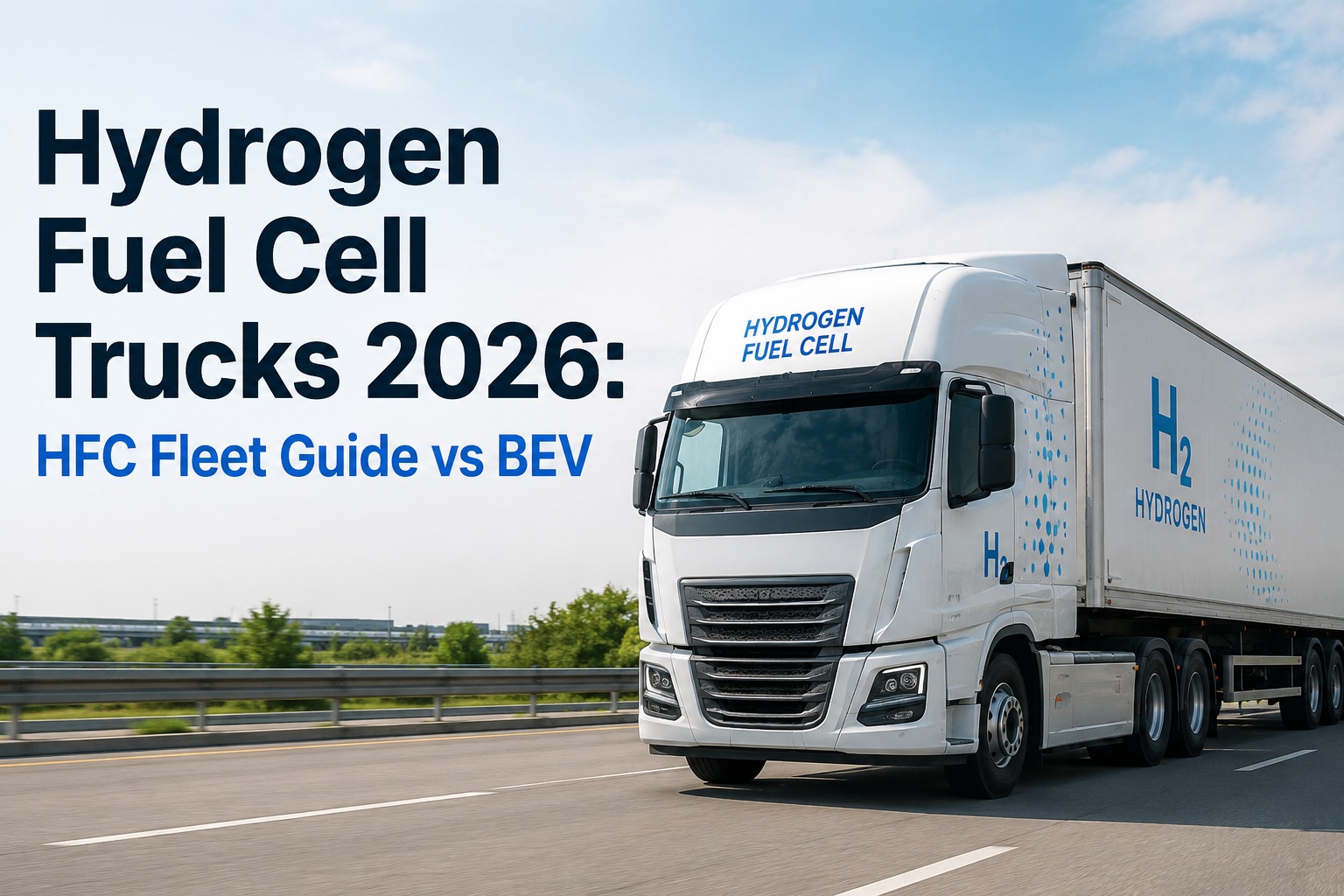
Hydrogen Fuel Cell Trucks in 2026: A Straight Fleet Guide, Not Hype
The market just had a shakeout. Here's what survived, what the economics really say, and which duty cycles fit.
- Diesel-like range & fast refuel
- Needs H2 fueling infrastructure
- Higher fuel cost per mile today
- Lowest energy cost per mile
- Depot charging, predictable routes
- Range & payload trade-offs
Neither technology is universally better — and anyone selling you that certainty is selling something. The right zero-emission choice depends on your route length, daily mileage, payload, depot setup, and whether refueling or charging even exists where you run. Before the comparison, two things every fleet planner needs straight: how a fuel-cell truck actually works, and the sobering state of the 2026 market.
How a fuel-cell truck worksand why it's still an electric truck
A hydrogen fuel cell electric truck is an electric truck — it just carries its energy as hydrogen instead of in a giant battery. That single difference drives every trade-off that follows.
Makes electricity onboard
Compressed hydrogen feeds a fuel cell that combines it with oxygen to generate electricity on the move, driving an electric motor. The only tailpipe output is water vapor. A small buffer battery handles surges. You refuel with hydrogen in minutes, much like diesel — if a station is there.
Stores electricity in a battery
A battery-electric truck carries a large, heavy battery pack charged from the grid, feeding the same kind of electric motor. Simpler, more energy-efficient end to end, and cheapest to "fuel" — but the pack is heavy, charging takes far longer than refueling, and range depends on pack size.
Both are zero-tailpipe-emission and share an electric drivetrain, so both shed a lot of diesel's moving-part maintenance. The divergence is entirely in how energy is stored and replenished — and that's what maps them to different duty cycles. Book a demo to see how each drivetrain's costs land against your mileage
The 2026 reality checkwho's actually still building these
This is where a responsible fleet guide has to be blunt, because the market changed fast. Treat any "hydrogen truck maker" claim as something to verify before you plan around it.
Nikola & Hyzon
Nikola filed Chapter 11 in February 2025 and has been liquidated — assets, trucks, and its HYLA fueling plans auctioned off. Hyzon likewise wound down its operations. The pure-play hydrogen-truck startups did not survive the freight downturn and thin infrastructure.
Hyundai XCIENT
Hyundai is currently the only active supplier of Class 8 hydrogen fuel cell tractors in North America, with its XCIENT model and plans to ship a limited number of US units in 2026 through Hyundai Translead. Its European fleet has logged over 20 million km.
Daimler, Volvo, Toyota
Legacy OEMs are investing through ventures like cellcentric, pooling fuel-cell development and infrastructure work. The market has consolidated from hyped startups to deep-pocketed incumbents playing a longer game — real, but not yet mass-market.
The takeaway for planning: hydrogen heavy-duty trucking in North America is early, thin, and consolidating — not dead, but a long way from turnkey. Verify current production, delivery, and support status before committing capital, and separate demonstration projects from vehicles you can actually buy and service today. Start free on HVI and track any pilot units' real uptime and cost from day one rather than trusting a spec sheet.
HFC vs BEV, head to headthe trade-offs that decide fit
Here's the honest side-by-side for heavy-duty fleets in 2026. Figures are directional planning ranges from independent studies and government sources — hydrogen prices especially swing hard by region, so verify local numbers before you model.
| Factor | Hydrogen (HFC) | Battery (BEV) |
|---|---|---|
| Range | Long, diesel-like (~400+ mi target) | Shorter, pack-dependent |
| Refuel / recharge | Minutes (like diesel) | ~1–4 hrs; faster with megawatt charging |
| Payload impact | Lighter energy storage | Heavy battery cuts into payload |
| Energy efficiency | Lower (more conversion loss) | Highest well-to-wheel |
| Fuel / energy cost | High today (~$8–16/kg H2) | Lowest, esp. depot charging |
| Infrastructure | Very limited public stations | Growing; depot charging practical |
| Upfront price | Highest of the three powertrains | High, but falling |
| Best duty cycle | Long-haul, high payload, fast turns | Predictable back-to-base routes |
The pattern is clear: BEV usually wins on cost per mile and efficiency; HFC wins on range, refuel speed, and payload where those matter most. Independent TCO studies put hydrogen's break-even against diesel at roughly $4.90–6/kg — below most current retail hydrogen prices, which is exactly why the economics still hinge on cheaper, more available fuel. Book a demo to run cost per mile for both against your lanes
Which duty cycle fits which truck?match the technology to the work
This is the decision that actually matters — not "which is better" but "which fits this route." Here's the plain read on where each one earns its place.
- Routes are long-haul or high daily mileage where BEV range falls short
- Payload is tight and a heavy battery would cost you revenue freight
- Fast, diesel-like refueling and high vehicle utilization are essential
- Reliable hydrogen fueling exists on your corridor or at your base
- Routes are predictable and return to a depot each day (back-to-base)
- You can install and schedule depot charging around dwell time
- Daily mileage sits comfortably inside battery range
- Lowest energy cost per mile is the priority and payload is less tight
In North America right now, the viable hydrogen model is largely "back-to-base" with centralized fueling — think drayage and defined corridors — because public station coverage is so thin. That constraint, more than the truck itself, decides feasibility. Start free and log route length, daily mileage, and dwell time per truck so the duty-cycle fit is grounded in data, not assumption.
Maintenance & lifecyclewhat changes when the engine goes away
Both HFC and BEV drop the diesel engine, transmission, and much of its service tail — no oil changes, fewer moving parts, regenerative braking that spares the brakes. But zero-emission doesn't mean zero-maintenance; it means different maintenance.
Stacks degrade over operating hours and can need replacement (a major cost item), though first replacements are often warranty-covered. A real lifecycle line, not a footnote.
Model pack degradation and eventual replacement as a possible cost, not a certainty — warranties cover a defined period, and second-life value can offset it.
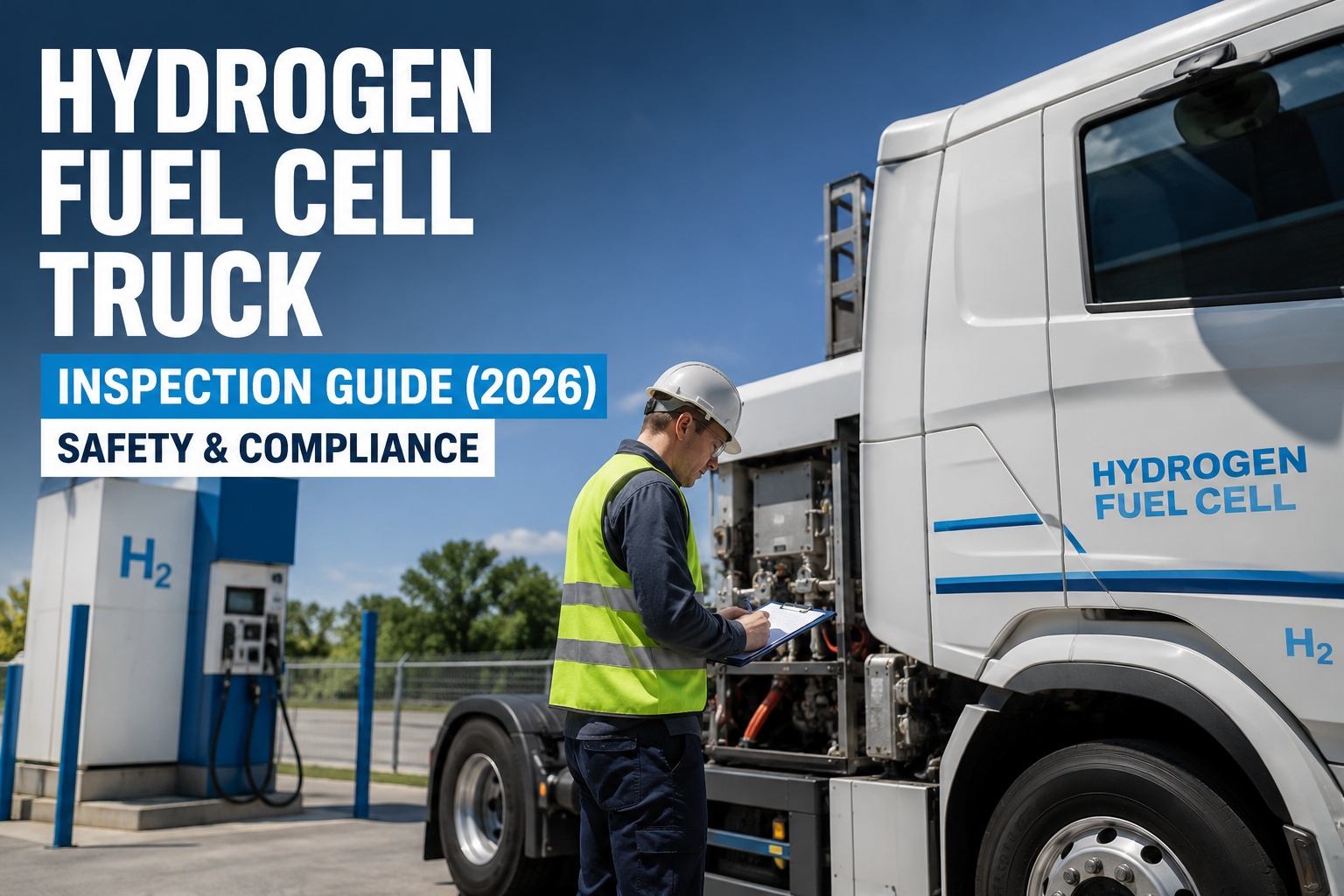
High-pressure H2 tanks, fuel-cell systems, and high-voltage components demand specialized training, tooling, and safety procedures your shop may not have yet.
Heavier zero-emission trucks (especially BEV) can wear tires faster; regen braking extends brake life. Both shift your consumable spend in ways worth tracking.
The lesson: your maintenance capability is part of the buying decision, not an afterthought. A fleet without high-voltage-trained technicians or hydrogen-handling procedures carries hidden cost and downtime risk on either powertrain. Capturing maintenance cost, stack or pack service, and downtime per unit is how you see the true lifecycle picture instead of the sticker one. Book a demo to track alternative-fuel maintenance and lifecycle cost in one place
From a fleet director who ran the pilot
We got caught up in the range pitch on hydrogen and almost committed before the market wobbled. What saved us was insisting on our own numbers first — when we actually mapped our routes, most of them came back to the yard every night, well inside battery range. That's a BEV job, not a hydrogen one.
We kept two corridor runs flagged as maybe-hydrogen for later, once fueling exists. But the real win was refusing to decide on a brochure. Cost per mile, uptime, and duty cycle on our data made the call obvious. The tech is exciting; the economics are what you actually sign for.
Your decision frameworknine questions before you commit
Skip the advocacy and run every zero-emission decision through these lenses. They're the inputs that actually determine whether HFC, BEV, or "not yet" is right for a given lane.
Long-haul leans hydrogen; short and regional leans battery.
Does it fit inside BEV range, or does it demand diesel-like endurance?
How much revenue freight can you afford to trade for battery weight?
Do trucks return nightly to a site you can electrify or fuel?
Does hydrogen or charging actually exist where you run?
Local H2 per kg and electricity per kWh drive cost per mile.
High annual mileage amortizes the higher upfront cost faster.
Do you have HV-trained techs and safe hydrogen procedures?
Model stack or pack replacement and residual over the hold period.
Answer these honestly and most fleets find the choice is route-by-route, not fleet-wide — some lanes are clearly BEV today, a few might be hydrogen once fueling arrives, and many are simply "wait and measure." That's a defensible strategy, but only if you're capturing the data to back it.
The bottom line on hydrogen fuel cell trucksmatch the technology to the duty cycle
In 2026, hydrogen fuel cell trucks are a real but early option that fits specific heavy-duty duty cycles — long-haul, high-payload, high-utilization work where fast refueling matters and hydrogen fueling exists. But the market just shed its pure-play startups, delivered fuel is still expensive, and public infrastructure is thin, so battery-electric wins most predictable back-to-base duty cycles today on cost and practicality. Neither is a blanket answer.
The disciplined move isn't picking a side — it's measuring the decision against your own operation. Route length, daily mileage, payload, energy price, utilization, maintenance capability, and lifecycle cost decide it, and those are exactly the numbers HVI helps fleets capture and compare before committing to HFC or BEV. Model the economics on the trucks and lanes you actually run, then choose with evidence. Book a demo to put real fleet data behind your zero-emission strategy.
Frequently asked questions
How do hydrogen fuel cell trucks differ from battery-electric trucks?
Both are electric trucks with electric motors and zero tailpipe emissions — the difference is how they store and supply energy. A hydrogen fuel cell electric truck (FCEV) carries compressed hydrogen and uses a fuel cell to generate electricity onboard as it drives, emitting only water vapor, and refuels with hydrogen in minutes much like diesel. A battery-electric truck (BEV) stores electricity in a large battery pack charged from the grid. The practical consequences: hydrogen offers longer, diesel-like range, fast refueling, and lighter energy storage that protects payload, but its fuel is currently expensive and stations are scarce. Battery-electric is the most energy-efficient and cheapest to fuel, especially with depot charging, but the heavy pack reduces payload, charging takes much longer than refueling, and range depends on pack size. Both drop most of diesel's engine maintenance but add high-voltage and, for hydrogen, fuel-cell and storage servicing.
Are hydrogen trucks like Nikola and Hyzon still available in 2026?
This is essential to verify before planning, because the market changed sharply. Nikola filed for Chapter 11 bankruptcy in February 2025 and has been liquidated, with its trucks, assets, and HYLA fueling plans auctioned off; Hyzon likewise wound down operations. The pure-play hydrogen-truck startups did not survive the combination of a freight-rate downturn, thin infrastructure, and reduced policy support. As of 2026, Hyundai is generally the only active supplier of Class 8 hydrogen fuel cell tractors in North America, with its XCIENT model and plans to bring a limited number of units to the US market. Legacy manufacturers including Daimler, Volvo, and Toyota are investing in fuel-cell development for the longer term through ventures like cellcentric. The market has consolidated from hyped startups toward well-capitalized incumbents. Always confirm a manufacturer's current production, delivery, parts, and service status before committing capital, and distinguish demonstration projects from vehicles you can actually buy and support today.
Is hydrogen or battery-electric cheaper to run for a fleet?
In most cases today, battery-electric has the lower running cost per mile, particularly with depot charging, because it's the most energy-efficient powertrain and electricity is cheaper per mile than current retail hydrogen. Independent studies place the break-even hydrogen price for parity with diesel at roughly $4.90 to $6 per kilogram, while retail hydrogen often runs well above that, so hydrogen's fuel cost is its biggest economic hurdle. However, total cost of ownership isn't just fuel — it's highly sensitive to vehicle utilization, payload, route profile, upfront price, maintenance, downtime, infrastructure cost, and residual value. High-mileage, high-utilization operations amortize the higher upfront cost faster and can shift the math. The honest answer is that it depends on your specific duty cycle and local energy prices, which is why fleets should model both against their actual routes and costs rather than relying on generic per-mile figures.
What duty cycles suit hydrogen fuel cell trucks best?
Hydrogen fuel cell trucks are best suited to demanding heavy-duty duty cycles where battery-electric limitations are most pronounced: long-haul or high-daily-mileage routes that exceed practical battery range, operations where payload is tight and a heavy battery would displace revenue freight, and high-utilization work where fast, diesel-like refueling keeps trucks earning rather than sitting on a charger. The critical qualifier is infrastructure — hydrogen only makes sense where reliable fueling exists on your corridor or at your base. In North America in 2026, the realistic model is largely "back-to-base" with centralized fueling, such as drayage and defined corridors, because public station coverage is thin. Battery-electric, by contrast, tends to fit predictable routes that return to a depot each day, where daily mileage sits inside battery range and depot charging can be scheduled around dwell time. Many fleets find the answer is route-by-route rather than a single fleet-wide choice.
How can fleet software help evaluate hydrogen or electric trucks?
Fleet software turns an alternative-fuel decision from a brochure comparison into an evidence-based one. A CMMS and analytics platform like HVI captures the data that actually determines whether HFC or BEV pays off: mileage, duty cycle, route length, payload patterns, energy or fuel cost, maintenance cost, downtime, vehicle utilization, and lifecycle data by asset. That lets a fleet compare real cost per mile and total cost of ownership for candidate powertrains against its own routes, rather than trusting headline range and refuel-time specs. It also helps model the maintenance and lifecycle items that make or break the economics — fuel-cell stack or battery-pack service, high-voltage component upkeep, tire and brake wear on heavier trucks, and downtime — and tracks any pilot vehicles' real-world performance so you can validate assumptions before scaling. You can start free and connect duty-cycle, cost, and maintenance data in one platform to build a zero-emission strategy grounded in your operation, not in advocacy.
Model HFC and BEV against your real routes before you commit
HVI brings together mileage, duty cycle, energy and fuel cost, maintenance cost, downtime, utilization, and lifecycle data — so fleet, sustainability, and finance teams can compare alternative-fuel economics on the trucks and lanes you actually run. Build a zero-emission strategy on evidence. One platform, mobile-first, live in under two weeks.
No credit card · Works across diesel, BEV & hydrogen fleets · Lifecycle analytics on day one