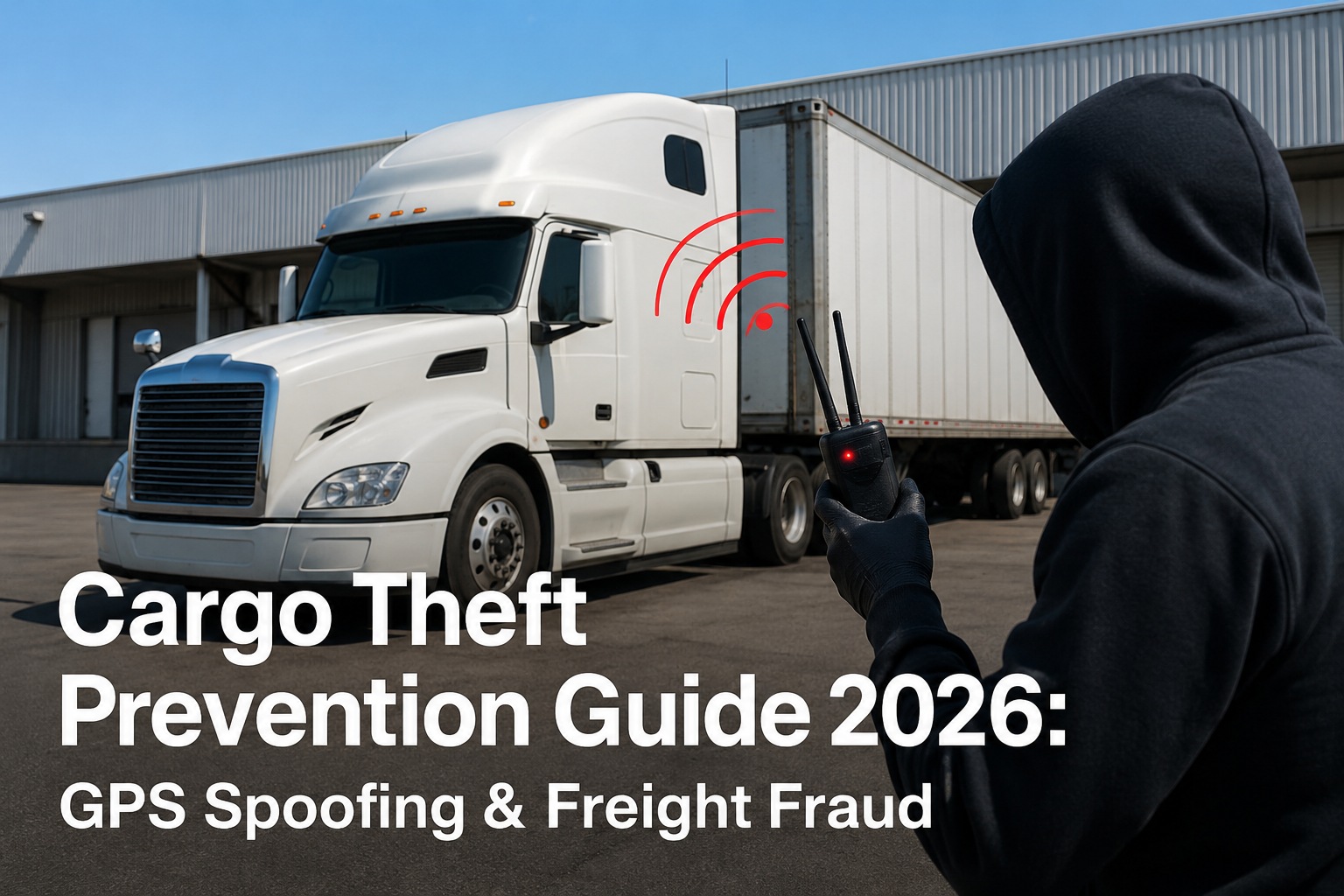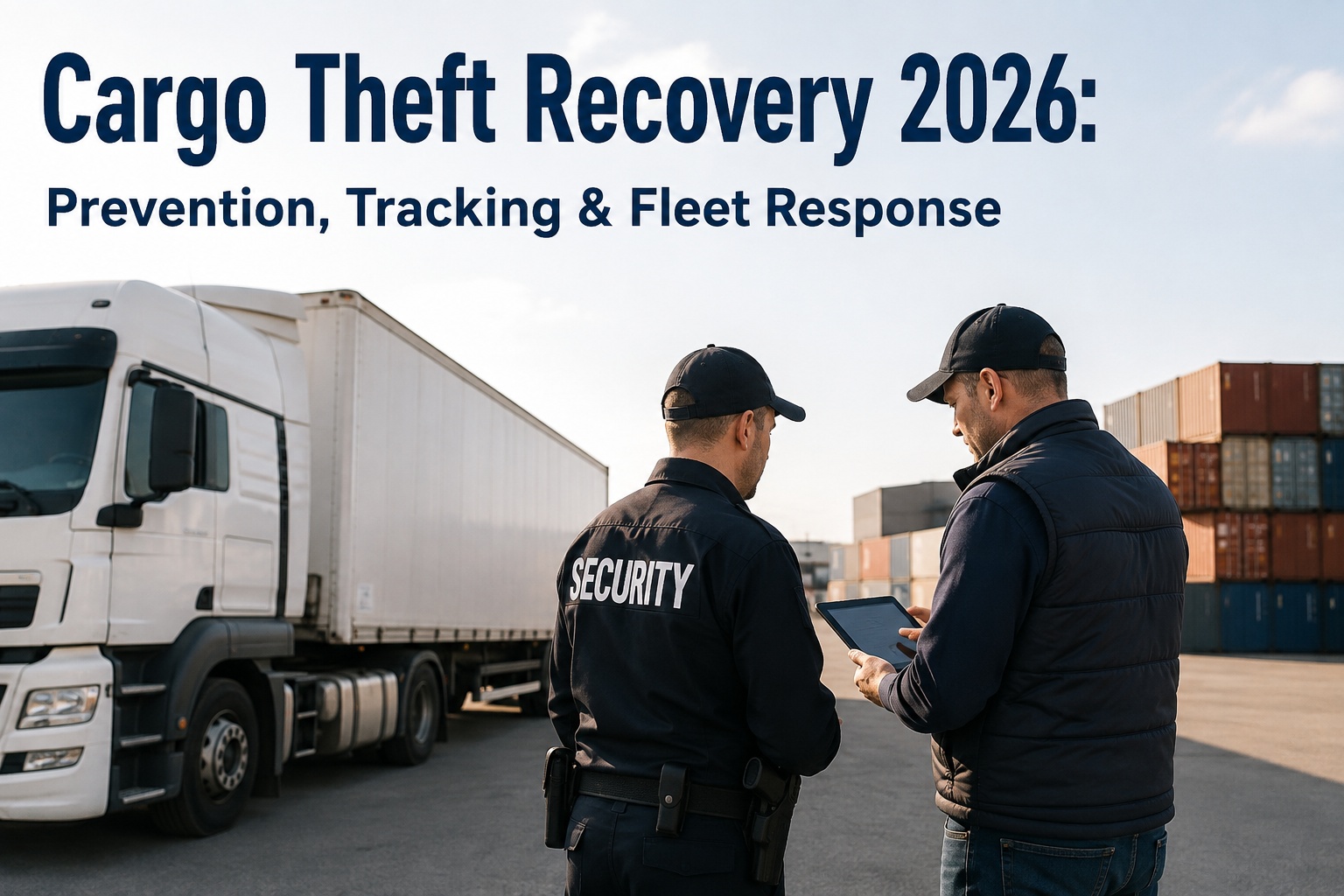
The trailer left the yard at 2:47 AM. Nobody noticed until the 6 AM shift change. By 9:15, the load was in a warehouse three states away, and the insurer was already writing off a $340,000 shipment. Cargo theft recovery 2026 isn't the smash-and-grab it used to be — it's coordinated, high-value, and often gone before anyone knows a load is missing. What changes the outcome is the first hour after discovery — book a demo to see incident workflows built into HVI.
Recovery Odds Fall Off a Cliff at Minute 60
Fleets with real-time tracking and a documented response plan recover cargo at over 3× the rate of fleets that discover the theft during a shift change. Here's how the first hour actually shapes the number on the insurance claim.
Discovery at shift change is the difference between a 3-hour head start and a 30-second head start. The head start decides which side of that 56% number your load lands on.
Everything below is what actually fills that first hour — the alerts that fire, the records that get shared with law enforcement, and the deterrents that keep the load from being taken in the first place. Book a 30-minute demo to see the workflow inside HVI's incident-management module.
What the 2025–2026 data actually says
Cargo theft in 2026 is not a volume story. It's a value story. CargoNet's annual analysis, published January 2026, showed a landscape that's structurally different from 2024 — and understanding the shape is what separates a defensive fleet from a target.
Total 2025 losses
Up 60% from 2024. CargoNet's full-year US & Canada loss estimate. The event count barely moved — the dollar value did, because organized groups shifted from opportunistic hits to targeted high-value freight.
Average value per theft
Up 36% year-over-year. One incident now costs more than four incidents did two years ago. High-value shipments (electronics, pharma, cosmetics, beverages) are being singled out at the tender.
Confirmed thefts in 2025
Up 18% year-over-year. Total supply-chain crime events were flat at 3,594, but the share that were confirmed cargo thefts (as opposed to attempted or related events) rose sharply.
Q1 2026 losses
Essentially flat from Q1 2025. Event count down 5.3% but confirmed thefts up 41. Fewer misc events, more actual loads taken — the 2025 pattern continuing into 2026.
Two shifts inside those numbers matter more than the headline totals. First, geography is changing: California is still #1 (1,218 incidents in 2025), but LA County dropped 11% while Kern County jumped 82% and San Joaquin rose 44%. New Jersey surged 119% in Q1 2026 (27 to 59 incidents). The theft rings are moving to secondary markets where fleets are less prepared. Second, method is changing: strategic theft (deceptive pickup schemes) rose 31% year-over-year in Q1 2026 and is up 1,500% since 2022. The load isn't being stolen from a trailer anymore — it's being tendered to a fraudulent carrier and driven away legally.
Three theft patterns fleets are actually facing
Straight theft
29% between midnight & 6 AM
Trailer taken from an unattended drop lot, truck stop, or rest area. Often over a weekend or holiday when facilities are closed. Physical break-in or lock defeat, then the tractor is coupled and driven off. Detection depends entirely on trailer geofencing and door sensors — if there are none, discovery happens at the next scheduled pickup.
Strategic theft (fraudulent pickup)
+31% year-over-year in Q1 2026
Criminals impersonate a legitimate carrier, submit falsified credentials, and pick up the load before the real carrier arrives. Zero physical break-in. By the time the shipper realizes the wrong driver took the load, it's already been transferred to a warehouse. Detection depends on driver-verification protocols at the origin dock — not on tracking.
Identity/route hijack in transit
Often uncovered only in the last hour
A real carrier's identity is compromised, and the driver is redirected mid-trip to a fake delivery address. The driver is not the criminal — the load is being handed to bad actors under the driver's belief that dispatch changed the destination. Detection depends on cross-checking bill of lading against dispatched destination, in real time.
The three patterns need three different defenses. Physical security (locks, seals, geofencing) stops Pattern A. Verification protocols and carrier vetting stop Pattern B. Real-time route monitoring against bill of lading stops Pattern C. A fleet that only defends against Pattern A is running exposed against the fastest-growing category in the data. Book a demo to see how HVI logs driver-identity verification, dispatch destination, and route deviation events against every load.
The 2026 hotspot map, ranked
The old cargo-theft map (LA basin, Dallas-Fort Worth, Atlanta) still matters, but the fastest-growing incident counts are somewhere else entirely. Fleets running lanes through these secondary hubs are exposed on staffing, physical security, and law-enforcement familiarity that historic hotspot fleets have already invested in.
| Region | 2025 trend | 2026 signal | What's driving it |
|---|---|---|---|
| California (statewide) | 1,218 incidents in 2025 (#1) | Q1 2026 up to 277 (from 255) | Organized crime networks, dense logistics, port proximity |
| Kern County, CA | Up 82% year-over-year | Rising continuing into 2026 | Displacement from LA County (down 11%) — less shop preparedness |
| San Joaquin County, CA | Up 44% | Rising | Same displacement pattern from LA basin |
| New Jersey | Rising through 2025 | Q1 2026 up 119% (27 → 59) | NYC metro organized-crime nexus, I-95 corridor density |
| Texas | Historically #2 | Q1 2026 down 22% (102 → 80) | Opportunistic activity giving way to targeted ops elsewhere |
| Memphis, Phoenix | Emerging secondary markets | Growing corridor concentration | Freight-hub density with less mature security ecosystem |
The pattern to notice: displacement. When enforcement or industry security tightens in the traditional hotspot, the ring moves 100 miles away to a county where the ecosystem hasn't caught up yet. If your fleet runs through Kern, San Joaquin, or the NJ/NY metro today, you're operating in the current wave — and the preparation that worked in LA five years ago has to be rebuilt locally. Book a demo to see HVI overlay theft-hotspot geofences against your active routes so trailers moving into an elevated-risk zone trigger tighter monitoring automatically.
The layered defense: what actually stops the loss
No single tool is enough. Every fleet that recovers loads consistently has all four layers running in parallel — because each pattern above defeats a different layer, and the redundancy is the point.
Physical security
King-pin locks, air-cuff locks, glad-hand locks, high-security seals. Yard lighting, camera coverage, gated parking. Kingpin locks alone deter a large share of opportunistic Pattern A attempts because they add measurable time to the taking — and time is what thieves don't have.
GPS tracking & geofencing
Tractor GPS is table stakes; trailer-level tracking is what recovers the load when they're separated. Geofences around depots, drop lots, and known theft hotspots trigger an alert the moment an asset moves outside authorized zones. Door sensors add another layer for detecting unauthorized cargo access.
Driver & carrier verification
The layer that defeats strategic theft. Photo ID + MC number cross-check at pickup, live dispatch confirmation before load release, driver-facing questions that only the assigned driver could answer. Simple, low-tech — but the primary defense against the fastest-growing theft pattern.
Documented incident response
Written procedure listing every call to make, every record to pull, and every deadline — before the theft happens. Pre-registered with CargoNet, NICB, and local recovery units. When the alert fires at 2:47 AM, the on-call manager runs a checklist, not an improvisation.
Each layer defeats a different attacker. Skip one, and you're exposed to the pattern that specific layer would have caught — and the fastest-growing patterns in 2026 (strategic theft, identity hijack) live in the layers most fleets are weakest on. Start a free HVI trial to build all four layers into your standard operating record per asset.
The first-hour response, step by step
Every minute after discovery costs recovery odds. The five actions below fit in that first hour if the records exist; they take a shift to reconstruct if they don't.
-
1Confirm the theft — check last known position & assigned trip0–5 min
Not every geofence alert is a theft. Confirm: is the asset assigned to a legitimate trip right now? Was the movement scheduled? Pull the last 15 minutes of GPS breadcrumbs. False alarms happen — but they should be dismissed in minutes, not hours.
-
2Call 911 & local law enforcement — give GPS coordinates5–15 min
Immediate 911 report with the last confirmed location, direction of travel, asset ID, VIN, and license plate. If the tracker is still live, provide the shareable live-tracking link so the dispatcher can hand it directly to the responding units. Every minute of delay compounds against recovery.
-
3Notify CargoNet, NICB & insurer15–30 min
File the CargoNet alert so nearby fleets and law enforcement watching the network see it immediately. NICB's coordinated recovery activates through the same channels. Notify your insurer — most policies require prompt notification, and the insurer's own investigative resources start moving at first contact.
-
4Compile the case file: BoL, driver ID, photos, GPS history30–45 min
Bill of lading, load manifest with serial numbers, driver identity confirmation, chain-of-custody photos from the last inspection, and the full GPS history for the asset. Investigators and adjusters need this in one package. Fleets with digital records deliver it in 10 minutes; fleets pulling from paper deliver it in a day — sometimes too late.
-
5Contact the driver — strategic-theft check45–60 min
If the driver still answers, walk through the last handoff: who took possession, at what address, with what paperwork, against what dispatched destination. A real published case showed a driver one hour from delivering to bad actors after a fake destination update; a phone call intercepted the load in time. If the driver doesn't answer, escalate immediately.
The high-risk windows — when to double the defense
Holiday shipping windows carry disproportionate risk
Thieves exploit reduced staffing and extended freight dwell during holiday closures. CargoNet recorded 353 events across five year-end holiday periods (Dec 23 – Jan 2), with the average incident valued at $347,334 — roughly 27% higher than the year-round average. Reported incidents during that window rose 82% from 2020 to 2024 (49 to 89 events). Thanksgiving 2024 alone recorded 79 incidents, a 64% year-over-year jump. Memorial Day and Independence Day windows show the same pattern. Fleets should shift high-value shipments away from holiday windows where possible, staff the security desk through the closure, and put geofence sensitivity on maximum for any load parked over a long weekend.
A loss-prevention manager who runs the drill quarterly
We used to think our tracking was enough. Then a trailer went missing on a Friday night in 2024 — discovered Monday. By then the tractor was on the border, the trailer was in a warehouse we never found, and the load was gone. That one incident cost us $412,000 net of insurance recovery.
Since then, every quarter we run a tabletop with the on-call managers — simulated 2 AM theft, timed against our own playbook. First drill took us 4 hours to file the CargoNet alert. Last drill: 22 minutes. Two actual thefts since then, both recovered inside 24 hours. The technology didn't change — the muscle memory did.
Frequently asked questions
How bad is cargo theft in 2026?
By the numbers, worse in dollar terms than any recent year on record. CargoNet's annual analysis published in January 2026 put total US and Canada cargo theft losses for 2025 at approximately $725 million — a 60% jump over 2024. Confirmed cargo thefts rose 18% year-over-year to 2,646 incidents, and the average value per theft climbed to $273,990, up 36% in one year. The Q1 2026 data showed the pattern continuing: 767 supply chain crime events with $131.58 million in losses, essentially flat with Q1 2025 but with confirmed thefts still rising. Total event count has stayed roughly stable at 3,594 events in 2025, so this isn't a volume story — it's a value story. Organized criminal groups are targeting fewer loads, but the loads they target are worth far more. High-value technology (RAM modules, storage drives, enterprise computing), personal care and beauty products, and pharmaceuticals are the categories seeing the sharpest increases in targeted theft.
What is strategic cargo theft and why is it growing so fast?
Strategic theft (also called theft by deception or fraudulent pickup) is when criminals impersonate a legitimate carrier, submit falsified credentials, and pick up the load directly at the origin dock before the real carrier arrives. Zero physical break-in, zero forced entry, zero tracker to defeat. The shipper hands the load to the wrong driver, and by the time the fraud is discovered, the freight has already been transferred to a warehouse and often broken up for resale. Overhaul's Q1 2026 report shows deceptive pickup schemes up 31% year-over-year, and this category is up roughly 1,500% since 2022. The growth is driven by the ease of the scheme: credentials can be harvested online, dormant carrier businesses can be acquired to inherit clean operating histories, and MC numbers can be spoofed with paperwork that looks legitimate at the guard shack. The defense is procedural, not technical: photo ID verification against the assigned driver, MC number cross-check against dispatch records, driver-specific challenge questions, and live dispatch confirmation before load release. Fleets defending only against physical theft are exposed against the fastest-growing pattern in the data.
Does GPS tracking actually improve cargo theft recovery rates?
Yes, and by a large margin when it's paired with real-time alerts and a documented response process. Industry data shows that GPS-tracked units are recovered within 24 hours in roughly 56% of theft cases, and 97% of tracked recoveries occur within the same state as the theft. Fleets running real-time GPS response report recovery rates approximately 3.1× higher than fleets that discover theft during a scheduled check hours later. Fleets without real-time alerts see recovery rates below 20%. The reason is time: every minute after the taking widens the search area geometrically, and criminal operations move loads to a transfer warehouse fast — often within the first 60 minutes. GPS alone isn't enough. What multiplies the recovery rate is the combination of GPS with geofence alerts (so the movement triggers a notification, not a discovery), a written first-hour response procedure, pre-registration with CargoNet and NICB, and the digital records (bill of lading, VIN, load manifest, driver ID) that law enforcement needs to act. Fleets that get all four working recover consistently; fleets missing any one of the four have a much harder time.
Where are the current cargo theft hotspots in the US?
California remains the top state with 1,218 incidents in 2025, but the pattern within California is shifting: LA County dropped 11% year-over-year while Kern County jumped 82% and San Joaquin County rose 44%. The theft rings are moving to secondary markets where fleets and law enforcement have less mature cargo-security infrastructure. New Jersey saw the sharpest emerging trend in Q1 2026, surging 119% (27 to 59 incidents) driven by NYC metro organized crime networks and I-95 corridor density. Texas actually declined 22% in Q1 2026 as opportunistic theft patterns in Dallas-Fort Worth and Houston gave way to targeted operations elsewhere. Memphis and Phoenix are emerging as secondary markets, drawing organized-crime attention because of freight-hub density and less established security ecosystems. Corridor-level concentration in Southern California, the Northeast I-95 corridor, and these emerging markets accounts for the majority of US freight losses. Fleets running lanes through the emerging hotspots need to invest in preparation locally — the security relationships and procedures that work in LA don't automatically transfer to Kern County or northern New Jersey.
What should I do in the first hour after a cargo theft?
The sequence that maximizes recovery odds is: (1) Confirm the theft in the first 5 minutes by checking last known GPS position against the assigned trip — not every geofence alert is a real theft, but real thefts need immediate action. (2) Call 911 with the last confirmed GPS coordinates, direction of travel, asset ID, VIN, and license plate, ideally providing a shareable live-tracking link the dispatcher can pass to responding units. (3) File the CargoNet alert and notify your insurance carrier within the first 30 minutes — CargoNet's network shares the alert immediately with fleets and law enforcement watching for that VIN, and most insurance policies require prompt notification. (4) Compile the case file: bill of lading, load manifest with serial numbers, driver identity confirmation, chain-of-custody photos, full GPS history — investigators and adjusters need all of it in one package. (5) Contact the driver, especially if strategic theft is suspected. A published case study documented a driver one hour from delivering to fraudulent bad actors after a fake destination update, and a phone call intercepted the load in time. Every step is easier if the records already exist digitally; every step is slower if they have to be reconstructed from paper.
Have the case file ready before the theft happens
HVI captures asset GPS history, geofence events, driver identity verification, chain-of-custody photos, and inspection records against every asset — the exact data an investigator, insurer, and CargoNet analyst need in the first 60 minutes. When the alert fires at 2 AM, the case file is already compiled. Live in under two weeks. No hardware. No credit card.
Trusted by fleets across North America · Ready on day one