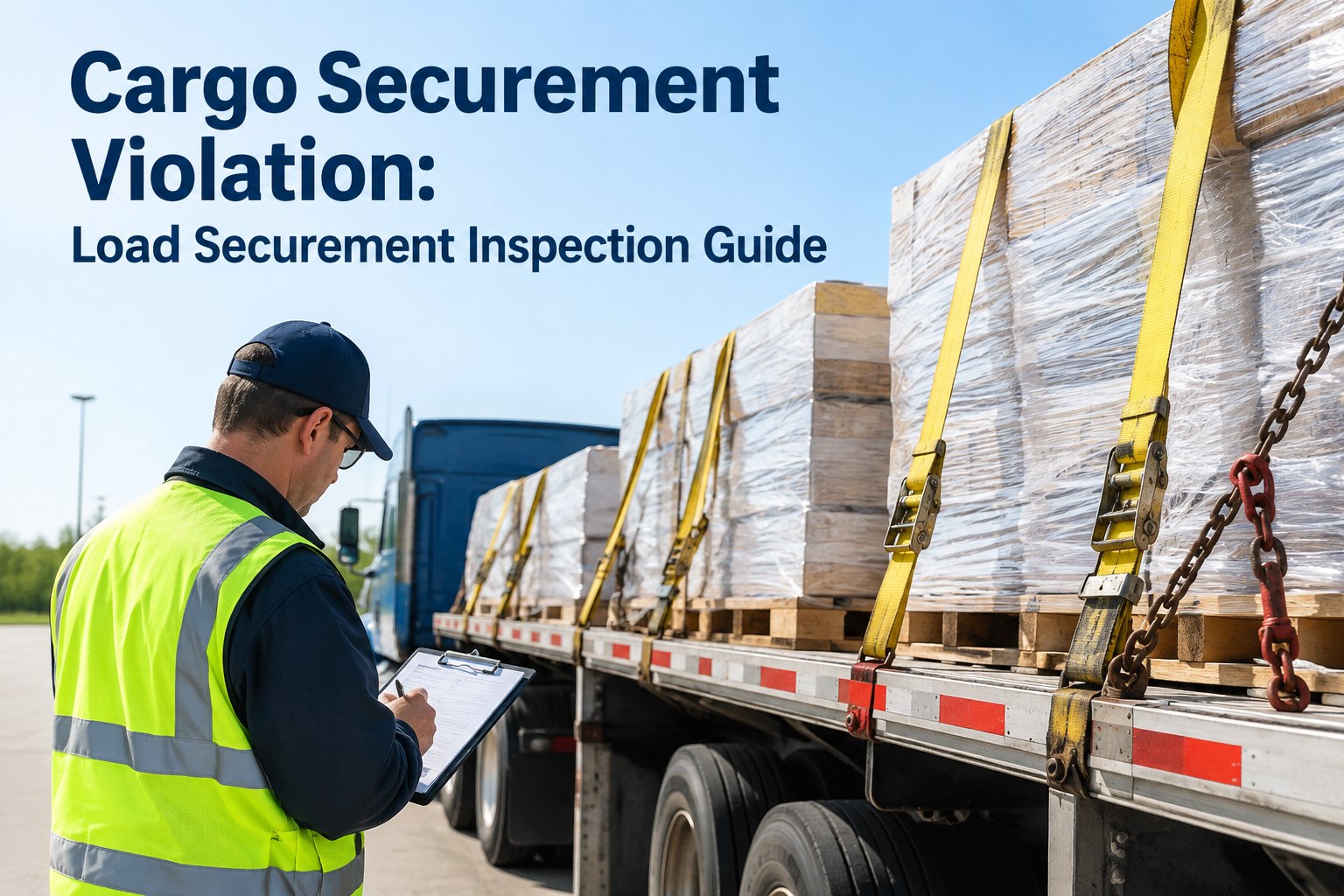
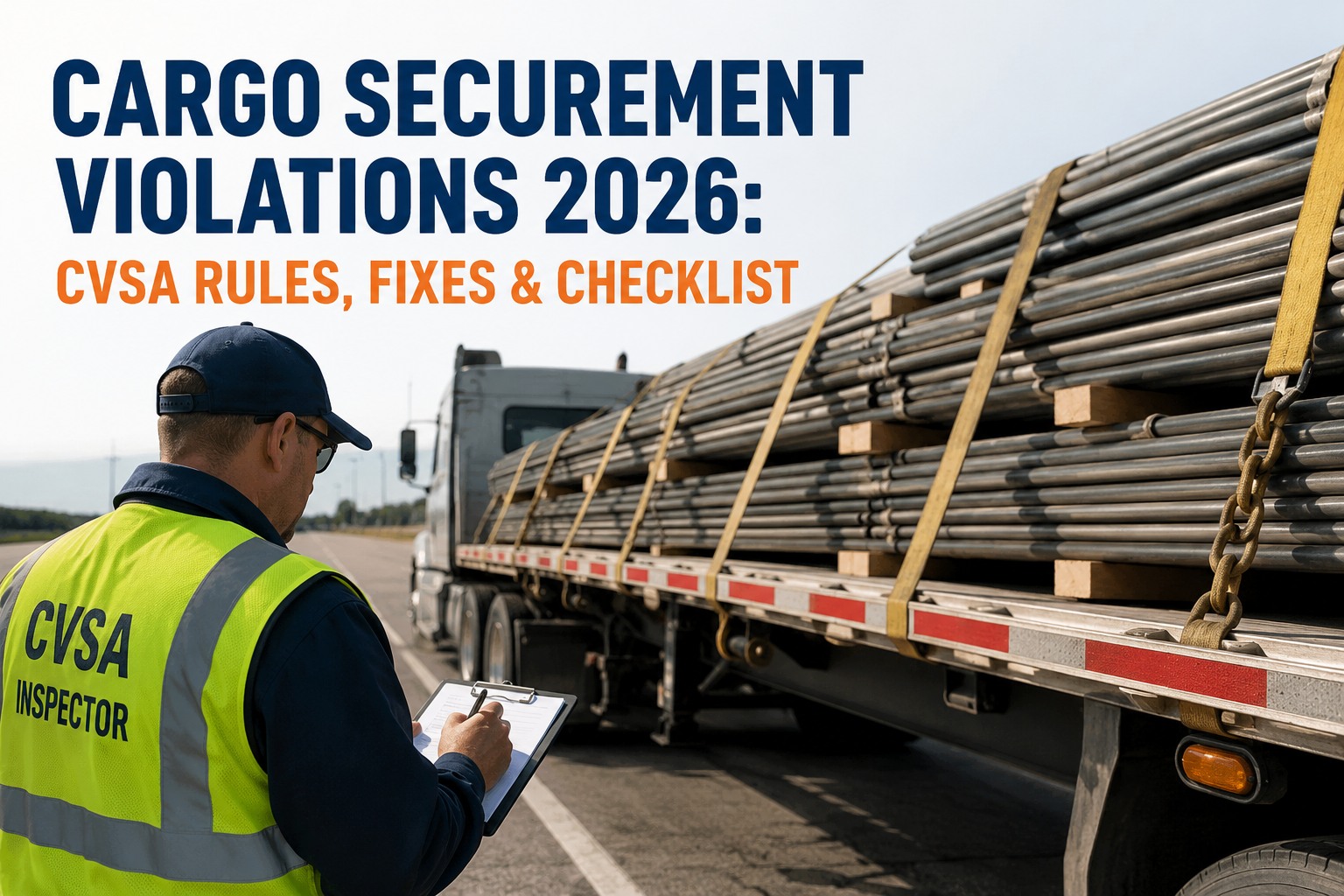
Cargo securement violations climbed to the 4th-highest vehicle out-of-service category in this year's CVSA International Roadcheck — and unlike most citations, this one's requirements are all public math: tiedown count, aggregate working load limit, device condition. Here's what inspectors check, the numbers that decide pass or fail and how to catch a gap before it's a roadside citation.
Is Your Load Legal? Check the Securement Math Instantly
Pick your cargo weight and length. See the aggregate WLL and minimum tiedown count a roadside inspector will check against — before a scale house does.
Why Cargo Securement Violations Are Under the Microscope This Year
Cargo securement wasn't a random category this year — CVSA named it the official vehicle enforcement focus for the 2026 Roadcheck, alongside ELD tampering on the driver side.
A category doesn't get named the annual focus area without a reason — CVSA picks it because the violation rate isn't trending down on its own. Every one of those citations traces back to a small number of calculable requirements, which is exactly what makes cargo securement violations more preventable than almost any other OOS category. See how HVI turns those requirements into a guided pre-trip check instead of a driver's best guess.
The Two Numbers That Decide Whether a Load Is Legal
Before any checklist, two figures in 49 CFR 393 settle whether a load passes or fails — and a fleet has to satisfy both, not pick one.
Aggregate Working Load Limit
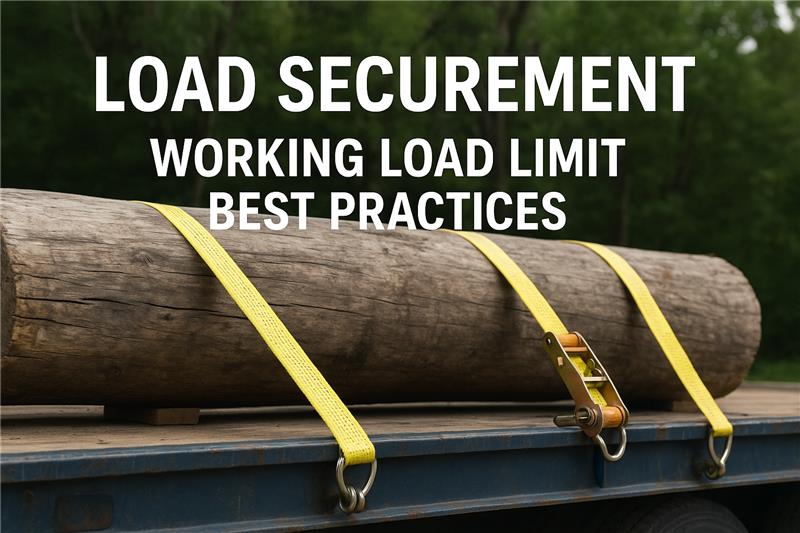
The combined working load limit of every tiedown in the system must equal at least half the weight of the cargo. A 30,000 lb load needs tiedowns totaling at least 15,000 lb of aggregate WLL — add each device's rated capacity and check the sum, not just the count.
Performance Criteria (in G's)
The securement system must hold the load against 0.8g of force forward, 0.5g rearward, and 0.5g laterally — the physics of hard braking, acceleration, and a sharp turn. The 50% rule and minimum tiedown counts exist specifically to satisfy this standard.
Miss either number and the load is out of compliance regardless of how secure it looks in the yard — a visually tight strap job with an aggregate WLL under 50% is still a citation waiting for a scale. See WLL calculated automatically from tiedown ratings entered on the inspection, instead of a driver doing the math roadside.
How Many Tiedowns Is Enough? The Count Formula Inspectors Use
Tiedown count isn't a judgment call either — it's a formula based on cargo length, and it's one of the fastest things a roadside inspector checks because it just requires counting and measuring.
| Cargo length | Minimum tiedowns required |
|---|---|
| 5 ft or less, and 1,100 lb or less | 1 |
| 5 ft or less but over 1,100 lb, or 5–10 ft (any weight) | 2 |
| 10–15 ft | 3 |
| 15–20 ft | 4 |
| 20–25 ft | 5 |
| Each additional 10 ft (or fraction) beyond 25 ft | +1 more |
The count is a floor, not a target — it assumes every tiedown is rated, undamaged, and correctly attached. Adding a fifth strap to a load that needed four doesn't fix an aggregate WLL shortfall if two of the five are already past their condition limit. See this count formula built into the inspection template, flagging the minimum automatically by cargo length entered.
Cargo Securement Violation Triggers: When a Rated Strap Still Fails Inspection
A tiedown's stamped working load limit only means something if the device is still in the condition it was rated for. Under Subpart I, any one of the following pulls a device from service regardless of what its tag says.
Cuts & Tears
Any cut, tear, or worn/broken fiber in webbing or synthetic rope, no matter how minor it looks against the rated capacity.
Abrasion & Fraying
Surface wear that's exposed core fibers or thinned the webbing cross-section, often from repeated contact with a sharp cargo edge.
Knots
A knotted strap or rope is treated as a compromised device outright — a knot reduces effective strength well below the rated WLL, regardless of the tag.
Heat & Weld Damage
Any discoloration from torch contact, weld splatter, or excessive heat exposure on chain, webbing or hardware.
Distortion & Damaged Hardware
Bent, twisted, or elongated chain links, hooks, buckles or ratchets — any deformation that changes how the device carries load.
Corrosion
Pitting or rust that's visibly reduced a chain link or hardware's cross-section, even if the part still moves and functions.
The Pre-Dispatch Securement Checklist
Every securement requirement comes down to a handful of yes/no checks a driver can run before the truck moves. Keep this on the phone at the deck — it's the whole citation risk in eight lines.
- Aggregate WLL totals at least 50% of cargo weight
- Tiedown count meets the minimum for cargo length
- Each tiedown's WLL tag is present and legible
- Commodity-specific rules checked (logs, coils, vehicles)
- No cuts, knots, abrasion, or heat damage on any device
- Hardware undistorted; no corrosion reducing cross-section
- Edge protection wherever a strap crosses a sharp edge
- Anchor points (D-rings, stake pockets) sound, not cracked
Eight checks between the deck and a roadside citation. Use this securement checklist online free, with WLL calculated and photo evidence on every item.
Edge Protection and Commodity-Specific Rules
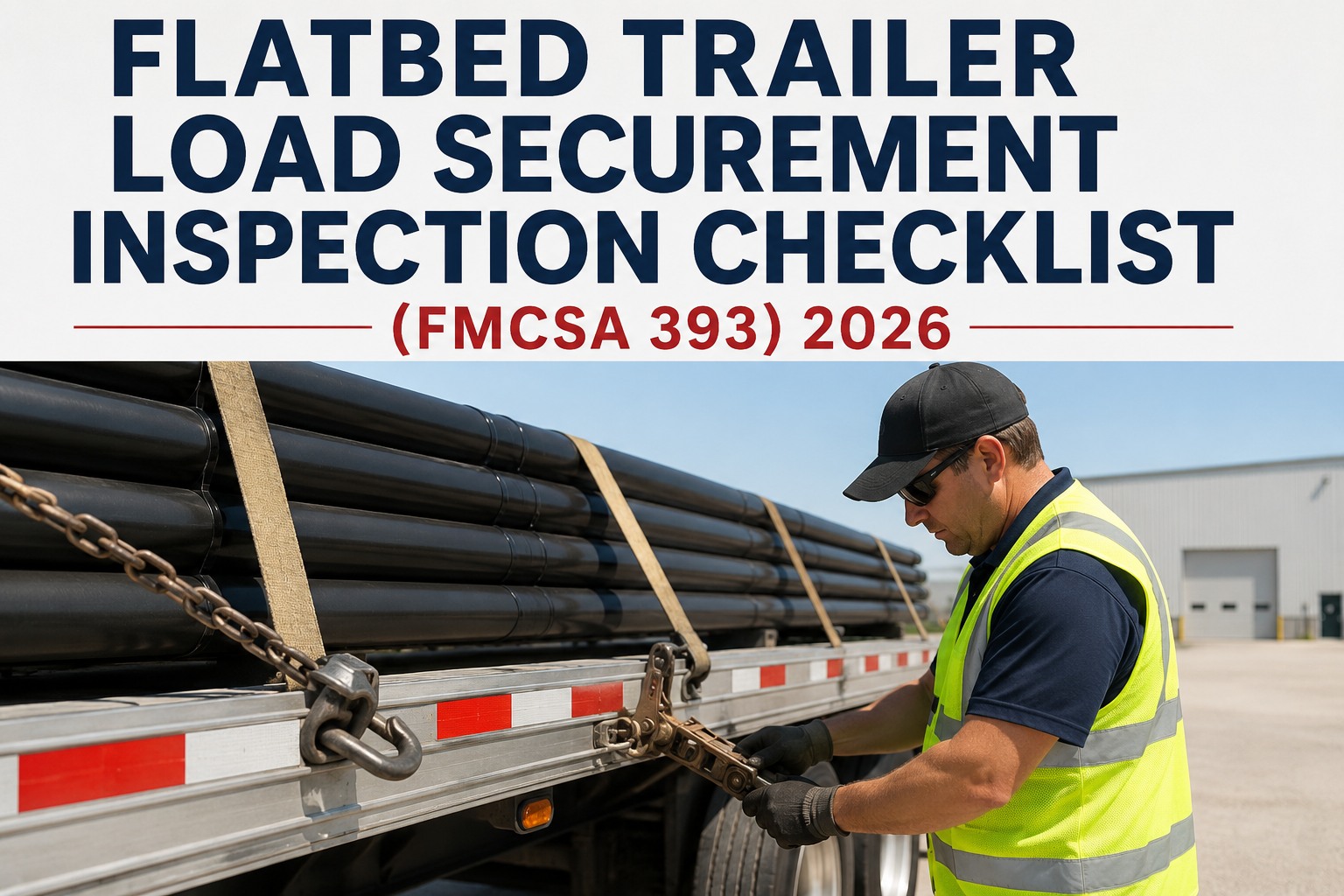
Two more requirements catch fleets that have the WLL and tiedown count right. Edge protection is required anywhere a tiedown crosses a sharp cargo edge — without it, the strap cuts itself against the load over a trip, dropping its effective WLL below what was calculated. Certain commodities also carry their own rules: logs, metal coils, concrete pipe, boulders, and transported vehicles all have commodity-specific sections in Subpart I. See HVI's full cargo securement inspection checklist for the load types your fleet actually hauls.
The En-Route Check Most Drivers Skip
A load secured correctly at the dock doesn't stay that way — vibration, wind, and hard braking settle straps and shift cargo within the first few miles. Under 49 CFR 392.9, the driver must stop and re-examine the securement within the first 50 miles of a trip, then again every 150 miles or three hours, whichever comes first, and after any change of duty status.
This is the requirement that most often gets skipped, because nothing about it happens on the roadside scale — it's self-reported, which is exactly why it's the easiest one to build evidence for. A logged, timestamped en-route check is the difference between "the driver said it was fine" and a defensible record if a load does shift.
Securement Points: The Trailer's Half of the Equation
Every tiedown calculation assumes the anchor point can hold the rated load — and that assumption fails more often than fleets expect. Stake pockets, D-rings, and winch tracks corrode, bend, and crack from years of chain contact, and a failed anchor lets go under load even when the tiedown is perfect. Anchor point condition belongs on the same inspection as the tiedowns, not a separate trailer PM. See anchor point condition tracked alongside every tiedown check.
What a Compliance Officer Actually Watches For
Drivers know the rules — that's not usually the gap. The gap is consistency. One driver eyeballs the WLL, another actually adds it up; one does the 50-mile check, another forgets because nobody's watching. Once we moved securement onto a digital pre-trip with the WLL calculated automatically and dispatch locked until it's signed off, our roadside securement citations basically stopped. The rules didn't change. The consistency did.
The Takeaway
Cargo securement violations are unusual because almost every requirement is a number, not a judgment call — aggregate WLL at 50%, a tiedown count by length, device condition criteria, and a 50-mile then 150-mile re-check. That makes it one of the most preventable OOS categories, if the check happens the same way every time, for every driver, on every load. With it named the 2026 Roadcheck focus and its rank climbing, this is the year consistency stops being optional. Start free and put every load through the same calculated check.
Frequently Asked Questions
What is the aggregate working load limit rule for cargo securement?
Under 49 CFR Part 393 Subpart I, the combined working load limit of every tiedown used to secure a load must equal at least 50% of the cargo's weight. This means adding the rated WLL of each individual strap, chain or device in the system and confirming the total reaches at least half the cargo weight — not simply using the minimum required number of tiedowns without checking whether their combined rating actually meets the threshold. A tiedown with a missing or illegible WLL tag counts as zero toward the total.
How many tiedowns does a load need?
The minimum tiedown count is based on cargo length: articles 5 feet or less and 1,100 pounds or less require just 1 tiedown; articles 5 feet or less but over 1,100 pounds, or between 5 and 10 feet regardless of weight, require 2; cargo from 10 to 15 feet requires 3; 15 to 20 feet requires 4; and 20 to 25 feet requires 5, with one additional tiedown required for every additional 10 feet or fraction thereof beyond that. This count is a floor — it assumes every tiedown involved is rated, undamaged and properly attached, and the load must also satisfy the 50% aggregate WLL rule.
What makes a tiedown device fail inspection even if it's rated for the load?
Under the securement standards in 49 CFR Part 393 Subpart I, a device must be removed from service if it shows cuts, tears or worn fibers, abrasion that's exposed core material, any knots, heat or weld-splatter damage, distortion or damage to hardware like hooks and buckles, or corrosion that's visibly reduced a chain link's cross-section. Any one of these defects makes the device unacceptable regardless of its stamped working load limit, because the rated capacity assumes the device is still in its original, undamaged condition.
How often must cargo securement be re-checked during a trip?
Under 49 CFR 392.9, a driver must stop and re-examine the cargo securement within the first 50 miles after beginning a trip, and then again every 150 miles or 3 hours, whichever occurs first, as well as after any change of the driver's duty status. This en-route check catches shifting caused by vibration, wind and braking that a load didn't have when it left the dock. The 50-mile check is citable even if nothing has shifted.
Why did cargo securement violations increase in the 2026 CVSA Roadcheck?
CVSA named cargo securement the official vehicle enforcement focus area for the 2026 International Roadcheck, which meant inspectors gave it heightened attention during the three-day blitz — cargo securement rose to the 4th-highest vehicle out-of-service category in 2026, up from 5th the year before, with 1,724 violations recorded during the event alone. Full-year 2025 FMCSA data showed more than 34,000 combined citations for unsecured cargo and unsecured vehicle components or dunnage, which is part of why the category was selected for focused enforcement.
Turn Every Securement Requirement Into a Guided Pre-Trip Check
HVI captures tiedown count, aggregate WLL, device condition, edge protection and en-route re-checks in one configurable template — with photo evidence, defect severity, dispatch lock, and full inspection history ready the moment an auditor or roadside inspector asks.
No credit card · No hardware required · Live before your next Roadcheck cycle

.png)