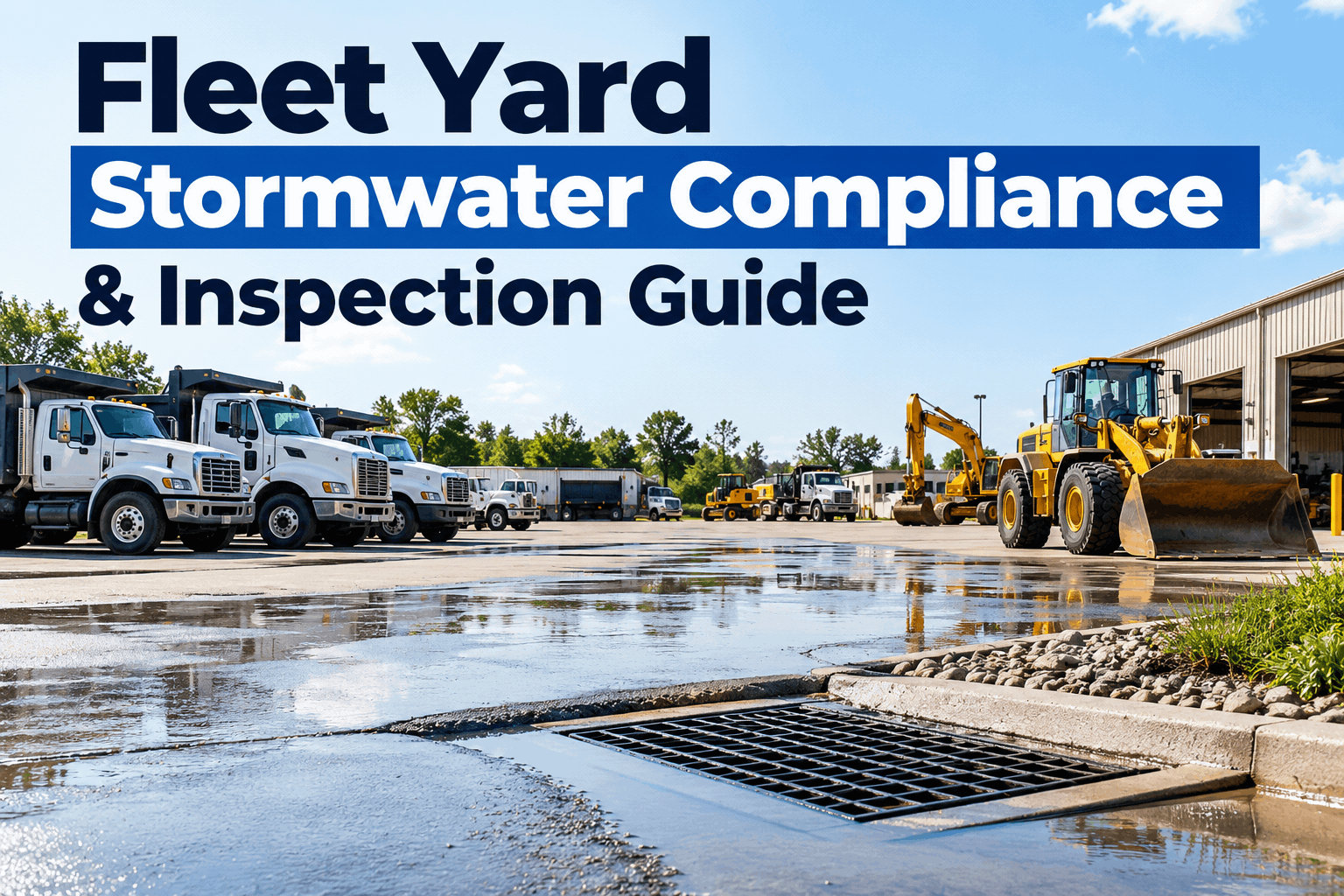
Fleet yard stormwater compliance comes down to one uncomfortable fact: every drop of rain that lands on your yard leaves it, and on the way out it picks up whatever your trucks dripped, leaked, or tracked across the pavement. Oil, fuel, coolant, wash water, sediment — it all heads for the nearest storm drain, and under your industrial permit that discharge is regulated. Miss the inspections and the record, and a routine site visit turns into a notice of violation. Sign up free and log your first yard inspection.
The Rain Leaving Your Yard Is a Regulated Discharge
A fleet or equipment yard is an industrial site. Fueling, washing, repairs, and outdoor storage all feed the runoff — and the permit expects you to prove you're controlling it, on a schedule.
Here's the part that catches fleets off guard: the inspector almost never cites you for the oil on the ground. They cite you for the missing record — the quarterly inspection that wasn't done, the BMP your plan promised but nobody logged, the leak that got mopped up but never written down. Fleet yard stormwater compliance is a paperwork discipline wearing a pollution-control costume, and that's exactly the part software fixes.
The SWPPPthe document your whole stormwater program hangs on
If your yard discharges stormwater to a drain or waterway, you almost certainly need coverage under an industrial permit — EPA's Multi-Sector General Permit or your state's version — and that permit requires a Stormwater Pollution Prevention Plan. The SWPPP is the rulebook the inspector grades you against. It has five parts that actually matter day to day.
Drains, outfalls, storage areas, fueling and wash points — every spot where materials meet stormwater, numbered.
An honest inventory of what could run off — fuels, oils, solvents, wash water, waste, exposed scrap.
The practices that stop pollution — secondary containment, covered storage, spill kits, yard sweeping, drip pans.
Who inspects, how often, and what happens when something's found. This is the engine, not an appendix.
Named responsible staff, plus the retained history of every inspection, finding, and fix. The plan is only as real as the records proving it runs.
The SWPPP itself is a one-time build (updated as the yard changes). What never stops is Part 4 — the inspections and the corrective actions. That's where a plan quietly falls out of compliance, and where See HVI's digital inspection checklists keep the cadence from slipping.
The cadencethe inspection schedule that keeps a yard permit alive
A SWPPP sitting in a binder satisfies nobody. The permit requires routine facility inspections on a fixed rhythm, and the record of each one is what proves the program is live. Miss the schedule and you've got a gap an inspector can point to — regardless of how clean the yard looks on the day.
-
QQuarterly routine inspectionevery 3 months
The core requirement under the EPA MSGP — a walk of every exposed area, drain, and control measure, documented each quarter. Inactive, fully-covered sites may qualify to drop to annual.
-
SPost-storm / seasonal checksafter rain events
Many permits add visual assessments of discharge during qualifying storm events. A fresh rain is when leaks, sheen, and failed containment actually show — the best time to catch a problem early.
-
DDaily / operational good housekeepingongoing
The BMPs your plan promises — sweeping, spill-kit checks, drip pans emptied, drums closed. If the SWPPP says it's done daily, there has to be proof it's done daily.
-
AAnnual comprehensive reviewonce a year
A full reassessment of the SWPPP against current site conditions, plus the annual report many permits require. New equipment or a new wash area means the plan gets updated.
Exact frequencies vary by permit and state, so your own permit is the final word — but the pattern holds everywhere: recurring checks, documented every time. Explore recurring inspection scheduling so the quarterly never gets missed, and Book a demo of the inspection calendar.
The walkthe fleet yard stormwater inspection checklist
This is the checklist your quarterly walk should cover — grouped the way an inspector actually moves through a yard. Run it against your site today; every unchecked line is a finding waiting to be written up by someone else instead of fixed by you.
- Storm drains clear of debris, sediment, and standing oil sheen
- Drain inlet protection (filters, socks) in place and intact
- No unauthorized non-stormwater discharge reaching the outfall
- No fresh fuel or oil stains on pavement; drip pans in use
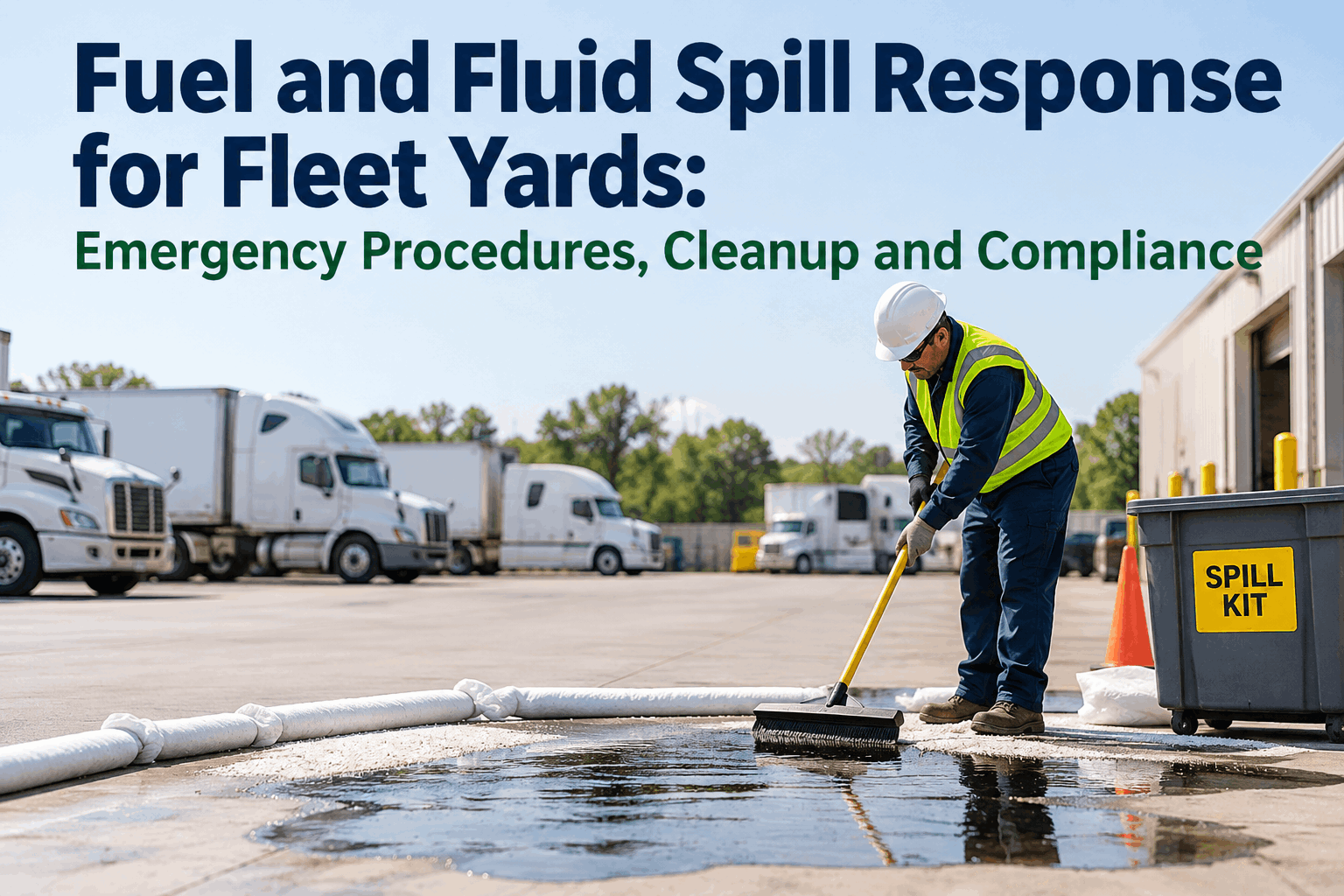
- Spill kits stocked, accessible, and within date
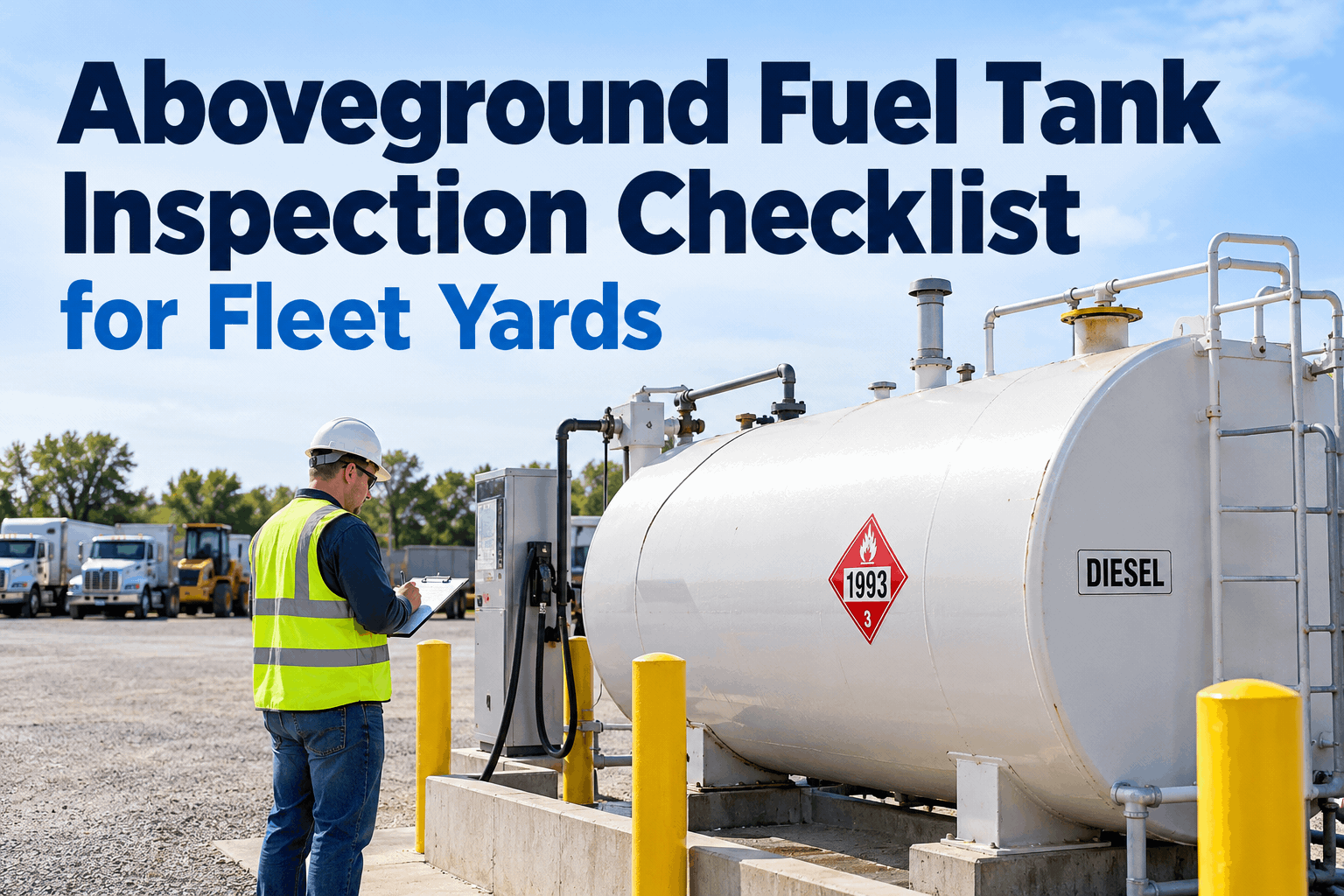
- Secondary containment around tanks intact and un-breached
- Drums and containers closed, labeled, and under cover
- Used-oil and waste collection sealed, no leaks or overfill
- Scrap, batteries, and parts not exposed to rain runoff
- Wash water routed to approved collection, not to the storm drain
- Yard swept per the SWPPP schedule; sediment controlled at exits
- Every BMP the plan promises is actually being done and logged
Built as a digital template, each line becomes a pass/fail with a photo and a timestamp, and any fail opens a tracked defect automatically. Explore how findings become maintenance records. Sign up free and load this checklist.
The gapwhy clean yards still fail — the plan-vs-reality problem
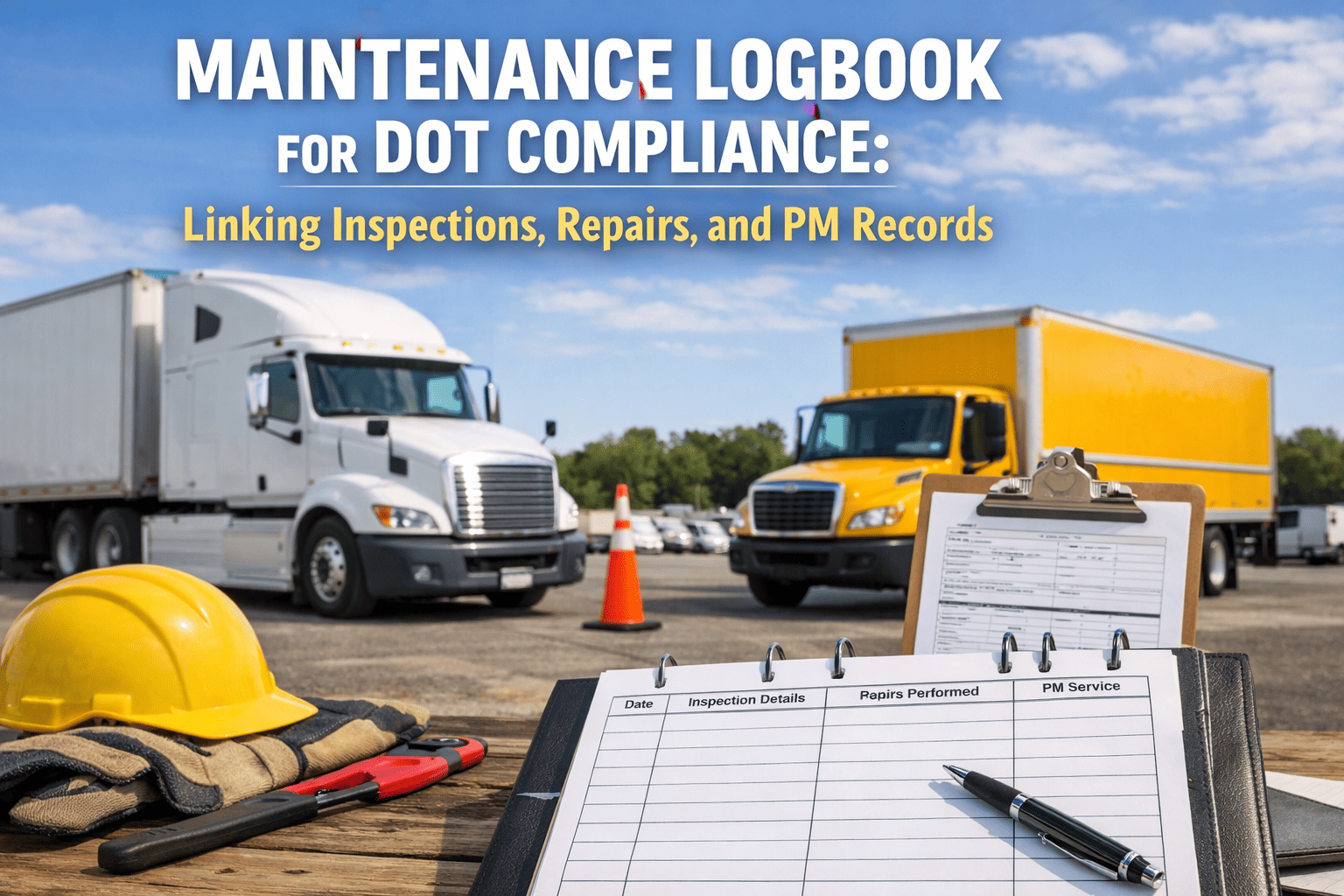
The most common citation isn't a dirty yard. It's a SWPPP that promises something the records don't prove. Your plan says "yard swept weekly," but there's no log. It lists a spill-kit check, but nobody signed off. An inspector reads the plan, asks for the proof, and the gap is the violation. A finding that's caught, fixed, and logged is a non-event — a finding that's ignored is an escalation.
That closed loop — finding to defect to work order to verified fix, all timestamped — is the difference between a clean audit and a fine. The same platform your technicians already use for vehicle inspections runs the yard inspection too, so compliance stops being a separate binder. Book a demo of corrective-action tracking.
From an EHS manager at a multi-site equipment yard
Our SWPPP was solid on paper — the problem was proving it got followed across four yards. An inspector doesn't want the plan, they want the record that the plan ran. Moving the quarterly walks and the spill checks onto the same app the crews use for truck inspections fixed it: every finding is time-stamped, every fix is linked to a work order, and I can pull a year of history in a minute instead of digging through clipboards.
Fleet yard stormwater compliance — FAQs
Does my fleet yard actually need a stormwater permit?
If your yard conducts outdoor vehicle maintenance, fueling, washing, or material storage and discharges stormwater, it usually falls under an industrial NPDES permit — often Sector P of the EPA MSGP or a state equivalent. Your state environmental agency confirms coverage for your site.
How often do I have to inspect the yard?
Under the EPA MSGP, routine facility inspections are generally quarterly, with added visual assessments during qualifying storm events. Inactive, fully-covered sites may drop to annual. Exact frequency depends on your permit, so check your specific coverage.
What's the most common stormwater violation at fleet yards?
A gap between the SWPPP and the records — a BMP the plan promises but no log proves was done, or a missed quarterly inspection. Inspectors cite the missing documentation as readily as actual pollution, which is why recordkeeping matters most.
What are BMPs for a fleet or equipment yard?
Best management practices are the controls that stop pollution reaching runoff — drip pans, secondary containment, covered storage, spill kits, drain inlet protection, yard sweeping, and routing wash water to approved collection. Your SWPPP lists the ones your site relies on.
How does HVI help with stormwater compliance?
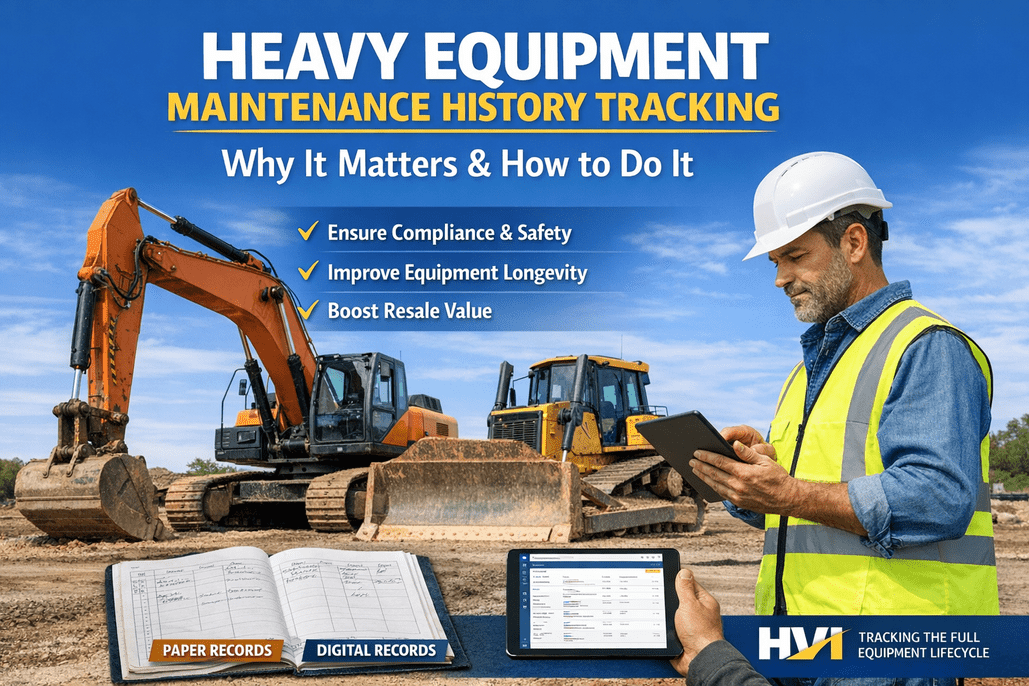
HVI isn't a permit filer — it's the inspection and records layer. It schedules recurring yard inspections, turns findings into tracked defects and work orders, and keeps an exportable history, so the proof your SWPPP demands is already in place for an audit.
Make your yard inspections prove themselves
You know what the permit expects. HVI makes the proof automatic — recurring stormwater inspections, findings tracked to a verified fix, and a complete exportable history for every yard. The same app your crews already use for trucks.
No credit card · No hardware · Inspection records from day one