You hear the hiss before you see the sticker. A roadside inspector just handed a driver an out-of-service order because two brakes on the trailer are out of adjustment and now the load is sitting on the shoulder waiting for a certified tow. Brake systems consistently account for the largest share of roadside violations, and the threshold is brutal — on a standard five-axle tractor-trailer, just 20% of the brakes being out of adjustment is enough to ground the entire rig. A proper air brake inspection is the only thing standing between a rolling fleet and a parked one. This guide breaks down the exact out-of-service points, from pushrod stroke to chamber leaks and how to catch them in the shop before an inspector finds them on the road. Digitize your brake inspections with HVI.
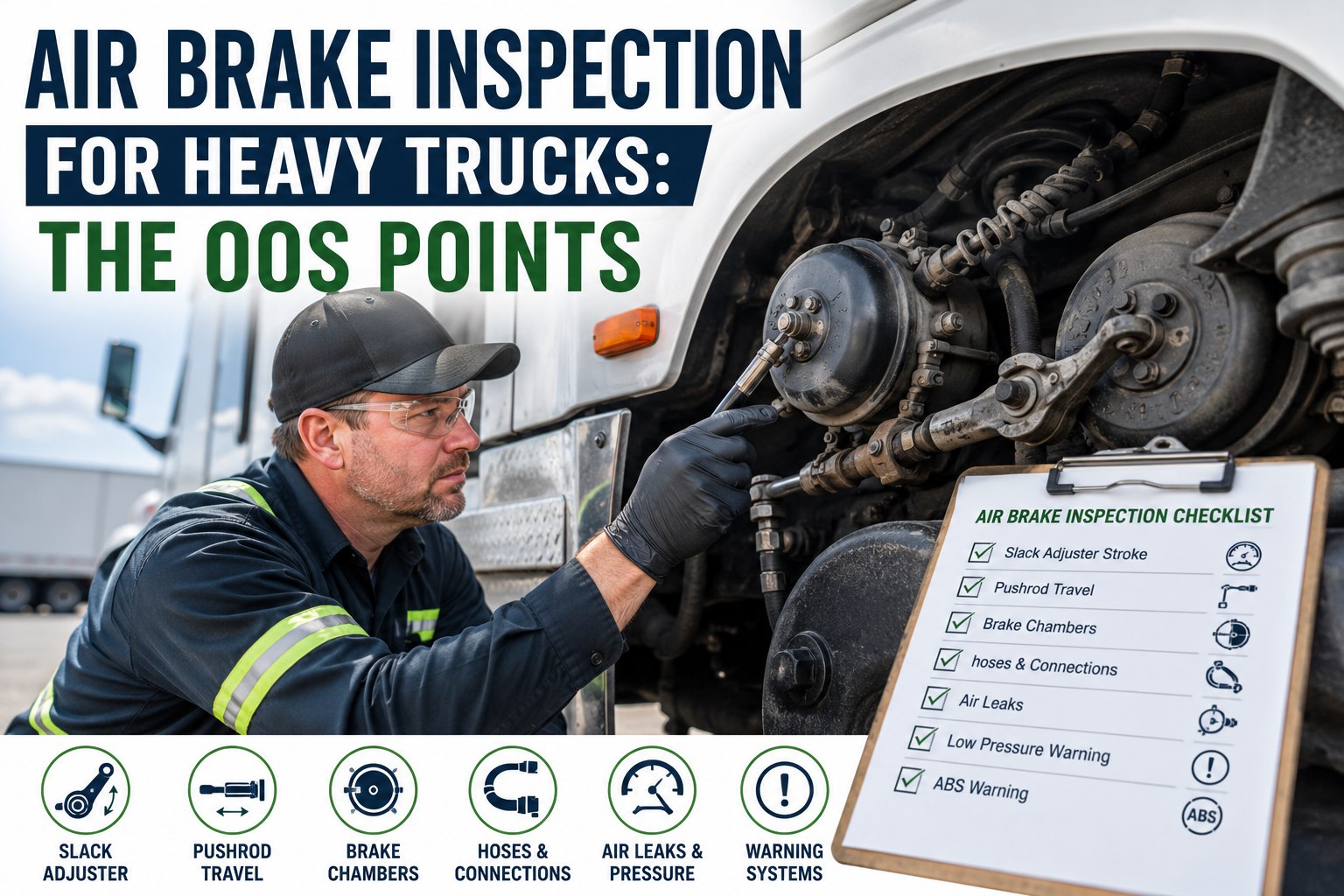
Air Brake Inspection for Heavy Trucks: The OOS Points
The exact measurement thresholds, leak tests, and visual checks a qualified technician must pass to keep a truck legal at the scale house.
- System Pressure90-100 PSI
- Brakes AppliedFully Service
- Defect Threshold20% of Brakes
- Result if FailedOOS Order
- ~41%
of all roadside out-of-service violations are brake-related
CVSA International Roadcheck data - 2 Brakes
out of adjustment on a 10-brake tractor-trailer triggers a 20% OOS order
CVSA Out-of-Service Criteria - 90-100 PSI
reservoir pressure required to legally measure pushrod stroke
Standard shop testing procedure - 1/8"
minimum lining thickness above the rivet head to pass inspection
FMCSA Appendix A rejection criteria
Why driver pre-trips miss the critical brake defects
Every driver is taught to charge the system to 120 psi, shut off the engine, hold the brake pedal down, and listen for leaks. It is a necessary check, but it creates a false sense of security. A slow audible leak at a chamber diaphragm is easy to catch, but an inaudible internal valve leak or a seized automatic slack adjuster makes no sound at all. The driver will apply the brakes, feel the pedal hold, and mark the DVIR as satisfactory.
Meanwhile, the pushrod on that same wheel is traveling a half-inch past its legal limit. Because the automatic slack adjuster has seized on its internal clutch mechanism, it stopped ratcheting the lining closer to the drum. The brake is technically functioning — it is pressing against the drum — but the stroke is so long that the chamber is running out of air volume, and the braking force at that wheel is severely compromised. See how HVI forces measured brake checks so this exact defect never leaves the yard.
The 5-point air brake inspection sequence
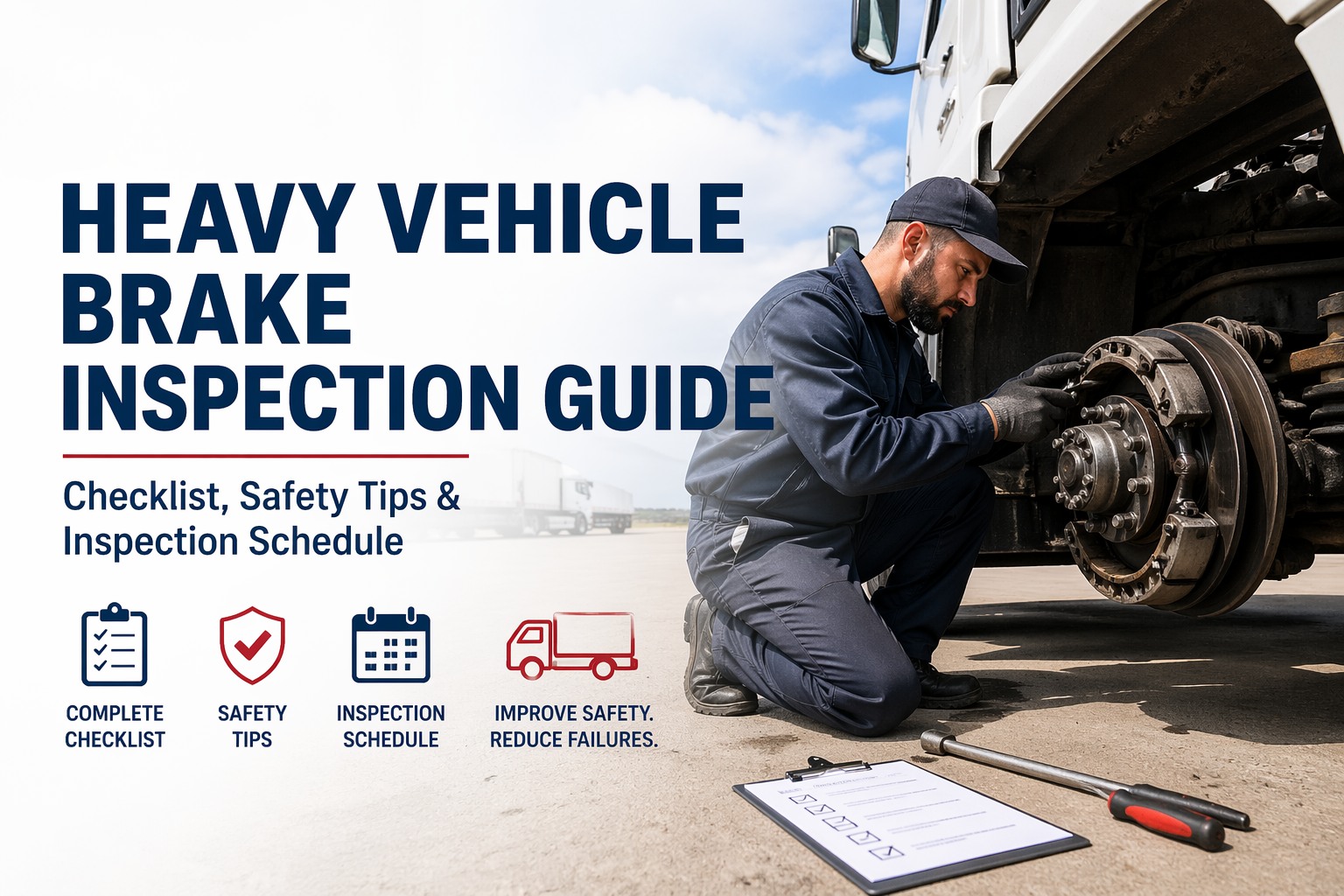
A compliant heavy truck brake inspection requires more than a visual glance. You have to build specific air pressure, physically measure stroke travel against the chamber size, and inspect the friction materials. This is the exact sequence a certified technician must run to clear the truck for the road.
Charge and Stabilize the System
Build reservoir pressure to 90-100 psi with the engine off. If pressure is too high, the spring brakes will stroke differently and give you a false pass. Fully apply the service brake pedal and hold it down.
Measure Pushrod Stroke
Mark the pushrod where it exits the chamber. Apply the brakes. Measure the stroke from the chamber face to the mark. Compare the measurement against the adjustment limit stamped on the chamber body (e.g., Type 30 max stroke is 2 inches).
Inspect Slack Adjuster Geometry
Check the angle of the slack adjuster arm when brakes are applied. It should never be past a 90-degree angle to the pushrod. Verify it is an automatic slack adjuster (ASA) and check for excessive freeplay or binding in the clevis pins.
Audible Leak and Component Test
With brakes still applied, listen at each chamber, valve, and fitting. Use a soap solution on suspected leaks. Inspect chamber housings for rust scale, dents, and compromised clamp rings that indicate a failing diaphragm.
Friction and Drum Evaluation
Pull the wheels or inspection plates. Measure lining thickness — reject if under 1/8 inch at the thinnest point. Look for grease or oil saturation. Inspect drums for heat checking, scoring, and structural cracks extending to the mounting surface.
Pushrod travel limits by brake chamber size
The most common reason a truck fails a roadside air brake inspection is pushrod stroke exceeding the legal limit. Inspectors do not guess this measurement — they use a standardized brake stroke indicator tool placed against the chamber. If the stroke exceeds the mark, the brake is considered out of adjustment. You need to know the chamber type on every axle to know the limit.
| Chamber Type | Standard Mark | Max Legal Stroke (OOS Limit) | Common Axle Use |
|---|---|---|---|
| Type 12 | 12 | 1.38 inches | Steer Axle |
| Type 16 | 16 | 1.38 inches | Drive Axle (Front) |
| Type 20 | 20 | 1.38 inches | Drive Axle (Rear) |
| Type 24 | 24 | 1.75 inches | Trailer Axle |
| Type 30 | 30 | 2.00 inches | Trailer Axle (Heavy) |
If you measure a Type 30 chamber and the stroke is 2.1 inches, that wheel is out of service. If two wheels on a 10-wheel rig hit that limit, the entire vehicle is grounded. Book a demo to see HVI's chamber reference library built directly into the technician's mobile app.
The 20% defective brake rule and the certified tow
The Commercial Vehicle Safety Alliance (CVSA) out-of-service criteria for brakes is unforgiving. It operates on a simple 20% threshold. If 20% or more of the vehicle's brakes are out of adjustment or otherwise defective, the entire vehicle is placed out of service. For a standard 5-axle, 18-wheel tractor-trailer, that means just 4 defective brakes will ground the truck. For a straight truck with 4 brakes, just 1 defective brake hits the 20% mark.
Passing the Scale
3 out of 10 brakes out of adjustment
At 10% defective, the truck is legal to roll, but the driver is issued a citation. The maintenance team gets a violation report, and the carrier's CSA score takes a hit in the Vehicle Maintenance BASIC category.
Grounded at Roadside
2 out of 10 brakes out of adjustment
At 20% defective, the red OOS sticker goes on the window. The truck cannot be moved legally except by a certified tow truck. No roadside adjustments are permitted — a certified mechanic must repair it on-site or in a shop before the sticker is removed.
This is the part that catches fleets off guard: you cannot just hand the driver a wrench and tell them to adjust the slacks on the shoulder. The CVSA requires that a qualified, certified mechanic perform the repair and sign off on the correction before the vehicle can legally return to traffic. Track certified mechanic sign-offs in HVI to ensure every repair meets legal standards.
Why automatic slack adjusters drift out of adjustment
Fleets often assume that because they have automatic slack adjusters (ASAs) installed, they never have to worry about pushrod stroke. This is a dangerous misconception. ASAs fail, and when they fail, they stop adjusting automatically — but the truck keeps driving.
The internal clutch mechanism inside an ASA can become clogged with road grime, freeze up in cold weather, or simply wear out. When this happens, the ASA locks up and acts like a manual slack adjuster. As the brake lining wears down over thousands of miles, the pushrod has to travel further and further to press the shoe against the drum. Eventually, the stroke exceeds the chamber's legal limit, and the brake loses its effectiveness because the chamber runs out of air volume.
A driver pushing the pedal in the cab will not feel this gradual change. The pedal feels normal because the air pressure is still building, but the mechanical leverage at the wheel is dropping. This is why a physical pushrod stroke measurement with a tape measure or brake stroke indicator tool is the only reliable way to verify brake adjustment. Learn how HVI flags seized ASAs before they become roadside violations.
Drum and rotor cracking: The silent OOS defect
CVSA's current Brake Safety Week emphasis has specifically targeted drums and rotors. While fleets focus heavily on lining thickness and pushrod stroke, the structural integrity of the drum itself is a massive liability. A drum can look perfectly fine from the outside but hide heat cracks that expand under heavy braking pressure.
Technicians need to look for hairline cracks radiating from the drum face, deep scoring that reduces surface contact, and "blueing" which indicates the drum has been overheated and compromised its metallurgical structure. Any crack extending through the drum wall to the mounting flange is an immediate out-of-service condition. Oil or grease contamination on the friction surface is another major defect — it destroys braking friction and cannot simply be wiped clean; the contaminated lining must be replaced.
Expert view from the shop floor
"Drivers will do the pedal tap, hear the air hold, and write 'brakes good' on the DVIR. Then we pull it in the shop and three pushrods are an inch past the limit. The ASA didn't just fail — it failed a month ago and nobody knew because nobody put a gauge on it. We stopped trusting the pedal tap and started requiring a stroke measurement on every PM.
-- Marcus T., Fleet Maintenance Manager, regional reefer carrier
Frequently asked questions
How many brakes out of adjustment put a truck out of service?
Under CVSA criteria, if 20% or more of a vehicle's brakes are out of adjustment or defective, the entire vehicle is placed out of service. On a standard 10-brake tractor-trailer, this means just 2 defective brakes will ground the truck. On a straight truck with 4 brakes, 1 defective brake hits the 20% threshold.
What is the required pushrod stroke for a Type 30 brake chamber?
The maximum legal stroke limit for a Type 30 brake chamber is 2.00 inches. The measurement must be taken with the reservoir pressure between 90 and 100 psi, the engine off, and the service brakes fully applied. Any stroke exceeding 2.00 inches on a Type 30 is an out-of-service violation.
Can a driver adjust slack adjusters at the roadside?
No. If a truck is placed out of service for brake defects, a certified mechanic or qualified inspector must perform the repair and sign off on the correction before the vehicle can be moved. Drivers are not permitted to perform roadside adjustments to clear an out-of-service sticker, and the truck must typically be towed to a qualified facility.
Do automatic slack adjusters ever need manual adjustment?
Automatic slack adjusters (ASAs) should not need routine manual adjustment to keep the brakes in compliance. If an ASA requires frequent manual adjustment, it is a sign that the internal clutch mechanism has failed or there is a problem with the foundation brake components. The ASA should be replaced, not continually adjusted.
What is the minimum brake lining thickness to pass inspection?
Brake lining must be at least 1/8 inch (or 3.2 mm) thick at the thinnest point above the rivet head to pass a DOT inspection. If the lining is contaminated with oil or grease, or if it is cracked or missing chunks, it must be replaced regardless of the remaining thickness.
Conclusion: Measure what matters
Air brake inspections are not about listening for hisses or trusting the pedal feel. They are about exact measurements: pushrod stroke against chamber limits, lining thickness in fractions of an inch, and structural integrity of the drums. With 41% of out-of-service violations tied to brake systems, and just two bad brakes enough to ground an entire tractor-trailer, the margin for error is zero. If your technicians are not recording the exact stroke and chamber size on every PM, you are rolling the dice at every scale house. Upgrade your brake inspection workflow with HVI to turn subjective checks into hard, defensible data.
Put the full air brake inspection protocol on every technician's phone
HVI guides mechanics through the 5-point brake sequence, enforces pushrod stroke data entry, compares it against chamber limits, and flags any 20% OOS risk before the truck leaves the bay.
No credit card · No hardware · Live on your fleet in under two weeks