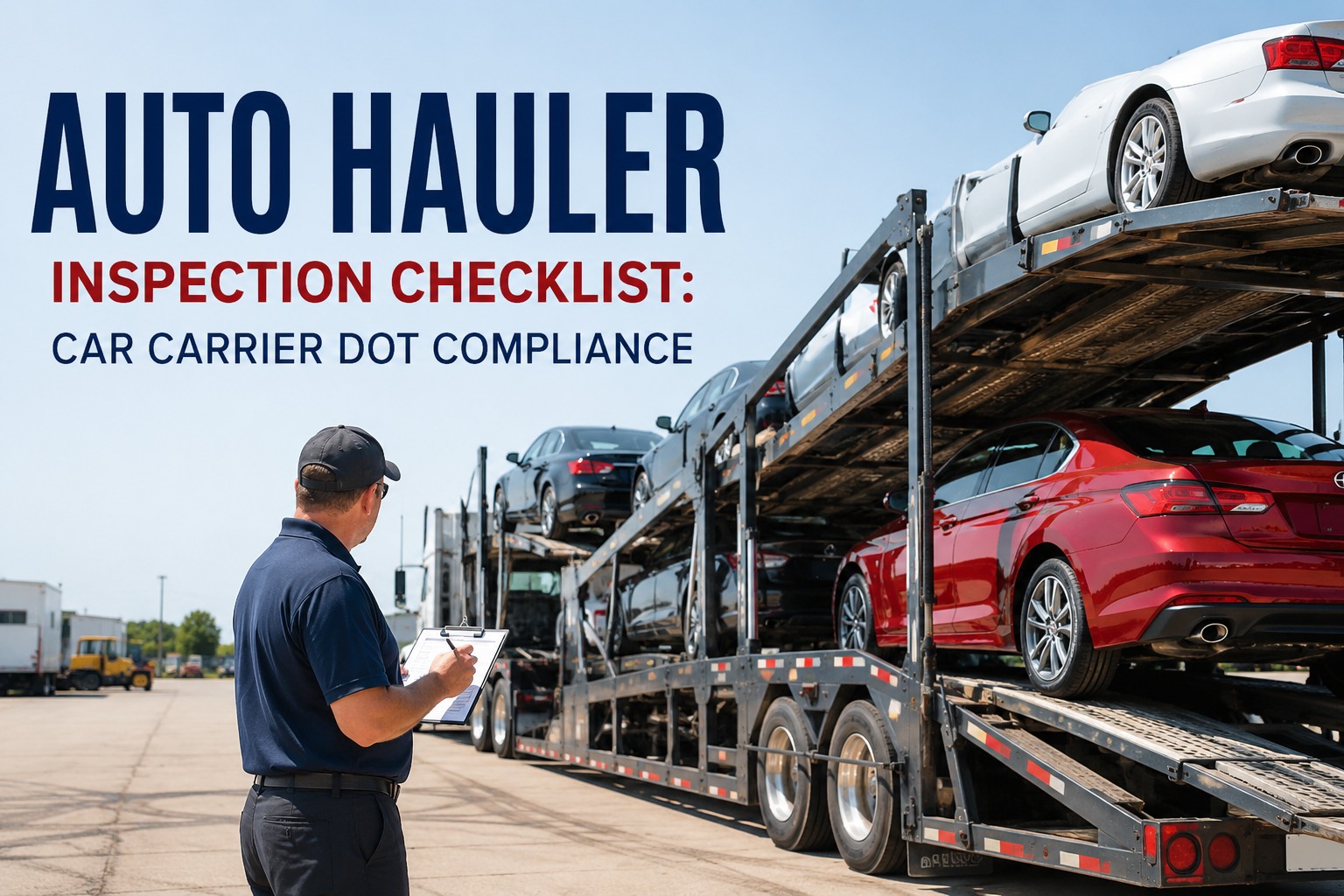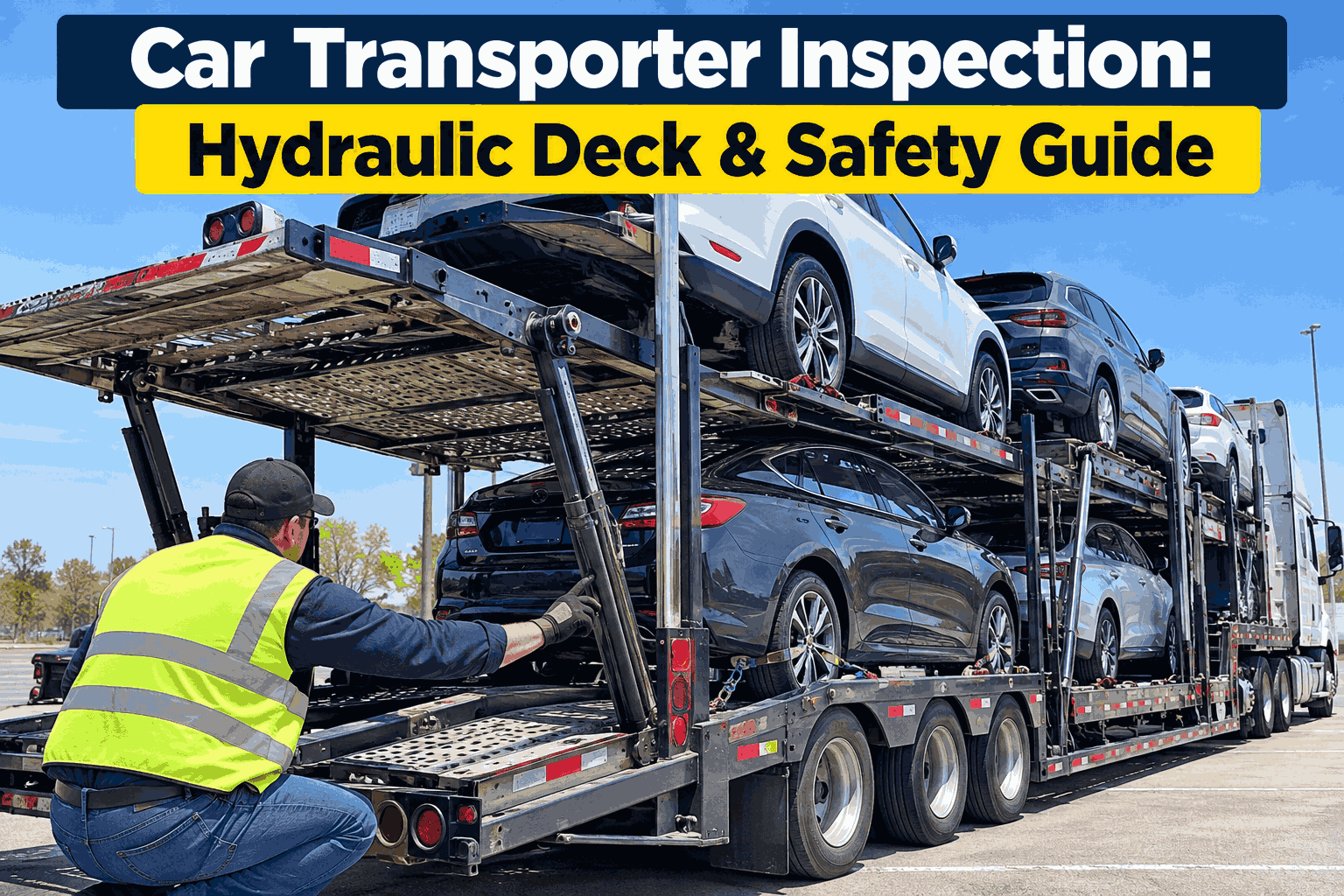
A car transporter inspection is really two inspections in one — the trailer that carries the load, and the hydraulic deck system that lifts, tilts and positions the vehicles onto it. A generic trailer checklist covers the first and quietly ignores the second, which is where the failures that strand a fully loaded rig actually start: a cylinder that weeps, a rod that's scored, a holding valve that lets a raised deck creep down under weight. Book a demo to see a transporter inspection that covers the hydraulics too.
The Deck Hydraulics Are What Make It a Transporter
Inspect the trailer like any other and you've done half the job. The hydraulic deck — cylinders, rods, hoses and holding valves — is the system a standard checklist has no line for, and the one that fails under load.
Here's the full walkaround — what sets a transporter apart, the hydraulic system component by component, the drift test that proves a deck will hold, deck and ramp geometry, securement equipment, pre-load damage records, running-gear roadworthiness, and how to keep it all on a recurring schedule per asset.
What sets a car transporter aparttwo systems, one inspection
Every car transporter inspection has to clear both the trailer and the load-handling equipment on top of it. Miss the second and a rig can pass a walkaround, then fail on the ramp with two cars already loaded.
Trailer + deck equipment. The running gear (tyres, brakes, lights, frame) is the same story as any trailer. The hydraulic decks, ramps, winches and per-vehicle securement are the transporter-specific half — and they carry the highest risk because they move, hold weight, and put a person under a raised deck.
The hydraulic deck system, component by componentthe transporter-specific inspection a generic form skips
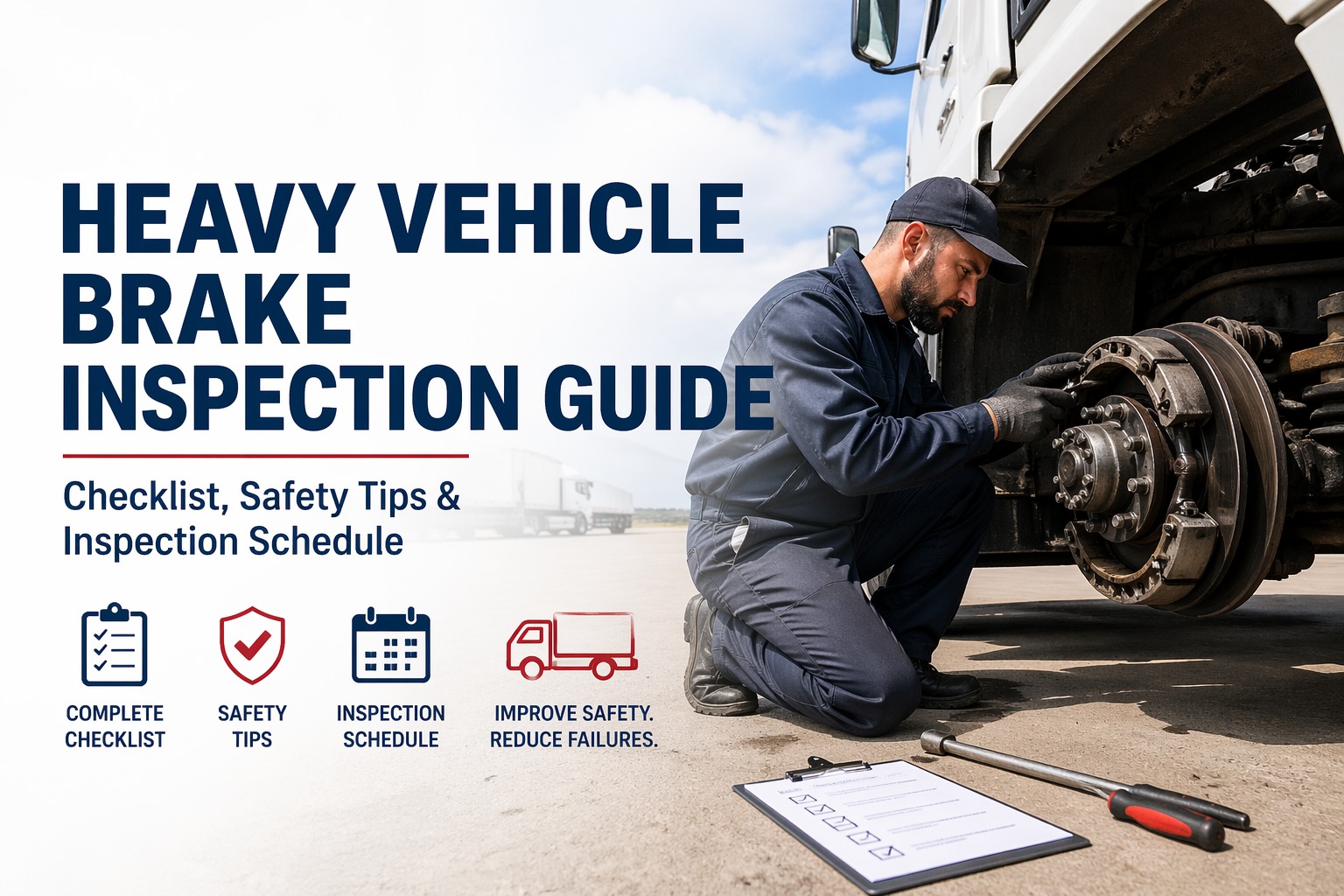
The hydraulic system is what lifts and tilts each deck to load vehicles at steep angles and pack them tight. Every part of it is a wear item, and a failure here doesn't just cause downtime — it can drop a loaded deck. These are the components that belong on the template.
This is the layer that separates a real transporter inspection from a trailer checklist with a car on it. Building these into a recurring preventive maintenance schedule catches slow seal and rod wear before it becomes a dropped deck. Book a demo to put the hydraulic system on a template
The drift test: proving a deck will holdthe one check that catches a failing holding valve
A deck can raise fine and still be unsafe if it won't stay up under load. The drift test is the single most important hydraulic check on a transporter, and it takes under a minute — raise the deck, load it or pressurise it, and watch whether it holds.
Because drift is gradual, it's exactly the kind of defect a rushed visual misses and a documented, timed check catches. Recording the result against the specific rig each time turns "looked fine" into a dated pass you can stand behind. Start free and add a timed drift check to every transporter inspection.
Deck & ramp geometrythe configuration checks that affect safe operation
Beyond the hydraulics, the decks and ramps have to be sound and correctly positioned. These are the mechanical and geometry checks that decide whether vehicles load safely and whether the loaded rig is legal on the road.
Loaded height in particular is a check that has to happen after the cars are on — a rig that clears at the yard can be over height once the top deck is packed. A template that prompts for it at the right moment keeps it from being skipped. Book a demo to build height and clearance into the flow
Securement equipment on every positionthe gear that holds each vehicle down
Each vehicle on a transporter is held by its own set of securement equipment, and every piece is a wear item that has to be inspected — not just present, but sound and rated. A single frayed strap is a loose car.
The full compliance and working-load side of securement — the DOT rules and the numbers behind them — is covered in HVI's guide to auto hauler securement and DOT compliance; this page keeps securement to the equipment-condition side. Both belong on the same rig — one for how the load is held, one for whether the gear holding it is fit to use. Logging every strap and winch by position keeps a frayed one from riding out under a car.
Document damage before you loadphoto evidence that protects against claims
On a transporter, the vehicles you carry are the cargo — and any scratch, dent or chip you didn't cause can still land as a claim on you. Documenting each vehicle's condition before it goes on the deck is part of the inspection, not an afterthought.
The same photo capture that records a weeping cylinder records a pre-existing dent, so the inspection and the claim defence run on one tool instead of a phone full of loose photos nobody can find later.
Running gear & roadworthinessthe trailer half of the inspection
Under all the load-handling equipment, a transporter is still a heavy trailer that has to be roadworthy. The running-gear checks are the same as any rig, and they still belong on the template alongside the hydraulic-specific lines.
Running these on the same recurring schedule as the hydraulics means the whole asset — trailer and equipment — stays documented in one place instead of split across a paper trailer form and a mental note about the deck.
From a vehicle transporter operator
We caught an upper deck that drifted about two inches over thirty seconds — passed the eyeball test every morning, nobody clocked it. Turned out to be a holding valve on the way out. If that deck had come down with a car half-loaded and a guy underneath it, we'd be having a very different conversation. Now the drift test is a required, timed line on every transporter, photo and all, and the hydraulic PM is on a calendar per rig. It's the difference between hoping the deck holds and knowing it does.
How HVI documents a transporter inspectioncustom templates, calendar PM and photo capture
A car transporter inspection holds up when the hydraulic, deck and securement checks are all on one recurring record instead of scattered. HVI's custom templates, calendar PM and photo capture keep every rig documented across its life.
Build the transporter template
Hydraulics, drift test, decks, ramps and per-position securement as required lines.
Capture defects, drift & photos
Every check, hydraulic result and pre-load photo logged against the specific rig.
Keep PM on a calendar
Recurring hydraulic and structural PM per rig, with full maintenance history.
See how transporter inspections, hydraulic PM and asset history live inside HVI's inspection and maintenance platform. Walk through it in a quick demo
Car transporter inspection: quick answers
What does a car transporter inspection cover?
A car transporter inspection covers two systems: the trailer itself — tyres, wheels, brakes, lighting, suspension, frame and coupling — and the load-handling equipment, which is the transporter-specific part. That means the hydraulic deck system (cylinders, rods, hoses, fittings and holding valves), the upper and lower decks, ramps, hinges and locks, and all per-vehicle securement equipment such as wheel straps, winches, chains and tie-down points.
How do you inspect a car transporter's hydraulic deck?
Check the cylinders for cracks and weeping seals, the rods for scoring and straightness, and the hoses and fittings for cuts, bulges and damp joints. Confirm the controls and PTO operate the decks smoothly, and look for fluid leaks at the glands, fittings and on the ground. The key test is the drift test: raise a deck to full extension, hold it under load, and watch for around thirty seconds — any downward creep means a holding valve or seal is bypassing and the deck must be tagged out until repaired.
What is the drift test on a car transporter?
The drift test proves a hydraulic deck will stay raised under load. You cycle the deck up to full extension, leave it loaded or pressurised, and watch for downward movement over roughly thirty seconds. A deck that holds is safe; any drift indicates a failing holding valve or cylinder seal that could let the deck come down on a vehicle or a person. It's the single most important hydraulic check because the failure it catches is gradual and easy to miss on a quick visual.
How often should a car transporter be inspected?
The running gear and load-handling equipment should be checked before each trip as part of the driver's walkaround, with the drift test and securement equipment verified every time vehicles are loaded. On top of that, the hydraulic system and structure need recurring preventive maintenance on a calendar schedule — seals, rods, hoses and holding valves are wear items that degrade over time, so a scheduled PM per rig catches slow wear before it becomes a failure under load.
How does HVI help with car transporter inspections?
HVI lets you build a custom transporter inspection template with hydraulic-deck, drift-test, ramp and per-position securement lines that a generic trailer form doesn't have, capture defects and photos — including pre-load vehicle damage — against each rig, and keep hydraulic and structural PM on a calendar schedule per asset. Everything lives in one maintenance history, so the inspection record and the pre-load claim evidence run on the same tool instead of scattered paper and loose phone photos.
Cover the deck hydraulics, not just the trailer
HVI documents car transporter inspections end to end — a custom template with hydraulic, drift-test, ramp and securement lines, photos and defects logged per rig, pre-load damage records, and calendar PM that catches seal and rod wear before a loaded deck can fail.
No credit card · Custom transporter templates on day one
- Cylinders, rods, hoses & valves
- Timed holding-valve drift test
- Decks, ramps, hinges & locks
- Straps, winches & tie-down points
- Loaded height & clearance