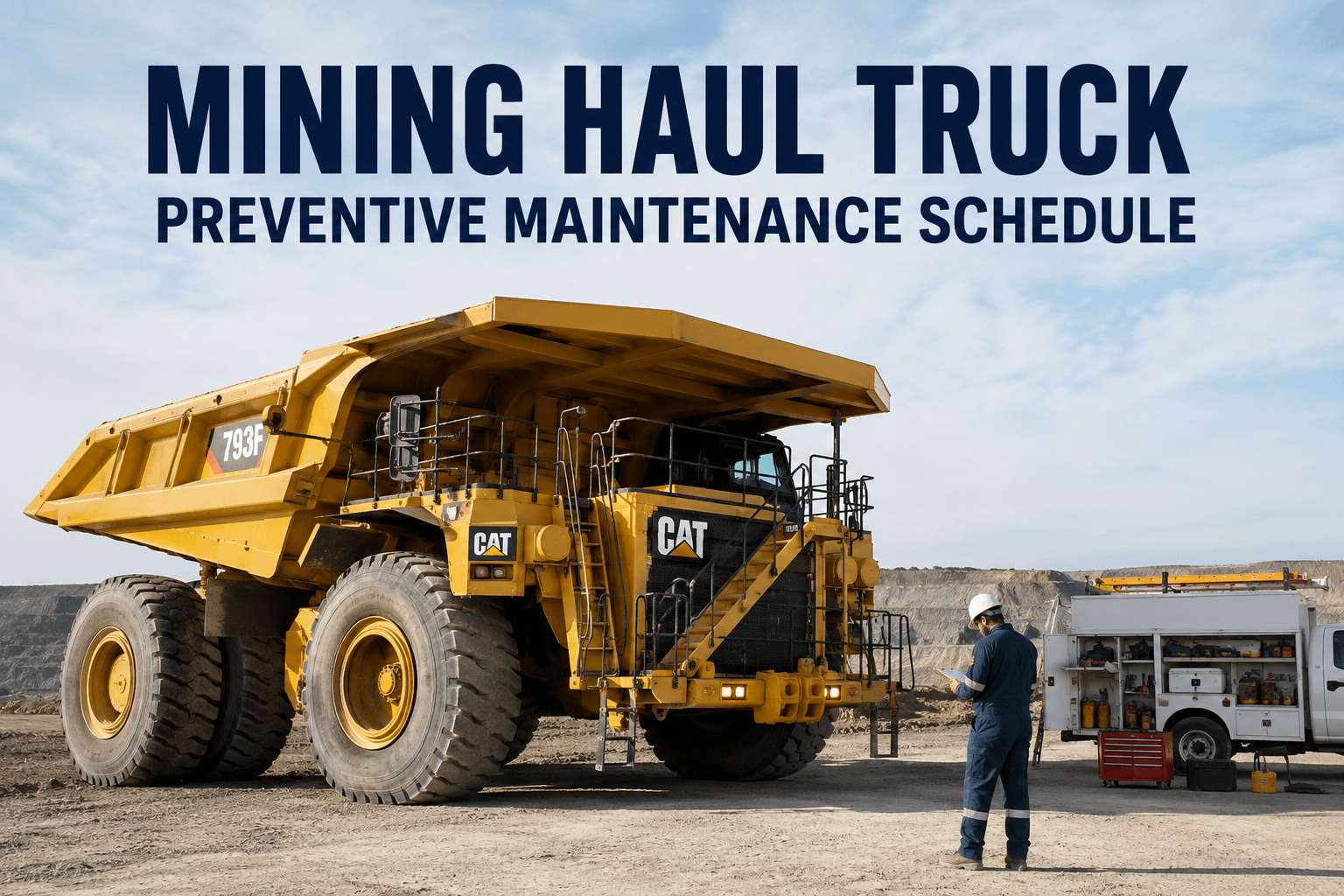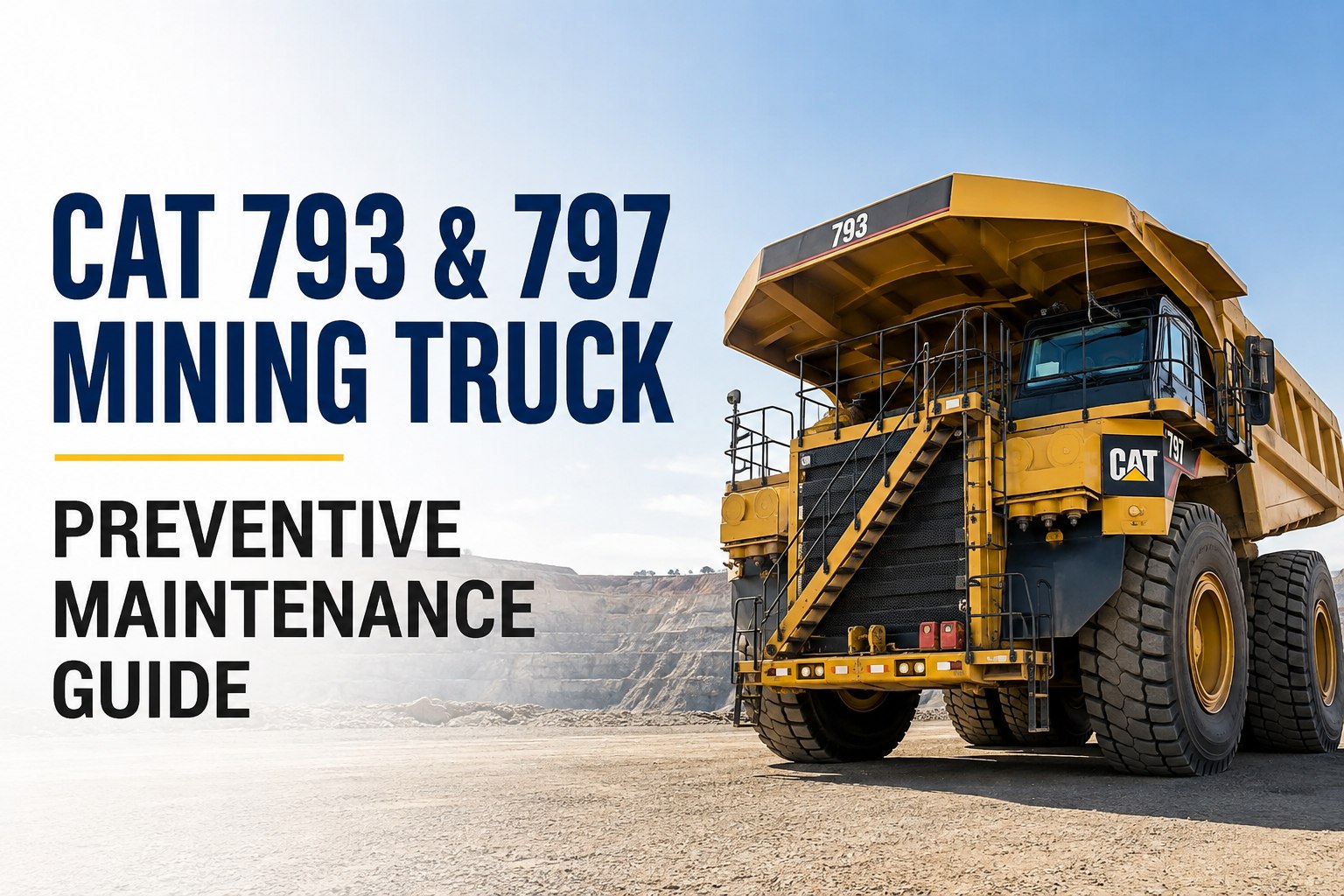
On an ultra-class haul truck, the gap between a well-run preventive maintenance program and a reactive one shows up as millions of dollars — per truck, per year. This guide breaks down Cat 793 and 797 maintenance the way a top-quartile mine actually runs it: real intervals, real component checkpoints, and the digital workflow that turns paper PM into >90% availability. Book a demo
The math that makes PM the highest-ROI line item on the shop floor
Every hour of unplanned downtime, every avoidable emergency repair, every early tire replacement lands in one of the numbers below.
Cat engineered these machines for mechanical availability greater than 90%. Whether your fleet actually gets there is not a machine question — it's an information question. How fast a defect goes from operator to work order. How reliably an interval fires on real engine hours. How quickly a rising oil-sample metal turns into a scheduled inspection. Every one of those loops is what the guide below tightens.
Cat 793 vs 797F — know what you're maintaining
Same tier structure, different truck. The PM ladder (PM1–PM4 plus daily walkaround) applies to both, but component sizes, fluid capacities, drive architecture and tire specs diverge in ways that change your parts stock and shop time. A quick side-by-side.
The delta most planners miss: the 797F's larger fluid capacities and tire budget mean the same missed PM interval or missed pressure check costs more in absolute dollars. On a 797F fleet, PM discipline isn't more important in principle — it's more expensive to skip. Book a demo to see per-truck maintenance cost broken down by machine model
The PM interval map — what happens every 250, 500, 1,000, 2,000 hours
Caterpillar structures ultra-class truck PM around four service tiers stacked on top of a mandatory daily walkaround. Each tier bundles the tasks whose service interval lines up with that engine-hour count — and every PM inherits every item from the PM tier below it.
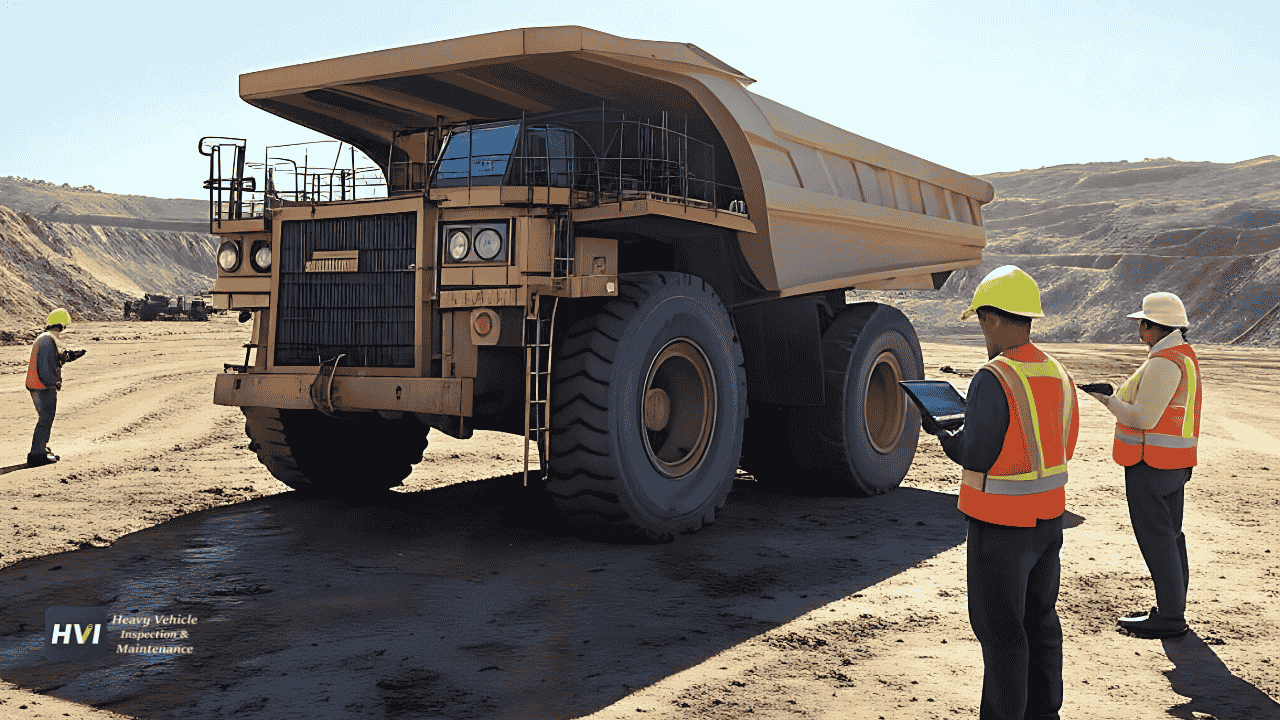
Pre-shift walkaround
- Visual + operational check with engine cold
- Tires, wheels, hoses, leaks, brake function
- Lighting, cab safety, dump body condition
- Fluid levels, air pressure, warning lamps
Basic service
- Engine oil & filter (per program)
- Fuel + air filter inspection
- Coolant & SOS oil sample pulled
- Wheel-end lube, chassis lube system check
- Tire pressure & condition documented
Intermediate service
- All PM1 items
- Fuel filter replacement, air filter change
- Brake inspection & adjustment
- Differential + final drive oil samples
- Hydraulic filter change, electrical check
Major service
- All PM2 items
- Transmission oil & filter, differential oil
- Structural torque check, brake measurement
- Wheel bearing + suspension cylinder inspection
- Radiator clean & pressure test, ECM scan
Overhaul-prep service
- All PM3 items
- Complete valve adjustment
- Cooling system flush
- Final drive planetary inspection
- Dye-penetrant frame weld inspection
Scheduled Oil Sampling
- Engine oil — wear metals & contamination
- Hydraulic fluid — silicon (dirt) intrusion
- Final drive & differential — bearing/gear wear
- Coolant — inhibitor depletion, glycol degradation
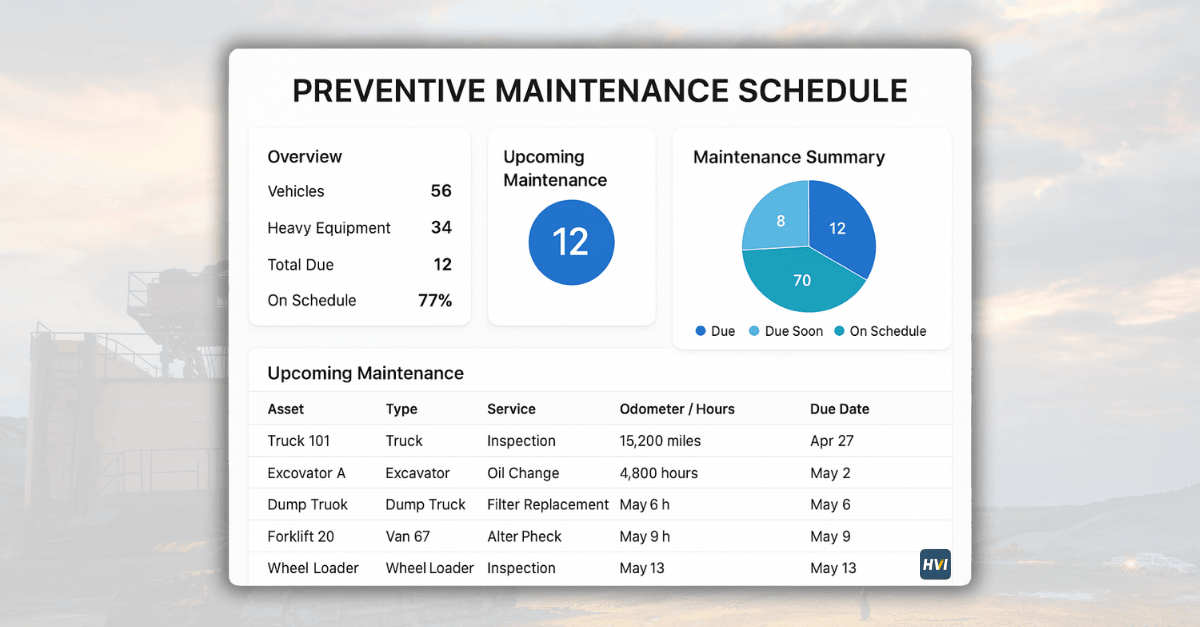
Two things separate the fleets that hold this ladder from the ones that drift. First: every interval fires on ECM engine hours, not calendar or memory — a truck that ran 22 hours a day is due sooner than the whiteboard says. Second: every PM is captured against the specific unit with photos and technician sign-off, not "done" written in a logbook. Miss either, and the ladder becomes a suggestion. Start free with the full PM ladder pre-configured for Cat 793 and 797F
Where availability actually gets lost — and how PM catches it
You can run every interval on time and still lose availability if any of these five system areas drifts. This is where most reactive maintenance events on 793 and 797F fleets actually originate — and each one carries a specific early warning signal a proper PM catches.
Early signal: Iron trending up 2 consecutive samples = cylinder liner or bearing wear starting. Coolant creep of even 2–3°C above baseline under the same load and route = radiator fouling or thermostat drift.
Early signal: Rising copper or lead in final drive SOS = bearing or gear wear. A failed final drive on a 793 or 797 is a ~$200K unplanned event — and it never fails without weeks of warning in the samples.
Early signal: Improper pressure is linked to ~85% of mining tire accidents (Goodyear/Continental) and cuts life 30–50%. On $30K–$45K tires, that's a $600K annual bleed hidden inside "normal" wear.
Early signal: Pad wear accelerating faster on one axle = load distribution or route grade issue, not a pad-change problem. Brake system defects are the top single OOS trigger on any commercial vehicle inspection.
Early signal: Frame cracks propagate fast under 240-tonne dynamic loading. Dye-penetrant weld checks at PM4 are non-negotiable, and any crack found grows an inspection interval — not just a repair line.
The pattern across all five: none fails without a signal. Every signal shows up in daily inspections or SOS trends before it shows up as a breakdown. A digital PM program's real job is making sure no signal gets lost between operator, tech, and planner. Book a demo to see SOS trends and inspection flags surfaced on one screen
From paper to digital — what actually changes on the shop floor
Both machines can be run on paper. It just doesn't survive at scale. Here's the same PM loop side-by-side on the two operating models. The distance between them is what closes when a mine implements a proper CMMS.
Nothing on the right side is exotic. It's the same disciplines the left side is trying to run — just held together by data instead of memory. That's the entire difference between a fleet that averages 84% availability and one that consistently holds >90%.
From a mining reliability engineer running 27 Cat 793Ds
We ran the fleet on paper for years and averaged around 84% availability. Never terrible, never great. What actually moved things was ditching the clipboards and running PM off actual ECM hours instead of what someone circled on a whiteboard on Monday.
Within six months our unplanned events dropped by roughly a third. Not because we spent more on maintenance — we spent less. We just stopped missing the small signals. A rising iron trend in a 500-hour SOS used to sit in an inbox for two weeks. Now it triggers a work order the same day. Same techs, same trucks, better information. Availability sits at 91% and the general manager stopped calling on Saturdays.
Frequently asked questions
What are the recommended Cat 793 maintenance intervals?
Caterpillar structures 793 preventive maintenance around a tiered ladder plus a mandatory daily walkaround. Daily: 10–15 minute pre-shift inspection covering tires, wheels, hoses, leaks, brakes, lighting, cab safety and dump body. PM1 at 250 engine hours: engine oil and filter service (unless extended-interval program in place), fuel and air filter inspection, coolant check, SOS oil sample, wheel-end lube top-up, tire pressure documented. PM2 at 500 hours: all PM1 items plus fuel filter replacement, air filter change, brake inspection and adjustment, differential and final drive oil samples, hydraulic filter change. PM3 at 1,000 hours: all PM2 items plus transmission service, differential oil change, structural torque checks, brake measurement, suspension inspection. PM4 at 2,000 hours: all PM3 items plus valve adjustment, cooling flush, final drive planetary inspection, dye-penetrant frame checks. Major component overhauls typically fall in the 15,000–20,000 hour window. Intervals should be shortened in high-dust, extreme-heat, extreme-cold or high-altitude operations, and adjusted based on SOS trending — the intervals are a floor, not a ceiling.
How do Cat 793 and Cat 797F maintenance schedules differ?
The tier structure (PM1–PM4 plus daily) is the same across both machines — but the 797F carries a larger, more complex powertrain and (in some configurations) an electric drive system that adds specific checkpoints not present on the 793. The 797F's Cat C175-20 engine has different filter specifications and larger fluid capacities than the 793's 3516-series engine. Where wheel-motor electric drives are used, dedicated bearing inspection, insulation resistance checks and cooling system verification are added at PM3 and PM4. The 793 uses a mechanical drive, so its PM focus stays on transmission and final drive service without the electric drive checkpoints. Tires on the 797F are also larger (typically 59/80R63 vs the 793's smaller footprint), so TKPH targets and pressure specifications differ — but the discipline of daily pressure checks and rotation on hours is identical. Both machines are engineered for >90% mechanical availability when their PM ladders are run on schedule. Neither achieves it on paper-based programs at scale.
How much does unplanned downtime on a Cat 793 or 797F actually cost?
Industry cost analysis puts unplanned downtime on an ultra-class haul truck at $5,000 to $20,000 per hour in combined direct and opportunity cost — the range widening with commodity price, haul cycle length, and how many other units the down truck was feeding. Individual component failure events land much higher: a failed final drive is roughly a $200,000 replacement, an unexpected engine overhaul in the field can exceed $500,000 fully loaded, and any of these events removes the truck from production for days to weeks. Emergency repairs run about 4.8 times the cost of the same job done as planned PM work — the multiplier comes from expedited parts, overtime labor, secondary damage, and lost tons that would have been hauled during the shop time. Which is why the ROI on a disciplined PM program is essentially never in question at any operation running Cat 793 or 797 units: the cost of one avoided major failure typically exceeds a full year of software, technician overtime and shop overhead combined.
What's the role of Cat's SOS (Scheduled Oil Sampling) in PM?
Cat's S·O·S Services program is a scheduled fluid analysis service that tests engine oil, hydraulic fluid, coolant and transmission oil for wear metals, contamination and degradation. It's one of the most valuable early-warning tools for haul-truck PM because it detects the trajectory of a failure long before the failure itself. Rising iron in engine oil samples across two or three consecutive PMs points at cylinder liner or bearing wear. Rising copper or lead in final drive samples signals bearing or gear degradation. Rising silicon in hydraulic samples means dirt is getting past a seal or breather — and contamination causes about 75% of hydraulic system failures. Coolant samples flag corrosion inhibitor depletion and glycol degradation before internal corrosion or liner pitting starts. The real value of SOS isn't a single report — it's the trend across samples, which is why capturing SOS results against the specific unit's history in a CMMS matters more than reading them once. A sample that sits in an inbox for two weeks isn't a PM tool; it's a paperwork exercise.
Can a digital CMMS actually improve Cat 793 or 797 availability?
Yes — and the mechanism is straightforward. Cat 793 and 797F trucks are engineered to deliver >90% mechanical availability. The gap between that engineered number and what a fleet actually achieves is almost entirely a matter of information flow: how quickly a defect is spotted, logged, assigned, worked and closed, and how well the SOS and PM history behind those decisions is tracked. Paper-based programs leak information at every hand-off — DVIRs get skipped or backdated, work orders get lost in shift changes, SOS reports get filed instead of acted on, and PM intervals drift because they're triggered by memory instead of ECM hours. A digital CMMS closes those leaks: pre-shift DVIRs are mandatory and time-stamped, flagged defects auto-open work orders the same shift, PM intervals fire on real engine hours, and SOS trends surface against the specific unit's history. Published customer data from HVI's mining fleet deployments shows roughly ~25% lower annual maintenance cost and typical payback around 3 months. At sites running multiple Cat 793 or 797F units, the software cost is rounding error against a single avoided major event.
Run your Cat 793 & 797 fleet on the same platform top-quartile mines already use
HVI schedules every PM tier against real ECM engine hours, auto-opens work orders on flagged defects, tracks SOS trends against every unit's history, and gives your planner and general manager a single availability and cost-per-hour dashboard. Fleets on HVI report ~25% lower annual maintenance cost, ~3-month payback, and configuration for your mine in under two weeks.
No credit card · No hardware · PM ladder ready on day one