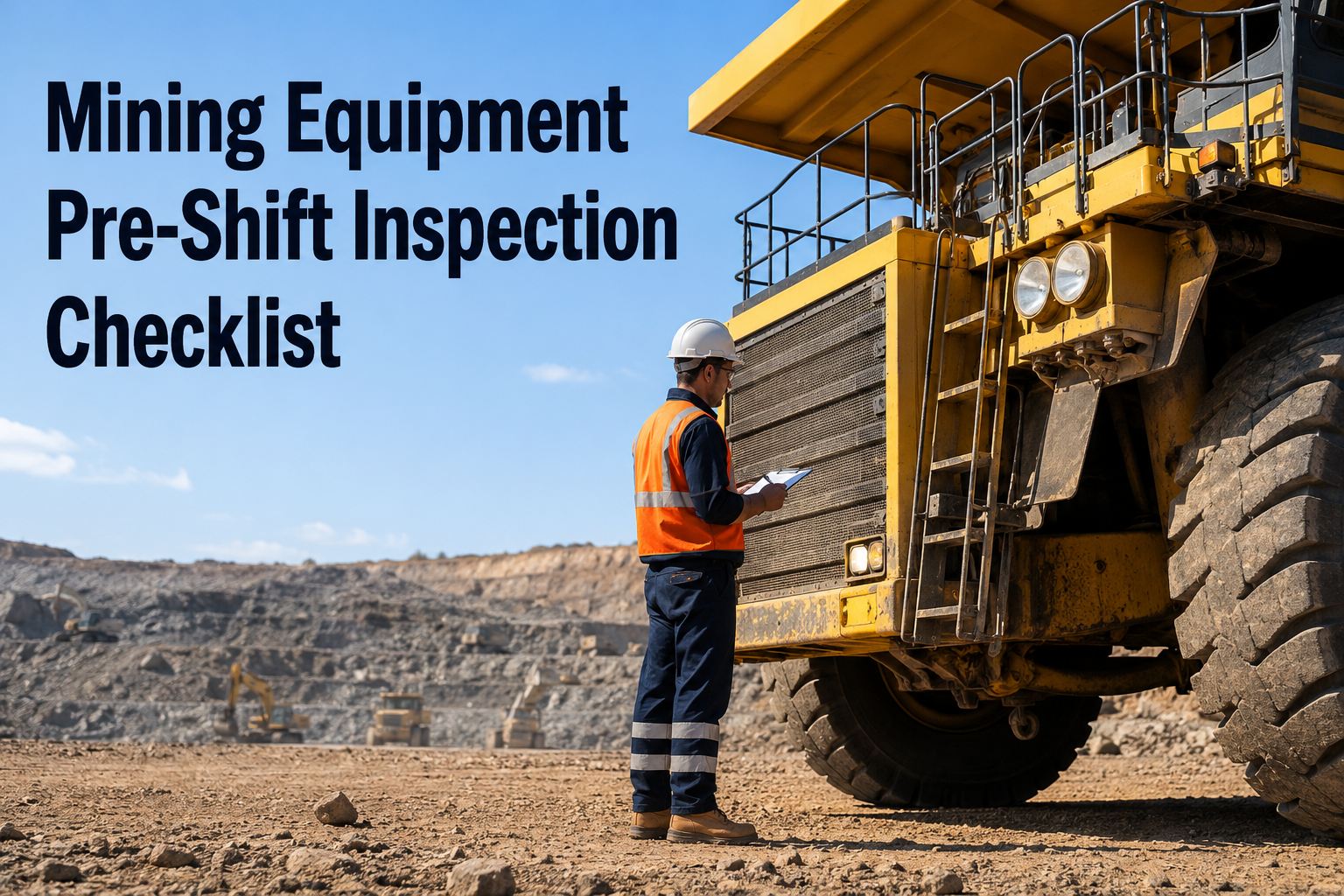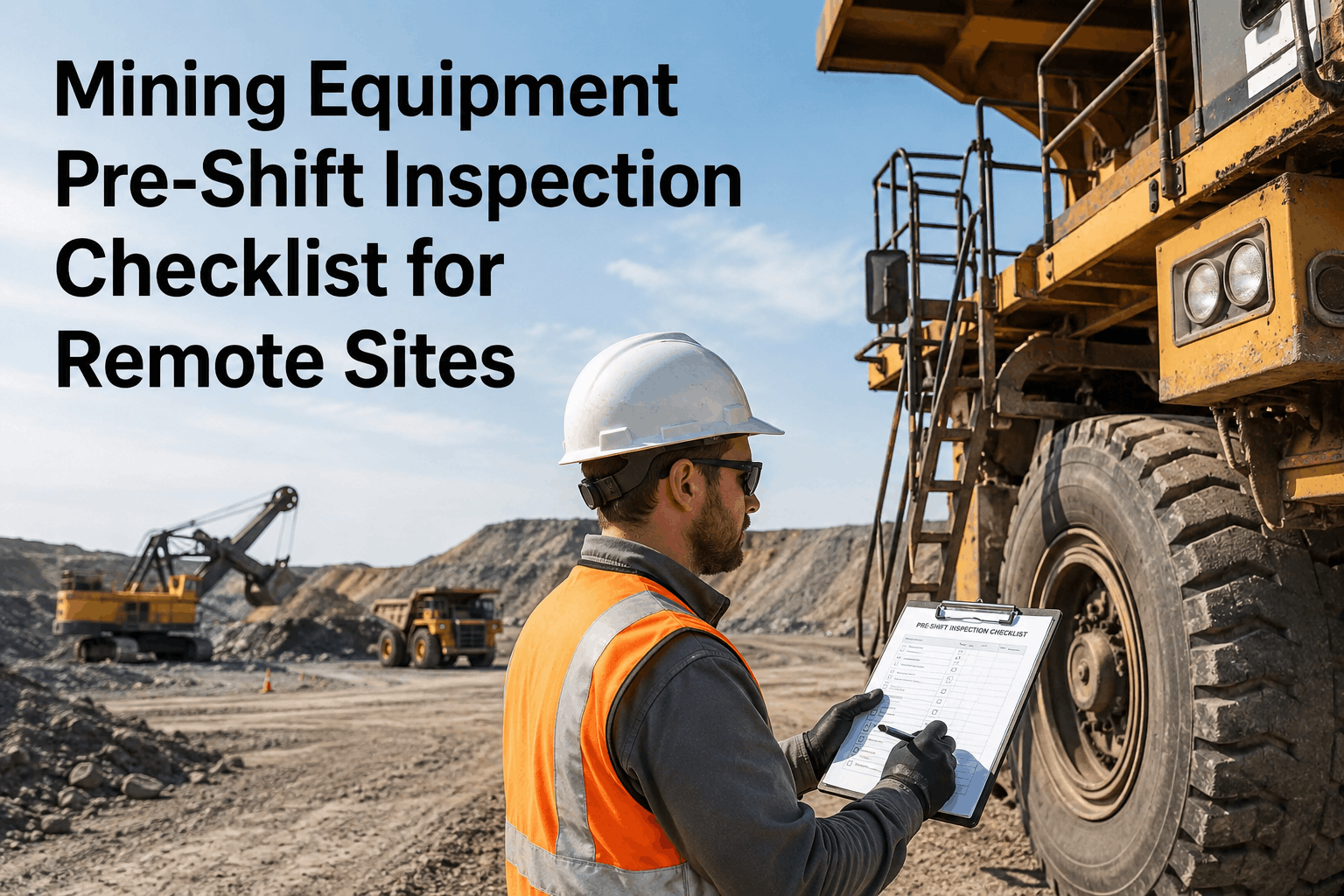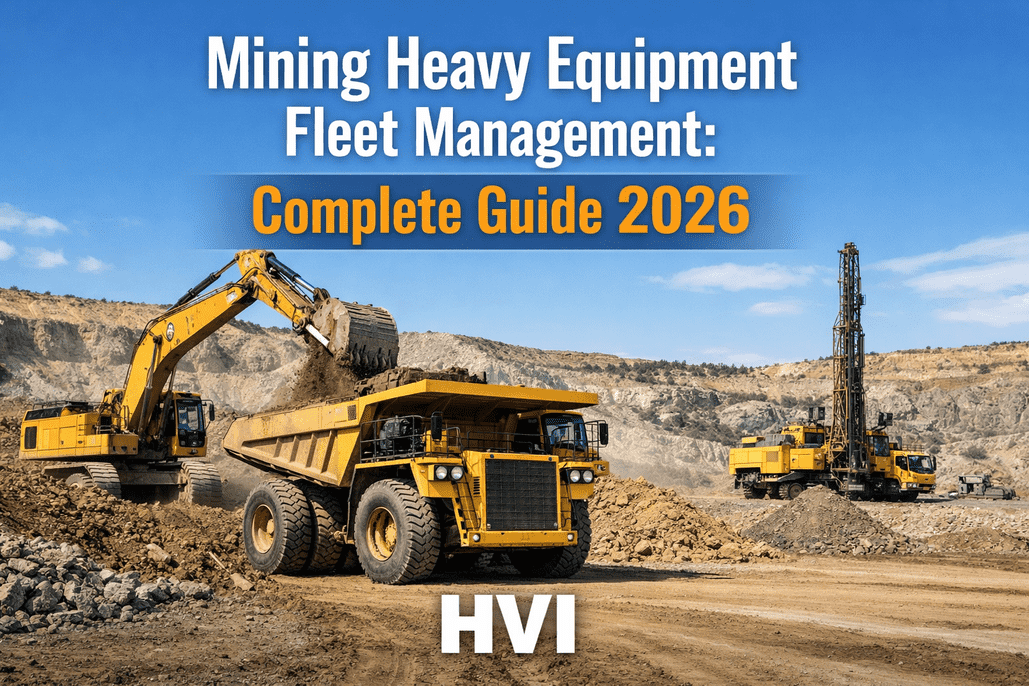
On a mine site, a paper inspection form is a liability waiting to happen. It gets lost in the dust, a found defect dies on a clipboard before it ever reaches a mechanic, and when MSHA arrives asking for ninety days of records, the answer is a filing cabinet nobody can search in time. Yet the inspection itself isn't optional: under Title 30 CFR, every piece of self-propelled mobile equipment must be inspected before it's placed in operation each shift, by the operator who will run it, and any unsafe equipment must be tagged and removed from service until it's repaired. That's a legal obligation, not a best practice — and the penalty for getting it wrong runs from thousands per violation up to unwarrantable-failure findings, pattern-of-violation status, and withdrawal orders. Digital mining inspection software closes the gap between the regulation and the reality of a remote pit: it auto-loads the right checklist, requires photo proof on critical items, works offline underground or on the bench, routes every defect to a work order, blocks dispatch of unsafe machines, and builds the audit-ready MSHA record automatically. This guide covers the regulatory framework, what a digital workflow does, the surface-vs-underground differences, and the mining-specific items a generic form misses. book a 30-minute walkthrough to see it set up for your operation.
Paper forms get lost in the pit. The MSHA obligation doesn't go with them.
HVI replaces paper checklists with photo-verified mobile inspections built for MSHA — QR-scan auto-loads the right haul truck, loader, dozer, drill, or underground template, works offline in the pit, blocks dispatch of unsafe equipment, and exports a 30 CFR audit record in one click.
Why paper fails — and what it costs
Traditional paper inspections are fundamentally flawed for mining. The failure modes are predictable, and each one carries a compliance and safety price.
The three failures repeat at every operation running paper: forms get lost in the dust before they're filed; defects die on a clipboard because maintenance never sees the finding until the machine breaks down; and when an inspector asks for records, retrieving them means hours in a filing cabinet instead of seconds on a screen. Each is a citation risk and a safety risk at once — a missed defect in the pit is a stranded multi-million-dollar machine and a lost production shift. Digital inspection is simply the decision to close those gaps.
The MSHA regulatory framework
The pre-shift inspection obligation lives in specific 30 CFR sections that differ by mine type. Knowing which applies is the foundation of compliance.
Metal / non-metal mines
Part 56 (surface) and Part 57 (underground) govern metal and non-metal operations. §56.14100 and §57.14100 require operators to inspect self-propelled mobile equipment before placing it in operation each shift.
Coal mines
Part 75 (underground) and Part 77 (surface) govern coal operations, with their own pre-shift examination and equipment-inspection requirements layered on the same before-each-shift principle.
Workplace examinations
§56.18002 and §57.18002 require a competent person to examine each working place every shift for hazardous conditions, documented with the conditions found and the corrective action taken.
Miner training
Part 46 (surface) and Part 48 (underground) govern new-miner, task, and annual refresher training — each with its own documentation, and no miner should operate with an expired certification.
The common thread across all of them: equipment inspected before each shift by a competent person, defects affecting safety reported, unsafe equipment tagged and removed until repaired, and the whole thing documented. Failure to conduct pre-shift examinations is among the most frequently cited MSHA violations. HVI structures its templates around these exact 30 CFR requirements.
What a digital workflow actually does
The power of digital isn't just replacing paper — it's a connected chain from the scan to the audit export. Each step closes a gap paper leaves open.
Scan & auto-load the checklist
The operator scans the equipment QR code and the right template auto-loads — haul truck, loader, dozer, drill, or underground-specific — so no one runs a generic form that misses mining items.
Photo-verify critical items, offline
Critical sections — brakes, tires, ROPS, fire suppression — require photo evidence to pass, GPS-tagged at the equipment, working fully offline in the pit and syncing when back in range. No more rubber-stamps.
Defect creates a work order & blocks dispatch
A flagged defect auto-creates a work order with photo, severity, and assigned technician; a critical defect auto-blocks dispatch so an unsafe machine can't be run, and maintenance sees it in real time.
One-click MSHA audit export
Every inspection is retained indefinitely and searchable in seconds. When MSHA asks, export by equipment, date range, or operator in one click — not hours in a filing cabinet.
This is the chain paper can't form: the defect found in the pit becomes a work order, blocks the unsafe machine, and lands in the audit record automatically. sign up free and digitize your mining inspections from the first shift, or book a demo to see the offline pit workflow.
Surface vs. underground
Both run on the before-each-shift principle, but underground operations add hazards and inspection items that surface sites don't face. A digital program handles both.
Surface mining
Mobile-equipment pre-shift checks on haul trucks, loaders, dozers, and drills, workplace exams each shift, and the Part 56 / Part 77 framework. Inspected by MSHA roughly twice a year, with every pre-shift record subject to review.
Underground mining
Everything surface requires, plus atmospheric and ventilation testing, ground control and roof support, escapeways and SCSR rescuers, refuge chambers, and communications — under Part 57 / Part 75. Inspected by MSHA roughly four times a year.
Underground pre-shift examinations must also be entered in the official mine examination book kept on the surface, documenting hazardous conditions and the corrective actions taken — a recordkeeping burden that digital handles natively. A platform that auto-loads underground-specific templates and syncs the record to the surface closes that gap. HVI supports both surface and underground equipment workflows.
The mining items a generic form misses
An off-the-shelf vehicle checklist passes a haul truck that an MSHA inspector would cite, because it skips the items unique to mining. These are the ones a real mining template checks first.
A generic form misses exactly the items MSHA inspectors check first — ROPS and fire suppression among them. sign up free and use mining-specific templates aligned to 30 CFR.
Paper checklists vs. HVI
Both technically record an inspection. Only one auto-loads the mining template, photo-verifies critical items, blocks unsafe dispatch, and produces the one-click MSHA record an audit demands.
Paper / reactive
- Forms lost in the dust before they're filed
- Generic checklist misses ROPS & fire suppression
- Defects die on a clipboard, machine runs anyway
- Rubber-stamped "pass" with no proof
- MSHA record retrieval takes hours of digging
- No real-time view of unsafe equipment
With HVI software
- QR-scan auto-loads the right mining template
- Critical items require photo evidence to pass
- Every defect auto-creates an assigned work order
- Critical defects auto-block dispatch
- One-click 30 CFR audit export in seconds
- Works offline in the pit, syncs when in range
pays for years. A single serious MSHA citation averages around $70,000, and a missed pre-shift can escalate to unwarrantable-failure findings, pattern-of-violation status, and withdrawal orders. Against that, a digital inspection program that catches the defect, blocks the unsafe machine, and keeps the audit record is among the highest-ROI safety investments a mine can make — and it deploys fast, often live before the next shift. HVI makes MSHA-compliant inspection routine across surface and underground fleets.
Frequently asked questions
Are pre-shift inspections of mining equipment legally required?
Yes. Under MSHA's Title 30 CFR regulations, pre-shift inspections are a legal obligation, not a best practice. All self-propelled mobile equipment must be inspected before it's placed in operation each shift, without exception, and the inspection must be performed by a competent person — the operator who will run the equipment. Any defects affecting safety must be reported, and equipment with safety defects must be tagged and removed from service until the repair is complete. The specific requirements live in 30 CFR Parts 56 and 57 for surface and underground metal and non-metal mines, and Parts 75 and 77 for coal operations, with §56.14100 and §57.14100 covering the before-each-shift equipment inspection. Failure to conduct these examinations is among the most frequently cited MSHA violations and can lead to unwarrantable-failure findings, civil penalties, and pattern-of-violation status. HVI's inspection and maintenance software runs the pre-shift check against these exact requirements and records the competent person. sign up free and stay compliant every shift.
What should a mining equipment pre-shift inspection checklist include?
Every MSHA-compliant checklist should cover the mining-specific safety items an inspector checks first, not just generic vehicle points. That means ROPS and FOPS rollover and falling-object structures with bolts tight and certification tags legible; fire suppression with extinguisher charge, inspection tag, and secure mounting; backup and warning alarms that activate in reverse with volume meeting MSHA distance standards, plus an audible horn; service and parking brakes that hold on the maximum grade encountered; tires and tracks; hydraulics and fluids with no leaks; cab and controls; and communications with a functional, correctly programmed radio. Underground operations add atmospheric and ventilation testing, ground control and roof support, escapeways and self-contained self-rescuers, and refuge chambers. A generic vehicle form misses mining-specific items like ROPS and fire suppression that MSHA inspectors prioritize, which is exactly why a mining template matters. HVI's inspection and maintenance software auto-loads equipment-specific mining templates aligned to 30 CFR. book a demo to see the mining templates.
How is digital mining inspection different from paper?
Paper inspections are fundamentally flawed for mining in three ways: forms get lost in the dust, defects die on a clipboard before maintenance ever sees them, and retrieving records for an MSHA audit means hours digging through a filing cabinet. Digital inspection closes all three. The operator scans the equipment's QR code and the correct template auto-loads, so no one runs a generic form. Critical items like brakes, tires, ROPS, and fire suppression require photo evidence to pass, GPS-tagged at the equipment, which ends rubber-stamp inspections. It works fully offline in the pit and syncs when back in range. A flagged defect auto-creates a work order with photo, severity, and assigned technician, and a critical defect auto-blocks dispatch so an unsafe machine can't run, with maintenance seeing it in real time. And every inspection is retained indefinitely and exportable to an MSHA audit in one click by equipment, date, or operator. HVI's inspection and maintenance software delivers exactly this workflow. sign up free and replace paper from the first shift.
How is underground mining inspection different from surface?
Both follow the same before-each-shift principle for mobile equipment, but underground operations add hazards and inspection requirements that surface sites don't face. Underground pre-shift examinations under Part 57 or Part 75 must cover atmospheric and ventilation testing — including confirming methane below 1.0% in working places — ground control and roof support, escapeways kept clear and passable, self-contained self-rescuers within service life, refuge chambers stocked and operational, and a tested underground communication system, on top of the mobile-equipment checks. The examination must also be entered in the official mine examination book kept on the mine surface, documenting hazardous conditions and corrective actions. Underground mines are also inspected by MSHA roughly four times a year versus twice for surface. A digital platform handles the heavier underground recordkeeping natively by auto-loading underground-specific templates and syncing the record to the surface. HVI's inspection and maintenance software supports both surface and underground workflows. book a demo for your mine type.
How does HVI help with MSHA mining compliance?
HVI is an inspection and maintenance software platform built for surface and underground mining under MSHA jurisdiction. Operators scan an equipment QR code to auto-load the correct 30 CFR-aligned template — haul truck, loader, dozer, drill, or underground equipment — and run it from a phone or tablet with mandatory photo evidence on critical items like brakes, tires, ROPS, and fire suppression, GPS-tagged and working fully offline in the pit. A flagged defect auto-creates an assigned work order with photo and severity, a critical defect auto-blocks dispatch so an unsafe machine is removed from service per the tag-out requirement, and maintenance sees findings in real time. Every inspection is retained indefinitely and exports to an MSHA audit in one click by equipment, date range, or operator, turning hours of filing-cabinet retrieval into seconds. It covers the mining-specific items generic forms miss and supports both the surface Part 56/77 and underground Part 57/75 frameworks. book a demo and we'll map the software onto your operation on the call.
Make every pre-shift MSHA-compliant, photo-verified, and audit-ready — even offline in the pit.
HVI replaces paper with QR-scanned mining templates aligned to 30 CFR, photo-verifies critical items, works offline underground and on the bench, auto-creates a work order from every defect, blocks dispatch of unsafe equipment, and exports an MSHA audit record in one click. Stop letting forms die in the dust and defects die on a clipboard.
No credit card required · Live before your next shift · QR mining templates + offline pit inspections + dispatch blocking + one-click MSHA export in one platform