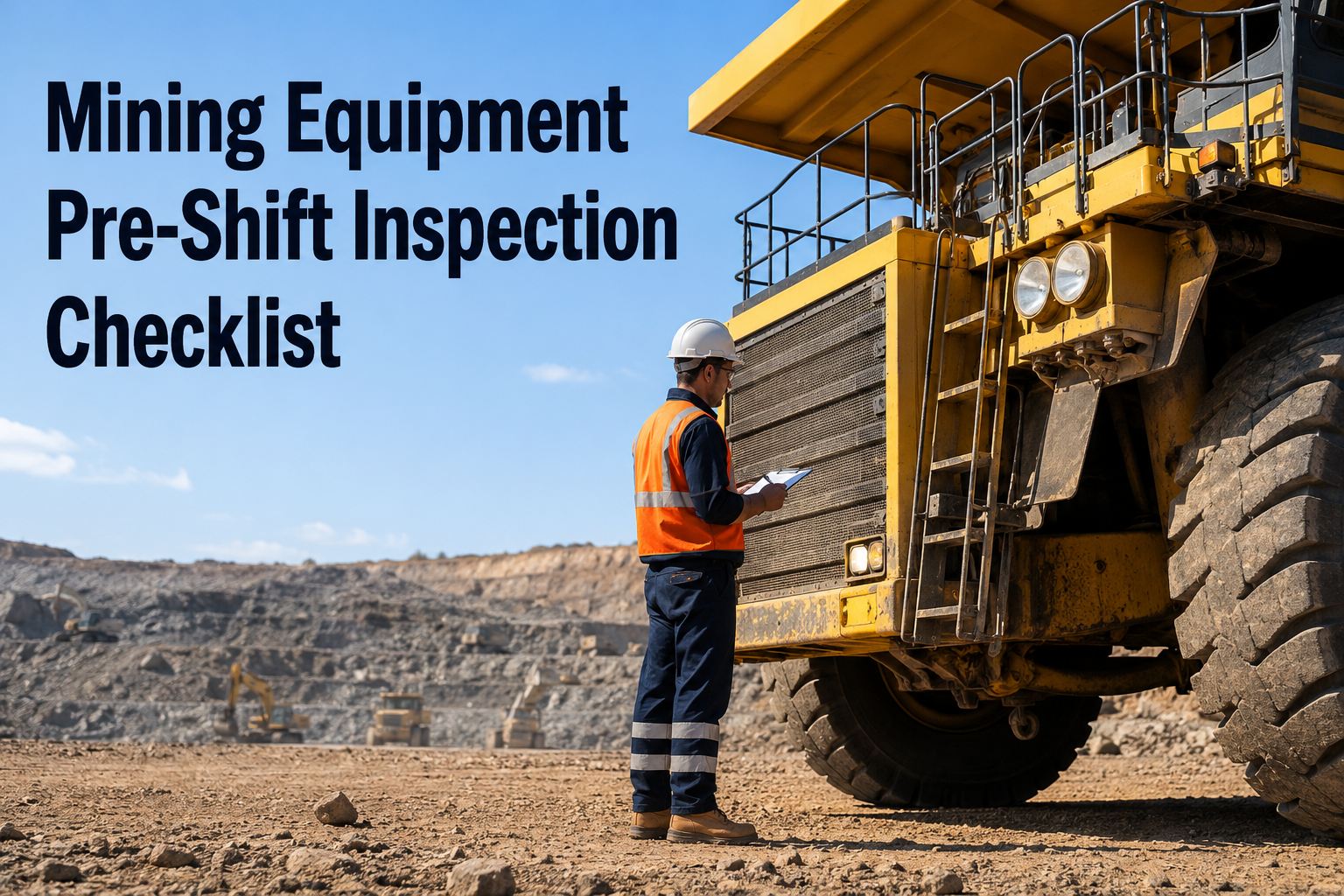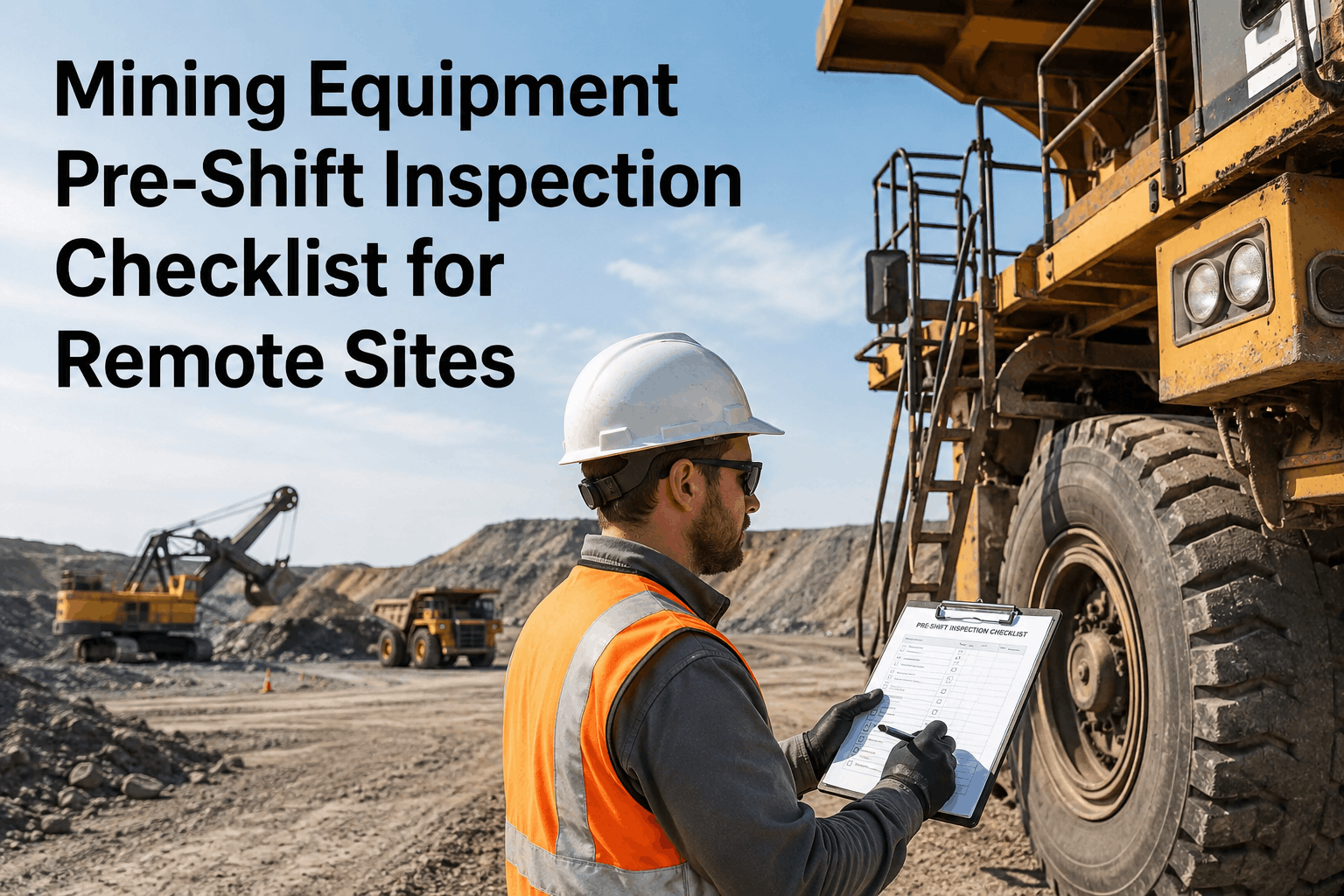
Mining equipment doesn't break down conveniently. A haul truck, dozer, or excavator at a remote pit is often hours from the nearest shop and far outside cell range — so a defect missed at the start of shift isn't a quick fix, it's a stranded multi-million-dollar machine and a production day gone. That's exactly why MSHA makes the pre-shift inspection a legal obligation, not a courtesy: under Title 30 CFR, all machinery must be inspected before use, every shift, without exception, by a competent person who visually and functionally assesses the equipment, reports defects, and documents the findings. Anything found unsafe must be tagged and removed from service until repaired. The problem most remote sites hit isn't knowing the rule — it's executing it where there's no signal, where paper forms get lost in the dust, and where a found defect dies on a clipboard before it ever reaches a mechanic. This guide lays out the MSHA-grounded pre-shift checklist by system, the defect-to-repair workflow that actually closes the loop, and how to run it all offline at the edge of the network. book a 30-minute walkthrough to see it set up for your remote operation.
No signal, no shop nearby, no margin for a missed defect. The pre-shift check is the whole game.
HVI runs MSHA pre-shift inspections from a phone or tablet that works fully offline in the pit, captures defects with mandatory photos, tags unsafe equipment out of service, turns every defect into an assigned work order, and syncs the moment a signal returns — so compliance and uptime hold even at the edge of the network.
Why the remote site changes everything
The pre-shift check matters everywhere, but a remote mine site raises the stakes on every side — distance, connectivity, and the cost of a stranded machine all work against you.
No shop nearby
A defect that strands a machine in a remote pit means hours of travel for a mechanic and parts — turning a five-minute fix into a lost production day.
No signal
Cell and data coverage drop off at the pit edge, so any inspection tool that needs a live connection simply doesn't work where the equipment actually is.
No margin
Ultra-class machines cost millions and the cost-per-hour of downtime is brutal — the pre-shift check is the cheapest insurance against the most expensive failure.
MSHA requires not just that the inspection happens but that a record is maintained and made available to inspectors. On paper, at a remote site, that record is exactly what goes missing — lost, illegible, or never filed. A digital check that syncs when signal returns is the only practical way to prove compliance from the pit.
The pre-shift checklist by system
Every machine is different, but the MSHA pre-shift check walks the same critical systems. These are the checkpoints that catch the failure before the operator turns a wheel.
Safety devices & ROPS
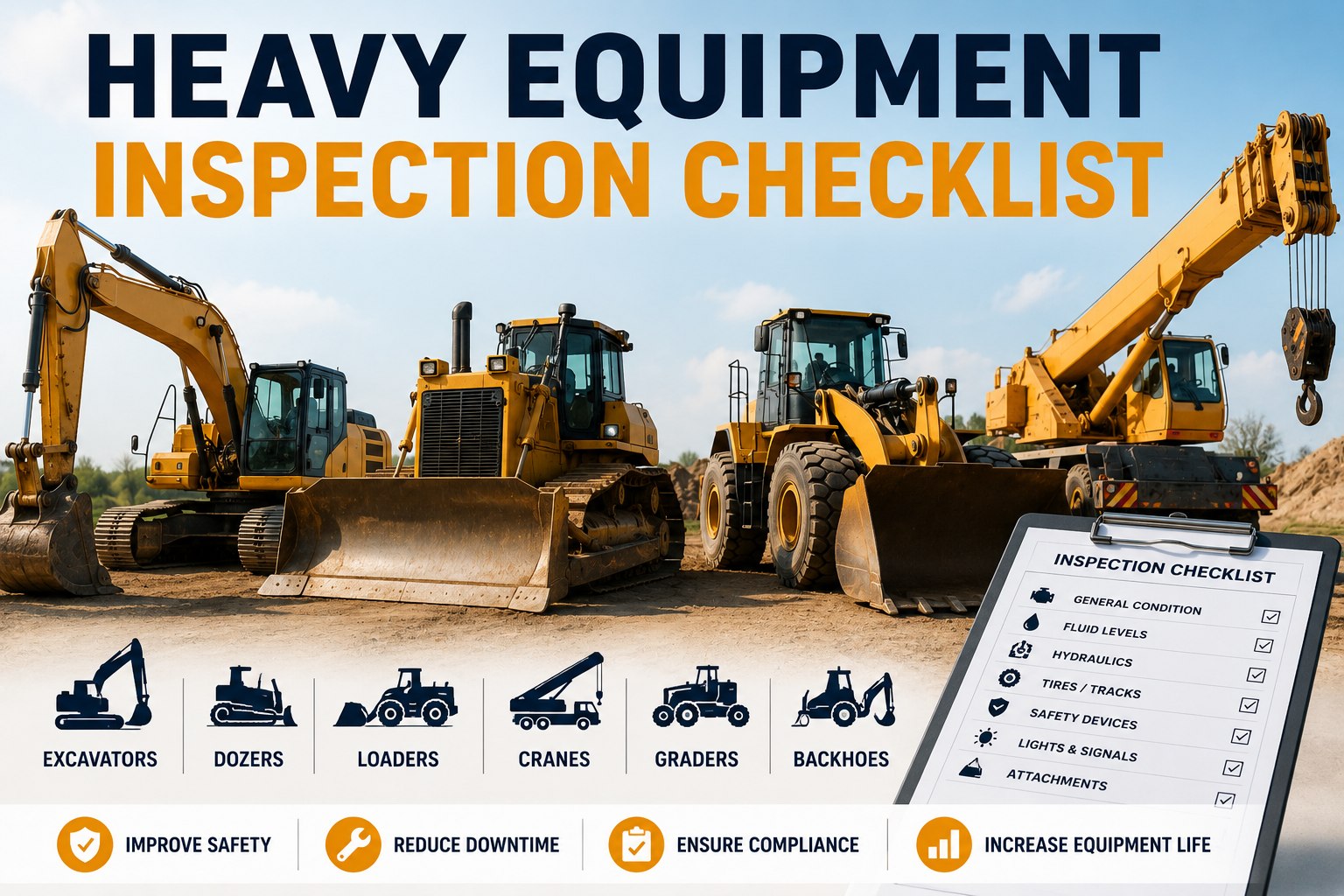
Rollover protection in place and undamaged, seatbelts, backup alarms, horn, lights, fire suppression, and emergency shutoffs — all confirmed functional before the machine moves.
Brakes & steering
Service and park brakes tested for holding, steering checked for response and play. On a loaded haul truck on a grade, this is the system that prevents catastrophe.
Tires & tracks
Tire condition, pressure, and cuts, or track tension and pad wear — checked for damage that abrasive pit conditions inflict fast and that fails expensively.
Hydraulics & fluids
Hydraulic levels and leaks, engine oil, coolant, and fuel checked — plus hoses and cylinders inspected for the leaks that signal a failure building.
Structure & attachments
Frame, bucket, blade, or bed checked for cracks and deformation; pins, linkages, and ground-engaging tools inspected for wear and security.
Cab, controls & access
Gauges, warning lights, controls, mirrors and cameras, windshield and wipers, and clean, secure access steps and handholds for safe mounting.
A generic vehicle form misses the mining-specific items — ROPS, ground-engaging tools, fire suppression — that MSHA inspectors check first. sign up free and build equipment-specific pre-shift templates for every machine type, or book a demo to see mining templates in the field.
From found defect to closed repair
Finding a defect is only the start. MSHA requires unsafe equipment to be tagged and removed from service until repaired — which means the defect has to flow into a tracked, assigned, closed-out repair, not a note that blows away.
Capture with photo
The operator logs the defect on the spot with a mandatory photo, documenting the condition exactly as found — even with no signal.
Tag out if unsafe
A safety-critical defect flags the machine out of service immediately, so it can't be run until the repair is verified complete.
Auto-create work order
The defect becomes an assigned work order with machine, system, and severity attached — routed to the right mechanic automatically.
Sync & document
When signal returns, everything syncs — the inspection, the defect, the work order — building the MSHA record that proves compliance.
The failure mode MSHA investigators look for after an incident is exactly this: a defect that was seen, noted on paper, and never acted on. Closing the loop from inspection to verified repair is both the safety win and the compliance proof. HVI makes that loop automatic on every machine.
Built for the edge of the network
The single feature that decides whether a digital inspection tool works at a remote mine is whether it works with no signal. Here's what offline-first actually means in the pit.
Works fully offline
The complete inspection — checklist, photos, defects, tag-outs — runs on the device with no connection, so coverage gaps never stop a shift from starting on time.
Syncs automatically
The moment the device is back in range, every inspection and work order uploads on its own — no manual export, no re-keying, no lost records.
One fleet, one record
Remote-pit and shop machines live in the same system, so supervisors see the whole fleet's compliance and defect status in one place once data syncs.
A cloud inspection app that needs a live connection is useless exactly where mining equipment lives — at the pit edge, off the grid. sign up free and run pre-shift inspections offline, syncing when you're back in range.
Paper checklists vs. HVI
Both technically capture a pre-shift check. Only one survives the dust and the dead zone, makes the inspection defensible, and turns a found defect into a verified repair.
Paper / reactive
- Forms lost, smudged, or never filed in the field
- Generic checklist misses mining-specific items
- Defects noted on paper, then forgotten
- No proof the inspection happened for MSHA
- Unsafe machines run because the tag-out never stuck
- Compliance status invisible until the audit
With HVI software
- Inspections run fully offline, sync when in range
- Mining-specific templates per equipment type
- Every defect auto-creates an assigned work order
- Digital records prove every shift inspection occurred
- Safety-critical defects tag machines out of service
- Fleet-wide compliance & defect status in one view
lost records, zero dead zones. A pre-shift program that runs offline and syncs automatically means every inspection is captured, every defect is tracked to a verified repair, and the MSHA record exists whether the pit had signal or not. The result is fewer stranded machines, defensible compliance, and operators who trust the equipment under them. HVI runs the whole remote fleet in one platform.
Frequently asked questions
Are pre-shift inspections of mining equipment legally required?
Yes. Under MSHA's Title 30 CFR regulations, pre-shift inspections are a legal obligation, not optional. All machinery must be inspected before use, every shift, without exception — regardless of how new or reliable the equipment seems. The operator must visually and functionally assess the equipment, promptly report any defects, and document the findings, and any machine found unsafe must be tagged and removed from service until it's repaired. The inspection must be performed by a competent person, defined as someone with the abilities and experience to recognize hazards. Non-compliance can result in citations and civil penalties that run into the thousands of dollars per violation per day, plus the far larger cost of a preventable injury. HVI's inspection and maintenance software runs the full MSHA pre-shift check from a phone or tablet, works offline in the pit, and keeps the documented record MSHA requires. sign up free and put pre-shift compliance on autopilot.
How do you run inspections at a remote site with no cell signal?
The answer is offline-first software. The deciding feature for any digital inspection tool at a remote mine is whether the complete inspection — checklist, photos, defect capture, and tag-outs — runs entirely on the device with no live connection, because cell and data coverage drop off at the pit edge where the equipment actually works. A cloud app that needs a connection is useless exactly where you need it. With an offline-first tool, the inspection happens normally regardless of signal, and the moment the device is back in range everything syncs automatically — no manual export, no re-keying, no lost records. That's what keeps both compliance and uptime intact at the edge of the network. HVI's inspection and maintenance software is built this way: full offline operation with automatic sync when signal returns. book a demo to see offline inspections in action.
What should a mining equipment pre-shift checklist include?
While each machine type varies, the MSHA pre-shift check walks the same critical systems. Safety devices and ROPS — rollover protection in place and undamaged, seatbelts, backup alarms, horn, lights, fire suppression, and emergency shutoffs. Brakes and steering, tested for holding and response, which is the system that prevents catastrophe on a loaded haul truck on a grade. Tires and tracks for damage and wear that abrasive pit conditions inflict fast. Hydraulics and fluids — levels, leaks, hoses, and cylinders. Structure and attachments — frame, bucket, blade, pins, and ground-engaging tools for cracks and security. And the cab — gauges, warning lights, controls, mirrors, cameras, and safe access steps. A generic vehicle form misses the mining-specific items like ROPS and fire suppression that inspectors check first. HVI's inspection and maintenance software provides equipment-specific templates with every system pre-built.
Who is responsible for the pre-shift inspection?
The responsibility for conducting the pre-operational check typically falls on the equipment operator, because operators are the most familiar with their machines and best positioned to notice when something feels off. MSHA requires the inspection be done by a competent person — someone with the abilities and experience to recognize hazards and adverse conditions. Supervisors and safety personnel are responsible for ensuring inspections are actually completed correctly and that any issues found are followed up and corrected, not just noted. That supervisory oversight is hard to maintain across a remote site on paper, because the records that prove inspections happened and defects were closed are scattered or missing. A digital system gives supervisors fleet-wide visibility into who inspected what and which defects are still open. HVI's inspection and maintenance software makes that oversight automatic once devices sync. sign up free and give supervisors full visibility.
How does HVI help with remote mining equipment inspections?
HVI is an inspection and maintenance software platform built for exactly this environment. Operators run MSHA pre-shift inspections from a phone or tablet using equipment-specific templates for haul trucks, dozers, excavators, loaders, and more — and the whole inspection works fully offline in the pit, with mandatory photo capture on defects, syncing automatically the moment signal returns. A safety-critical defect tags the machine out of service until the repair is verified, and every defect auto-creates an assigned work order routed to the right mechanic, so nothing dies on a clipboard between the pit and the shop. All records are stored digitally and are instantly available for MSHA audits, giving supervisors fleet-wide visibility into inspection compliance and open defects across every remote location. Because it's the same platform running your whole fleet's maintenance, the inspection, the defect, and the repair all connect. book a demo and we'll map the software onto your remote operation on the call.
Capture every defect, tag every hazard, document every inspection — even with no signal.
HVI runs MSHA pre-shift inspections from a phone that works fully offline in the pit, captures defects with mandatory photos, tags unsafe equipment out of service, turns every defect into an assigned work order, and syncs automatically when signal returns. Stop losing records to the dust and the dead zone, and stop paying for stranded machines you could have caught at start of shift.
No credit card required · Live in under two weeks · Offline pre-shift inspections + tag-out + work orders + MSHA records in one platform