A warning light comes on, a load is due, and a driver mentions a shop that can "make the problem disappear for good." That's the moment EPA emissions compliance stops being abstract. The gap between a legitimate repair and illegal tampering is enormous, and getting it wrong exposes you to civil penalties. The best-protected fleets can prove every emissions fault was found, diagnosed, repaired, and verified. This guide covers the aftertreatment systems, the 2026 enforcement picture, the tampering line, and the records that protect you. Book a demo to see an audit-ready repair trail in HVI.
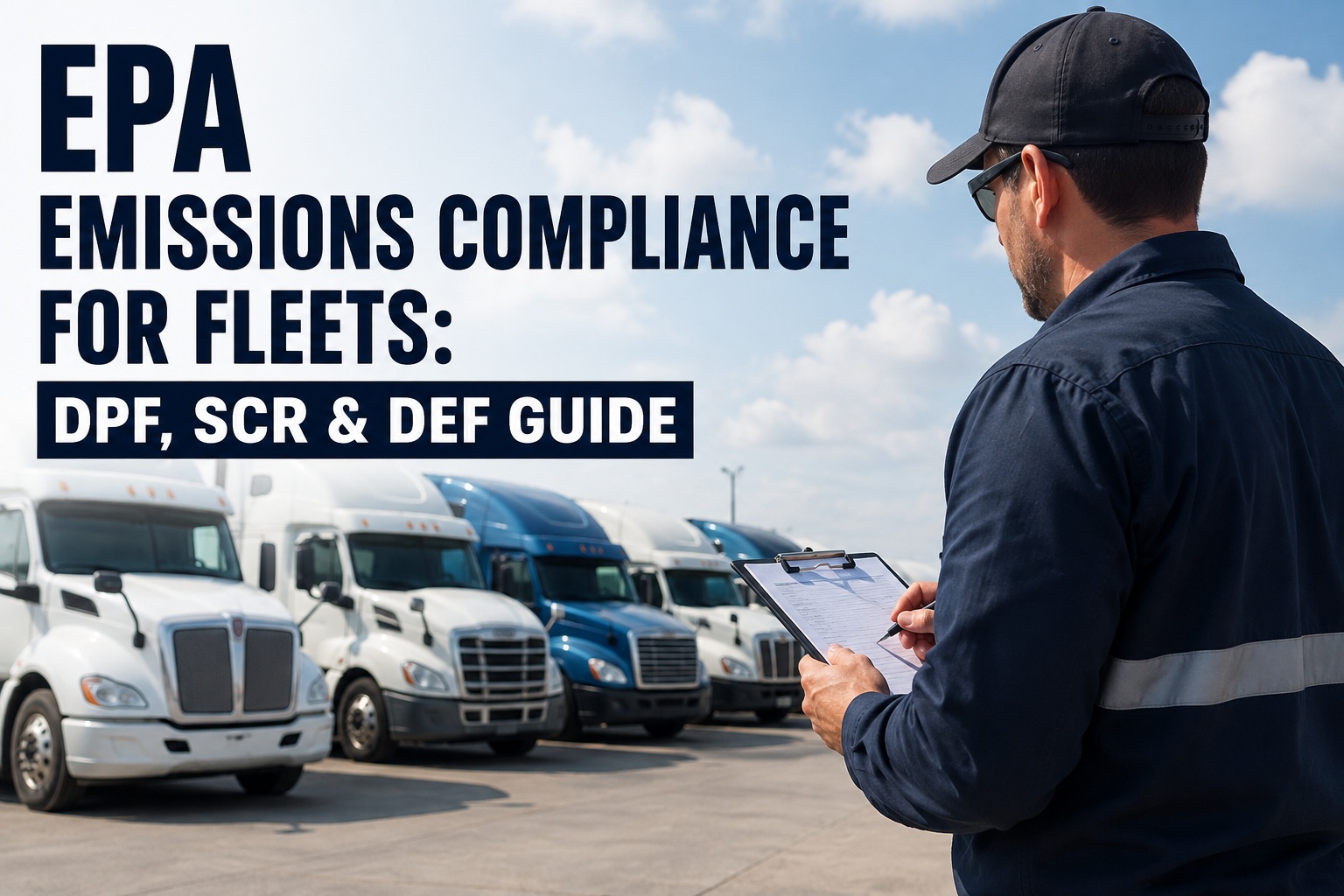
EPA Emissions Compliance for Fleets: DPF, SCR & DEF Guide
Emissions compliance isn't just about clean exhaust — it's about proving your aftertreatment systems were maintained, and that faults were repaired rather than bypassed.
Educational overview — not legal advice. Emissions rules and enforcement change, and state/local requirements vary. Confirm current federal, state, and local requirements and consult qualified professionals on any enforcement matter.
For any fleet running post-2010 diesels, EPA emissions compliance is woven into daily maintenance whether you think about it that way or not. Modern aftertreatment — the diesel particulate filter (DPF), selective catalytic reduction (SCR), and diesel exhaust fluid (DEF) systems — keeps trucks within federal emissions limits, and keeping those systems working is both an operational necessity and a compliance obligation. The Clean Air Act prohibits tampering with emissions controls, and that prohibition remains firmly in place. The smart way to treat aftertreatment isn't as a nuisance to work around, but as a maintained system whose upkeep you can document and prove.
How diesel aftertreatment works
Before the compliance side makes sense, it helps to understand what these three systems actually do. They work together to clean the exhaust, and each has its own maintenance profile and failure modes.
Captures soot and particulate matter from the exhaust. It periodically cleans itself by burning off trapped soot — a process called regeneration, which happens passively at highway temperatures, actively via injected fuel, or as a parked regen when needed.
Converts harmful nitrogen oxides (NOx) into nitrogen and water using a catalyst. It's the system that lets modern diesels meet NOx limits — but it only works when it's fed properly and functioning correctly.
A urea-and-water solution injected into the SCR system to drive the NOx-reducing reaction. Running out of DEF, or using contaminated or out-of-spec fluid, can trigger warnings and power derates designed to protect the system.
The key insight for compliance: these aren't optional add-ons — they're the emissions controls your engine was certified with, and they're designed to be maintained, not removed. When a fault appears, the compliant path is to diagnose and repair it. We cover the specific fault codes and regeneration behavior in more depth in our related maintenance guides. Book a demo to track DPF, SCR, and DEF maintenance per vehicle
The line: legitimate maintenance vs. prohibited tampering
This is the single most important distinction in emissions compliance, and it's not subtle. One side is required upkeep of a certified system; the other is a federal violation. Knowing exactly where the line sits protects your fleet from a costly mistake.
- Cleaning, servicing, or replacing a DPF
- Diagnosing and repairing SCR faults
- Refilling DEF and fixing DEF-system problems
- Replacing failed sensors and aftertreatment components
- Performing regens and following OEM repair procedures
- Temporary diagnostic steps as part of a genuine repair
- Removing or gutting the DPF ("DPF delete")
- Disabling or removing the SCR or DEF system
- Installing defeat-device software or "delete tunes"
- Hardware that bypasses required emissions controls
- Defeating or falsifying the onboard diagnostic system
- Any modification that renders a control inoperative
The Clean Air Act prohibits tampering with emissions controls and the manufacture, sale, or installation of aftermarket defeat devices. The distinction is intent and outcome: fixing a system so it works as certified is maintenance; removing, disabling, or bypassing it is tampering. A repair that temporarily disables a component to diagnose or fix it is part of legitimate maintenance — permanently defeating a control is not. Start free on HVI to document repairs that keep systems working as certified.
2026 enforcement update: what changed, what didn't
2026 brought real changes to how emissions tampering is enforced — and a lot of dangerous misunderstanding along with them. It's essential to separate what actually changed from what stayed exactly the same, and to distinguish proposals from final rules.
In January 2026, the U.S. Department of Justice announced it would exercise enforcement discretion to no longer pursue criminal charges for Clean Air Act emissions-tampering cases, and to stop opening new criminal cases. Subsequent EPA guidance clarified that temporarily overriding a control as part of a genuine repair isn't illegal tampering.
The Clean Air Act's tampering prohibition remains in force — deletes and defeat devices are still illegal. EPA can still investigate and pursue civil penalties. State agencies, notably California's, enforce independently. And a future administration could revisit criminal enforcement.
One more distinction the news cycle blurs: some 2026 items are proposals, not final rules. A proposed EPA change to how DEF-related derates work, for example, is not the same as an enforceable requirement today. Always separate proposed from final, and confirm the current rules directly with EPA and your state agency before making any decision. For any active enforcement matter, consult qualified compliance counsel. Book a demo to keep emissions maintenance documented regardless of enforcement climate
The emissions-fault response process
When an aftertreatment fault appears, a disciplined, documented response does two things at once: it fixes the truck, and it builds the record proving you did. Here's the sequence that turns a warning light into an audit-ready repair trail.
Capture the fault code, warning, or derate — ideally the moment a telematics or diagnostic alert fires, before it worsens.
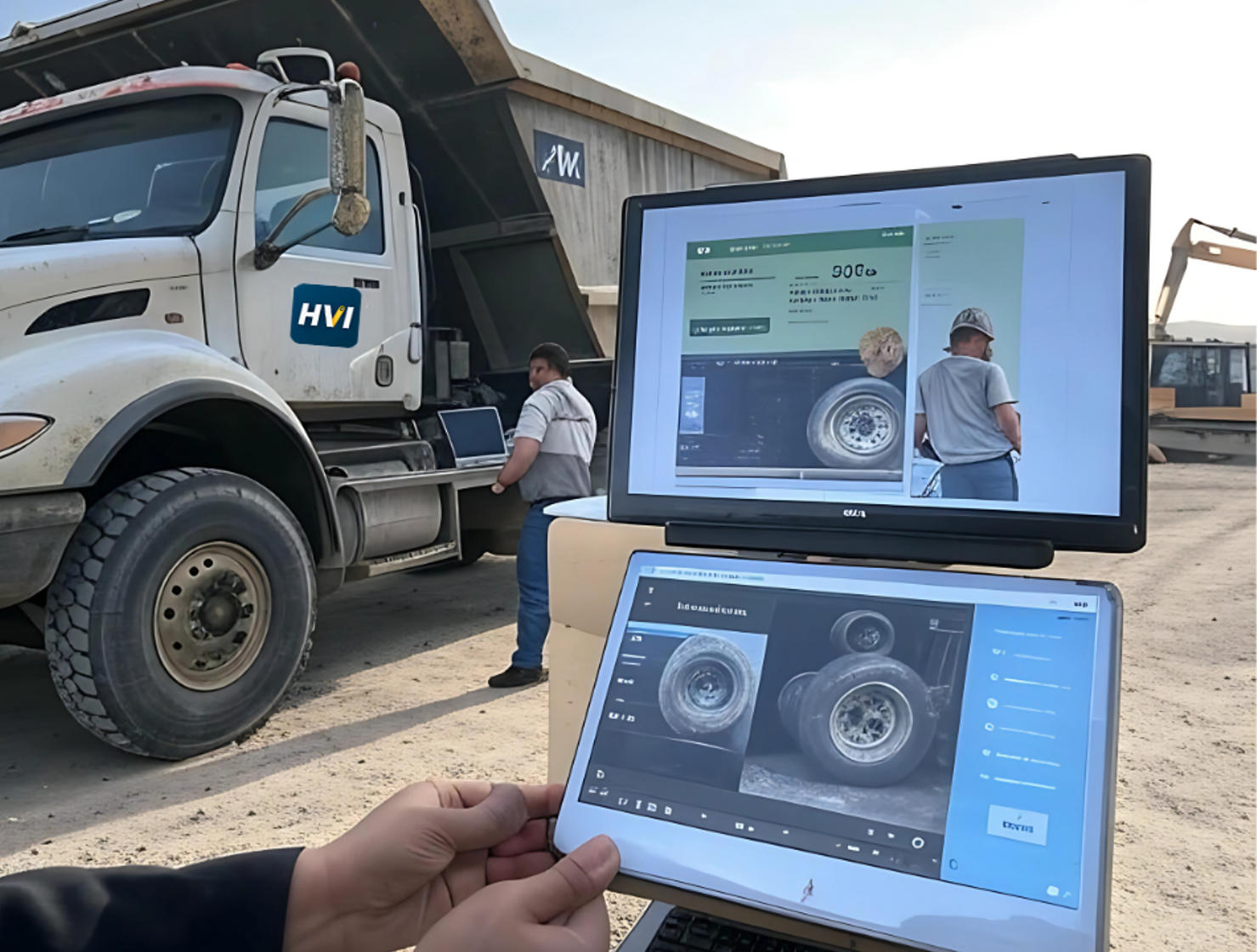
Note what was observed, with photos of the fault, the affected component, and any relevant readings.
Open a tracked work order so the fault becomes an assigned, accountable task rather than a note someone forgets.
Diagnose the root cause and complete the repair using proper procedures and parts, recording what was found and done.
Confirm the system works again, clear the fault, and retain all supporting evidence against the vehicle's record.
The power of this process is that it produces its own proof as a byproduct of doing the work correctly. Each step leaves a record, and together they tell an unambiguous story: the fault was found, understood, fixed, and confirmed. That's the opposite of the story tampering tells — and it's exactly what you'd want on hand if anyone ever asked. Start free to run emissions faults through a documented work-order process.
The documentation that demonstrates compliance
A complete maintenance history is what lets a fleet demonstrate that an emissions problem was identified, diagnosed, repaired, and verified — rather than ignored or bypassed. These are the pieces of evidence worth capturing and keeping together on each vehicle.
Individually, each of these is a data point. Assembled against the vehicle and tied together in sequence, they become a narrative: this fault, on this truck, was caught here, diagnosed this way, repaired with these parts, and verified working. Telematics and diagnostic alerts make this even stronger by catching aftertreatment problems early and triggering a documented work order before a small fault becomes a large maintenance — or compliance — problem. Book a demo to keep the full emissions evidence chain on each vehicle
EPA enforcement: what the record shows
EPA has treated aftermarket defeat devices as a significant pollution problem, and its published enforcement record makes the stakes concrete. These are drawn from EPA's own authoritative sources.
EPA has run a National Enforcement and Compliance Initiative focused on stopping aftermarket defeat devices for vehicles and engines, reflecting the scale it assigns the problem.
EPA's case resolutions include substantial settlements with defeat-device manufacturers and sellers — for example, a California parts manufacturer agreeing to pay $1 million in a resolved matter.
An EPA analysis attributed hundreds of thousands of tons of excess NOx over the trucks' lifetime to defeat-device sales for certain diesel trucks in a defined period — the basis for its enforcement focus.
The takeaway isn't to catalog penalties — it's that emissions compliance is something EPA actively documents and enforces, and civil exposure is real even where criminal prosecution has eased. For current enforcement details, penalty amounts, and case examples, EPA's own website is the authoritative source, and it's the one to check rather than secondhand summaries.
From a maintenance manager who keeps the receipts
We run a mix of Cummins and Detroit power, and aftertreatment faults are just part of life — DPF regens, the occasional SCR sensor, DEF quality flags. Early on, we'd fix them and move on without much of a paper trail. It never felt like a problem until I started thinking about what I'd actually show if someone questioned whether a truck's emissions system was intact.
Now every emissions fault runs through the same flow: the code gets logged, we photograph it, a work order opens, and we don't close it until the repair's verified and the record's complete. It's not about expecting an investigation — it's that I can prove, on any truck, that we fixed these systems properly instead of doing something we shouldn't. That peace of mind is worth the few extra minutes per repair.
Maintain the systems, document the proof
EPA emissions compliance for a diesel fleet comes down to a straightforward principle: keep your aftertreatment systems working as certified, and be able to prove you did. The DPF, SCR, and DEF systems are the emissions controls your engines were built and certified with, designed to be maintained rather than removed — and the Clean Air Act's prohibition on tampering and defeat devices remains fully in force. The 2026 enforcement changes were real but narrower than the noise suggested: federal criminal prosecution of tampering eased, but the tampering ban itself, EPA civil enforcement, and independent state enforcement all remain, and some talked-about changes are proposals rather than final rules. The compliant path for any emissions fault is the same as it's always been — identify it, diagnose it, repair it, verify it, and keep the evidence.
That last part, keeping the evidence, is where a fleet turns good maintenance into demonstrable compliance, and it's exactly what HVI is built for. From an emissions fault or inspection finding through diagnosis, repair, verification, and preventive maintenance, HVI keeps the whole trail — fault codes, DPF regeneration history, diagnostic results, inspection findings, work orders, parts, DEF-related work, mechanic notes, photos, and verification — organized against each vehicle and retrievable in seconds, with telematics and diagnostic alerts helping catch problems early. To be clear about the boundary: HVI is a documentation and maintenance-records platform, not legal or compliance advice, not a determiner of your compliance status, and not a substitute for qualified professionals — and it should never be used to disguise tampering, only to document legitimate maintenance. Because federal, state, and local emissions requirements vary and can change, always confirm the current rules with EPA and your state and local agencies, and consult qualified compliance counsel on any enforcement matter. Maintain the systems, document the work, and your fleet's emissions compliance rests on evidence rather than hope. Book a demo to build your emissions maintenance evidence trail in HVI.
Frequently asked questions
What is the difference between emissions maintenance and tampering?
The difference is fundamental and comes down to whether you're keeping an emissions control working as certified or defeating it. Legitimate emissions maintenance includes cleaning, servicing, or replacing a diesel particulate filter (DPF); diagnosing and repairing selective catalytic reduction (SCR) faults; refilling diesel exhaust fluid (DEF) and fixing DEF-system problems; replacing failed sensors and aftertreatment components; performing regenerations; and following the manufacturer's repair procedures. These activities keep the emissions system functioning the way it was certified to function. Prohibited tampering, by contrast, means removing, disabling, or bypassing those controls — gutting or deleting the DPF, disabling the SCR or DEF system, installing defeat-device software or "delete tunes," adding hardware that bypasses required controls, or defeating the onboard diagnostic system. The Clean Air Act prohibits tampering with emissions controls and the manufacture, sale, or installation of aftermarket defeat devices. The practical test is intent and outcome: if the work restores the system to proper certified operation, it's maintenance; if it renders an emissions control inoperative, it's tampering. Notably, temporarily disabling a component strictly as part of diagnosing or completing a genuine repair falls within legitimate maintenance — what's prohibited is permanently removing, disabling, or bypassing the control. This is why documenting the purpose and outcome of emissions work matters: the record shows the work was a repair, not a defeat.
Did the 2026 changes make diesel deletes legal?
No. This is the most dangerous misconception circulating in 2026, so it's worth being precise. In January 2026, the U.S. Department of Justice announced it would exercise enforcement discretion to stop pursuing criminal charges for Clean Air Act emissions-tampering cases and to stop opening new criminal cases, and subsequent EPA guidance clarified that temporarily overriding a control as part of a genuine repair is not illegal tampering. What did not change is just as important: the Clean Air Act's prohibition on tampering and defeat devices remains fully in force, so deletes and defeat devices are still illegal. The EPA can still investigate violations and pursue civil penalties. State agencies — California's in particular — enforce their own emissions requirements independently of federal decisions. And enforcement discretion is a policy posture that a future administration could revisit at any time. So the accurate summary is that federal criminal prosecution of tampering eased, but tampering itself remains illegal and carries real civil exposure. It's also important to separate proposed changes from final rules, because the news cycle blurs them: some discussed 2026 items are proposals, not enforceable requirements. Treating any of this as permission to delete an emissions system would be a serious misread, and anyone facing a specific situation should confirm current federal, state, and local rules and consult qualified compliance counsel.
What documentation should a fleet keep for emissions compliance?
A fleet should keep a complete maintenance history that demonstrates each emissions problem was identified, diagnosed, repaired, and verified rather than ignored or bypassed. The specific documentation worth capturing and keeping together on each vehicle includes: DPF regeneration history; fault codes and diagnostic results; inspection findings; repair orders and a record of parts replaced; DEF-related work; mechanic notes explaining what was found and done; photographs of the fault and the repair; and repair verification confirming the system works again. Individually these are just data points, but assembled against a specific vehicle and tied together in sequence, they form a clear narrative showing the emissions system was maintained properly. This kind of record is valuable precisely because it distinguishes a legitimately maintained fleet from one that might have bypassed its controls — the evidence tells the story of a repair, not a defeat. Telematics and diagnostic alerts strengthen the picture further by identifying aftertreatment problems early and triggering a documented work order before a minor fault escalates into a larger maintenance or compliance issue. The practical challenge most fleets face isn't doing the work — it's keeping all these pieces organized and retrievable rather than scattered across diagnostic tools, paper repair orders, and individual technicians' memories, which is exactly the gap a structured maintenance-records system fills.
How should a fleet respond to an emissions fault code?
The most effective response is a disciplined, documented process that both fixes the truck and creates the record proving it was handled correctly. The recommended sequence is: first, record the fault — capture the fault code, warning, or derate, ideally the moment a telematics or diagnostic alert fires so it's addressed before it worsens. Second, document the inspection — note what was observed, with photographs of the fault, the affected component, and any relevant readings. Third, create a work order so the fault becomes a tracked, assigned, accountable task rather than an informal note that gets forgotten. Fourth, diagnose and repair — determine the root cause and complete the repair using proper procedures and parts, recording what was found and what was done. Fifth, verify and retain — confirm the system is functioning again, clear the fault, and retain all the supporting evidence against the vehicle's record. The strength of this approach is that it produces its own proof as a natural byproduct of doing the work properly: each step leaves documentation, and together they tell an unambiguous story that the fault was found, understood, repaired, and confirmed. That's both good maintenance practice and, in an environment where emissions compliance can be scrutinized, exactly the evidence trail a fleet wants to have on hand.
Do state emissions rules matter if federal enforcement changed?
Yes, very much so. Federal enforcement decisions do not override state and local emissions requirements, and states enforce independently. California, through the California Air Resources Board (CARB), is the most prominent example of a state with its own robust emissions requirements and enforcement, and other states have their own rules as well, including tampering prohibitions and inspection requirements that operate regardless of federal enforcement posture. This means a fleet operating across multiple jurisdictions may be subject to requirements that go beyond, or simply exist independently of, the federal picture — and a change in federal criminal enforcement discretion does nothing to relax those state obligations. It's one of the reasons the 2026 federal changes should not be read as broad permission: even setting aside continued federal civil enforcement, state-level requirements remain fully in effect where they apply. For any fleet, the practical implication is that emissions compliance has to account for where the vehicles actually operate, and the applicable state and local rules there. Because these requirements vary by location and can change, the right approach is to confirm the current federal, state, and local requirements for your operating area directly with the relevant agencies, and to consult qualified compliance professionals when questions arise — while maintaining, in all cases, the documented maintenance trail that demonstrates your emissions systems were kept in proper working order.
Build your emissions maintenance evidence trail in HVI
From the first fault code to verified repair, HVI keeps your emissions maintenance provable: DPF regeneration history, fault codes and diagnostics, inspection findings, work orders, parts, DEF work, mechanic notes, photos, and verification — organized against each vehicle and retrievable in seconds. Turn telematics alerts into documented work orders, and keep an audit-ready trail that shows faults were repaired, not bypassed. HVI is your documentation layer, not legal or compliance advice. Mobile-first for the shop and the road, live in under two weeks.
Free to start · Emissions defect-to-repair evidence chain · Fault codes, photos & verification on day one