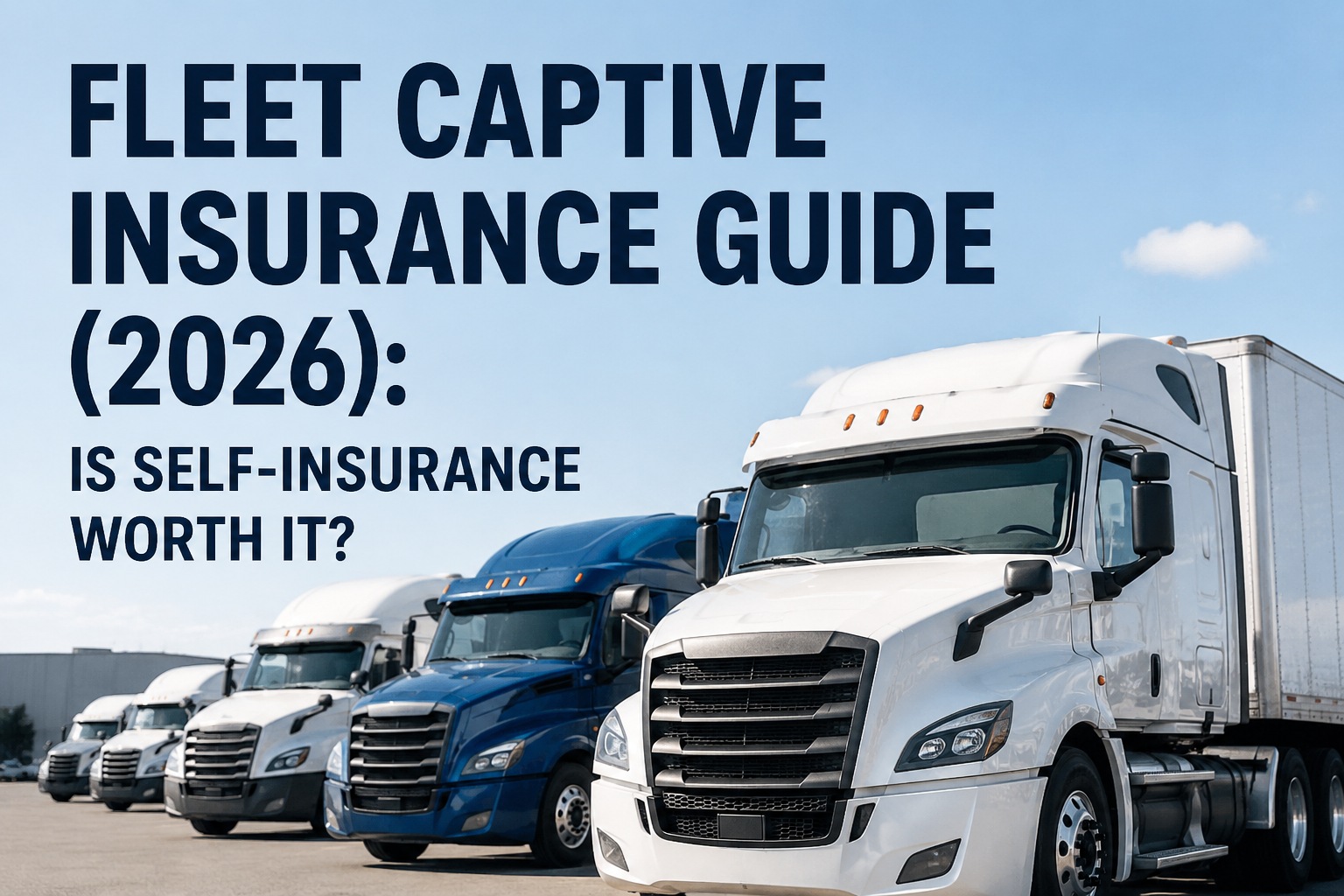
The commercial insurance line item is the fastest-growing cost on most fleet P&Ls — and the one operators feel the least control over. Fleet captive insurance is the alternative quietly gaining ground: an insurance company you own, funded by your own premium, that returns underwriting profit to your balance sheet instead of the market's. It's not right for every fleet. This guide walks through what a captive is, when the math works, the four structures, and the qualification bar. Book a demo
Commercial vs captive — the same 150-truck fleet, two different insurance economics
Real numbers from a published Houston carrier scenario. Same risk profile. Different structure. $1–$1.7M swing.
- Insurer keeps underwriting profit
- Rate exposed to class pricing & market cycles
- Zero recovery when losses come in low
- Limited coverage customization
- Underwriting profit returns to fleet
- Rate reflects your actual loss history
- Multi-year good-loss dividends
- Coverage tuned to specific risk profile
The comparison above isn't hypothetical — it's a real published case study. But the number that matters isn't the $1M in year-one savings. It's the compounding value of returning underwriting profit to your balance sheet year after year, and the insulation from commercial-market rate volatility. On a well-run fleet, a captive isn't cheaper insurance — it's better ownership of your own risk. On a poorly-run fleet, it's expensive and painful. The line between the two is what this guide is about.
The four captive structures — and when each one fits
"Captive insurance" isn't one thing. It's a family of four structures with meaningfully different capital requirements, complexity, and fleet-size thresholds. Picking the right one is the difference between a program that returns capital to shareholders and one that ties it up.
Pure (single-parent) captive
One carrier sponsors and owns the captive. Full underwriting profit stays with the parent. Maximum control, maximum capital commitment.
Group captive
Multiple fleets share a captive to gain scale and diversification. Members are typically vetted best-in-class fleets. Meets 3–4 times/year for peer safety benchmarking.
Rent-a-captive / protected cell
Fleet "rents" a segregated cell within an existing captive rather than sponsoring its own. Lower capital outlay, faster to stand up, most benefits without the overhead of a full captive.
Line-specific captive
Captive insures only one or two lines — commonly auto liability and physical damage, or first-dollar layers only — while buying reinsurance/excess coverage in the market.
The path most 2026 mid-sized fleets take starts with a rent-a-captive or group captive, moves to line-specific captive coverage of auto liability plus physical damage while reinsurance handles the excess layers, and only converts to full pure captive when the fleet crosses ~100 units with a proven multi-year loss record. Skipping straight to pure captive without the operational discipline is where the horror stories come from. Book a demo to see loss data organized for captive underwriting
Am I a candidate? The 3-gate qualification framework
Underwriters and captive managers filter candidate fleets through a sequence of three qualification gates before any capital conversation starts. Fleets that fail any gate should either fix the gap or stay in the commercial market; captives don't reward operational chaos.
Fleet size & premium threshold
Pure captives typically require 100+ power units and $1M+ annual commercial premium. Group captives and rent-a-captives lower the threshold to 20–100 units. Below that, the fixed costs of captive administration eat the premium savings.
Loss history & safety record
Underwriters require a full loss run for the current year plus five prior years. Group captives specifically curate best-in-class fleets — if your loss ratio consistently sits above the class average, most captive managers will pass. Documentation quality matters as much as the numbers.
Capital & balance-sheet stability
Captive members must fund initial capital, ongoing loss reserves, and the possibility of assessments in bad-loss years. Requires enough balance-sheet stability to weather a large claim without threatening operations. Not for fleets running tight cash flow or shaky financials.
Failing any single gate isn't necessarily permanent — smaller fleets can grow into candidacy, weak loss records can be improved with disciplined safety and PM programs, and capital positions can be built. But entering a captive with any of the three unresolved is a fast path to the exit. Book a demo to see documentation and safety records organized for captive underwriting
The 150-truck fleet, on paper — where the $1M actually comes from
The Houston-carrier example the hero opened with is worth breaking down line by line. It shows what "12–20% savings" actually means in dollar terms, and where the risk sits.
Two things about this math are underappreciated. First: the savings shown are before any underwriting profit is returned. If loss experience runs better than reserved, the captive returns dividends to members — often adding another 10–25% to effective savings over multi-year periods. Second: the savings are asymmetric. A single catastrophic claim can wipe out multiple years of savings in the captive layer. That's why the qualification bar exists — captives concentrate reward for good operators and concentrate risk for bad ones. Book a demo to model per-unit captive economics on your fleet's actual loss data
The five factors that break captive economics
Every captive success story comes with a corresponding cautionary tale. Here are the five failure modes captive managers see most often — and the operational discipline that prevents each.
A single catastrophic claim in year 1
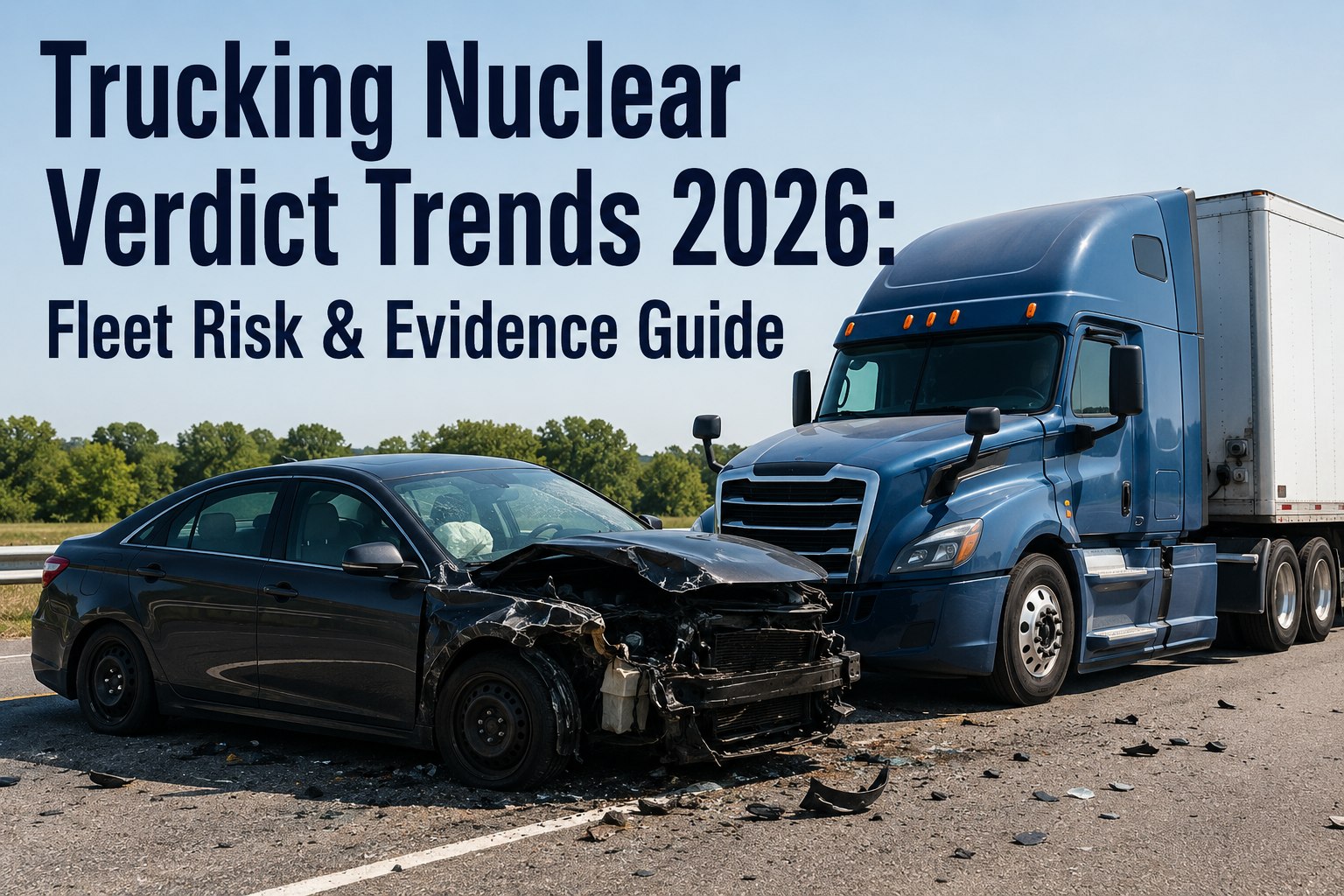
A high-severity nuclear verdict or fatality claim early in captive tenure can consume years of would-be savings. Reinsurance mitigates but doesn't eliminate. Fleets with recent high-severity claims in their loss run are typically declined by captive managers.
Undocumented safety & maintenance history
Captive underwriters demand 5-year loss runs plus supporting PM and safety documentation. Fleets running paper DVIRs, spotty PM records, and no incident-response trail can't produce the data needed for underwriting or ongoing loss control.
Balance sheet too thin for assessments
Group captives can assess members for shortfalls in bad-loss years. A fleet that can't fund an unexpected assessment mid-year has to exit the captive — often at cost. Adequate reserves and multi-year financial stability are non-negotiable.
Rapid fleet growth changes risk profile
A fleet that doubles in size in 18 months no longer resembles the fleet the captive underwrote. Rapid geographic expansion, new lane types, or acquired equipment shift the loss profile faster than the captive can absorb.
Loss of the safety-culture champion
Captives concentrate performance around whoever runs safety. When a strong VP of Safety leaves — or gets sidelined by operations — loss experience deteriorates within 12–18 months. Sustainable captive economics require institutional safety culture, not one person carrying it.
Every one of these failure modes traces back to the same root cause: operational discipline that wasn't as deep as the initial underwriting suggested. Captives magnify what's already there. On a well-run fleet, they magnify the reward. On a shakier fleet, they magnify the pain. Start free and get 5-year loss documentation infrastructure on day one
From a CFO five years into a group captive
We joined a group captive in 2021 after our commercial renewal came in 34% higher. Our loss ratio was 42% against a class benchmark of 68%, so we were paying to subsidize worse operators. Year one in the captive we saved $340,000 against what we would have paid commercially. Year two we got a $180,000 dividend from underwriting profit. Year three we absorbed a $600,000 claim that would have eaten our year-two dividend twice over — and I was terrified.
What saved us was documentation. Every DVIR, every work order, every driver record was in one system, and the captive claims manager could reconstruct the incident timeline in hours instead of weeks. Five years in, we've saved north of $1.2M cumulatively against commercial equivalent, and the discipline the captive forced on our safety program made us a better fleet regardless of the insurance line. It's not a shortcut. It's a multiplier.
Frequently asked questions
What is fleet captive insurance and how does it differ from traditional commercial insurance?
Fleet captive insurance is an alternative risk-financing structure in which the trucking company owns the insurance company that covers its own risks — either alone (single-parent captive), together with other similarly-vetted fleets (group captive), or through a rented cell within an existing captive (rent-a-captive or protected cell). The key difference from traditional commercial insurance is where the underwriting profit and investment income go. In a traditional commercial policy, the fleet pays a premium to an insurance carrier that assumes the risk; if losses come in lower than the carrier expected, the carrier keeps the underwriting profit. In a captive structure, the fleet (or captive member group) retains ownership of the premium, pays claims out of a captive-controlled loss fund, and receives underwriting profit back as dividends or retained earnings when loss experience runs favorably. The trade-off is that the fleet also assumes more of the risk: a catastrophic loss can consume years of savings, and members may be assessed for shortfalls in bad-loss years. Captive insurance is a proven cost-control strategy for well-managed fleets with strong safety records, disciplined maintenance and DVIR programs, adequate balance-sheet stability, and long-term commitment to the model. It is not a fit for fleets with poor loss history, weak documentation, or cash-flow-constrained operations.
What size fleet is eligible for captive insurance?
The size threshold depends on which captive structure is being considered. Pure single-parent captives typically require 100 or more power units and $1M+ in annual commercial premium to justify the fixed costs of standalone captive administration, actuarial services, audit, and regulatory compliance. Below that threshold, the overhead consumes the underwriting savings. Group captives lower the threshold significantly by spreading fixed costs across multiple member fleets; participation in a well-governed group captive is often viable for fleets with 20–100 power units, provided they meet the underwriting criteria on loss history and safety culture. Rent-a-captive and protected cell arrangements lower the entry barrier further — smaller fleets can access captive benefits through a cell inside an existing captive without sponsoring their own structure, sometimes with just $25,000–$100,000 in initial capital commitment. Line-specific captives (covering only auto liability and physical damage while leaving other lines in the commercial market) offer another entrance strategy for fleets that aren't ready for a full captive but want to capture captive economics on their largest premium lines. Most mid-sized fleets that end up in pure captives arrive through this ladder: rent-a-captive or group captive first, line-specific captive next, pure single-parent captive only after the fleet has grown to scale with a proven multi-year loss record.
How much can a fleet actually save with captive insurance?
Realistic annual savings for a qualifying fleet run in the 12–20% range against commercial-equivalent premium, based on published industry case studies. A widely-cited example: a Houston-area regional carrier with 150 power units paying $8.5M annually in commercial premium (~$56,667 per unit) restructured to retain the primary $1M layer in a captive and purchase excess coverage above $1M in reinsurance; total captive costs (internal loss funding + admin/actuarial/audit + reinsurance) came in at $6.8M–$7.5M, a savings of $1M–$1.7M annually before any underwriting profit dividends. But the annual premium delta is only part of the total return. Well-run captives return underwriting profit to members when loss experience runs favorably, often adding another 10–25% to effective savings over multi-year periods. They also insulate members from commercial-market rate volatility, cycles, and class-pricing dynamics driven by other operators' loss experience. That said, the savings are asymmetric: a single catastrophic claim can consume multiple years of savings in the captive layer. This is why the qualification bar is high — captives concentrate reward for disciplined operators and concentrate risk for weaker ones. Fleets exploring captive economics should model both the good-year and bad-year scenarios, and confirm balance-sheet capacity to absorb assessment risk before committing.
What documentation do captive underwriters require?
Captive underwriters require a comprehensive loss run for the current policy year plus five prior years, showing all losses by line (auto liability, physical damage, cargo, workers' comp, etc.) and by severity band. Beyond the raw numbers, underwriters and captive managers want to see supporting operational documentation that demonstrates the loss history is representative of a repeatable safety culture rather than a lucky streak. That typically includes: DVIR completion and defect-resolution history per unit and per driver; preventive maintenance compliance rates and any missed-PM patterns; incident and near-miss reporting infrastructure and response times; driver qualification file completeness (CDL, medical certification, MVR, Clearinghouse status); safety training records and hire-to-first-incident histories; and cost-per-mile trends by unit and by driver over multi-year periods. Fleets running paper-based DVIRs, spotty PM records, and no organized incident-response trails often struggle to produce this documentation in the format captive managers want, and can be declined not because loss history is bad but because it can't be defended. Fleets on integrated fleet management platforms (like HVI) can typically produce the full 5-year documentation package as a single export — a material advantage in the underwriting conversation, and equally important for ongoing loss control once the fleet is in the captive.
How does HVI help fleets prepare for captive insurance qualification?
HVI addresses the documentation and operational-discipline requirements captive underwriters and managers actually evaluate. On the documentation side, HVI holds every DVIR, work order, PM record, safety flag, cost line, and driver qualification detail per unit and per driver on one platform, with the audit trail retained for the full loss-history window. When underwriters ask for 5-year loss documentation, incident-response timelines, or PM compliance rates, the export is a single report rather than a three-week scramble across multiple systems and paper files. On the operational side, HVI's analytics surface the specific patterns captive managers watch for: unit-level cost-per-mile trends, driver-level safety flag rates, DVIR completion and defect-resolution response times, PM compliance percentages, and cost outliers by unit and by driver — the kind of operational discipline that produces below-market loss ratios in the first place. On the ongoing loss control side, HVI supports the safety culture that keeps captive economics working: fast DVIR resolution, PM adherence tracking, driver-qualification alerts, and cost-anomaly detection that catches problems before they become claims. Published customer data shows fleets on HVI report approximately 25% lower annual maintenance cost and typical payback around 3 months. The captive readiness value extends the same operational discipline into the insurance and risk-financing stack rather than treating captive qualification as a documentation exercise separate from operations.
Captive qualification lives or dies on data. Make sure yours is ready.
HVI holds every operational record captive underwriters actually want to see — DVIRs, PMs, safety flags, driver files, cost per unit — with the 5-year audit trail retained per unit and per driver. When your captive readiness package is one export instead of a three-week scramble, the conversation with the captive manager gets shorter.
No credit card · No hardware · Loss documentation dashboard on day one