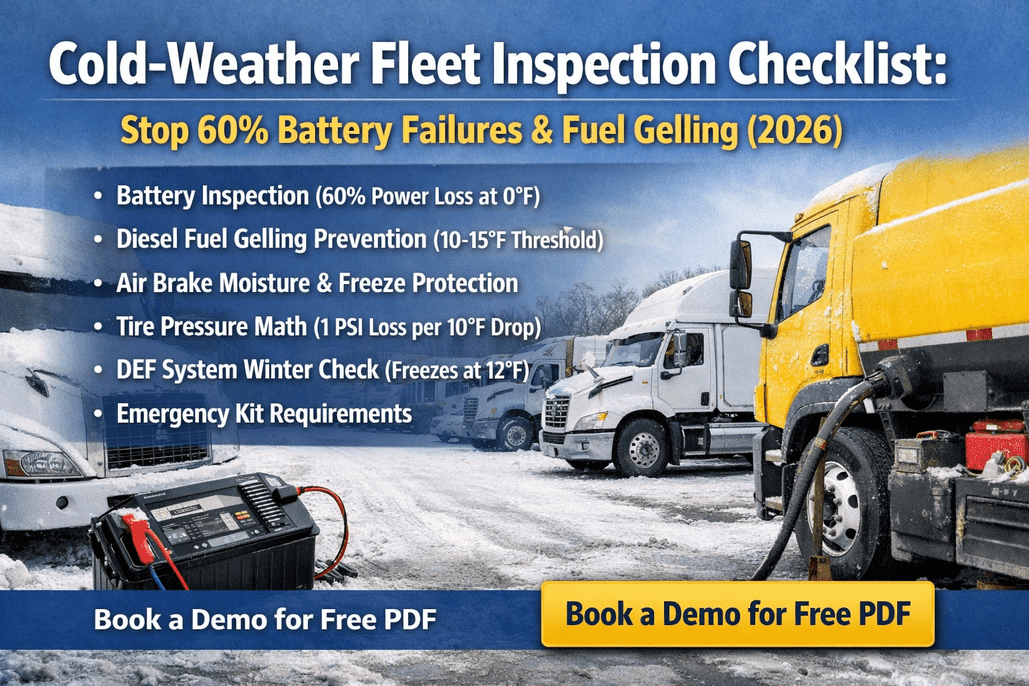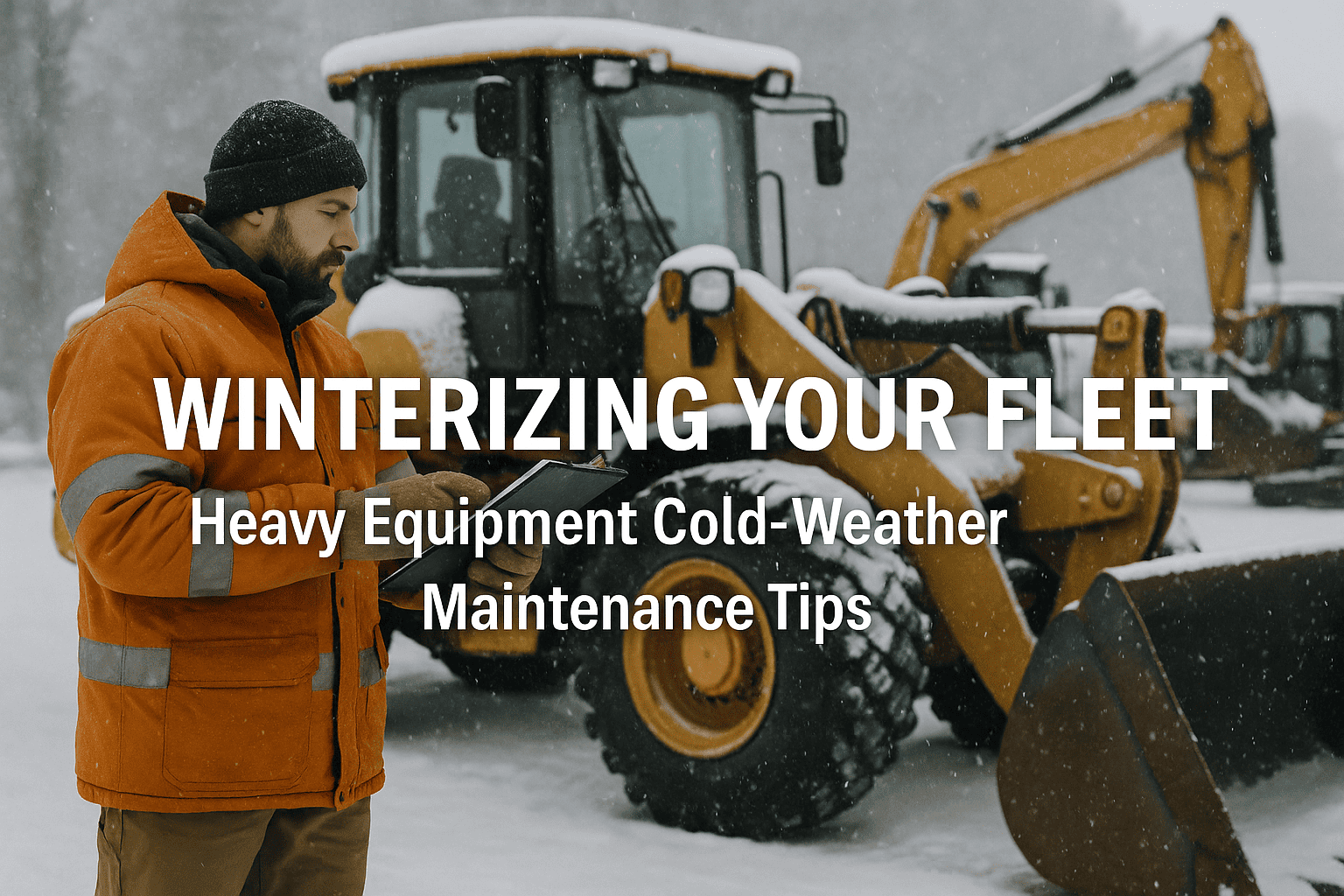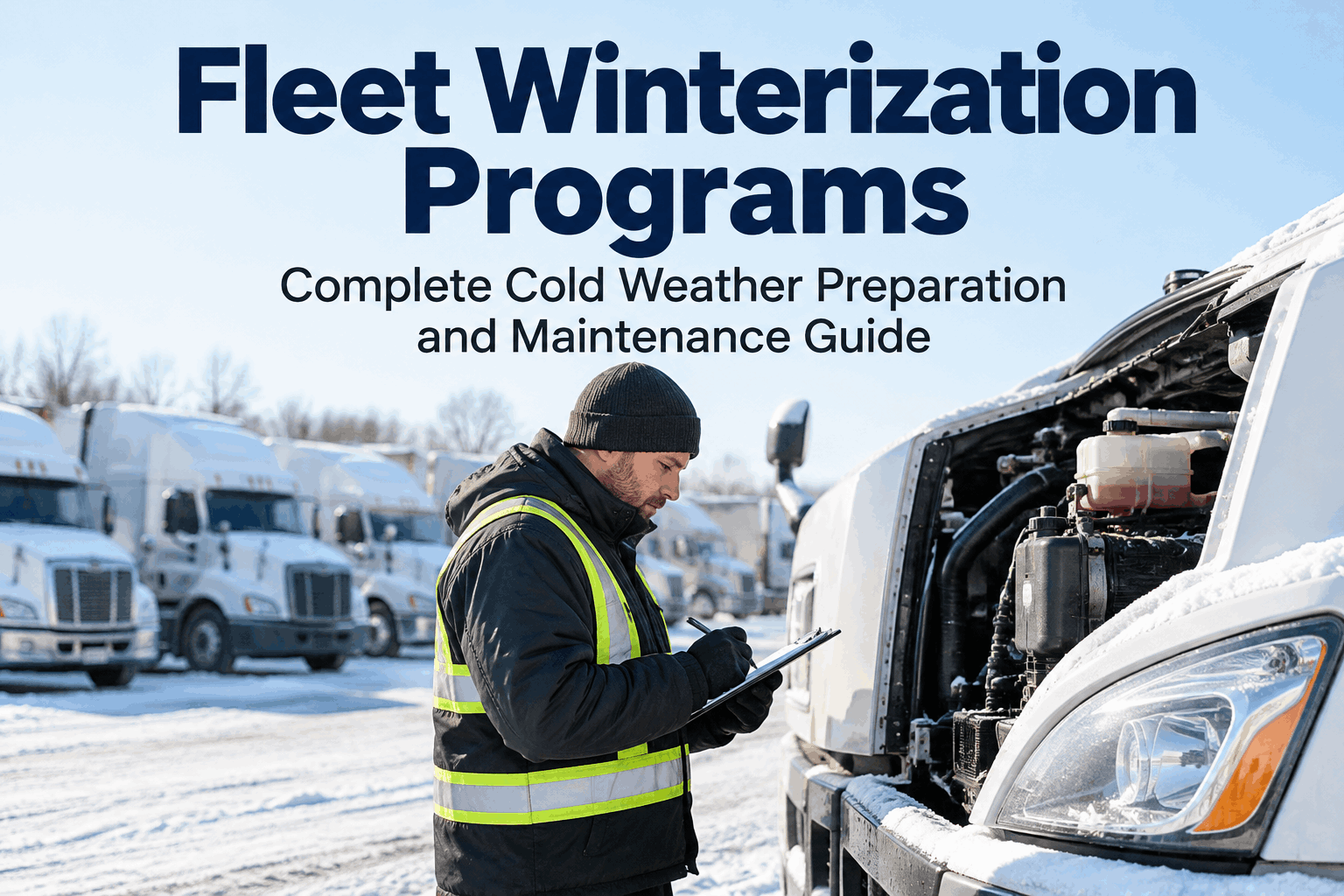
Fleet winterization is the difference between a fleet that starts on the first hard freeze and one that strands trucks in the yard with gelled fuel and dead batteries. Cold doesn't break vehicles randomly — it attacks the same systems every year, and every one of them can be prepped ahead of time. Here's a complete fleet winterization program — the systems, the checklist, and how to run it so nothing slips — or book a demo.
The cold doesn't improvise. It fails the same parts every winter.
Batteries, diesel fuel, coolant, air systems — the temperature drops and the same failures line up in the same order. A real winterization program gets ahead of every one of them before the forecast does.
Where HVI fits, plainly: HVI doesn't change your oil, blend your fuel or load-test a battery — your technicians do the physical winterization. What HVI does is make it a program instead of a scramble. It schedules the preventive maintenance, pushes the winterization checklist to every bay and driver, tracks which units are done and which aren't, raises a work order the moment a check fails, and keeps the record. So winter prep isn't a memo that half the fleet misses — it's a tracked job with a finish line. Book a demo to see it on your fleet.
The systems winter hits firstwhere a fleet winterization program has to focus
Cold-weather breakdowns cluster around six systems. Prep each one ahead of the freeze and the vast majority of winter no-starts and downtime simply don't happen.
Batteries & starting
Winterize: load-test every battery, clean and tighten terminals, replace anything marginal, and verify the charging system before the first cold snap.
Diesel fuel system
Winterize: switch to a winter blend or anti-gel additive, fit fresh fuel filters, and drain the water separator — gelled fuel is the classic cold no-start.
Cooling system & coolant
Winterize: test the coolant freeze point, confirm the right mix, and check hoses and the thermostat — weak coolant can freeze and crack a block.
Air brakes & moisture
Winterize: drain the air tanks, service the air dryer and desiccant — water in the lines freezes and can lock up the brakes.
Tires & traction
Winterize: set pressures for the cold, check tread depth, and fit winter tires or carry chains where the route and regs demand it.
Cab, visibility & heaters
Winterize: winter washer fluid, fresh wiper blades, a working defroster and heater, and block-heater cords checked — a driver who can't see or stay warm is a safety risk.
Each one is a known, repeatable job — which is exactly what makes winterization a program rather than a guess. Book a demo to build the systems into a checklist.
Your fleet winterization checklistthe fleet winterization checklist to run before the freeze
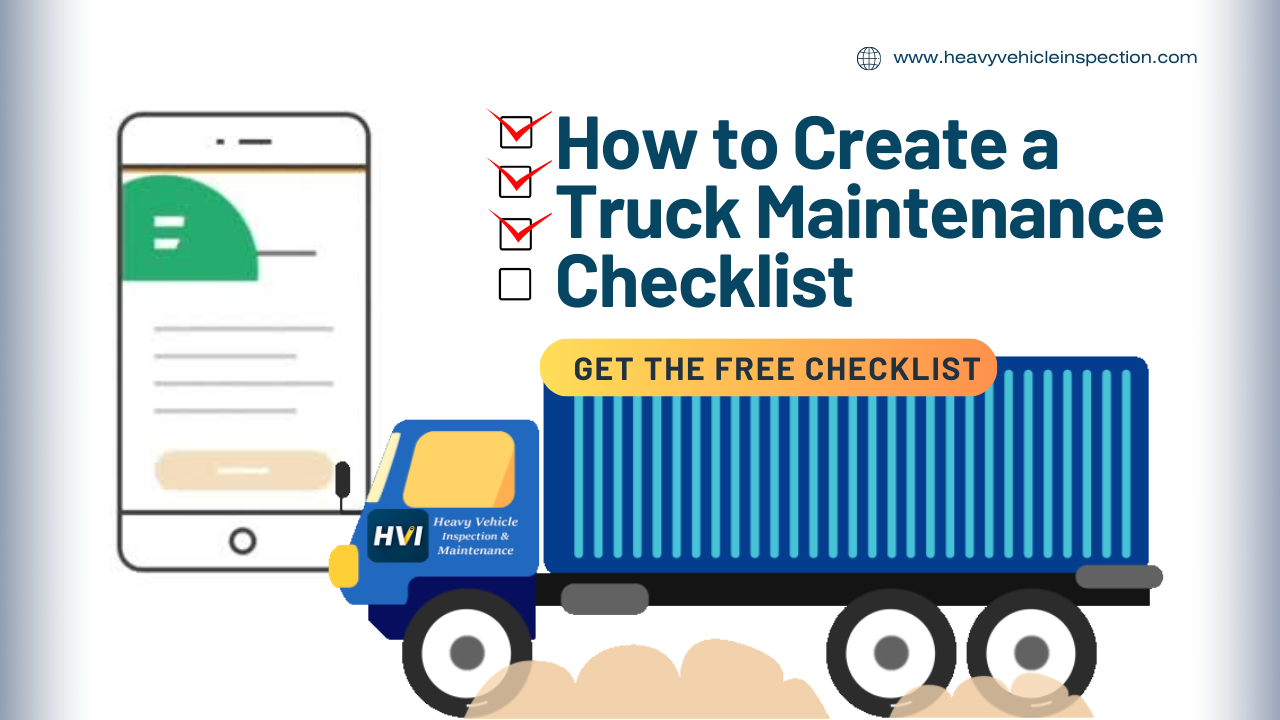
Turn the systems into a checklist every bay runs the same way. Three groups, one pass per unit, signed off before winter.
Engine & fuel
- Winter fuel blend or anti-gel in use
- Fresh fuel filters, water separator drained
- Coolant freeze point tested, block heater working
Electrical & starting
- Batteries load-tested, terminals clean
- Charging system and starting aids checked
- All lights working for short winter days
Chassis & cab
- Air tanks drained, air dryer serviced
- Tire pressures and tread set for winter
- Wipers, washer fluid, heater and emergency kit
Run it from a phone and each unit is signed and time-stamped — so you know at a glance which trucks are winter-ready and which still need a bay. Start a free trial to run the checklist fleet-wide.
Where HVI runs the winterization programthe preventive maintenance features behind cold-weather readiness
HVI turns winterization from an annual memo into a tracked program that finishes on time. Five features carry it.
Preventive maintenance
Schedule the winterization service for every unit by date — so prep starts in fall, not after the first truck won't crank.
Fleet inspection / DVIR
The winterization checklist on a phone in every bay — batteries, fuel, coolant, air, tires — with photos and readings captured.
Equipment maintenance records
Every winterization service kept per unit — the proof that each truck was prepped, and when it was last done.
Work order management
A failed check — a weak battery, a low coolant freeze point — becomes a work order and gets fixed before winter, not during it.
Analytics & reporting
A readiness view across the fleet — which units are winterized and which aren't — so nothing goes into the freeze unprepped.
It's the same maintenance management and fuel backbone behind HVI, and it pairs with the cold-weather maintenance tips. Book a demo of the winterization workflow.
From a fleet maintenance manager
Winterization used to be a memo I sent in October and hoped the bays worked through. Then the first cold morning would hit and we'd still have trucks that nobody had gotten to — gelled fuel, a dead battery, a block heater nobody plugged in. Putting it on the system changed everything: every unit gets a scheduled winterization job, the checklist is the same in every bay, and I can see on one screen exactly which trucks are done. Last winter we didn't have a single cold no-start traced to prep we missed. That's the whole game.
Fleet winterization — FAQs
What does fleet winterization involve?
Fleet winterization is preparing every vehicle for cold-weather operation across the systems the cold attacks: batteries and the charging system, the diesel fuel system (winter blend or anti-gel, fresh filters, water separator), the cooling system and coolant freeze point, air brakes and moisture control, tires and traction, and the cab — heaters, defroster, wipers, washer fluid and block-heater cords. Run as a program, each vehicle gets the same checklist completed and signed off before the first hard freeze, rather than being fixed reactively once the cold has already caused a failure.
When should fleets start winterizing?
Start in the fall, well before the first hard freeze — ideally completing the full program across the fleet while conditions are still mild and bays aren't under pressure. Trying to winterize once the cold has already arrived means doing it reactively, truck by truck, as failures appear, which is slower and far more expensive. Scheduling the winterization service as preventive maintenance in early autumn is the practical way to make sure the whole fleet is ready before it matters.
Why does diesel fuel gel in cold weather?
Diesel contains paraffin wax that stays dissolved at normal temperatures but begins to crystallize as it gets cold — first clouding the fuel, then thickening into a gel that clogs filters and fuel lines and stops the engine. Untreated number-two diesel typically starts to gel in the mid-teens Fahrenheit, though the exact point depends on the blend. The fix is a winter blend, an anti-gel additive, fresh fuel filters and a drained water separator — all standard parts of a winterization program.
Why do batteries fail in winter?
Cold does two things at once: it slows the chemical reaction inside a battery, cutting the cranking power it can deliver, and it thickens the engine oil, so the engine needs more power to turn over. A battery that was marginal in summer can be well below what a cold start demands. That's why load-testing every battery, cleaning terminals and replacing weak units is a core winterization step — most winter no-starts are a battery that should have been caught in the fall.
How does HVI help with fleet winterization?
HVI doesn't do the physical work — your technicians blend the fuel, test the batteries and service the systems. HVI runs the program around it: it schedules the winterization service for every unit as preventive maintenance, delivers the winterization checklist to every bay on a phone, tracks which vehicles are done and which still need prep, turns any failed check into a work order, and keeps the record. That turns winterization from a memo half the fleet misses into a tracked job you can see finish.
Finish fleet winterization before the freeze does
Leave the wrenching to your techs — and put the schedule, the checklist, the work orders and the records on one system. A fleet winterization program then isn't a memo you hope got done; it's a tracked job you can watch cross the finish line, unit by unit.
Scheduled prep · one checklist · work orders · fleet-wide readiness