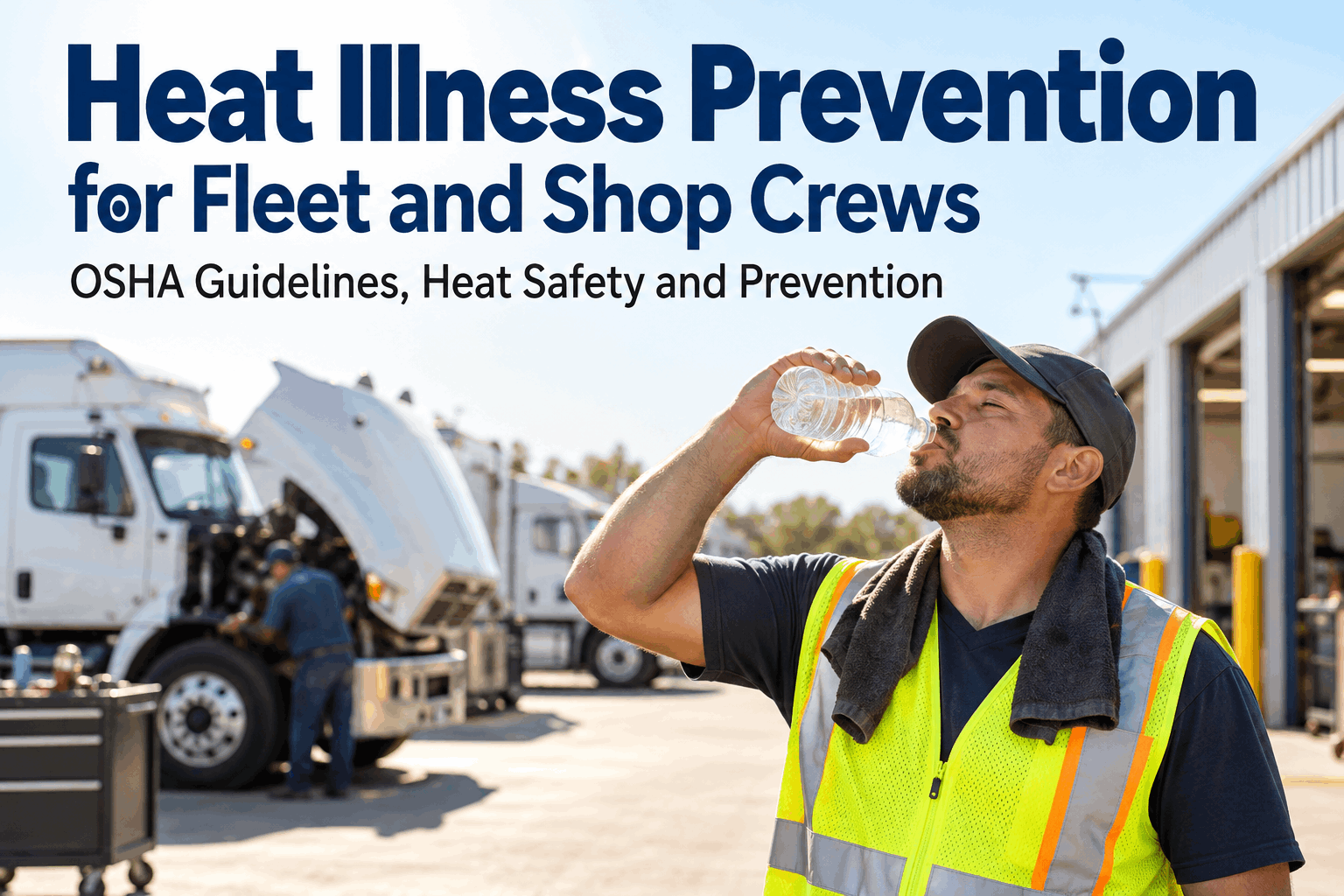
Heat illness prevention matters in fleet yards, vehicle bays,and maintenance shops where physical work, hot surfaces and poor airflow can combine. A technician working beneath a bus or a crew member inspecting vehicles outdoors may face serious heat exposure even without direct sunlight. A practical heat safety program helps supervisors prepare crews, spot symptoms early and document workplace controls before someone becomes ill.
Heat Illness Prevention for Fleet and Shop Crews
Build a heat safety routine around water, recovery breaks, acclimatization, emergency response and documented workplace inspections.
Pair these controls with workload adjustments, training and a clear emergency plan.
Where Fleet and Maintenance Crews Face Heat Risks
Heat stress is not limited to outdoor road crews. Engine bays, poorly ventilated shops, asphalt yards and protective clothing can increase exposure during everyday tasks.
Outdoor Fleet Yard
Direct sun, hot pavement, inspections and repeated climbing increase physical and environmental strain.
Maintenance Bay
Limited airflow, heat from equipment and strenuous repairs can make indoor work hazardous.
Roadside Repair
Breakdown response can combine high temperatures, time pressure and restricted access to water.
Make heat controls part of routine facility checks. Book a Demo to See HVI Safety Inspection Checklists.
Five Controls That Make a Heat Illness Prevention Plan Practical
Effective prevention starts before the shift and adapts to the actual workload, temperature, humidity, clothing and individual circumstances.
Provide Water and Encourage Frequent Drinking
Keep cool potable water easy to reach. For prolonged heavy sweating, plan suitable electrolyte replacement in line with safety guidance.
Schedule Rest and Cooling
Increase recovery opportunities as heat strain rises. Use shade, air conditioning or another genuinely cooler rest area.
Adjust Tasks and Staffing
Move strenuous work to cooler periods where feasible, rotate demanding tasks and consider protective clothing effects.
Acclimatize New and Returning Workers
Gradually increase heat exposure and physical workload. Watch new employees and workers returning after time away closely.
Train, Observe and Escalate
Teach crews to recognize symptoms, report concerns promptly and follow a rehearsed medical emergency procedure.
Build Heat Tolerance Gradually—Not in One Shift
Workers new to hot conditions, or returning after an extended absence, may be at greater risk. Supervisors should use a documented acclimatization approach suited to the worker and job.
Introduce heat work gradually, with closer observation and frequent cooling breaks.
Increase workload and time in the heat only as conditions and worker response allow.
Adjust for hotter days, heavier tasks, illness, absence and changing work conditions.
An acclimatization schedule is not a fixed guarantee of safety. Use occupational heat guidance and applicable requirements for your workforce.
Are Your Heat-Safety Checks Actually Getting Recorded?
Use HVI inspection checklists to document water stations, cooling-area readiness, ventilation concerns and corrective findings.
Heat Exhaustion vs. Heat Stroke: Know When to Act
Heat-related illness can worsen rapidly. Workers should stop activity and get help when symptoms appear; supervisors should never wait for every symptom to develop.
Possible Heat Exhaustion
Heavy sweating, dizziness, headache, nausea, weakness or unusual fatigue.
Stop work, move to a cool area, begin cooling and seek medical assessment as appropriate. Escalate if symptoms worsen or do not improve.
Possible Heat Stroke
Confusion, altered behavior, fainting, seizures or other severe symptoms. Sweating may still be present.
Call emergency services, begin rapid cooling, stay with the worker and follow dispatcher instructions. Do not delay for a temperature reading.
Heat Illness Prevention Checklist for Fleet Shops
Use this practical checklist before high-heat shifts and revisit it when working conditions change.
Before the Shift
- Review expected heat and job demands.
- Confirm accessible drinking water.
- Inspect cooling and rest areas.
- Check ventilation and hot-work locations.
- Identify new or returning workers needing acclimatization.
During the Shift
- Provide suitable rest and cooling opportunities.
- Observe crews and encourage symptom reporting.
- Adjust strenuous tasks as conditions change.
- Keep emergency contacts and procedures available.
- Record hazards and follow up on corrective actions.
HVI's Safety Management Checklist provides a digital starting point for workplace inspections. Book a Demo to Discuss Fleet Shop Heat-Safety Checks.
Turn Heat-Safety Findings into Trackable Actions
A written policy alone does not show whether water stations were checked or ventilation problems were resolved. Routine inspection records help teams make those gaps visible.
Airflow concern reported in service bay. Supervisor review requested.
HVI can support inspection documentation and maintenance follow-up; it does not automatically measure heat exposure or replace trained safety supervision. Book a Demo to See HVI Safety Records in Practice.
What OSHA Guidance Means for Fleet and Shop Employers
OSHA recommends water, rest, shade or other cooling, acclimatization, hazard assessment and worker training. These practices apply to both indoor and outdoor heat exposure.
Federal rulemaking
OSHA's nationwide heat-specific standard has been proposed, but a proposed rule is not itself a final, enforceable regulation. Check its current status before citing specific proposed thresholds as requirements.
Existing obligations
Employers must address recognized serious workplace hazards under applicable law. State-plan rules and local requirements may impose additional, specific heat protections.
Compliance note: This guide is educational, not legal or medical advice. Verify current OSHA, state-plan and industry requirements for each worksite.
Heat Illness Prevention FAQs
What should a workplace heat illness prevention program include?
Include hazard assessment, drinking water, cooling and rest arrangements, acclimatization, worker training, symptom reporting, emergency response and a process for reviewing workplace controls.
Can heat illness occur inside a maintenance shop?
Yes. Poor airflow, hot equipment, strenuous tasks and protective clothing can contribute to heat stress even without direct sunlight.
Is OSHA's proposed federal heat rule already in force?
The nationwide heat-specific rule is described by OSHA as proposed. Employers must still follow existing applicable obligations and any state-specific heat standards. Check official updates before publication or policy changes.
What should a supervisor do if a worker becomes confused in the heat?
Treat confusion as a possible heat stroke emergency. Call emergency services immediately, move the worker to a cooler place and begin rapid cooling while help is on the way.
How can HVI help a fleet heat-safety program?
HVI's digital safety checklists can help document workplace inspections, capture findings and maintain inspection history. It does not replace medical response, heat monitoring instruments or the employer's safety plan.
Make Heat-Safety Inspections Easier to Document with HVI
Give supervisors a more consistent way to record workplace readiness checks, note concerns and review inspection history.