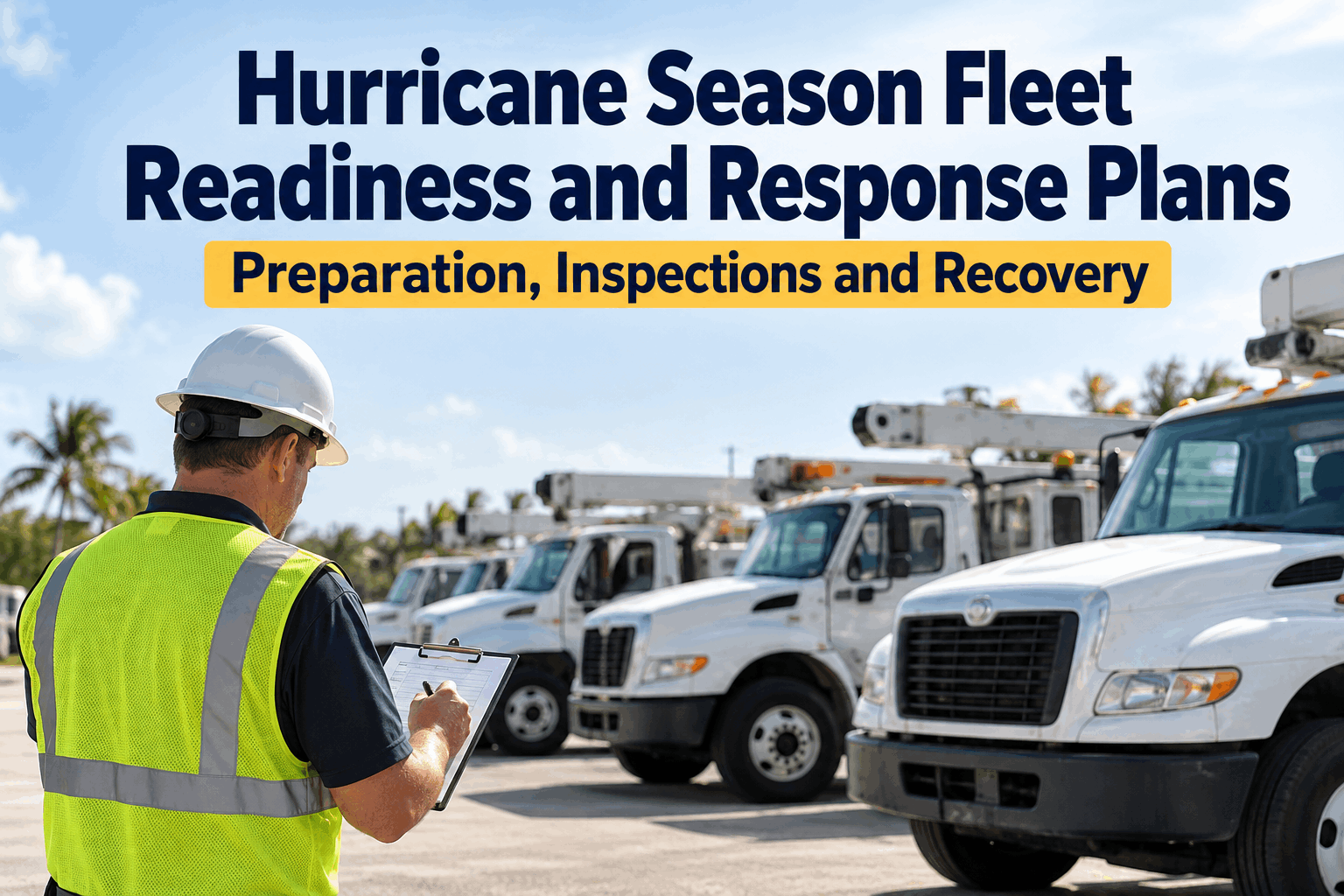
Hurricane fleet readiness is won or lost in the week before landfall — not in the scramble after. When the storm clears, the fleets that keep moving are the ones with fuel in the tanks, maintenance current, and a plan for before, during and after. The ones that guessed spend recovery hunting diesel and nursing flooded engines. Here's how to build hurricane fleet readiness across all three phases, and how to track it — or start a free trial.
A hurricane doesn't test your fleet. It tests your plan.
Readiness isn't one checklist — it's three phases: get ready before landfall, hold the line during the storm, and restart fast after. Each one is a set of checks and records, and the fleets that keep them are the ones still running when the roads reopen.
Where HVI fits, plainly: HVI doesn't move your vehicles, fill their tanks or predict the storm track. Your team and your plan do that. What HVI does is make the readiness happen and prove it. It keeps preventive maintenance current, puts the pre-storm and post-storm inspections on a phone, tracks fuel and open defects, and gives you a readiness view across the whole fleet — so before a storm you can see which units are go, and after it you have the records insurance and recovery need. Start a free trial to set it up before the season.
The three phases of hurricane fleet readinessa hurricane fleet preparedness plan, before, during and after
A real plan covers the whole storm lifecycle. Here's what each phase asks of the fleet — and where the work actually happens.
Prepare — before landfall
- Close out overdue PM and critical repairs
- Top off every tank and secure a backup fuel supply
- Full pre-storm inspection on every unit
- Stage key vehicles on high ground, clear of trees and flood
- Photograph and document fleet condition for insurance
Respond — during the storm
- Stand down or restrict operations to safe, essential tasks
- Track every deployed vehicle and crew
- Keep drivers in contact — safety over schedule
- Log damage and incidents as they happen
Recover — after the storm
- Post-storm inspection before any unit returns to service
- Never start a flood-soaked engine — check for water intrusion
- Assess and document damage for insurance and FEMA
- Prioritize repairs to get the fleet back online fast
- Debrief and update the plan for next time
Most fleets plan Phase 1 and improvise Phases 2 and 3 — which is exactly backwards from where the cost lands. Start a free trial to run all three phases on one system.
Your pre-landfall readiness checklistthe hurricane fleet readiness checklist to run 72 hours out
Phase 1 is where readiness is actually built. Three groups, run before the storm window closes.
Maintenance & inspection
- Overdue PM and critical repairs closed
- Full pre-storm DVIR on every vehicle
- Tires, brakes, wipers, lights, batteries checked
Fuel & assets
- Every tank and vehicle topped off
- Backup fuel supplier or contract confirmed
- Standby generators and pumps verified
People & records
- Driver roster and contacts current
- Fleet condition photographed for insurance
- Response roles assigned and briefed
Fuel is the one that bites hardest — stations lose power and run dry after a storm, so topped tanks and a backup supply decide who moves. Book a demo of the pre-landfall checklist.
Where HVI fits hurricane fleet readinessthe features behind a fleet storm-response plan
HVI runs the readiness program across all three phases and proves it on demand. Five features carry it.
Preventive maintenance
Go into the season with PM current — overdue service and critical repairs closed before a storm is on the map.
Fleet inspection / DVIR
Pre-storm and post-storm inspections on a phone — including the flood-damage check before any unit restarts.
Fuel & cost tracking
Know fuel levels across the fleet before landfall, and track consumption and cost through the response.
Work order management
Turn a pre-storm defect or post-storm damage into a tracked repair — prioritized to get the fleet back fast.
Analytics & reporting
A readiness dashboard before the storm and a complete, dated record after it — for insurance and recovery.
It runs on the same inspection and fuel tracking backbone as the rest of HVI, and pairs with the utility fleet storm-readiness checklist. Book a demo of the readiness dashboard.
From a fleet manager on the Gulf Coast
Our first bad hurricane taught us everything. We thought we were ready, then spent three days after landfall driving around looking for diesel while half the fleet sat on empty, and we couldn't prove the damage to insurance because nobody photographed anything beforehand. Now it's a routine: PM closed out before the season, a pre-storm inspection and a fuel top-off on every unit, condition photos on file, and a post-storm flood check before anything turns a wheel. The plan runs on the app, so when the forecast cone points at us, I already know exactly where we stand.
Hurricane fleet readiness — FAQs
What should a hurricane fleet readiness plan include?
A complete plan covers three phases. Before landfall: close out preventive maintenance and critical repairs, run a full inspection on every vehicle, top off all fuel and secure a backup supply, stage key vehicles on high ground, and photograph fleet condition for insurance. During the storm: stand down or restrict operations, track deployed units, and keep drivers safe and in contact. After: inspect every unit for flood and water damage before it returns to service, document damage for insurance and FEMA, and prioritize repairs to restart quickly.
Why is fuel the biggest hurricane fleet risk?
Because fuel availability collapses right when you need it most. After a hurricane, widespread power outages shut down fuel stations and pumps, roads are blocked, and resupply is slow — so a fleet running on half-full tanks can be stranded within a day. The fix is simple but has to happen before landfall: top off every tank and vehicle, and confirm a backup fuel supplier or on-site storage. Knowing your fleet-wide fuel position before the storm is a core part of readiness.
What should a post-storm vehicle inspection check?
The priority is water and flood damage. Never start an engine that may have taken on water — it can hydrolock and be destroyed. Check for water in the air intake, engine oil, fuel and transmission, inspect the electrical system and connectors for intrusion, check brakes and wheel bearings for water contamination, and look for debris damage. Document everything with photos before repairs. A structured post-storm inspection, run the same way on every unit, is what keeps a quick restart from becoming an expensive mistake.
When does hurricane season start and how early should fleets prepare?
The Atlantic hurricane season runs from June 1 to November 30, with peak activity typically from August through October. Fleet preparation should start well before — ideally completing preventive maintenance, inspections and plan reviews at the start of the season rather than when a storm is already forecast. Once a specific storm is on the map, the pre-landfall checklist (fuel, final inspections, staging, documentation) is run in the days before it arrives.
How does HVI support hurricane fleet readiness?
HVI doesn't move vehicles, fuel them or forecast the storm — your team and plan do that. HVI runs the program behind the plan: it keeps preventive maintenance current, delivers the pre-storm and post-storm inspection checklists to drivers' phones, tracks fuel levels and open defects, turns damage into prioritized work orders, and gives you a readiness dashboard before the storm and a complete, dated record after it. That record is exactly what insurance and recovery operations need.
Go into hurricane season with a plan, not a hope
Leave the driving, fueling and forecasting to your team — and put the maintenance, the pre- and post-storm inspections, the fuel position and the records on one system. When the cone points your way, hurricane fleet readiness is a dashboard you can act on, across all three phases.
Prepare · respond · recover — one system, one record