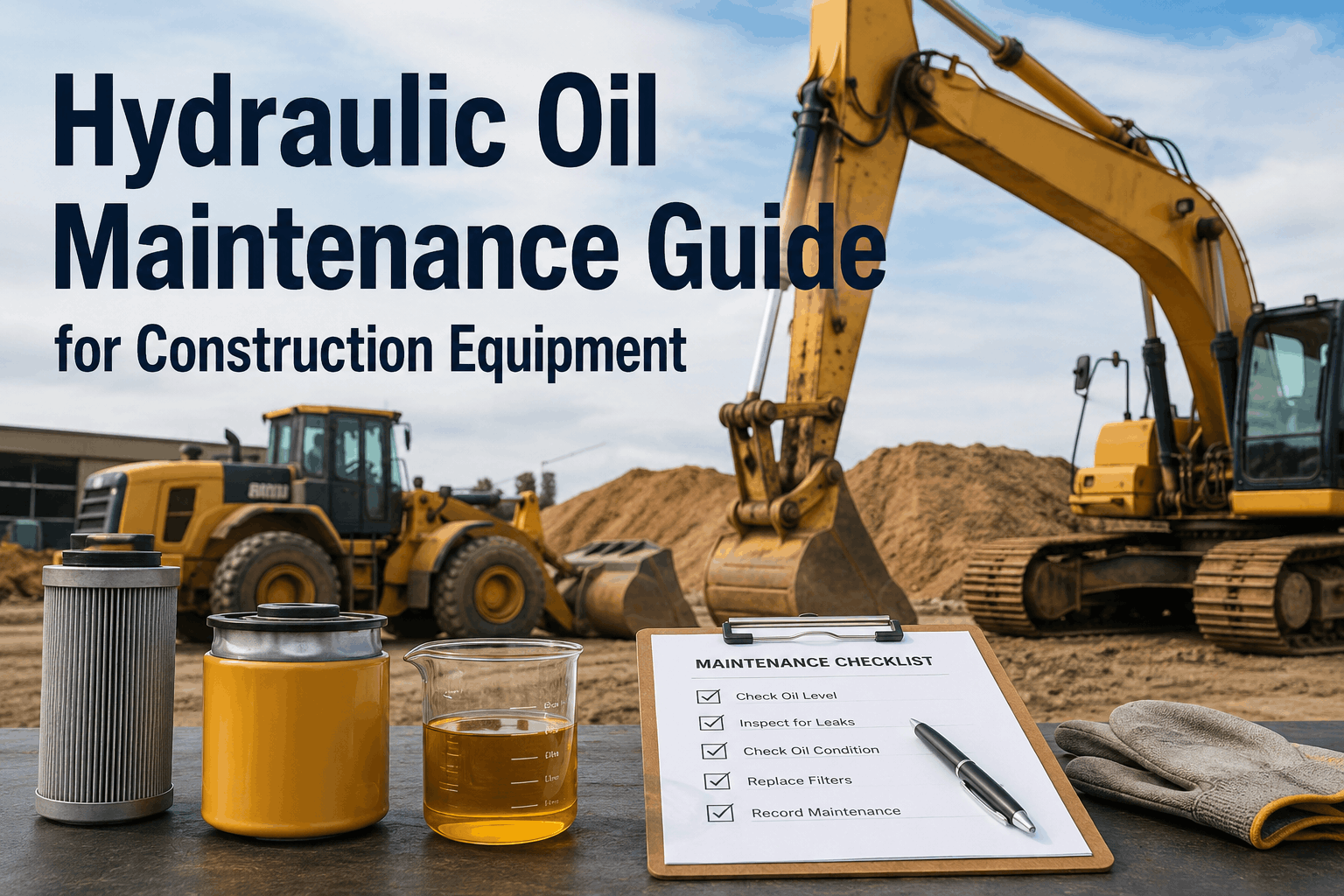
Hydraulic failures are the single biggest cause of heavy-equipment breakdowns — they account for roughly 45% of all major excavator failures, and the average hydraulic system failure costs around $95,000 once you add parts, labor, and downtime. The uncomfortable part is that 70–90% of those failures trace back to one preventable cause: contaminated oil. Even more striking, about 78% of hydraulic failures show detectable warning signs two to six weeks before they turn catastrophic — yet 72% of construction companies have no systematic way to catch them. That gap between "the oil was already telling us" and "nobody was tracking it" is exactly where HVI's inspection and maintenance software earns its keep: it turns daily hydraulic checks, oil-change intervals, and contamination flags into one tracked, alert-driven workflow instead of scattered notes that never reach the shop. This guide covers what destroys hydraulic oil, how to read the warning signs, the service rhythm that prevents failures, and how HVI keeps the whole program on schedule. schedule a 30-minute walkthrough with our team to see it built around your own machines.
Your hydraulic oil knows it's failing weeks before the pump does.
HVI tracks oil-change intervals, captures hydraulic inspection findings, and flags contamination across every excavator, loader, and dozer in your fleet — so the warning signs reach a work order instead of dying on a clipboard.
Why hydraulic oil maintenance is the highest-leverage habit you have
Clean hydraulic oil isn't a fluid-cost line item — it's the cheapest insurance policy on your most expensive machines. The numbers make the case better than any argument.
A proactive contamination program — quarterly oil analysis, disciplined filter changes, clean service habits — costs a fraction of a single failure. A typical fleet that manages oil cleanliness systematically saves $95,000–$165,000 a year through optimized intervals, prevented breakdowns, and longer component life.
The 4 things that destroy hydraulic oil
Oil rarely fails on its own — it gets killed. Knowing the four killers tells you exactly what your inspection routine and HVI checklists need to watch for.
Particle contamination
Dirt, metal, and wear debris cause up to 90% of failures through abrasive wear. The dangerous particles — 4 to 14 microns — are invisible to the naked eye; by the time oil looks dirty, it's far past spec.
Water ingress
Water above ~1,000 PPM turns oil milky, strips lubrication, corrodes internals, and degrades additives. It enters through worn breathers, bad seals, and condensation in the reservoir.
Heat & oxidation
Excess heat oxidizes oil, turning it dark, thick, and acidic. Oxidized fluid loses viscosity control, varnishes valves, and accelerates seal wear — a slow death that compounds every operating hour.
Additive depletion
Anti-wear, anti-foam, and corrosion-inhibitor additives wear out over time. Once depleted, the base oil can't protect components even if it still looks clean — which is why interval discipline matters.
Every one of these four killers leaves a fingerprint your operators can catch on a daily walkaround. sign up for a free HVI account and build a hydraulic inspection checklist that screens for all four, or schedule a live demo to see contamination flags route straight to a work order before damage spreads.
Read the warning signs: what the oil is telling you
Hydraulic oil broadcasts trouble long before failure. Train operators to log these signs in HVI, and the software turns each one into a tracked action instead of a forgotten observation.
| Warning sign | What it usually means | Action |
|---|---|---|
| Milky or cloudy oil | Water contamination above 1,000 PPM | Change now |
| Black / dark oil | Severe oxidation from overheating | Change now |
| Visible metal particles | Internal component wear in progress | Analyze + flush |
| Foam or aeration | Air ingress, low fluid, or additive loss | Inspect |
| 15%+ slower cycle times | Worn pump, contamination, or leak | Inspect |
| Temperature spikes | Cooling fault, low oil, or restriction | Inspect |
| Burnt smell / unusual odor | Overheating or oxidized fluid | Analyze |
| Filter clogging early | High contaminant load in the system | Inspect |
The catch: the most damaging particles (4–14 microns) are invisible until they reach 40–50 microns. That's why visual checks alone aren't enough — pair them with oil analysis. By the time you can see contamination, the oil is already far too dirty.
The hydraulic oil service rhythm
Fixed intervals are a starting point; oil analysis is the truth. Here's the baseline rhythm HVI schedules for you, with condition data overriding the calendar whenever it signals trouble.
Pre-shift checks
Check fluid level, scan for leaks, note any color or foam change. A 10–15 minute walkaround prevents roughly 80% of common failures — and in HVI it's a logged, timestamped inspection, not a memory.
Oil analysis sampling
Pull a sample (about $25–$30) and test particle count, water content, and viscosity. Sampling-based intervals are the single biggest cost lever — they cut total hydraulic maintenance spend 40–55% versus fixed schedules.
Filter service
Monitor differential pressure and replace elements before the bypass valve opens (typically ~25 psi differential). Log change dates and contamination levels so HVI can refine the next interval automatically.
Full oil change
The standard baseline for moderate use — sooner in heavy-duty or dusty conditions. But contaminated fluid gets changed immediately regardless of schedule. Always cross-reference your OEM handbook.
lower total hydraulic maintenance cost when you switch from conservative fixed intervals to condition-based service. Going too early wastes $18,000–$32,000 a year on a 10-machine fleet; going too late risks $125,000–$185,000 in accelerated failures. Analysis-driven timing hits the sweet spot.
Know your cleanliness target: the ISO 4406 code
Oil analysis reports cleanliness as an ISO 4406 code — three numbers like 18/16/13 counting particles at 4, 6, and 14 microns per milliliter. Lower is cleaner, and the scale is brutal.
How to read it
Each number is a range code. Drop just one number — say 18/16/13 to 17/15/12 — and you can extend pump, valve, and bearing life by 50% or more. Every single step up the code doubles the particle count.
The teaspoon test
A teaspoon of dirt in a 55-gallon drum yields about 19/17/14 — already "highly contaminated," enough to halve pump life. New oil is not clean oil; it routinely needs filtering before it ever enters a machine.
Set a target per machine
Sensitive servo systems want 16/14/11 or cleaner; rugged systems tolerate more. Record each machine's target in HVI and trend the codes over time, so a rising number triggers action before a pump pays for it.
How HVI keeps the whole program on schedule
Knowing the rhythm is easy; executing it across a moving fleet is where programs fall apart. This is the gap HVI closes — turning hydraulic care from scattered habits into one tracked system.
Without a system
- Oil-change hours tracked on a whiteboard — or not
- Operator spots milky oil, mentions it, it's forgotten
- Filter change dates lost across crews and sites
- Oil analysis results sit in an inbox, untrended
- No record when an auditor or OEM asks for service history
- First sign of trouble is a machine down mid-job
With HVI software
- Oil-change intervals fire automatically by engine hours
- Daily hydraulic checks logged with photos from the field
- A contamination flag auto-creates a work order on the spot
- Analysis results and ISO codes trended per machine
- Full service history exportable for audits in seconds
- Warning signs reach the shop weeks before failure
HVI ties daily inspections, PM scheduling, defect tracking, and work orders into one loop — so a milky-oil note on a Monday walkaround becomes a scheduled service, not a $95,000 surprise. sign up free and set hydraulic intervals and inspection checklists for your whole fleet in minutes.
Frequently asked questions
How often should I change hydraulic oil on construction equipment?
The standard baseline is every 2,000–3,000 operating hours for moderate use, or as your OEM specifies — sooner in heavy-duty, dusty, or hot conditions. But fixed intervals are only a starting point. Oil analysis is more reliable than any calendar: if a sample shows high particle counts, water above 1,000 PPM, or viscosity drift, change the oil immediately regardless of hours. Condition-based timing typically cuts total hydraulic maintenance cost 40–55% versus rigid fixed schedules. HVI tracks the hours and the analysis results together so you service on whichever signal fires first.
What are the warning signs that hydraulic oil needs changing now?
Change immediately if oil appears milky (water contamination), black (severe oxidation), or contains visible metal particles (internal wear). Performance red flags include cycle times slowing 15% or more, reduced lift capacity, erratic operation, temperature spikes, foaming, a burnt smell, or filters clogging before their scheduled interval. The trap is that the most damaging particles — 4 to 14 microns — are invisible until they reach 40–50 microns, so by the time oil looks dirty it's already far past spec. Pair visual checks with regular oil analysis, and log every observation in HVI so nothing slips.
Why is contamination such a big deal if the oil still looks fine?
Because the particles that destroy hydraulic systems are too small to see. Roughly 70–90% of hydraulic failures come from particle contamination, and studies show about 80% of mechanical wear is caused by particles in the oil. Improving cleanliness by just one ISO 4406 step — for example 18/16/13 to 17/15/12 — can extend pump, valve, and bearing life by 50% or more. A teaspoon of dirt in a 55-gallon drum already pushes oil to a highly contaminated state. Clean-looking oil can still be well over spec, which is exactly why analysis and tight filtration matter.
Is oil analysis really worth the cost?
Overwhelmingly. A sample costs about $25–$30, while a single contamination-driven hydraulic failure averages around $95,000, and major system replacements run $75,000–$145,000. Emergency hydraulic repairs carry a 150–200% premium over planned work. Analysis removes the guesswork: it tells you the real condition of the fluid and the remaining useful life, so you neither waste money changing good oil early nor risk a failure by running it too long. A typical fleet managing oil systematically saves $95,000–$165,000 annually.
How does HVI help with hydraulic oil maintenance specifically?
HVI brings the whole program into one place. It schedules oil-change and filter intervals automatically by engine hours, builds hydraulic inspection checklists your operators complete from a phone, and turns any contamination flag — milky oil, metal particles, a temperature spike — into a tracked work order on the spot. You can record each machine's target ISO cleanliness code and trend analysis results over time, so a rising number prompts action before a pump fails. And the full service history exports in seconds for OEM warranty or audit requests. schedule a demo and we will set it up around your specific machines and intervals on the call.
Catch hydraulic trouble weeks early — on one platform built for heavy equipment.
HVI runs your hydraulic oil intervals, daily inspections, contamination flags, filter tracking, and work orders in a single connected workflow. Stop paying the 150–200% emergency premium for failures the oil warned you about. Sign up free and protect your most expensive machines before the next pump goes.
No credit card required · Live in under two weeks · Oil intervals + inspections + defect tracking + work orders in one platform
.png)