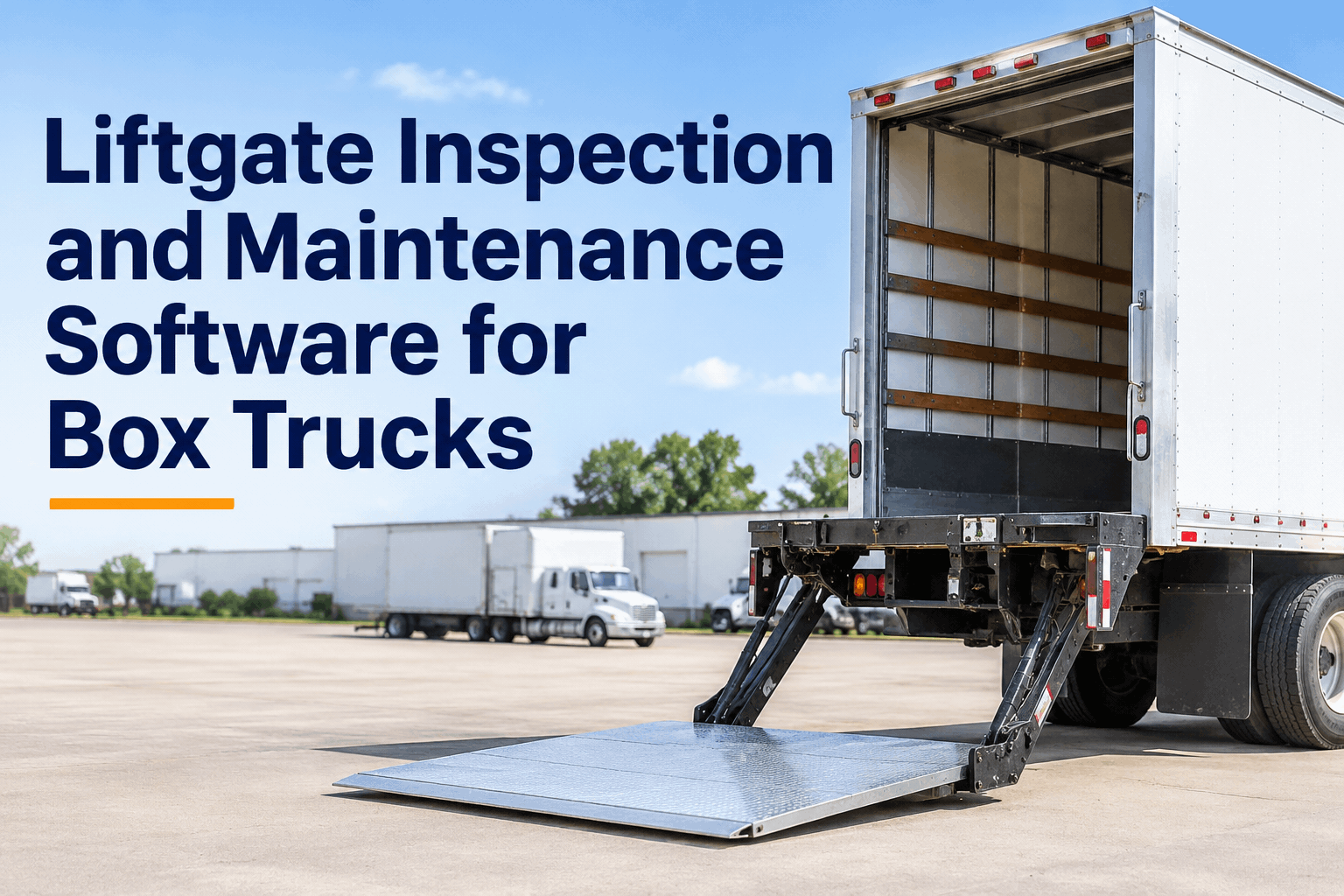
A box truck liftgate wears every time it lifts a load — not every mile it drives. That's why mileage-based maintenance keeps missing it, and why liftgate maintenance software that schedules by use is what actually keeps the gate working. Catch the hydraulic or electrical fault early, fix it on a work order, prove it.
The hardest-working part on your box truck is the one your PM plan ignores
HVI tracks every liftgate's hydraulic and electrical health, schedules PM by lift cycles instead of miles, and turns each defect into a documented repair.
Here's the trap most fleets fall into: the liftgate rides on a truck, so it gets maintained on the truck's schedule. But a gate on a last-mile route can cycle dozens of times a day while the odometer barely moves, and a line-haul gate racks up miles while barely lifting. Mileage tells you nothing about liftgate wear — cycles do. That mismatch is exactly what usage-based preventive maintenance fixes, and you can book a demo to see it set up for your box trucks.
What's actually failing on the gatea liftgate is a hydraulic machine and an electrical one — mapped
Almost every liftgate failure traces to one of two systems. This is the gate, labeled by where it breaks — so when a driver reports a symptom, you already know which side to open.
Rule of thumb: motor runs but the gate won't move → it's hydraulic (low fluid, failed pump, leaking cylinder). Gate is totally dead → it's electrical (power, fuse, solenoid). Catching the right side first is the whole game.
Track hydraulic and electrical as two defect histories in connected maintenance management and the repeat offenders surface fast — so you rebuild the cylinder once instead of topping off fluid five times. Book a demo to see defect history per gate
Two trucks. Same PM plan. Wrong for both.why the service interval has to follow the gate, not the odometer
This is the core of liftgate preventive maintenance software: the interval follows how hard the gate works. Watch what happens when you run two very different trucks on one mileage-based schedule.
Low miles, brutal gate use. Odometer PM services it far too late — the cylinder gives out mid-route.
High miles, light gate use. Odometer PM over-services it — wasted shop hours on a gate that's barely worn.
Set the trigger to lift cycles (or calendar for low-use gates) and every liftgate gets serviced exactly when it needs it. You can start free and build a usage-based liftgate PM today .
A defect this heavy can't go unloggedliftgate faults are a safety issue, not just an uptime one
A liftgate lifts hundreds of pounds at waist height, with real pinch and crush points where the platform meets the body. OSHA injury records tell the same story again and again — a gate that tilted, drifted or dropped while someone was near it. A tracked defect is what keeps an unsafe gate from being the one a driver uses anyway.
Tilt & drift
A platform that drops unevenly or drifts under load shifts freight toward the edge — a leading cause of strain and fall injuries during unloading.
Pinch & crush points
Where the gate meets the body is a documented shear point. OSHA has logged amputations and hand injuries from gates moving unexpectedly.
Tracked = accountable
A reported defect that becomes a work order can't be quietly ignored — the gate stays flagged until the repair is logged and signed off.
A documented liftgate program through safety management protects your people and your liability record at the same time. Book a demo to see defect-to-repair accountability on liftgates
From caught to provenhow one liftgate defect moves through the maintenance software
Flagged on the walkaround
A fluid film on the cylinder, a slow lift, a gate that won't latch — marked with a photo on the digital inspection, not a paper slip that never reaches the shop.
Becomes a work order instantly
The defect generates a work order the moment it's logged — assigned, prioritized, with the gate's full history attached. It can't slip through the cracks.
Repaired with the right part
Seal kit, hose, solenoid or cylinder comes straight from parts inventory; the fix is logged against the work order and stock updates automatically.
Documented proof per gate
The closed work order becomes a timestamped repair record — the trail you want for a safety audit or warranty claim, in analytics and reporting.
That's the difference between a fleet that keeps nursing the same leaking gate and one that closes the loop. Book a demo to walk a real liftgate defect through it
The liftgate PM checklistthe recurring check that keeps gates lifting and crews safe
Build this once as a preventive maintenance template, trigger it by lift cycles or calendar, and it auto-assigns to every box truck. For the full walkthrough, see the liftgate inspection guide.
On paper, this is only as good as the last person who filed it. In HVI, every failed line becomes a tracked defect, a work order and a documented repair — automatically.
Build This Checklist Free in HVIFrom a fleet manager who stopped losing delivery days
Our liftgates were on the truck's PM schedule, which meant our hardest-working delivery trucks were getting their gates looked at way too late. We'd lose a whole route because a cylinder finally gave out at a customer's dock.
Once we switched liftgate PM to lift cycles and made every leak a work order with a photo, the pattern was obvious in a month — it was almost always seals and hoses we'd been topping off fluid on instead of fixing. Unplanned gate downtime basically disappeared off our board.
Frequently asked questions
What does liftgate maintenance software actually do?
It lets drivers flag hydraulic and electrical liftgate defects during digital inspections, turns each into a work order automatically, and schedules preventive maintenance by lift cycles. The result is fewer stranded routes and a documented repair record per gate.
Why shouldn't I maintain the liftgate on my truck's mileage schedule?
Because a liftgate wears by how often it lifts, not how far the truck drives. A low-mileage delivery truck can cycle its gate 60+ times a day, so mileage-based PM services it far too late — usage-based scheduling catches it on time.
What are the most common liftgate failures the software helps catch?
Hydraulic leaks at hoses, fittings and cylinder seals are the top failure point, followed by electrical faults in the battery, solenoid or switches. Flagging the symptom early surfaces the real root cause instead of repeat fluid top-offs.
Does this help with liftgate safety and liability?
Yes. A flagged defect becomes a work order that can't be ignored, so an unsafe gate is kept out of service until it's repaired and signed off. Every repair is timestamped, giving you a clear safety and audit trail.
How long does it take to set up liftgates in HVI?
Most fleets are live across their box trucks in under two weeks, with no new hardware. You build the liftgate inspection and usage-based PM checklist once, and it auto-assigns to every truck on schedule.