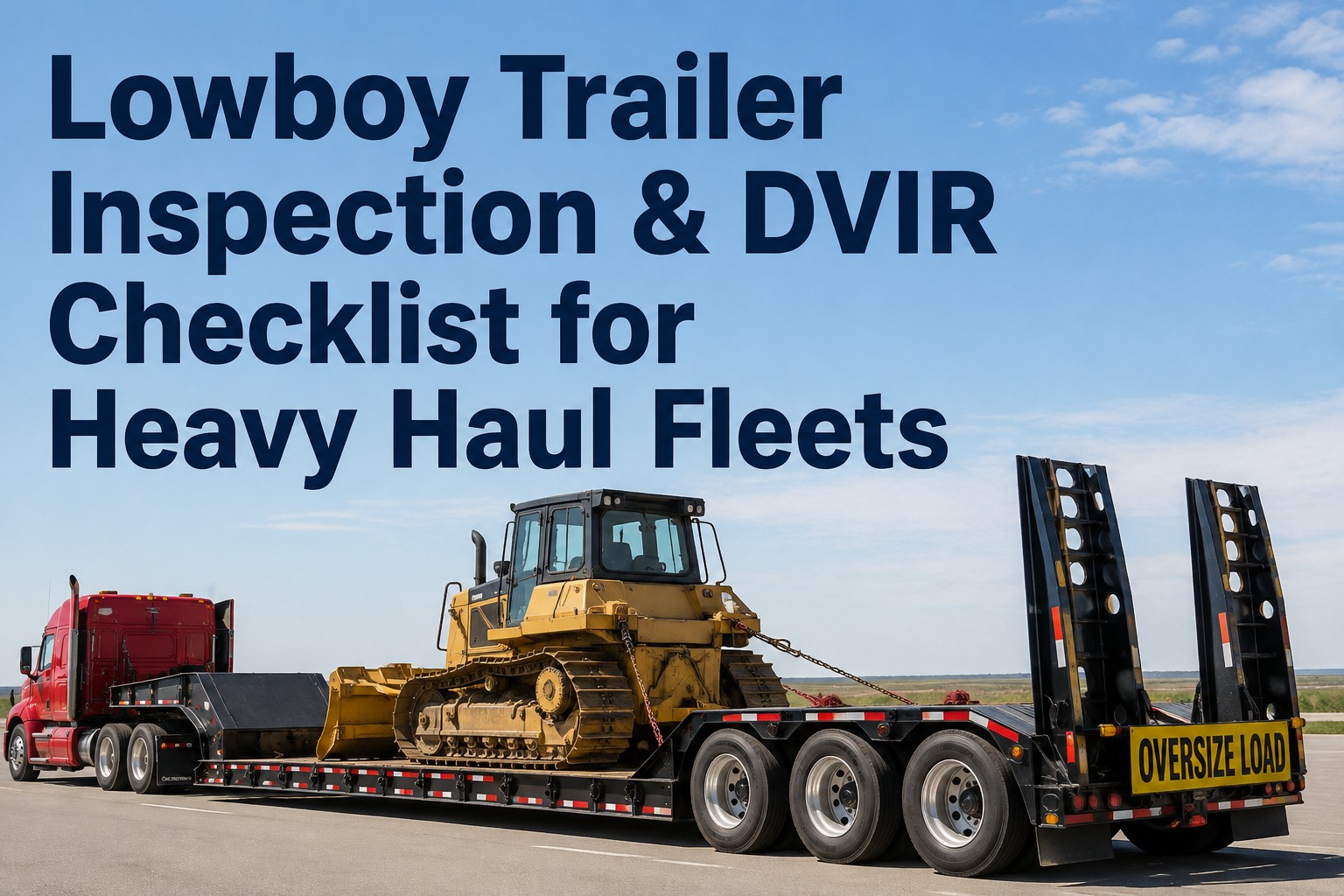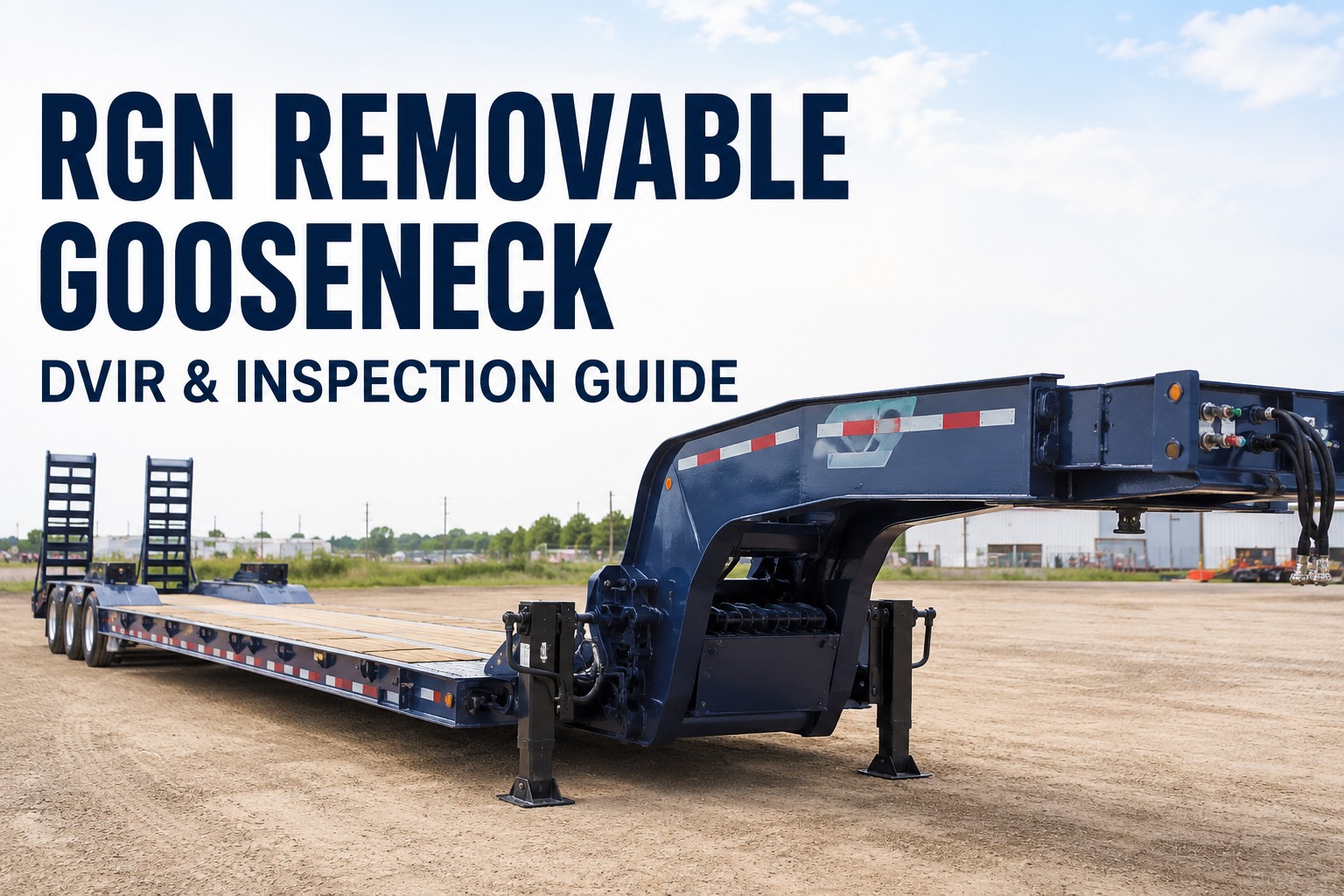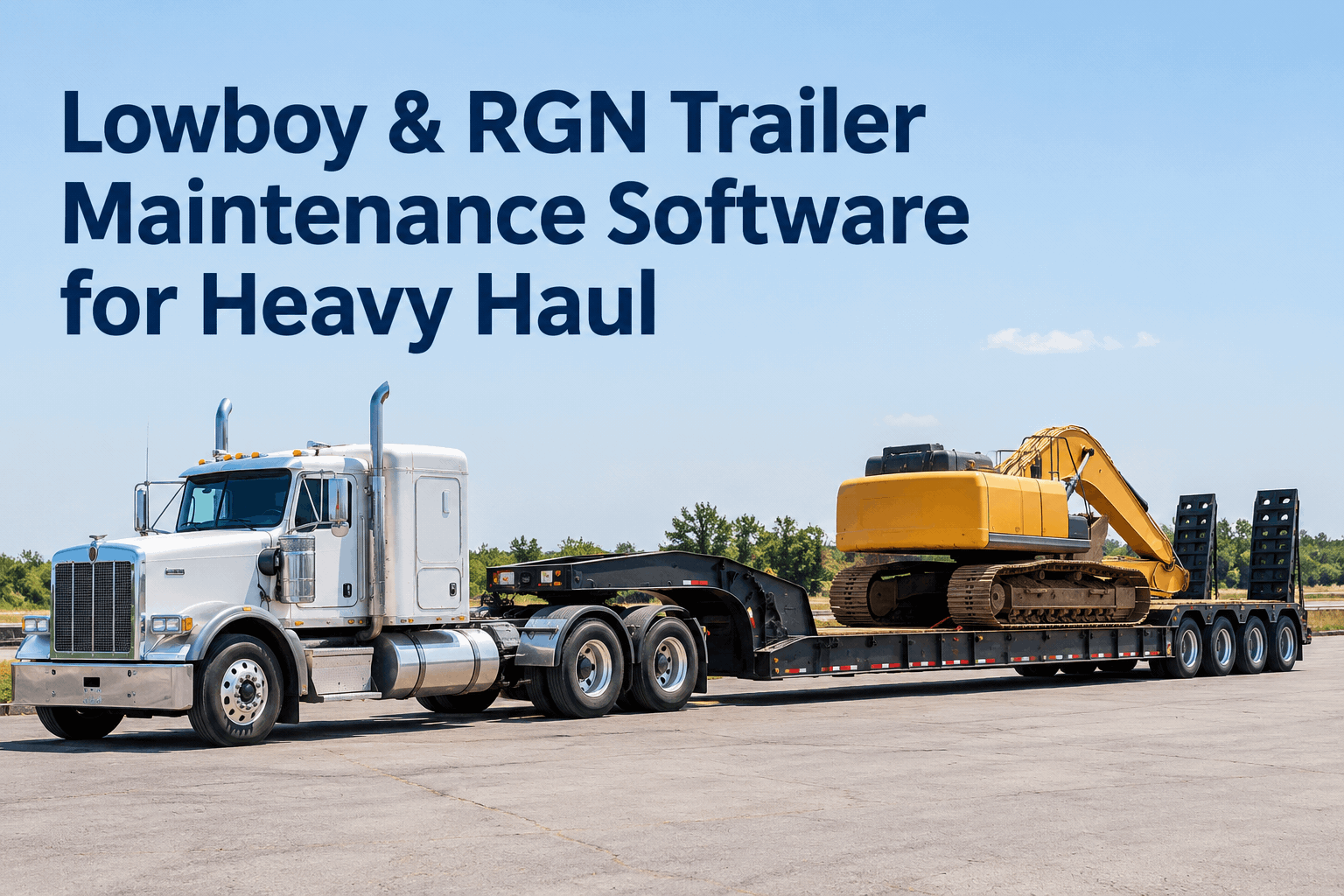
Heavy haul is the least forgiving corner of trucking: a 60-ton excavator, a permit with your name on it, and a trailer whose hydraulic gooseneck has to drop, hold, and re-latch every single load. When an RGN's gooseneck or one of its many axles fails, it's not a dry-van breakdown — it's an oversize load stuck in a lane, a blown permit window, and a repair bill to match the machine. Lowboy and RGN trailer software built for heavy haul puts the gooseneck, axles and securement on a schedule, before the load. Book a demo to see it on your rigs.
Lowboy & RGN Trailer Software That Keeps the Gooseneck, Axles and Securement Load-Ready
Inspections, preventive maintenance, defects and repairs for lowboy and removable-gooseneck trailers — in one system, so a weeping gooseneck cylinder or cracked axle is caught before the permit load goes on.
A dry van hauls freight. A lowboy hauls the machine that builds the road. Between the two sit the most mechanically demanding trailers on the highway: lowboys and removable-gooseneck RGNs, with a hydraulic gooseneck that detaches to load, a deck rated for extreme weight, and a running-gear count no standard trailer comes close to. Heavy-haul fleet software can't be a brakes-and-lights app — the gooseneck, the axles and the securement each need their own inspection lines, schedules and history.
The gooseneck does the hard partwhy RGN trailer software has to track the detach-load-attach cycle
What makes an RGN an RGN is the removable gooseneck: hydraulics drop the front, the deck lowers to the ground as a ramp, the machine drives on, and it all re-latches under load. Every cycle leans on the hydraulics and the connection pins — and every cycle is a chance for the one system a dry-van app can't even see to fail.
Hydraulics release the gooseneck and lower the deck to the ground. Cylinders, hoses and pump all under load.
The machine drives onto the low deck. Deck structure, ramps and load-bearing welds take the full weight.
Gooseneck raises and re-latches; pins and locks hold the whole load. A worn pin or weak cylinder shows here.
Detach, load, re-attach — several times a week, under the heaviest loads on the road. A purpose-built digital inspection puts the gooseneck hydraulics, pins and locks on the checklist with a photo on every flag. Book a demo of an RGN gooseneck template.
Three trailers' worth of running gearwhy heavy-haul fleet software tracks every axle, not a fleet average
To spread a permit load, a heavy-haul rig stacks running gear — the lowboy's own axles, plus a jeep up front and a booster behind. That's far more tires, brakes and bearings than any standard trailer, and a dry-van app that tracks "the trailer" as one unit misses most of it.
Added axles between tractor and trailer. Its own tires, brakes and connection points — and its own inspection lines.
Multiple heavy-duty axles under the load deck, each carrying extreme weight. Bearings, brakes and tires all tracked per position.
Trailing axles that extend the footprint for the permit. More tires and brakes that fail just as easily as any other.
Every axle position needs its own tire, brake and bearing history — not a fleet average that hides the one bearing about to seize. Tracking each one by position is what maintenance management is built for, so a flagged axle becomes a work order before it becomes a roadside fire. Book a demo of per-axle tracking.
A weep now or a dropped deck laterwhy lowboy and RGN trailer software catches the cylinder before the load
A gooseneck cylinder doesn't quit all at once. It starts as a seal weep and a gooseneck that's slow to lift. Caught on a scheduled check it's a seal kit. Left alone, it lets go during a detach or fails to hold a re-attach — with a machine on the deck.
Fluid on the rod, a gooseneck slow to lift. Caught on a pre-load check, trailer empty.
A seal kit, on your scheduleThe gooseneck struggles to raise and hold. Loading takes longer; the crew babies it and hopes.
A detach you don't trustThe cylinder lets go mid-cycle. Equipment at risk, a rig down, and a permit load going nowhere.
Stranded permit loadSame cylinder, caught at three very different costs. Scheduled checks and reminders are what preventive maintenance scheduling is built for — the gooseneck gets looked at on a cadence, not at the job site. Book a demo on your own heavy-haul fleet.
The lowboy & RGN checklistwhat the software runs on every heavy-haul trailer, by zone
A lowboy or RGN is best checked by zone — the gooseneck, the deck and structure, the running gear, and the securement. Each line ties to the trailer, takes a photo on a flag, and opens a work order on a fail.
- Cylinders lift and hold, no rod scoring or seal weep
- Hydraulic fluid, pump and hoses sound, no seepage or chafe
- Connection pins, locks and backup retainers fully seated
- Detach and re-attach cycle smooth, no binding
- Load-bearing welds and crossmembers free of cracks
- Deck floor and tie-down points sound under extreme load
- Chains, straps and winches within wear limits
- Aggregate working load limit confirmed against the cargo
- Every axle's tires, tread and inflation, jeep and booster included
- Brakes, slack adjusters and bearings at each position
- Lights, reflectors and electrical across the full length
- Suspension and axle-weight distribution for the permit
Run this on paper and the gooseneck and per-axle lines are the first skipped on a load day. In the software, a flagged cylinder or axle can hold the rig from dispatch until it's cleared — the way a lowboy and RGN inspection checklist only describes on paper. Start a free trial and load this checklist on your fleet this week.
Every rig, one recordwhat a lowboy or RGN looks like inside the platform
Open any trailer and the whole story is there — last check, open defect, next service, parts on hand and cost to date — instead of a clipboard in one truck and a service log in the office.
When a permit review or an officer asks for your inspection history, you open the rig, not a filing cabinet. It all ties into the analytics and reporting dashboard. Fleets running flat and stepped decks too can manage those in the same place — see our step deck trailer software. Book a demo on a rig from your own fleet.
From a heavy-haul carrier that stopped babying its goosenecks
We run lowboys and RGNs hauling dozers and cranes, and the thing that scared me most was always the gooseneck — a cylinder weeping for weeks until it couldn't hold a detach with a machine half-loaded. Once the gooseneck, every axle and the chains were on a scheduled check the app flagged, we caught the weeps as seal kits and the low tires before a jeep axle cooked a bearing. The office finally sees every rig's gooseneck and running gear without a walk-around in the yard.
Lowboy & RGN trailer software FAQs
What is lowboy and RGN trailer software?
Does it handle the RGN hydraulic gooseneck specifically?
Can it track every axle on a jeep-and-booster setup?
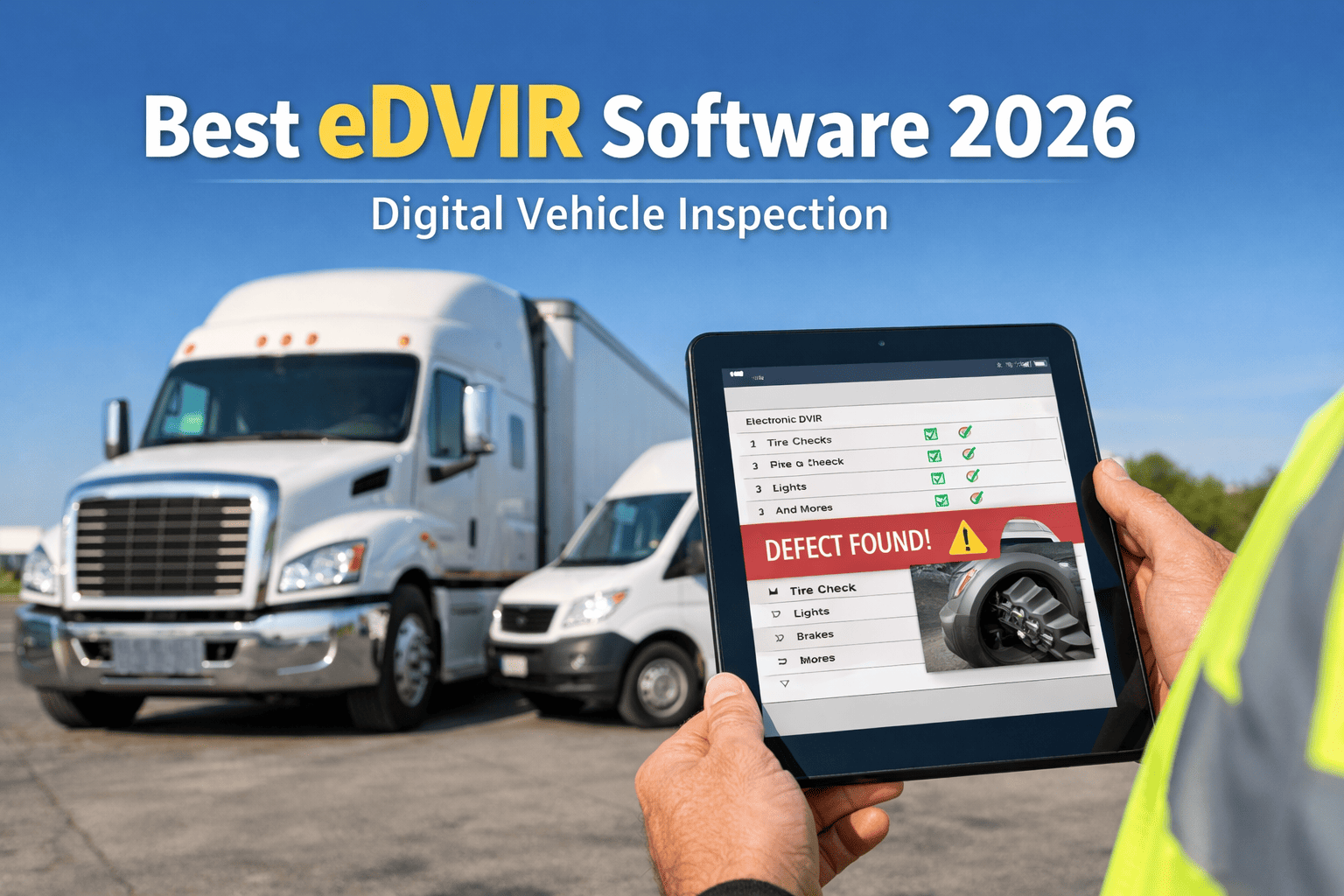
Does it handle the DOT pre-trip and defect reporting too?
How long until it's running on our heavy-haul fleet?
Keep every lowboy and RGN load-ready
Lowboy and RGN trailer software should track the gooseneck hydraulics and every axle, not just the brakes and lights. Put inspections, PM, defects and repairs on one platform and catch the cylinder before it drops a deck.
- RGN gooseneck & hydraulic templates
- Per-axle tire, brake & bearing tracking
- Defect-to-work-order in one tap
- Per-rig cost & service history