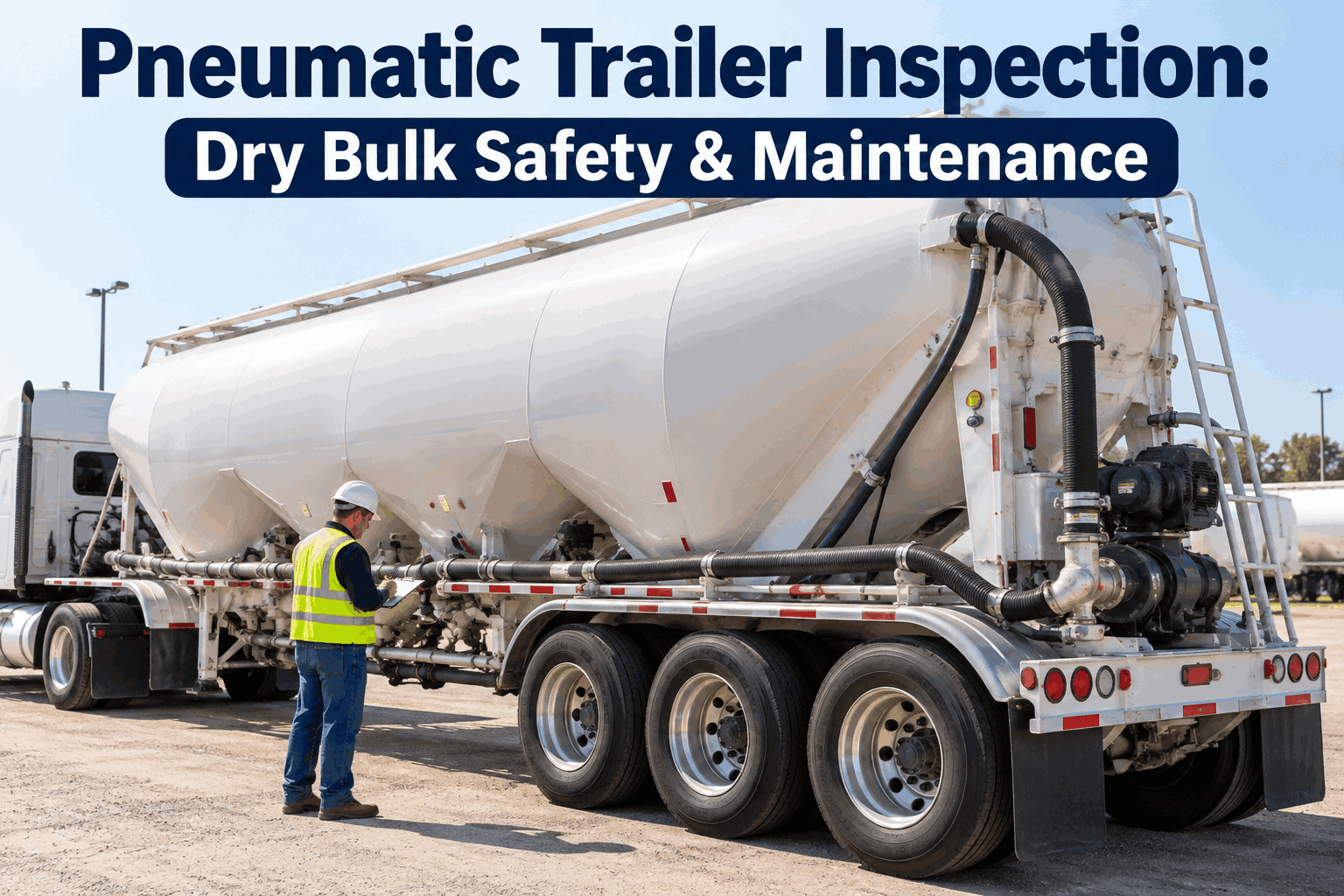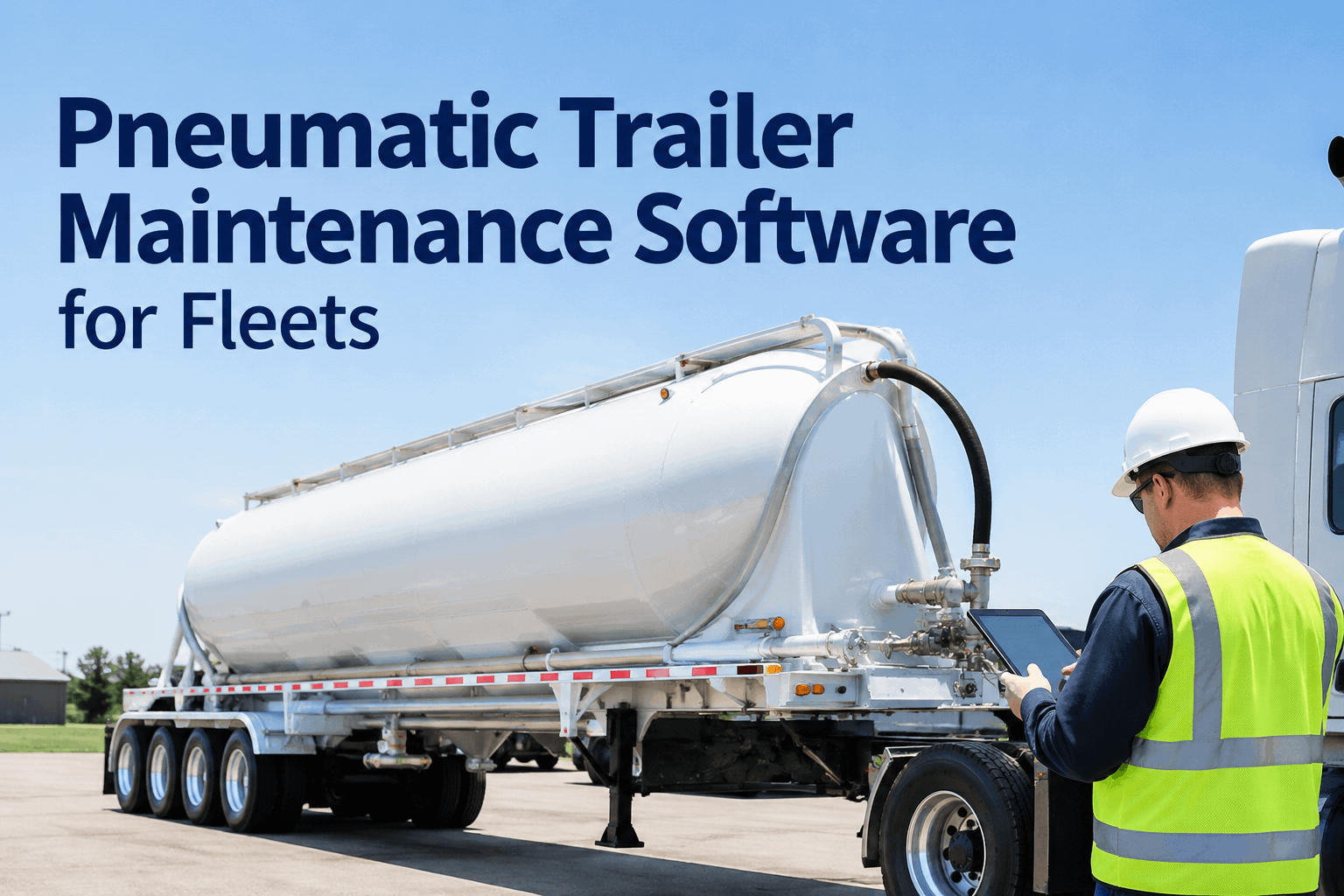
Backed up to the silo, hose coupled, 25 tons on board — and the blower won't pull pressure. That's the moment a pneumatic trailer fails, and it's never a tire or a light. It's a choked filter, a tired blower, a weeping gasket: the air-unload system no dry-van checklist ever looks at. Pneumatic trailer software built for dry bulk is how a fleet catches that days before the plant, not at it. Book a demo to see it on your trailers.
Pneumatic Trailer Software That Tracks the Whole Air-Unload Path
From PTO to hopper — blower, filter, valves, lines and aeration on one system for cement, flour, pellet and fly-ash fleets.
A liquid tanker has a pump. A dry van has doors. A pneumatic dry bulk trailer pushes product through lines with pressurized air, driven by a PTO blower — a system that exists on no other trailer and that no generic fleet template knows to check. That gap is exactly what pneumatic trailer software for dry bulk closes: the air-unload path gets tracked, not just the brakes and lights.
How the air moves the loadthe pressure path a dry-bulk trailer lives or dies on
Unloading is a chain of pressure. The blower draws air through a filter, builds 15–20 psi, and that air fluidizes the product and carries it up the line to the silo. Break the chain anywhere and the whole unload stalls — so the software has to watch the chain, not a single part.
A purpose-built digital inspection puts every stage of that path on the checklist — intake, filter, blower, valves, lines, aeration — so a weak link gets flagged before it's an unload failure at the silo. Book a demo of the air-path inspection.
Two ways the same morning goesa restricted filter — on paper versus on pneumatic trailer software
The failure is identical in both columns: an inlet filter past its restriction limit. What differs is when anyone knows — and whether the driver ever gets stranded.
- Day beforeFilter is restricted. Nobody logs it — the sheet stays in the cab.
- 06:00Trailer dispatched loaded. No flag, no check-back.
- At the siloBlower can't build pressure. Unload stalls with product on board.
- Hours lostStranded driver, blown window, dust already in the blower.
- Day beforePre-load check flags the filter at its restriction limit, with a photo.
- Same hourA work order opens automatically; the shop sees it instantly.
- Before dispatchFilter swapped from stock; trailer cleared to load.
- At the siloClean unload, on time. Blower never saw the dust.
Same part, same cost to fix — a different outcome entirely, because one version caught it a day early. That early flag is what preventive maintenance scheduling is built to produce. Book a demo on your own dry bulk fleet.
The service clock, kept for youhow pneumatic trailer software holds every air-system interval
A pneumatic trailer has intervals a dry van never does — drain the housing every haul, check the filter monthly, service the blower by hours. Miss one and the chain weakens. The software holds each clock and surfaces what's due, so none of them lives only in someone's memory.
cadence
Set the intervals once and the system tracks them per trailer, flags what's due, and opens the work order when a check fails. Keep the right filters and gaskets in stock and a scheduled swap is never a parts-run surprise. This is the air-unload layer that general trailer maintenance software leaves out.
The three-phase dry bulk checkwhat the pneumatic trailer checklist runs from pre-load to post-unload
A dry bulk trailer isn't checked once. The software runs it in three phases — before loading, on site, and after unloading — because the air-unload system can pass in the yard and still strand you at the plant. Each line ties to the trailer, takes a photo on a flag, and opens a work order on a fail.
- Blower runs smooth, oil level correct, no new noise
- Inlet filter within restriction limit, housing drained
- Relief and safety valves seat and test correctly
- Tank, manway and discharge gaskets sealing
- Tires, tread and inflation across all positions
- Brakes, slack adjusters and air lines within limits
- Lights, reflectors and electrical connection working
- Landing gear, suspension and frame sound
- Drain filter housing, check for standing water
- Discharge hoses and couplers free of wear or cracks
- Aeration pads intact, hopper lines clear of product
- Any flagged defect carried to an open work order
Run this on paper and the air-unload phases are the first to get skipped on a hot day. In the software, a flagged filter or valve can hold the trailer from dispatch until it's cleared. Start a free trial and load this checklist on your fleet this week.
One trailer, the whole storywhat a pneumatic unit looks like inside the platform
Open any trailer and the air-unload history is right there — last check, open defect, next service, parts on hand and cost to date — instead of a clipboard in one truck and a service log in the office.
When a plant asks why a delivery slipped, or an auditor asks for your inspection history, you open the trailer, not a filing cabinet. This sits alongside your general tanker trailer inspection and compliance for the rest of the fleet, tied together in the maintenance management workflow. Book a demo on a trailer from your own fleet.
From a dry bulk fleet that stopped getting stranded
We haul cement and fly ash, and our worst days were always a blower quitting at the plant with 25 tons on board. Once the filter checks and blower service were on a schedule the system reminded us about, those calls basically stopped — last year we caught two restricted filters a week before they'd have cost us a rebuild. The office finally sees every trailer's air system without calling the yard.
Pneumatic trailer software FAQs
What is pneumatic trailer software?
How is it different from general trailer maintenance software?
Can it schedule blower and filter maintenance automatically?
Does it handle the DOT pre-trip and defect reporting too?
How long until it's running on our dry bulk fleet?
Keep every pneumatic trailer ready to unload
Pneumatic trailer software should track the whole air-unload path, not just the brakes and lights. Put inspections, PM, defects and repairs on one platform and stop getting stranded at the silo.
- Full air-path inspection templates
- Blower & filter PM on its own clock
- Defect-to-work-order in one tap
- Per-trailer cost & history