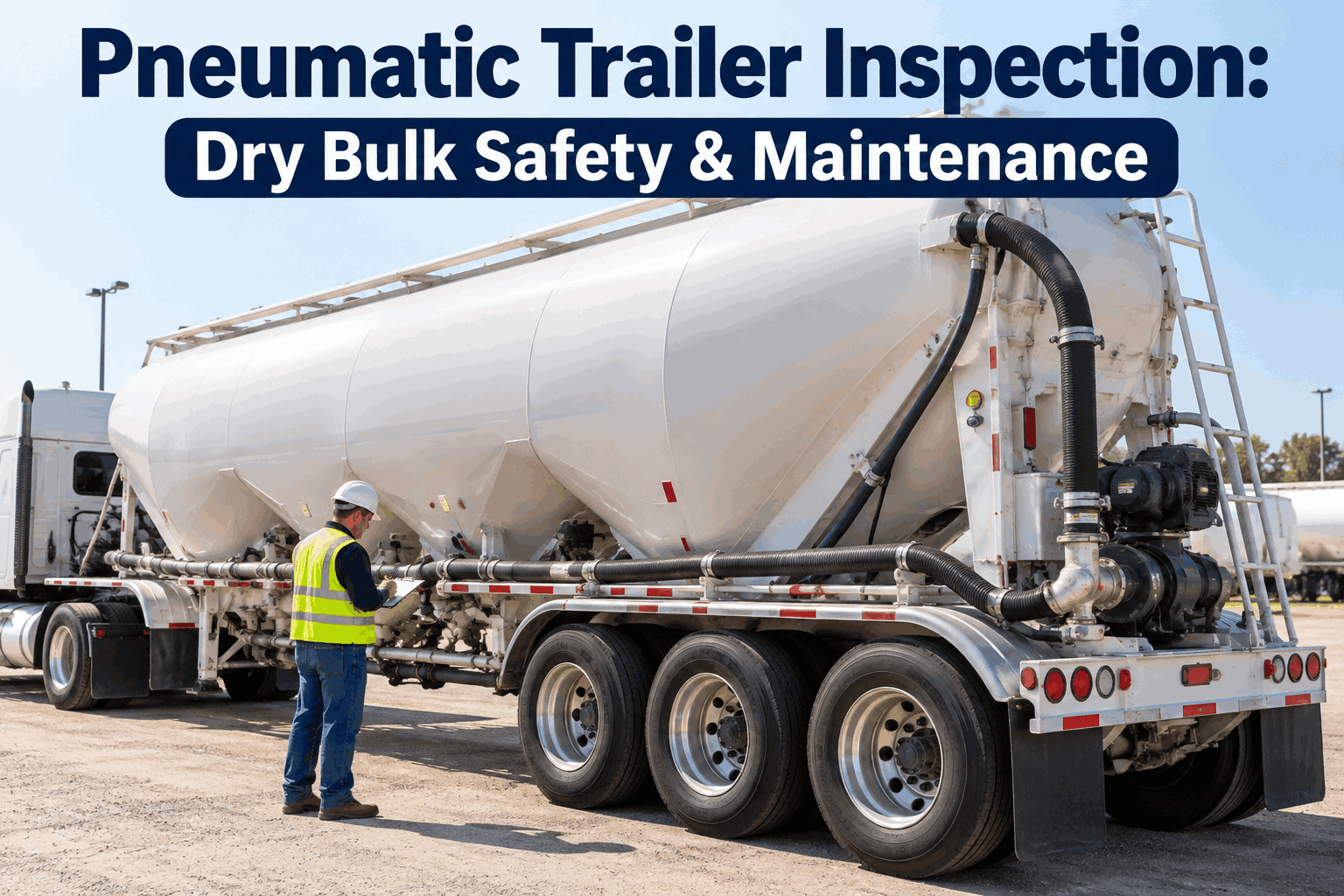
A pneumatic trailer inspection has to cover something a flatbed or van never worries about: a pressurized discharge system that can strand a full load even when the trailer itself is perfectly roadworthy. The tyres, brakes and lights can all pass, but if the blower won't build pressure, a relief valve is stuck, or a discharge hose is split, you're parked at the silo with 25 tonnes of product you can't move. Book a demo to see a pneumatic dry bulk inspection that covers the discharge system, not just the running gear.
Roadworthy Doesn't Mean It Can Unload
A pneumatic dry bulk trailer earns its keep on the discharge line. Pass the running gear and miss the blower, relief valve or discharge hose, and you've got a roadworthy trailer that can't do its one job.
Here's the full inspection — why a pneumatic trailer is really two trailers in one, the discharge system component by component, the pressure-safety trio that keeps it safe, blower service intervals, manways and closures, residue and cross-contamination control, running-gear roadworthiness, and how to keep it all documented per trailer with test dates.
Two trailers in one inspectionroadworthy and able to unload are different tests
Every pneumatic trailer inspection has to clear two separate questions: is it safe to drive, and can it actually discharge its load. A generic trailer checklist only answers the first, which is why a bulk trailer needs an equipment-specific template.
Running gear + discharge system. Tyres, brakes, lights and frame decide whether it's roadworthy. The blower, pressure vessel, relief devices, hoses, aeration and discharge line decide whether it can unload — and a failure there costs you a delivery even though the trailer never leaves the road unsafe.
The pneumatic discharge system, component by componentthe dry bulk trailer inspection a generic form skips
The discharge system uses air pressure to fluidize dry product — cement, flour, plastic pellets, sand — and push it up the discharge line into a silo. Every part of it is a wear or safety item, and any one can stop an unload. These belong on the template.
This is the layer that turns a generic trailer check into a real pneumatic trailer inspection. Building these into a recurring maintenance schedule catches slow blower and pad wear before it strands a load. Book a demo to put the discharge system on a template
The pressure-safety triothe checks that keep a pressurized vessel safe
A pneumatic trailer runs its vessel under pressure to discharge, which makes three components pure safety items — not performance items. If any of these is wrong, the risk isn't a slow unload, it's an over-pressurized vessel. They get their own focused check.
Because these are pressure-vessel items, many jurisdictions also require periodic testing and certification with recorded dates — the same discipline that applies to liquid cargo tanks, covered in HVI's guide to tanker valve and pressure-test inspection. Recording each test against the specific trailer keeps the certification current. Start free and track pressure-test dates per trailer.
Blower service & intervalsthe PM that keeps the air moving
The blower is the heart of the discharge system and the component most sensitive to missed maintenance. Its service needs are interval-based, not condition-based, so they belong on a calendar PM schedule rather than a "check when it sounds off" habit.
Intervals vary by blower make and by how hard the trailer works, so the practical move is a per-trailer schedule that prompts each service on time rather than a shared spreadsheet nobody updates. Book a demo to set blower PM intervals per trailer
Manways, closures & access pointswhere the vessel seals to hold pressure
Every opening on a pneumatic vessel has to seal fully to hold pressure and keep product in — and every seal is a wear item. A leaking closure means lost pressure, lost product and a slower or failed unload.
Closures are also where cross-contamination sneaks in, so a worn seal is both a pressure problem and a product-quality one. Logging each closure by position keeps a marginal gasket from becoming a rejected load.
Residue, cleaning & cross-contaminationwhen the last load can spoil the next one
On a bulk trailer, what you carried last matters to what you carry next. For food-grade product, a product change, or any sensitive cargo, residue control is part of the inspection — not a separate job done and forgotten.
The same photo capture that documents a torn aeration pad documents a clean vessel before a food-grade load, so the inspection and the cleanliness record run on one tool instead of a paper wash ticket nobody can find later.
Running gear & roadworthinessthe trailer half of the inspection
Under the pressure and discharge equipment, a pneumatic trailer is still a heavy trailer that has to be roadworthy. The running-gear checks are the same as any rig, and they still belong on the template alongside the bulk-specific lines.
Running these on the same recurring schedule as the discharge system keeps the whole asset — trailer and equipment — documented in one place instead of split across a paper trailer form and a mental note about the blower.
From a dry bulk hauling operator
We had a trailer pass its walkaround, drive two hundred miles to a cement plant, and then sit there for four hours because the relief valve was weeping and it couldn't hold discharge pressure. Roadworthy the whole time — completely useless at the silo. That's the failure a normal checklist never catches. Now the blower, relief valve and discharge line are required lines on every pneumatic trailer, the pressure-test dates are tracked per unit, and the discharge stuff gets photographed. We stopped finding out at the silo.
How HVI documents a pneumatic trailer inspectioncustom templates, calendar PM and test-date alerts
A pneumatic trailer inspection holds up when the blower, pressure, discharge and cleaning checks are on one recurring record instead of scattered. HVI's custom templates, calendar PM and annual inspection alerts keep every trailer documented across its life.
Build the bulk trailer template
Blower, pressure, relief valve, aeration and discharge lines as required checks.
Capture defects, tests & photos
Every check, pressure-test date and interior photo logged against the trailer.
Keep PM & alerts on a calendar
Blower PM and pressure-cert alerts per trailer, with full maintenance history.
See how pneumatic trailer inspections, blower PM and test-date history live inside HVI's inspection and maintenance platform. Walk through it in a quick demo
Pneumatic trailer inspection: quick answers
What does a pneumatic trailer inspection cover?
A pneumatic trailer inspection covers two systems: the running gear — tyres, wheels, brakes, lighting, suspension, frame and coupling — and the pressurized discharge system that makes it a dry bulk trailer. That means the blower and its drive, the pressure vessel and gauges, the relief valve, discharge hoses, couplings and lines, aeration pads and lines, and the manways, closures and seals that hold pressure. It also covers residue and cleaning control where the cargo requires it.
Why can a roadworthy pneumatic trailer still fail to unload?
Because the discharge system is separate from the running gear. A trailer can have perfect tyres, brakes and lights and still be unable to discharge if the blower won't build pressure, a relief valve is stuck or weeping, an aeration pad is clogged, or a discharge hose is split. The failure doesn't make the trailer unsafe to drive — it just means you arrive roadworthy and can't move the product, which is why the discharge system needs its own inspection lines.
How do you inspect a dry bulk trailer's discharge system?
Check the blower for noise, vibration, oil level and belt or coupling condition; the pressure vessel and gauges for corrosion, damage and accurate readings; the relief valve to confirm it lifts at its set pressure; the discharge hoses, couplings and line for cuts, bulges and worn seals; the aeration pads and lines for tears and blockage; and the manways and closures for sound seals. Pressure-vessel items such as the relief valve and vessel certification also need periodic testing with recorded dates.
How often should a pneumatic bulk trailer be serviced?
The running gear and discharge equipment should be checked before each trip, with the pressure-safety items — relief valve, gauge and manway seals — verified before every discharge. On top of that, the blower needs interval-based preventive maintenance (oil, belts, filters) on a calendar schedule, and the pressure vessel needs periodic testing and certification per the applicable jurisdiction. Because intervals vary by blower and workload, a per-trailer PM schedule with alerts is the reliable way to stay on time.
How does HVI help with pneumatic trailer inspections?
HVI lets you build a custom pneumatic trailer inspection template with blower, pressure, relief-valve, aeration and discharge-line checks a generic form doesn't have, capture defects and photos — including clean-vessel evidence before a food-grade load — against each trailer, and keep blower PM on a calendar with annual inspection alerts for pressure-test and certification dates. Everything lives in one maintenance history per trailer, so inspections, test dates and cleaning records run on the same tool.
Cover the discharge system, not just the running gear
HVI documents pneumatic trailer inspections end to end — a custom template with blower, pressure, relief-valve, aeration and discharge lines, pressure-test dates tracked per trailer, clean-vessel photos, and calendar PM that catches blower and pad wear before a load gets stranded at the silo.
No credit card · Custom bulk trailer templates on day one
- Blower, drive & air filter
- Relief valve, gauges & test dates
- Hoses, couplings & discharge line
- Aeration pads & lines
- Manways, seals & clean-vessel photo