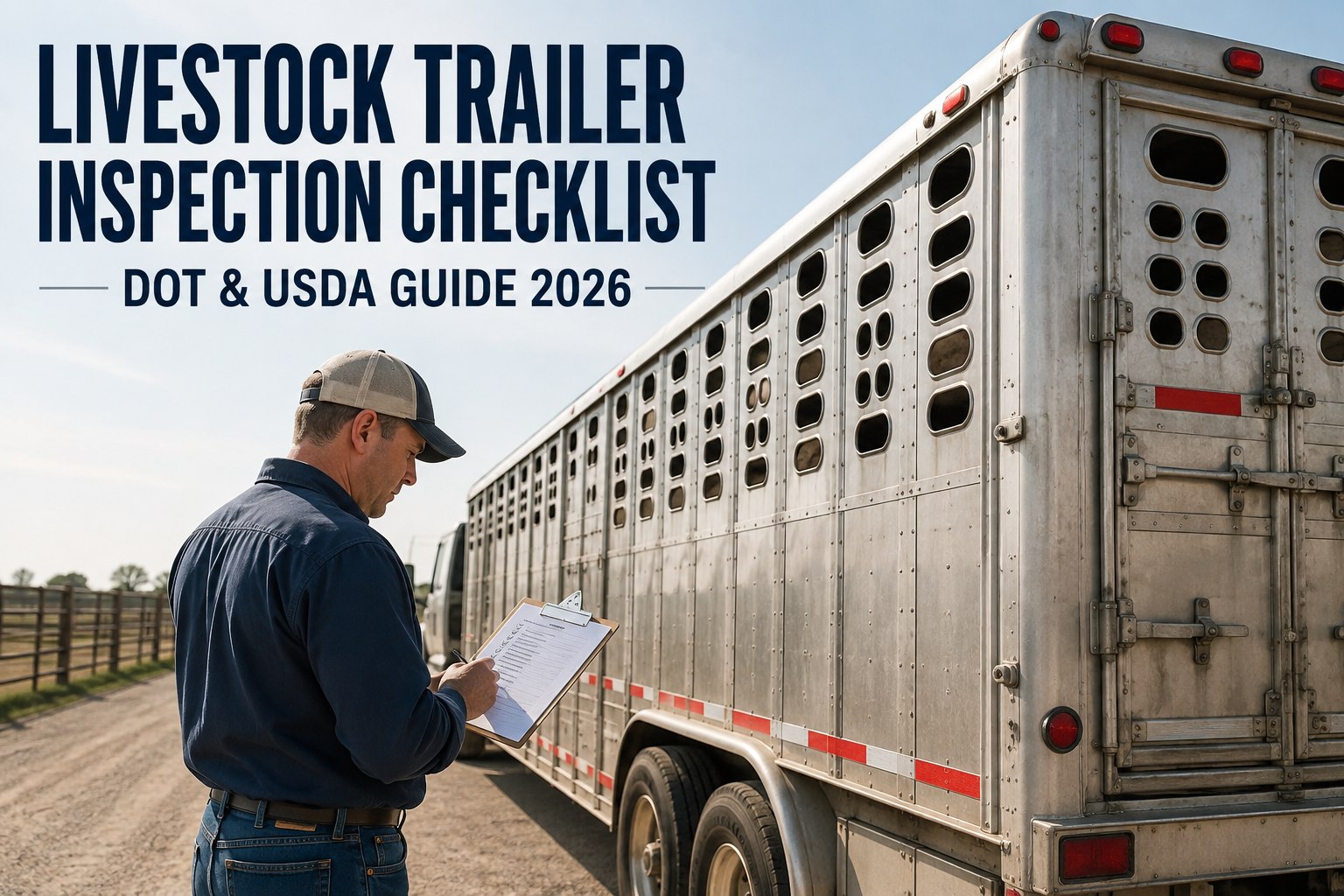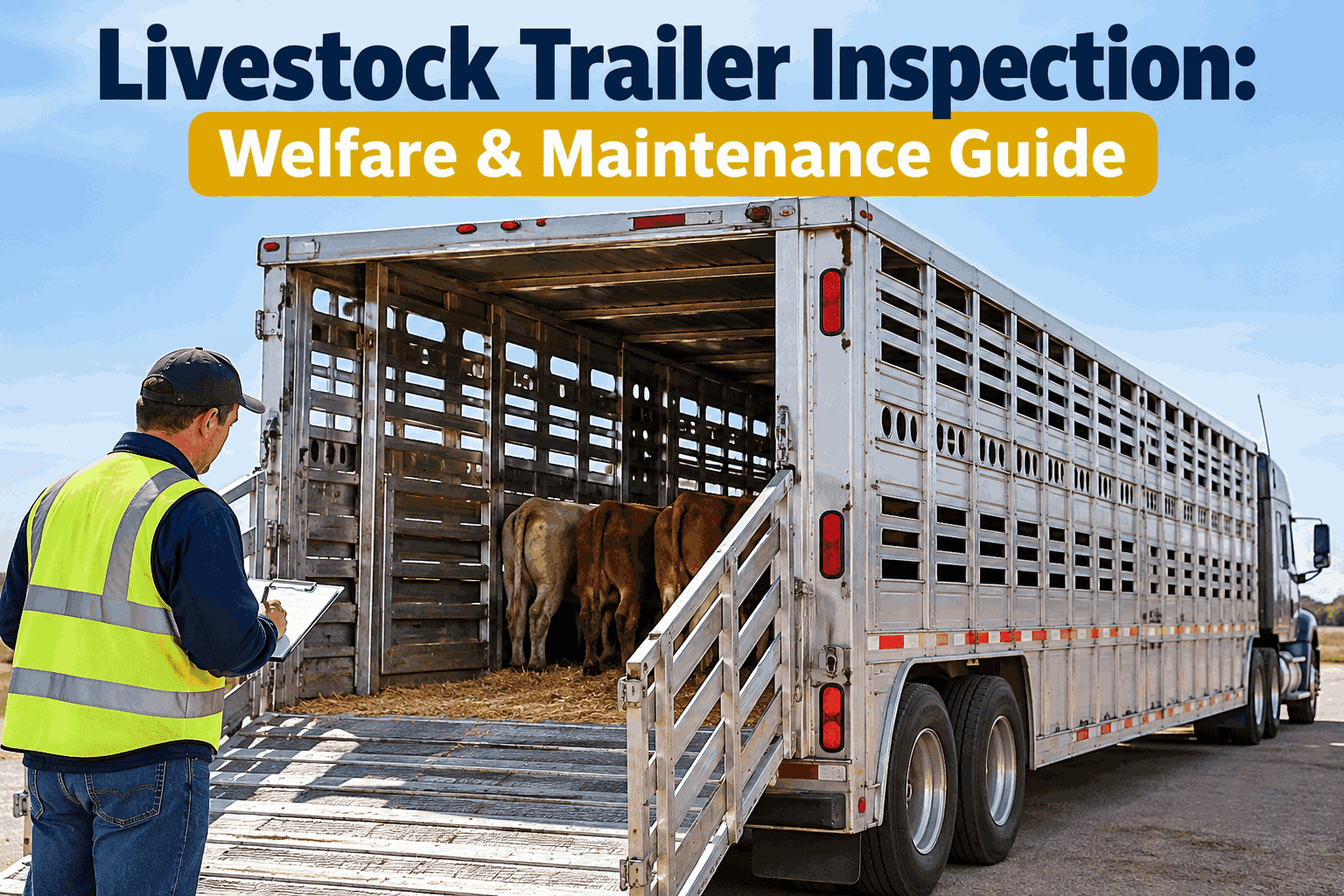
A livestock trailer inspection is the one check where a mechanical fault turns straight into an animal-welfare problem. A blocked vent becomes heat stress, a worn floor becomes a slip and a down animal, a jammed gate becomes a crush risk at loading — none of which show up on a standard trailer walkaround. The trailer can be perfectly roadworthy and still be a bad place to put animals, which is why livestock haulers need an inspection built around welfare, not just compliance. Book a demo to see a livestock trailer inspection that ties every check to the animal inside.
A Mechanical Fault Is a Welfare Fault
On a livestock trailer, the defect and the animal are connected. Pass the running gear and miss a blocked vent or a slick floor, and you've got a roadworthy trailer that's still failing the animals in it.
Here's the full inspection — why livestock trailers carry a welfare duty on top of compliance, the welfare-critical systems, how each mechanical defect maps to an animal outcome, ventilation as the top in-transit driver, flooring and drainage, corrosion hotspots, breakdown planning, running-gear roadworthiness, and how to document it all per trailer.
Why a livestock trailer inspection is differentcompliance and welfare in one check
Most trailer inspections answer one question: is it safe and legal to drive. A livestock trailer inspection has to answer two — is it roadworthy, and is it a safe environment for animals in motion. The second is what a generic checklist has no lines for.
Roadworthy + fit for animals. Tyres, brakes and lights decide whether it's legal on the road. Ventilation, flooring, partitions, gates and cleanliness decide whether the animals arrive healthy — and a welfare-critical defect can put you on the wrong side of animal-transport rules even when the trailer passes a mechanical check. It sits alongside the wider DOT compliance duties for agriculture fleets, not instead of them.
The welfare-critical systemsthe livestock trailer inspection a generic form skips
Beyond the running gear, a livestock trailer has systems that exist purely to keep animals safe and comfortable in transit. Each is a wear point that degrades between services, and each belongs on the template as a required, welfare-critical line.
This is the layer that turns a mechanical walkaround into a real livestock trailer inspection. Building these into a recurring agriculture fleet maintenance program catches welfare defects before an animal is on board. Book a demo to put welfare checks on a template
How a mechanical defect becomes a welfare failurethe mapping that makes each check matter
The reason welfare checks can't be optional is that each one prevents a specific animal outcome. Naming that link is what turns a line on a form into something a driver takes seriously. These are the failures worth catching before loading.
Recording each of these against the specific trailer, with a photo, turns "looked fine" into evidence the welfare check was actually done. Start free and log welfare-critical defects with photos.
Ventilation: the top in-transit welfare driverairflow is what keeps animals safe once you're moving
Once a livestock trailer is loaded and rolling, ventilation does more for animal welfare than any other system. Heat and ammonia build quickly in a packed trailer, so the airflow check isn't a formality — it's the difference between a healthy delivery and heat-stressed animals.
Because airflow needs change with weather and load density, this is a check worth prompting every trip rather than assuming last week's setup still fits. Book a demo to make airflow a required pre-load line
Flooring, drainage & corrosionwhere waste and washing attack the trailer
The floor of a livestock trailer takes the worst of it — animal waste, constant washing and standing moisture — which makes it both a welfare surface and the fastest-corroding part of the structure. These checks protect the animal and the asset at once.
Corrosion here is progressive and easy to miss until a floor gives way under an animal, so a recurring PM that trends it beats waiting for a failure at the worst possible moment. Logging each area by photo makes slow rust visible across inspections instead of forgotten between them, and gives the workshop a dated before-and-after when a repair is finally due. A soft floor section or a rusted-through fastener is exactly the kind of defect that looks minor on one inspection and structural three months later.
Breakdown planning is a welfare plana defect that strands the trailer strands the animals
On a livestock trailer, a roadside breakdown isn't just downtime — every minute the trailer sits, the animals are exposed to heat, cold or stress with no way off. That makes reliability itself a welfare issue, and it's the strongest reason to catch defects before they leave the yard.
The same recurring inspection and PM that keeps the trailer roadworthy is what keeps animals from being stuck in a defective one on the shoulder in bad weather. A trailer that never leaves the yard with a known ventilation or brake fault is the simplest welfare protection there is — and it's a policy you can actually enforce when every check and defect is logged against the unit rather than living in a driver's head. Escalating welfare-critical defects the same day, instead of parking them until the next service, is what turns a checklist into a real safeguard.
Running gear & roadworthinessthe trailer half of the inspection
Under the welfare-specific systems, a livestock trailer is still a heavy trailer that has to be roadworthy — and on a load of live animals, a smooth, reliable drive is itself part of welfare. The running-gear checks belong on the template alongside the animal-specific lines.
Running these on the same recurring schedule as the welfare checks keeps the whole trailer — mechanical and animal-facing — documented in one place instead of split across a paper form and a driver's memory.
From a livestock hauler
The one that stuck with me was a rear ventilation fan that had quietly died. Trailer drove fine, everything else checked out — but on a summer run that would've been a load of heat-stressed cattle by the time we noticed. Now ventilation, flooring and the gates are required, photographed lines on every livestock trailer, and anything welfare-critical gets escalated the same day instead of waiting for the next service. When you're hauling live animals, "it's roadworthy" isn't the same as "it's fit to load."
How HVI documents a livestock trailer inspectioncustom templates, calendar PM and welfare defect records
A livestock trailer inspection holds up when the welfare and mechanical checks live on one recurring record instead of scattered. HVI's custom templates, calendar PM and annual inspection alerts keep every trailer documented across its life.
Build the livestock template
Ventilation, flooring, partitions, ramps and washout as required welfare lines.
Capture welfare defects & photos
Every check and welfare-critical defect logged with a photo against the trailer.
Keep PM & alerts on a calendar
Recurring PM and annual inspection alerts per trailer, with full history.
See how livestock trailer inspections, welfare PM and defect history live inside HVI's inspection and maintenance platform. Walk through it in a quick demo
Livestock trailer inspection: quick answers
What does a livestock trailer inspection cover?
A livestock trailer inspection covers two things: the running gear — tyres, wheels, brakes, lighting, reflectors, suspension, frame and coupling — and the welfare-critical systems that make it fit for animals. That means ventilation openings and fans, flooring and non-slip surfaces with drainage, partitions, gates, hinges and latches, ramps and loading equipment, corrosion around floors, frame, fasteners and electrical, and washout and cleanliness. Any defect that could affect animals in transit is treated as a priority.
Why is livestock trailer inspection different from a normal trailer check?
Because a mechanical defect on a livestock trailer becomes an animal-welfare problem. A blocked vent causes heat stress, a worn floor causes slips and injury, a failed gate creates a crush or escape risk. A standard trailer walkaround confirms the trailer is roadworthy but has no lines for these welfare-critical systems, so a livestock trailer can pass a mechanical check and still be unfit to load animals into.
How important is ventilation on a livestock trailer?
Ventilation is the single biggest welfare factor once a livestock trailer is moving. Heat and ammonia build quickly in a loaded trailer, so vents and louvres must be clear and unobstructed, any fitted fans must be working and securely mounted, and air must be able to flow through the load rather than pooling in dead zones. Because airflow needs change with weather and load density, it's best checked before every trip rather than assumed.
How often should a livestock trailer be inspected and serviced?
The welfare-critical systems and running gear should be checked before each trip — ventilation, flooring, gates and latches especially, since these directly affect the animals. On top of that, flooring, corrosion and hardware need recurring preventive maintenance on a calendar schedule because waste and washing degrade them steadily, and the trailer needs its periodic annual inspection. A per-trailer schedule with alerts keeps both the daily welfare checks and the longer-term services on time.
How does HVI help with livestock trailer inspections?
HVI lets you build a custom livestock trailer inspection template with ventilation, flooring, partition, ramp and washout lines a generic form doesn't have, capture photos and welfare-specific defects against each trailer, and keep preventive maintenance on a calendar with annual inspection alerts. Welfare-critical defects can be escalated rather than deferred, and everything lives in one maintenance history per trailer, so inspections, PM and welfare records run on the same tool.
Make welfare a documented part of every inspection
HVI documents livestock trailer inspections end to end — a custom template with ventilation, flooring, partition, ramp and washout lines, welfare-critical defects escalated and photographed per trailer, and calendar PM with annual alerts that catch corrosion and wear before an animal is on board.
No credit card · Custom livestock trailer templates on day one
- Vents, louvres & fans clear
- Non-slip floor & drainage
- Partitions, gates & latches
- Ramps & loading equipment
- Washout, corrosion & edges