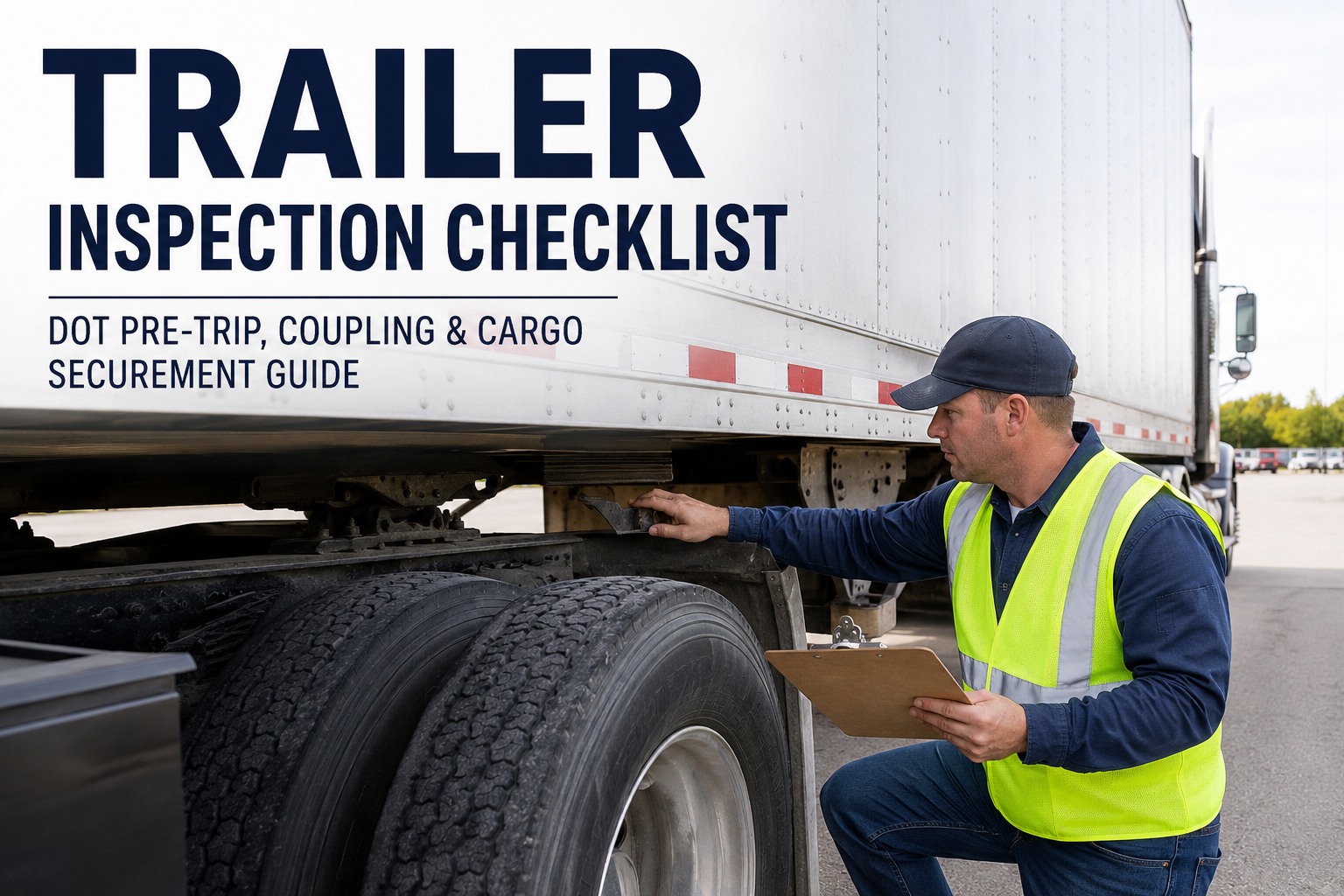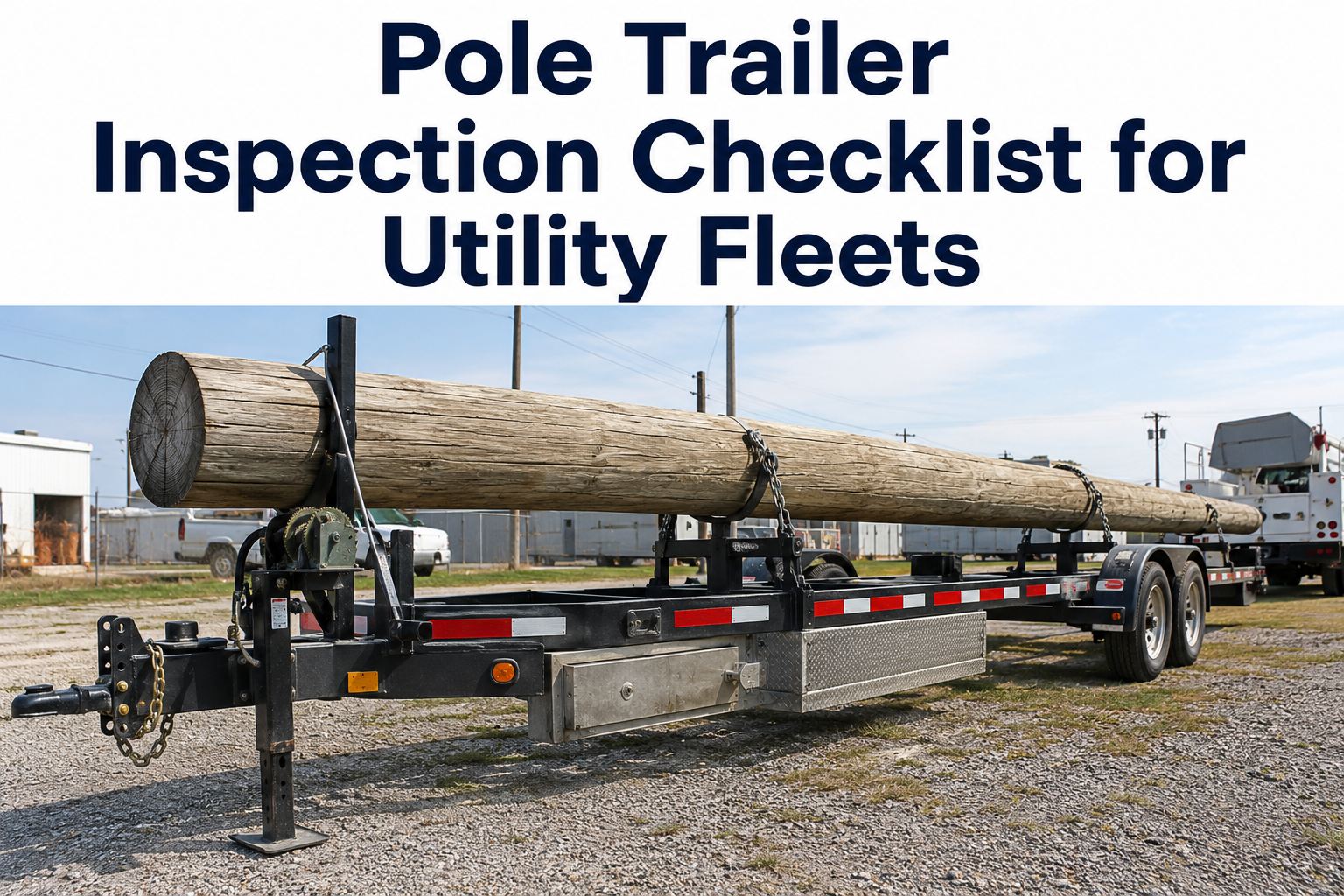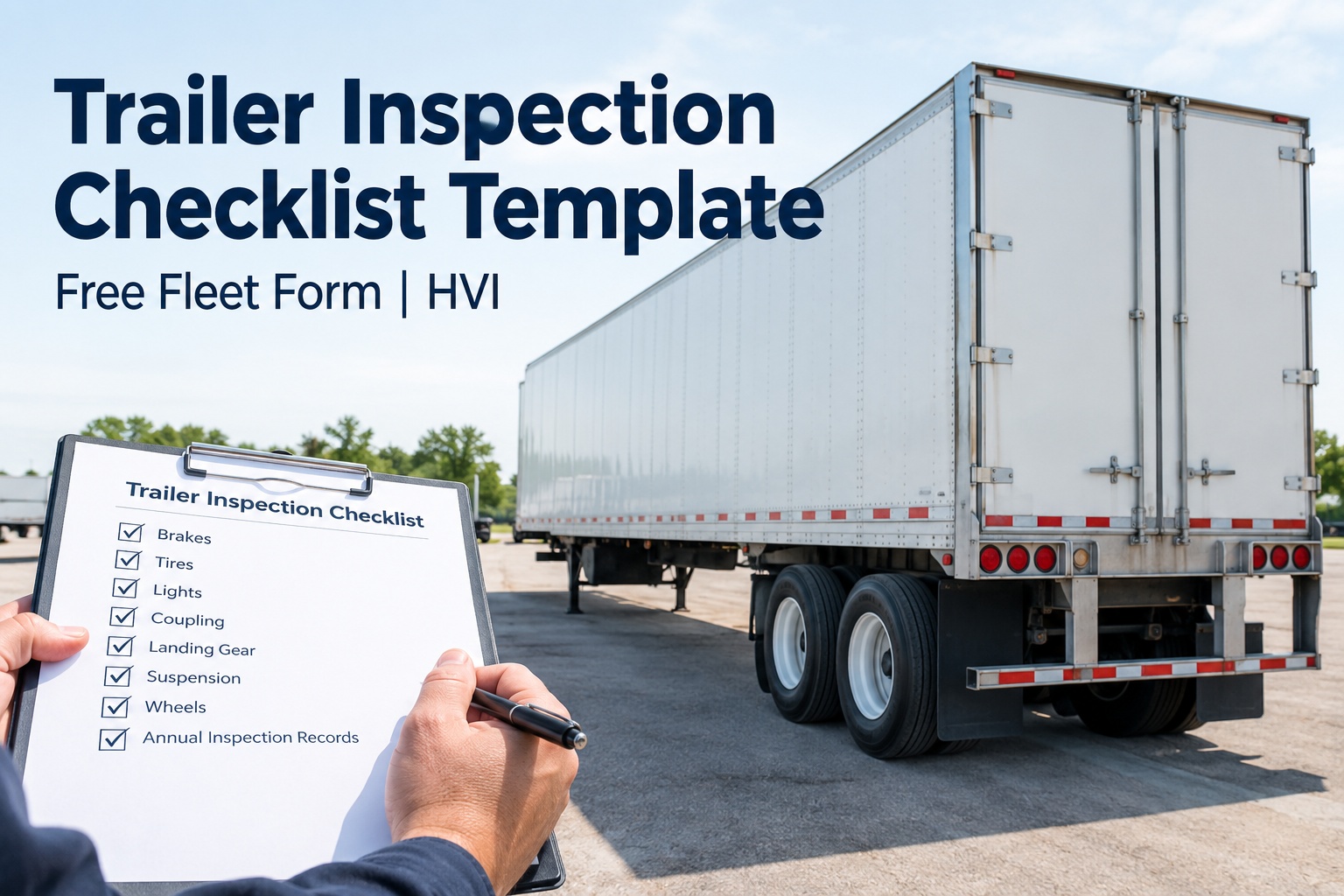
Trailers are where fleets quietly lose the compliance game. The tractor gets the attention — daily walkarounds, PM on a schedule — while the trailer dropped in the yard for three weeks rolls out with a chafed air line and a landing-gear leg nobody looked at. A good trailer inspection checklist fixes that by treating the trailer as its own asset, not an afterthought hooked to the back. See a trailer checklist built digitally, by zone
Not every trailer check happens every day
The most common mistake is treating one form as if it covers everything — running deep mechanical checks daily (impractical) or skipping them entirely (dangerous). These are three distinct inspection types with different frequencies and different purposes. Sort your checklist into them.
Get that separation right and the checklist below becomes genuinely usable — a driver isn't gauging a kingpin at 5 a.m., and a worn brake isn't waiting for an annual to surface. Here's the full trailer inspection structure by zone, what changes across trailer types, and how the same checklist becomes a digital inspection that actually captures what was found.
The trailer inspection checklist, by zone
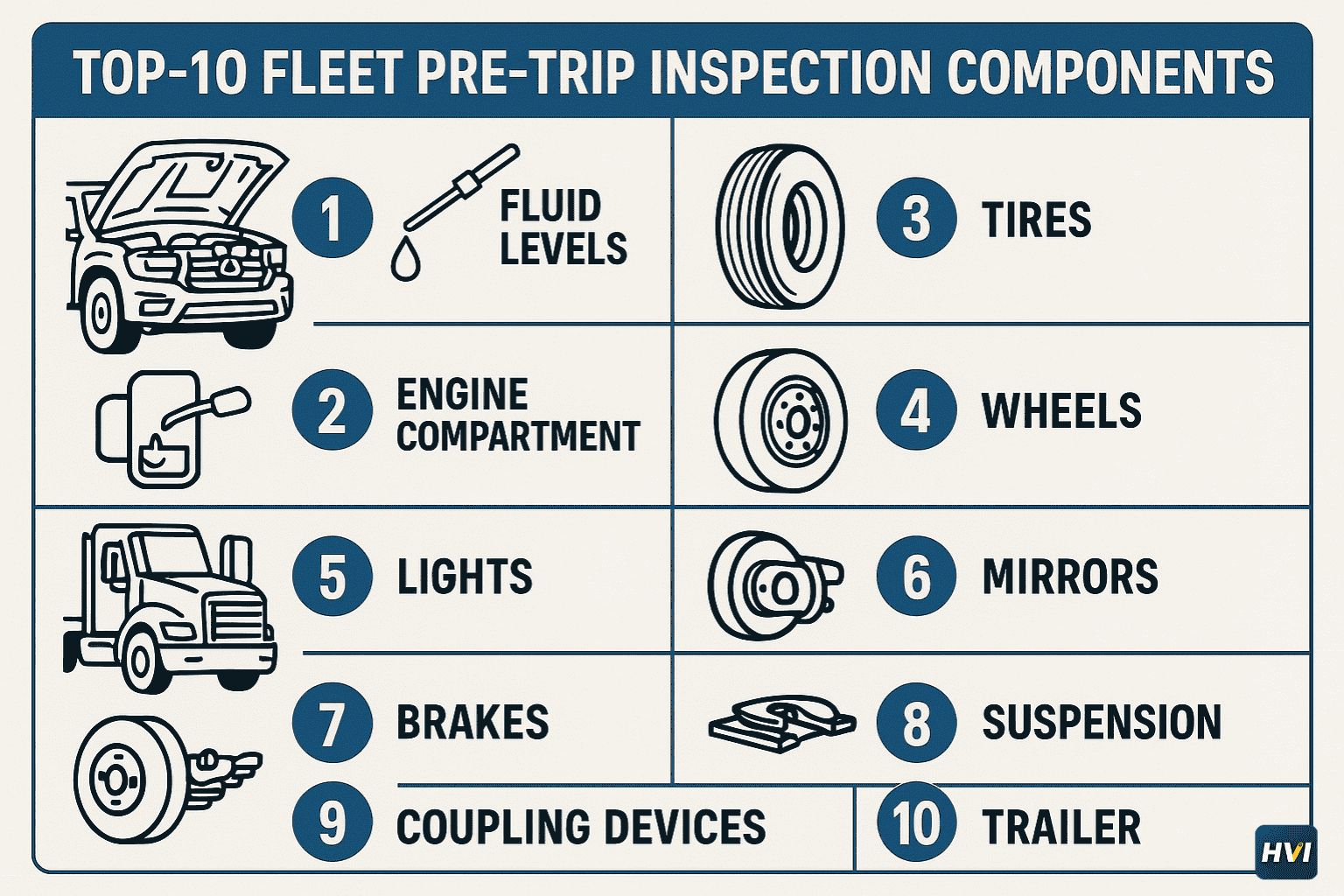
A trailer inspection is easiest to run — and hardest to skip a step on — when it's organized by physical zone, walking the trailer in order. Each zone below lists what to check and flags whether it's typically a daily driver check or a deeper scheduled/periodic item. Adapt the frequencies to your operation and the applicable regulations.
- Kingpin condition — wear, mushrooming, cracks (gauge measurement at PM)
- Fifth-wheel contact area, upper coupler, locking jaws fully closed
- Release handle seated; tug test verifies coupling
- No gap between trailer apron and fifth-wheel plate
- Safety devices, glad hands, air and electrical lines connected, not chafing
- Fully raised and secured before travel; no dragging risk
- Crank handle stowed; cross-shaft and braces intact
- Legs not bent or damaged; mounting bolts tight
- Supports trailer weight properly when uncoupled
- Seven-way connector, pins clean and undamaged
- Wiring secured, not chafing or hanging
- All lamps: clearance, marker, tail, brake, turn — correct colours
- ABS indicator lamp completes self-test and functions
- Trailer brakes apply and hold (daily functional check)
- Slack adjuster stroke within limits (measured at PM)
- Lining thickness above minimum; drums free of cracks (PM)
- Air hoses and tubing: no leaks, chafing, secured
- Spring/park brake holds; ABS functional
- Tread depth with a gauge (regulatory minimum is 2/32"; many fleets set higher)
- Sidewall damage, dry rot, correct pressure for load
- Wheel fasteners present and tight; no rust streaks
- Hub oil level and seal condition; no leaks (PM)
- Air springs: no leaks, tears, or chafing
- Hangers, U-bolts, and mounts: no cracks or looseness
- Shock absorbers and bushings condition
- Axle alignment signs — uneven tire wear as a clue
- Roof, walls, and floor: no damage compromising load or structure
- Crossmembers and rails: no cracks or damage
- Doors, hinges, latches, and seals sound and operating
- Landing-gear-area and undercarriage scan for leaks or damage
- Conspicuity (reflective) markings present, clean, not peeling
- Mudflaps/mudguards, rear bumper/underride guard condition
- Cargo securement equipment where applicable
- Required placarding/markings for the trailer's use
That's the full walk. On coupling specifically, the daily driver check is visual and functional; the wear gauging that catches a kingpin heading for its replacement threshold belongs in scheduled PM — we cover that measurement in depth in the coupling inspection walkthrough on a demo . Use this trailer checklist online free
One base checklist, different trailer types
The zones above are the common core — but a dry van, a reefer, a flatbed, and a tank trailer don't inspect the same. Using one identical form across all of them either misses type-specific items or clutters every inspection with irrelevant ones. Here's what each type adds on top of the base.
Dry van
Closest to the base checklist. Extra attention to door seals, hinges, and locking hardware, interior wall and floor condition for cargo damage, and roof integrity against leaks that ruin freight.
Reefer
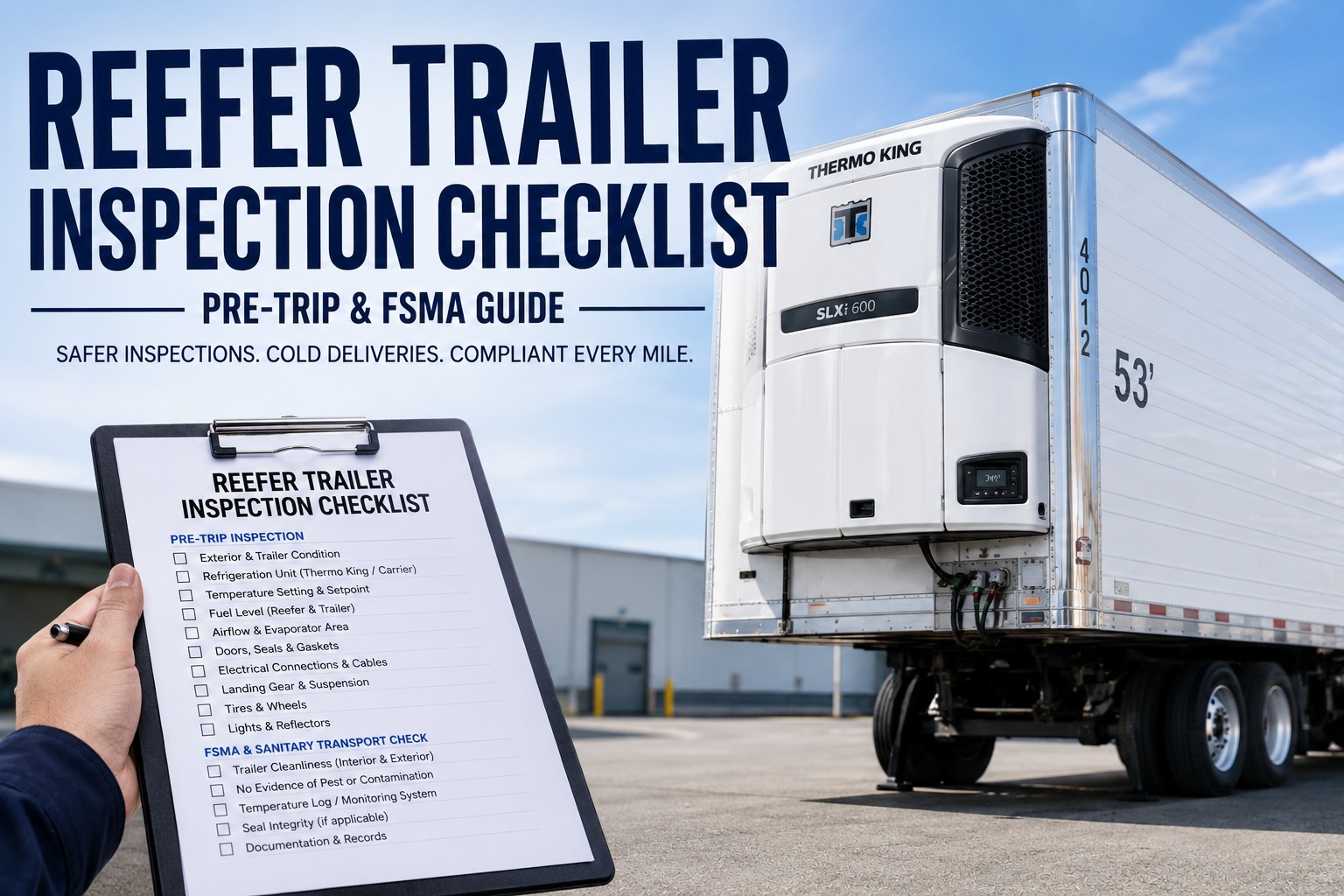
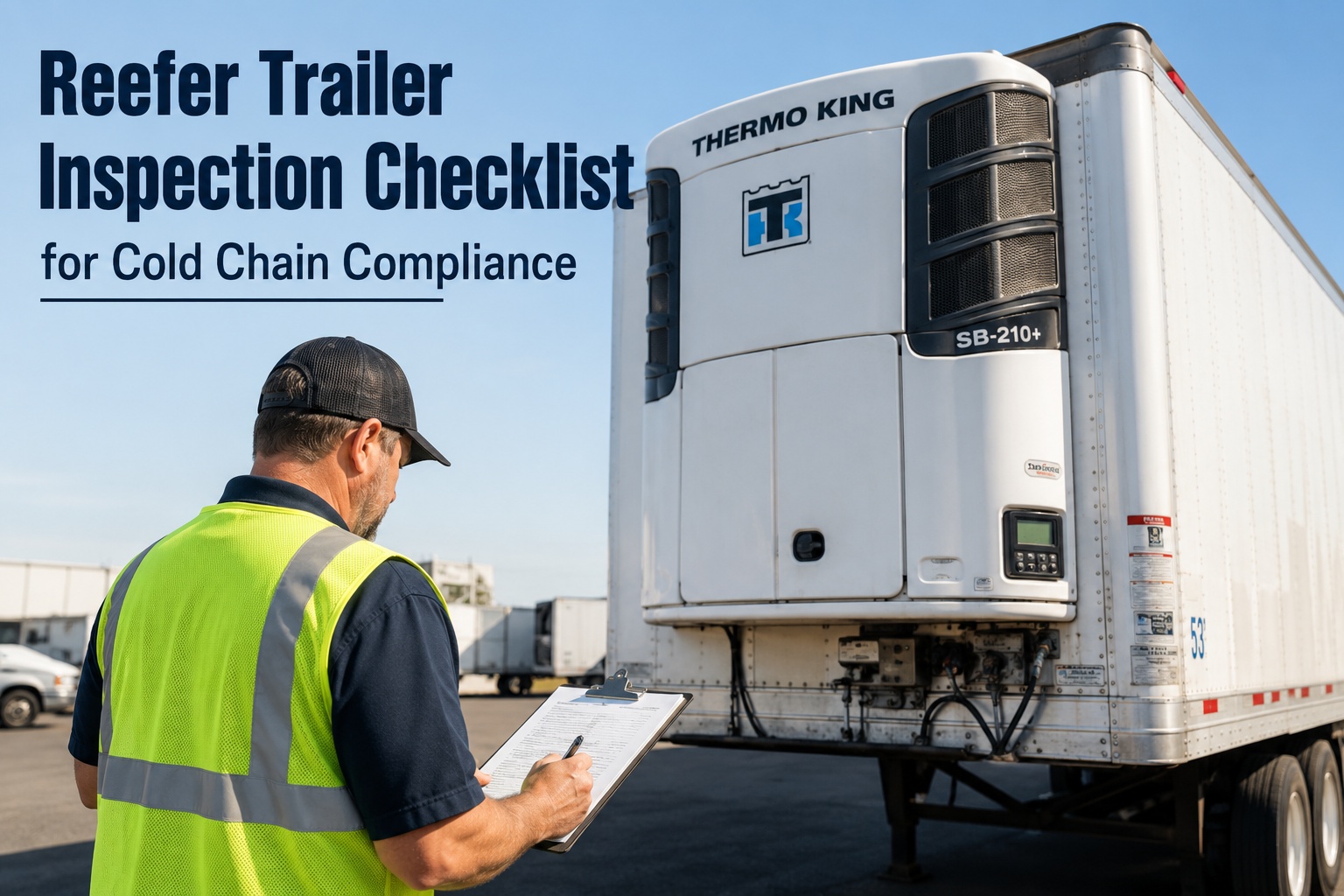
Everything a dry van needs, plus the refrigeration unit: fuel level, temperature setpoint and performance, airflow, defrost, and the unit's own service schedule. Temperature integrity is a load-value and food-safety issue, not just mechanical.
Flatbed
No body to check, but cargo securement becomes central: tie-down points, straps, chains, binders, edge protectors, and the deck condition. Securement equipment inspection carries its own requirements.
Tank trailer
Adds the tank and its systems: valves, seals, venting, and leak checks, plus configuration-specific and hazmat requirements where applicable. Tank inspection and testing follow their own distinct regulatory regime.
The point isn't that one type is harder — it's that a single generic form can't serve all four well. Inspection requirements vary by configuration and by the applicable regulations in your region, so the base-plus-type approach keeps each inspection both complete and uncluttered. Book a demo to see separate templates per trailer type
What makes a checklist field actually useful
A checklist that only offers a tick box throws away most of what an inspection knows. The difference between a form and a record is in the fields — what each line item lets the inspector capture. Build these into every applicable item and the inspection becomes data you can act on.
Those fields are exactly what separates a static PDF from a living record — and what makes the annual audit a search instead of a scramble through a filing cabinet. Book a demo to see the fields on a live trailer template Start free and add measurement and photo fields to any item
From a fleet manager who runs a mixed trailer pool
We run vans, reefers, and a handful of flatbeds, and for years everyone used the same one-page trailer sheet. The reefer guys ignored the securement lines that didn't apply to them, the flatbed guys had nowhere to log strap condition, and nobody was gauging kingpins because "inspection" meant a quick daily glance. Trailers were our worst category at roadside, every year.
Splitting it into a daily driver check and a real PM inspection — with a different template per trailer type — changed the numbers. The daily is fast and the driver actually does it; the PM catches the wear before it's a violation. And because the kingpin and slack readings are logged per trailer now, I can see which units are trending toward a replacement instead of finding out at a scale.
Frequently asked questions
What should a trailer inspection checklist include?
Organize it by zone: coupling (kingpin wear, fifth-wheel, landing gear), running gear (tyres, wheel-ends, brakes, slack adjusters, suspension), the frame and floor, lighting and electrical, and the body or cargo system for the trailer type. Every item should let the inspector record a pass/fail/defect state, a measurement where one applies, a photo, and a severity — not just a tick.
What's the difference between a pre-trip, periodic, and PM trailer inspection?
Three distinct types. A pre-trip is the driver's quick daily safety check before the road. A periodic (or annual) inspection is the formal regulatory exam by a qualified inspector, documented and retained. PM is scheduled maintenance-driven servicing on an hour/mileage interval. They run on different cadences for different purposes — conflating them wastes effort or misses compliance.
Do dry vans, reefers, flatbeds, and tankers need different inspection checklists?
They share a large common core — coupling, running gear, frame, lighting — but each adds type-specific items. So the best approach is one base checklist plus a type-specific section: reefer unit and temperature system for a reefer, securement points and headboard for a flatbed, shell and valves for a tanker. One generic form either asks the wrong questions or skips the right ones.
How often should a trailer be inspected?
It depends on the inspection type, and a sound program runs each on its own cadence. Pre-trip and post-trip are daily, driver-performed. PM services run on an hour or mileage interval per the maintenance schedule. The periodic/annual regulatory inspection runs at least once a year (more for heavy-duty trailers). Tracking all three per trailer is what keeps a pool genuinely compliant.
Why move trailer inspections from paper forms to a digital system?
Because a paper form captures far less than an inspection produces, and can't act on what it does capture. It can't hold a measurement trend, attach a photo, flag a defect into a work order, or alert you before an annual lapses. A digital system turns each inspection into a per-trailer record that trends wear, routes defects, and proves compliance on demand.
Build your trailer inspection checklist in HVI
HVI turns this checklist into configurable digital templates by trailer type, with measurement fields, photo evidence, defect severity, corrective-action routing, calendar-based PM scheduling, and a complete searchable inspection history per trailer — plus bulk import to roll it across your whole pool at once. The daily check drivers actually finish and the PM that catches wear before a roadside does. Live on your fleet in days.
No credit card · Configurable templates by trailer type · Bulk import ready