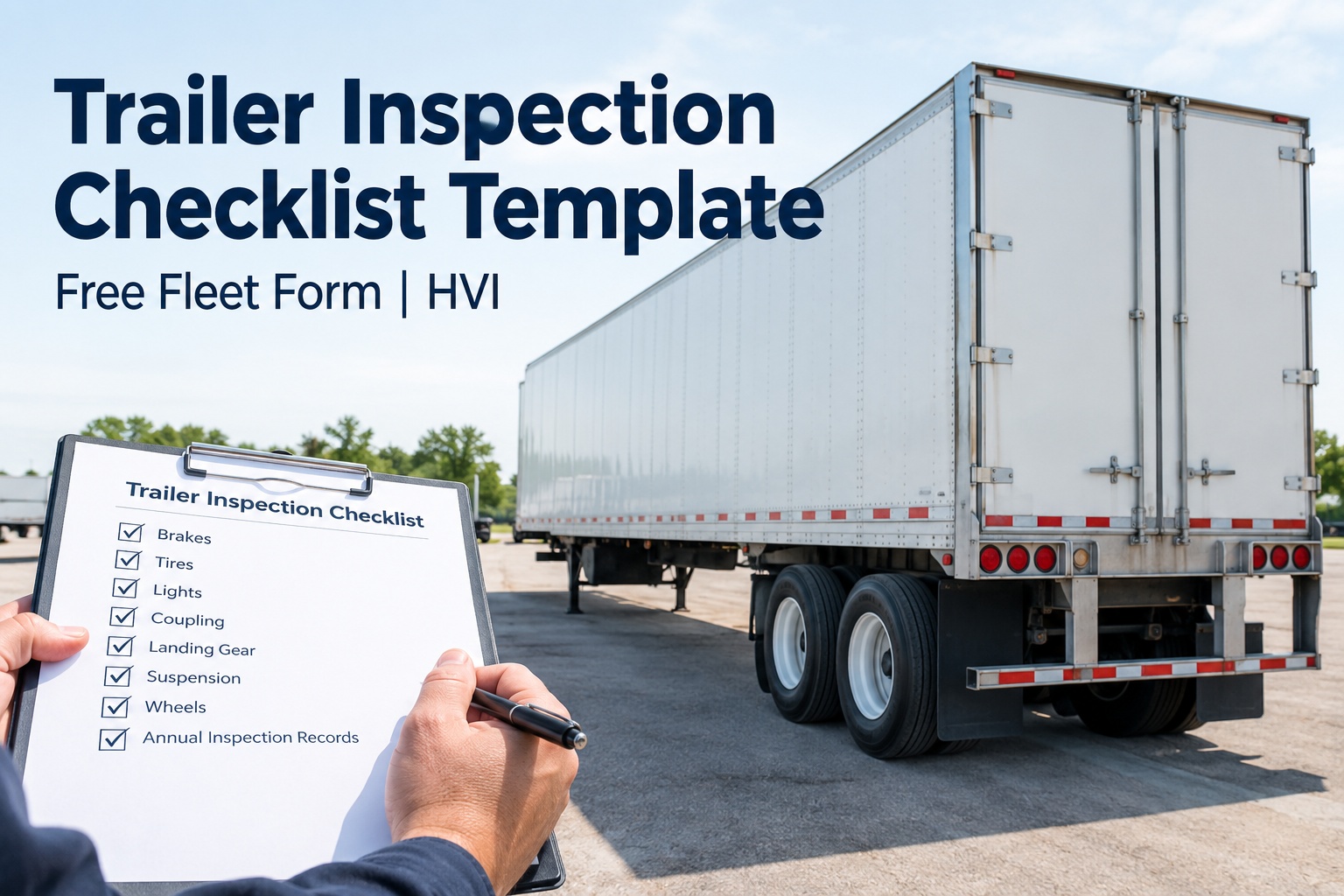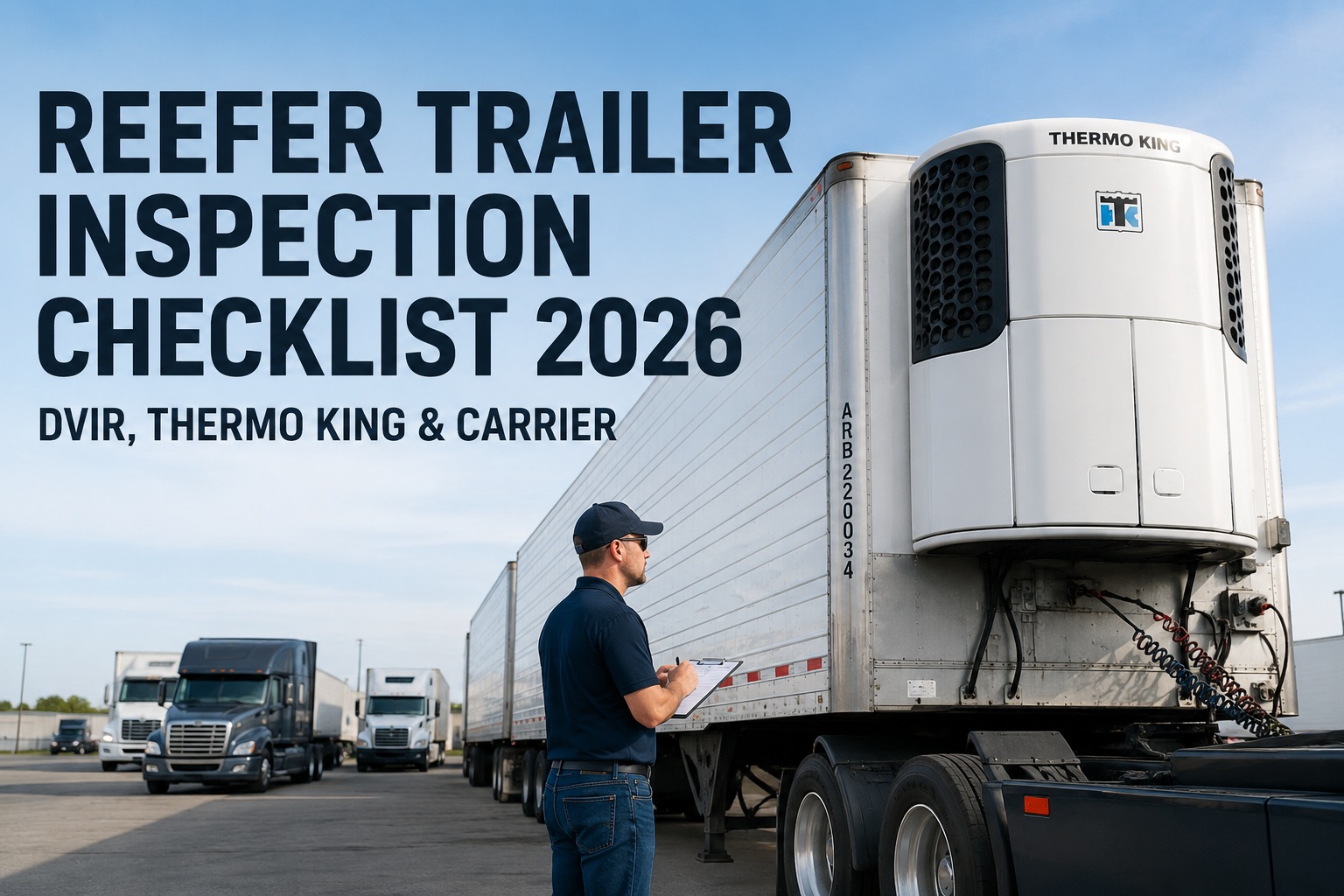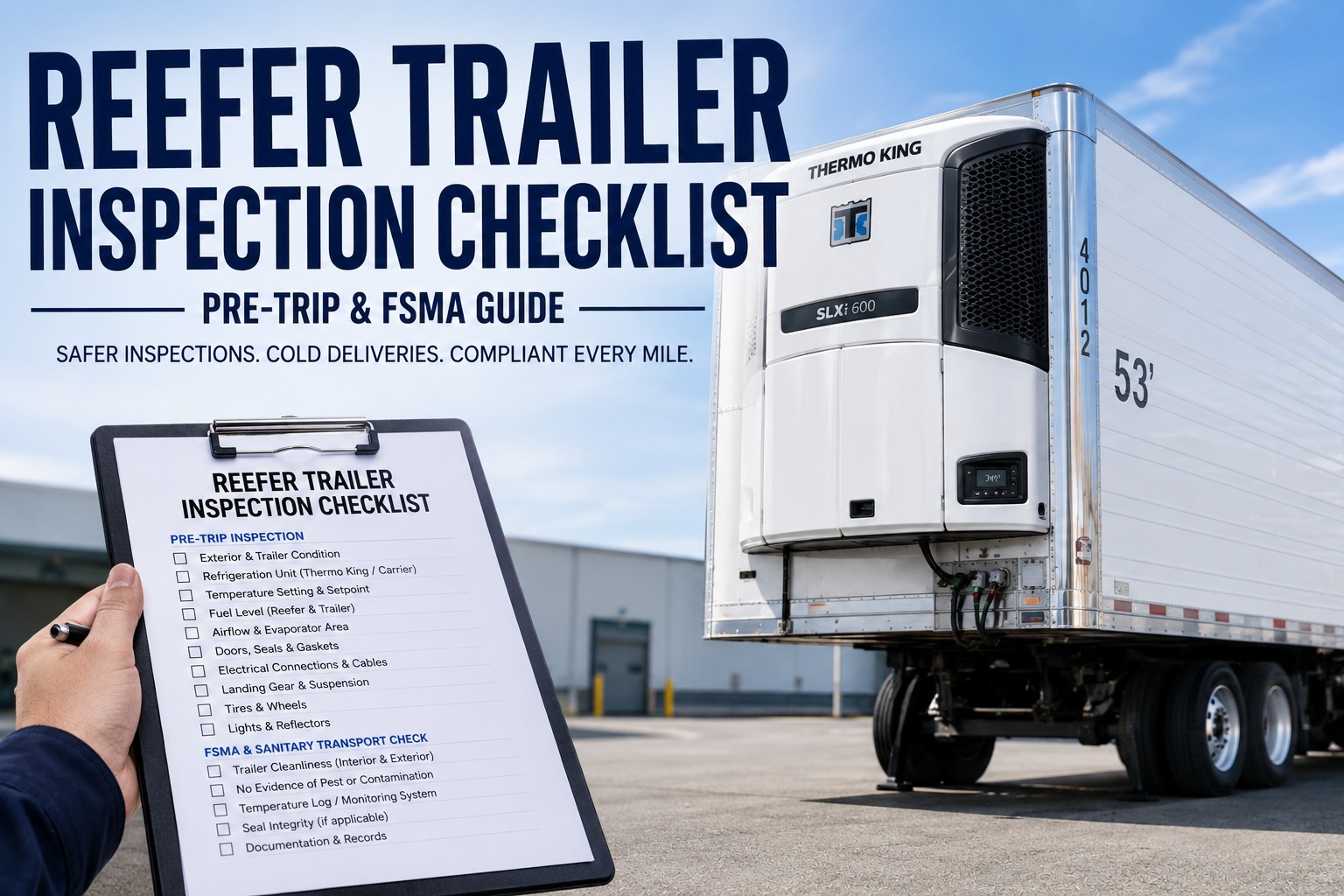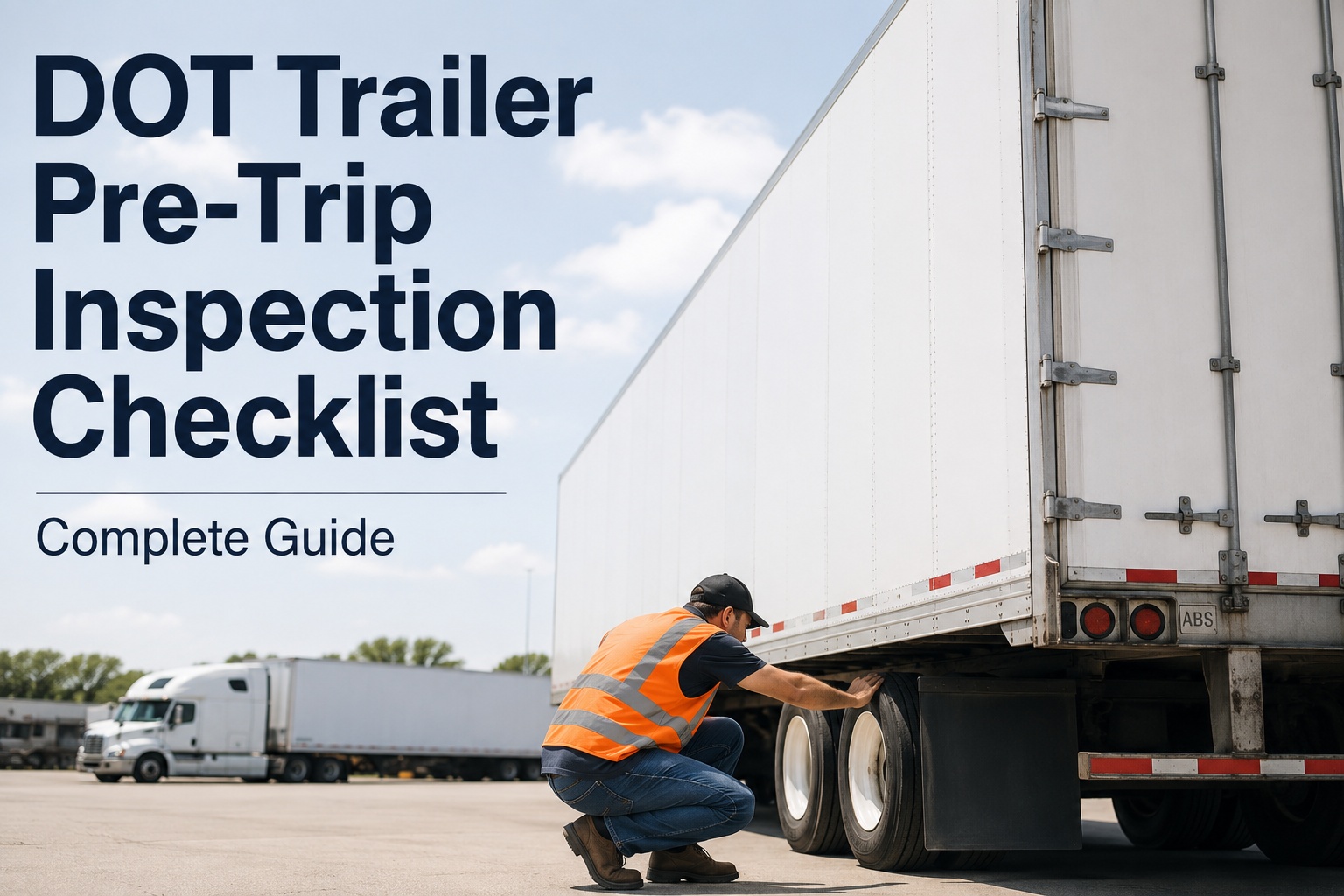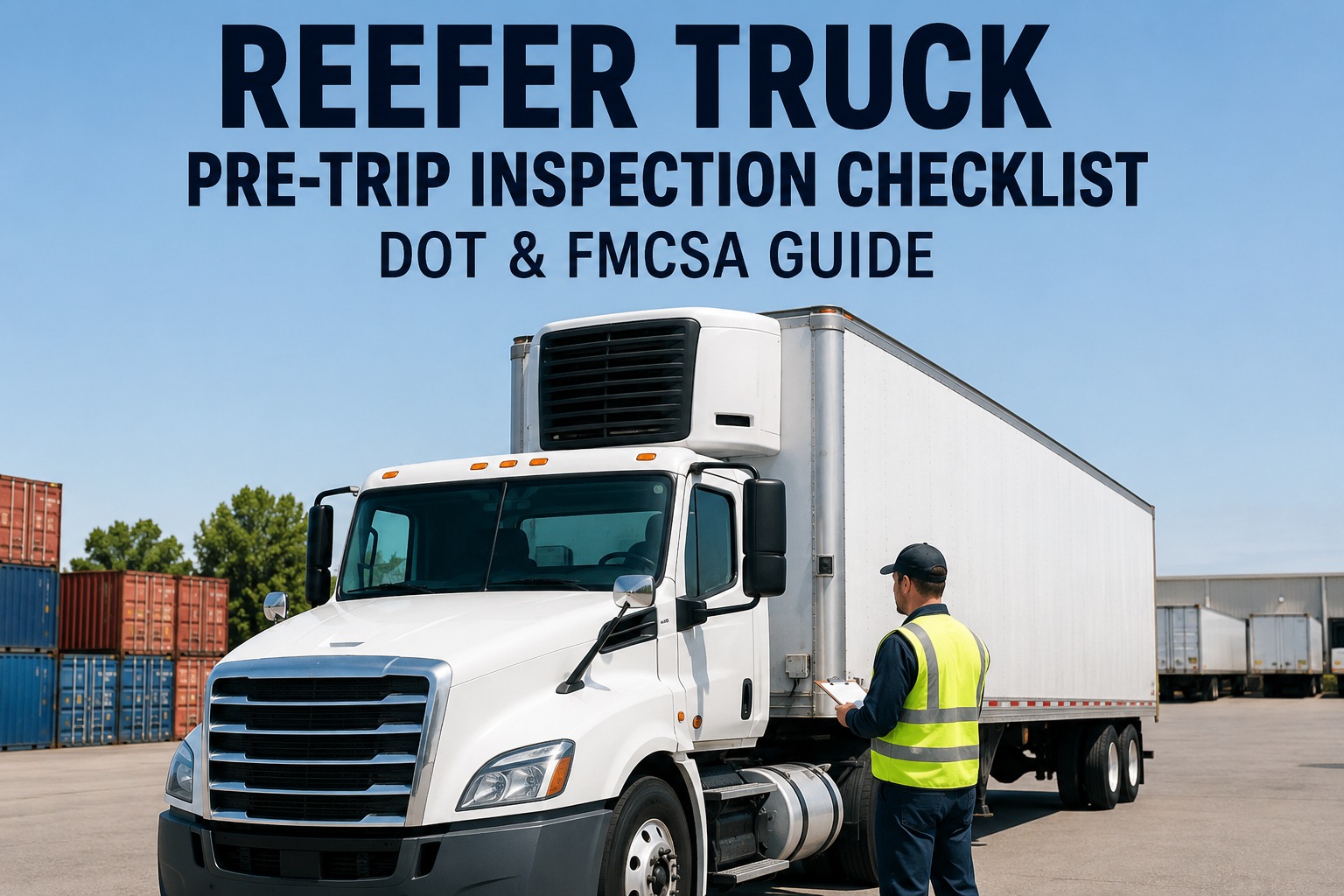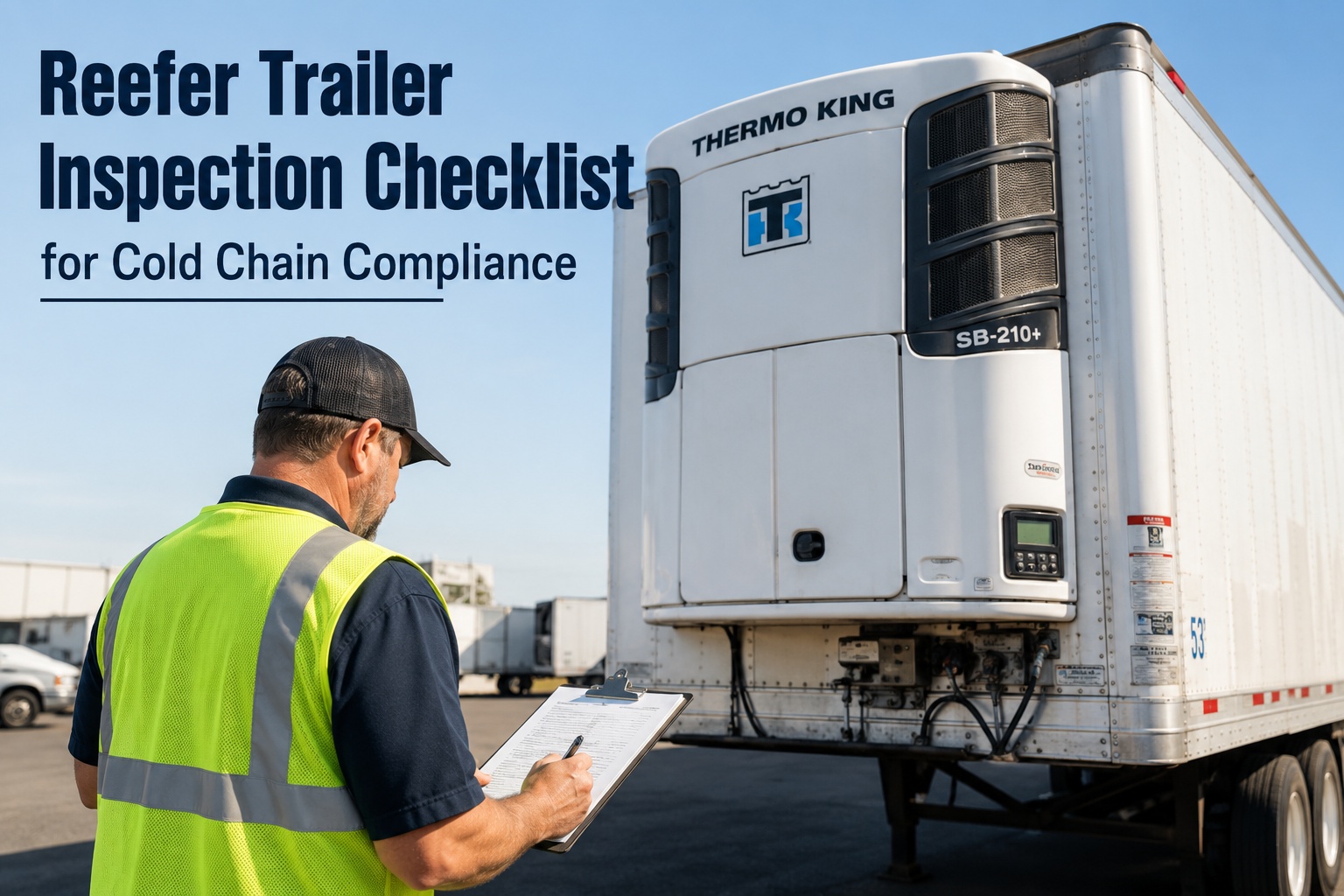
A reefer trailer inspection checklist is the last line of defense between a shipper's product and total cargo loss. A refrigerated trailer that arrives at the loading dock with a stalled refrigeration unit, drifted setpoint, cracked door seal, or fuel tank below spec can turn $50,000 to $500,000 of pharma or frozen food into landfill in a matter of hours — and a single documented cold-chain break can shut a carrier out of FSMA-regulated, or GDP-regulated shipping for months. A rigorous pre-trip reefer trailer inspection catches every one of those failures before the trailer leaves the yard. This page walks the complete reefer inspection checklist across 27 verification points grouped by zone, what a failed inspection actually costs by cargo type, the FSMA and GDP compliance framework the checklist plugs into, and the five most common inspection mistakes fleets keep making. Book a demo after you see the workflow end-to-end.
Reefer Trailer Inspection Map
Every reefer trailer has eight critical inspection zones. Miss any one on a pre-trip and the trailer becomes a risk to the load, the shipper contract, and the FSMA compliance record.
The map shows where to inspect. The checklist below is what to inspect at each location — 27 specific verification points that catch every failure mode a reefer trailer produces in real service. Click each item to check it off as you'd work through a pre-trip. Below the checklist: what a failed inspection actually costs, the FSMA and GDP compliance the checklist ties into, and the five inspection mistakes that keep costing fleets loads.
The complete reefer trailer inspection checklist
Twenty-seven verification points, grouped by inspection zone in the same order a technician or driver actually walks the trailer. Every checkable item corresponds to a specific failure mode observed in real reefer service.
Every fleet handling temperature-controlled freight needs this level of verification per trailer, per trip. Paper checklists work in theory but fail in practice — missed items, unsigned lines, no photo record. Digital inspection makes each item non-skippable, enforces the signature, and preserves the audit trail. Book a demo to see this checklist enforced by workflow with photo capture
What a failed reefer inspection actually costs
The direct cost is the cargo. The indirect cost is the shipper relationship, the FSMA record, and the increase in insurance premium after a documented cold-chain break. Below are typical loss ranges by cargo type on a single trailer.
These numbers are the cargo alone. Add the shipper's next-load penalty (often 1x-2x the load value), the potential insurance premium reclassification, and lost commercial relationships that took years to build. A single pharma-cold-chain break can end a carrier's ability to serve that vertical entirely. Start free and lock every reefer trip behind a signed digital inspection
FSMA, GDP, and the compliance framework the checklist plugs into
The reefer inspection checklist isn't just operational discipline — it's the primary evidence a carrier presents when a regulator, shipper, or insurance auditor asks how the cold chain was verified before departure.
FSMA Sanitary Transportation Rule
Federal rule under the Food Safety Modernization Act. Requires carriers to maintain sanitary conditions, verify temperature control, and preserve inspection records for two years. Pre-trip verification of reefer function is explicitly required for temperature-sensitive food loads.
Good Distribution Practice (GDP)
International standard for pharmaceutical distribution. Requires continuous cold-chain documentation, calibrated dataloggers, and audited pre-trip verification. A single documented excursion typically voids the entire shipment and triggers root-cause investigation.
HACCP framework
Hazard Analysis Critical Control Points. Widely adopted by food shippers as their required carrier standard. Reefer inspection is the critical control point where cold-chain risk is verified before departure — the whole framework depends on it being documented.
Shipper contract requirements
Beyond the regulatory floor, most major shippers (Walmart, Kroger, McKesson, Cardinal Health) impose stricter carrier standards through contract, including per-trip inspection records, photo evidence, and continuous temperature monitoring. Non-compliance means being dropped from the carrier list.
Every framework above asks the same underlying question: can the carrier produce a signed, dated, photo-verified inspection record for each temperature-sensitive load? The paper answer is "sometimes." The digital answer is "always, in under 10 seconds." Book a demo to see FSMA and GDP-ready records generated per inspection
5 common reefer trailer inspection mistakes that keep costing loads
Every reefer fleet that's lost a load in the last 24 months can trace the failure back to one of five recurring inspection gaps. All five are fixable with a rigorous checklist and a workflow that won't let items be skipped.
Trusting the display, not the load
Driver reads the reefer display, sees "set to 34°F," and rolls. Never verifies that the box actually reached setpoint or that the sensor is calibrated to the datalogger.
Skipping the door seal check
Gaskets look fine at a glance but have hairline splits along the corners. Small gaps leak 3-5°F of cold air per hour on a 12-hour trip, silently drifting the load out of spec.
Rolling with fuel under 3/4
Reefer runs on its own diesel tank. Below 3/4 on a long haul, the reefer will pause overnight while the driver sleeps, and the load warms above spec by dawn.
Ignoring the alarm history
Prior trip's alarm log shows a 15-minute high-temp excursion at hour 6. Nobody investigated, alarm was cleared, trailer went back out. The underlying cause (blocked evaporator, weak refrigerant charge) is still present.
Paper inspection with no photo record
Inspection signed on a paper form, no photo of fuel gauge, temperature display, or seal condition. When a load is rejected and the shipper asks for evidence, the carrier has nothing to prove pre-trip compliance. Insurance and legal exposure follows.
Every mistake above is a $30K to $500K risk hiding in a routine that looks like it's already covered. Digital inspection makes each item non-skippable, timestamped, and photo-verified. Book a demo to see rigorous reefer inspection in production — or start free and get all five mistakes engineered out of your workflow .
From a reefer fleet maintenance manager on what changed
Every fleet running reefers knows exactly what a lost load looks like — the phone call at 2 AM, the receiver rejecting a $95K pallet because the temperature log shows a 45-minute window at 42°F on a frozen product. What's harder to admit is how often it started with a pre-trip that got rushed at the yard.
Digital inspection changed that for us. Every reefer gets 27 verified checks before it rolls, signed by driver and mechanic, with timestamped photos of the seal, the fuel gauge, and the temperature display. We've had zero rejected loads in 14 months. That's not luck — that's process.
Frequently asked questions
What is a reefer trailer inspection checklist?
A reefer trailer inspection checklist is a structured list of verification points a driver or mechanic works through before, during, and after a temperature-controlled load to confirm the refrigeration unit, fuel system, insulation, door seals, and temperature controls are functioning within specification. A rigorous checklist covers 25-30 items across five zones: the reefer unit itself, the fuel system, belts and controls, cargo box interior, and doors and documentation. The checklist matters because refrigerated freight is unforgiving: a single failure mode not caught pre-trip — a cracked door gasket, low reefer fuel, drifted setpoint, blocked evaporator — can spoil an entire load worth $15,000 to $500,000+ depending on cargo type. Beyond the direct loss, a documented cold-chain break can end a carrier's eligibility for FSMA-regulated food shipping or GDP-regulated pharmaceutical work. The checklist is both an operational safeguard and the primary evidence a carrier presents in audits.
What are the FSMA requirements for reefer trailer inspections?
FSMA (Food Safety Modernization Act) Sanitary Transportation Rule requires carriers hauling temperature-sensitive food to maintain sanitary conditions during transport, verify temperature control functionality before loading, and preserve inspection and temperature records for a minimum of two years. Specific requirements include pre-cooling of the trailer to the required temperature before loading, verification that the refrigeration unit is functioning correctly, sanitation appropriate to the food type, and monitoring during transit. Shippers set temperature specifications; carriers verify and maintain them. Non-compliance can result in FDA enforcement action, load rejection, and loss of eligibility to serve FSMA-regulated shippers. Beyond the federal rule, most large food shippers layer stricter contractual requirements on top: continuous temperature monitoring, photo-verified pre-trip inspection, and digital record submission per load. A rigorous digital reefer inspection checklist typically satisfies both the FSMA floor and the shipper contract layer with the same workflow.
How often should a reefer trailer be inspected?
Reefer trailers require a documented inspection at three points per load: pre-trip (before departure with a load), en-route (typically at every rest stop or every 3-4 hours during transit), and post-trip (at delivery and again during cleanup for the next load). Beyond per-load inspections, reefers need regular preventive maintenance: a 250-engine-hour or monthly A-service covering belts, fluids, filters, and unit function; a 1,000-hour or annual B-service covering full refrigeration system check, refrigerant charge, sensor calibration, and datalogger battery; and an OEM-recommended major service every 5,000-6,000 engine hours or 3-4 years. Sensors and dataloggers require calibration verification annually at minimum, and more frequently for GDP-regulated pharmaceutical service. The pre-trip inspection covered by the checklist on this page is the highest-frequency and highest-impact inspection: it catches immediate load risk before the trailer leaves the yard.
What's the difference between pre-trip, en-route, and post-trip reefer inspections?
Pre-trip inspections happen before loading and departure, and cover the full 25-30 point checklist — reefer unit function, fuel level, belts, seals, cargo box condition, sensor and datalogger status, and pre-cool verification. This is the most detailed of the three and produces the primary compliance record. En-route inspections happen at rest stops or on schedule during transit and cover a subset: setpoint verified against display, alarm log clean, no visible unit issues, fuel level trending correctly, door seal intact. En-route catches drift and early failure before the load is at risk. Post-trip inspections happen after delivery and cover the temperature record download, interior cleanliness for next load, damage assessment, and datalogger reset. Post-trip is where the digital record is closed out for the load and preserved for FSMA or GDP audit. All three are required for full cold-chain documentation.
How does digital inspection software help with cold chain compliance?
Digital reefer inspection software solves the fundamental problem of paper checklists: items get skipped, signatures get missed, photos never happen, and the compliance record is incomplete when an audit or a rejected load forces it to be produced. A modern platform enforces every checklist item as non-skippable, requires timestamped photos on critical checkpoints (fuel gauge, temperature display, door seal, interior), captures the driver's and mechanic's signature digitally, syncs alarm history from the reefer unit, and preserves the FSMA and GDP-ready record automatically. Beyond record-keeping, the software cross-references trip temperature data with the pre-trip checklist so an alarm during transit can be traced back to the inspection that caught or missed the risk. Fleets moving from paper to digital reefer inspection typically eliminate rejected loads within the first quarter, reduce claim events by 60%-80%, and gain eligibility for stricter shipper contracts that require digital records.
Turn the reefer inspection checklist into a mandatory digital workflow — and stop losing loads
HVI enforces every item on the 27-point checklist per trip, captures timestamped photos of the seal, fuel gauge, and temperature display, syncs reefer unit alarm history, and preserves the FSMA and GDP-ready record automatically. Live in under two weeks. Typical customers eliminate rejected loads within the first quarter.
No credit card · No hardware · Reefer checklist ready day one