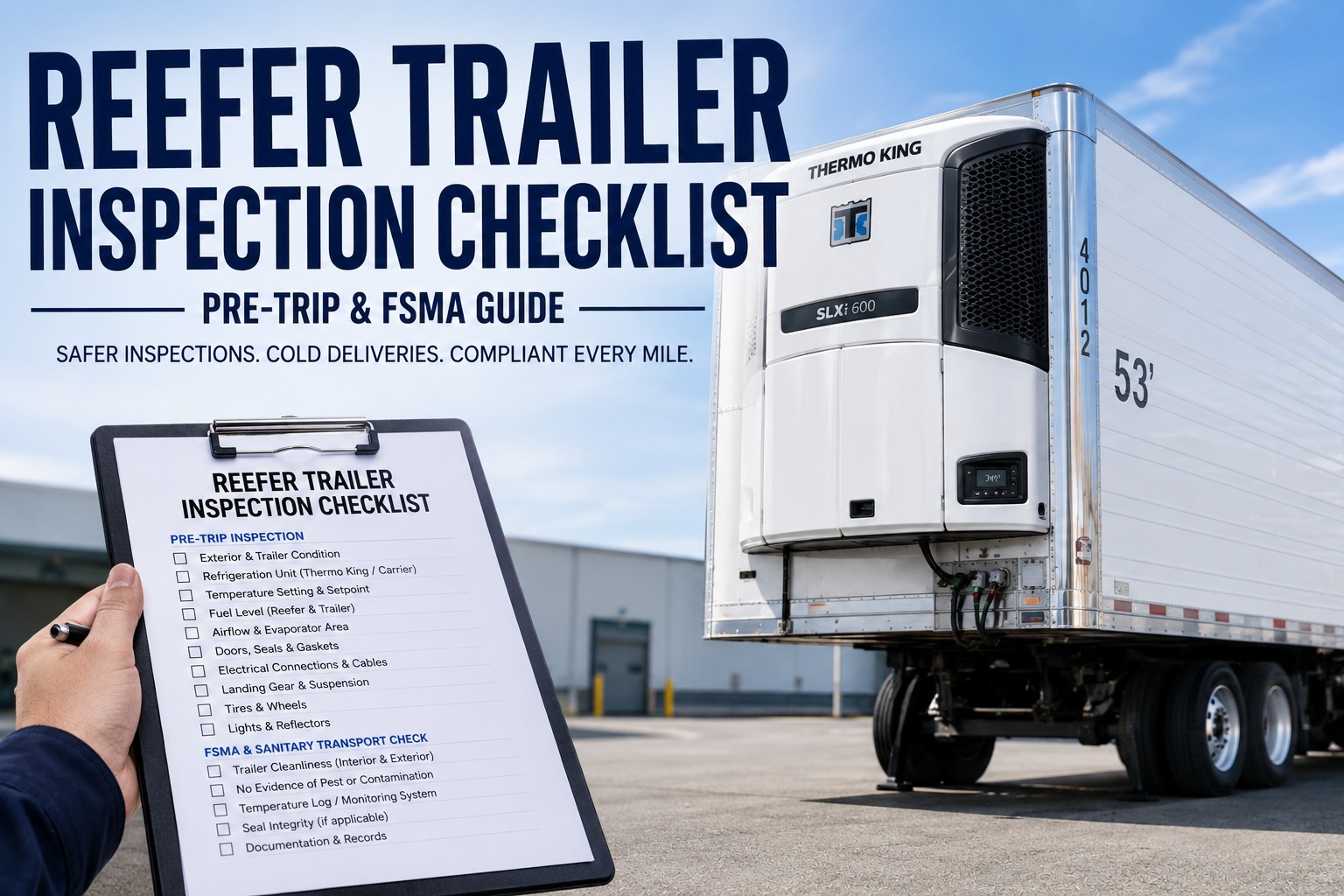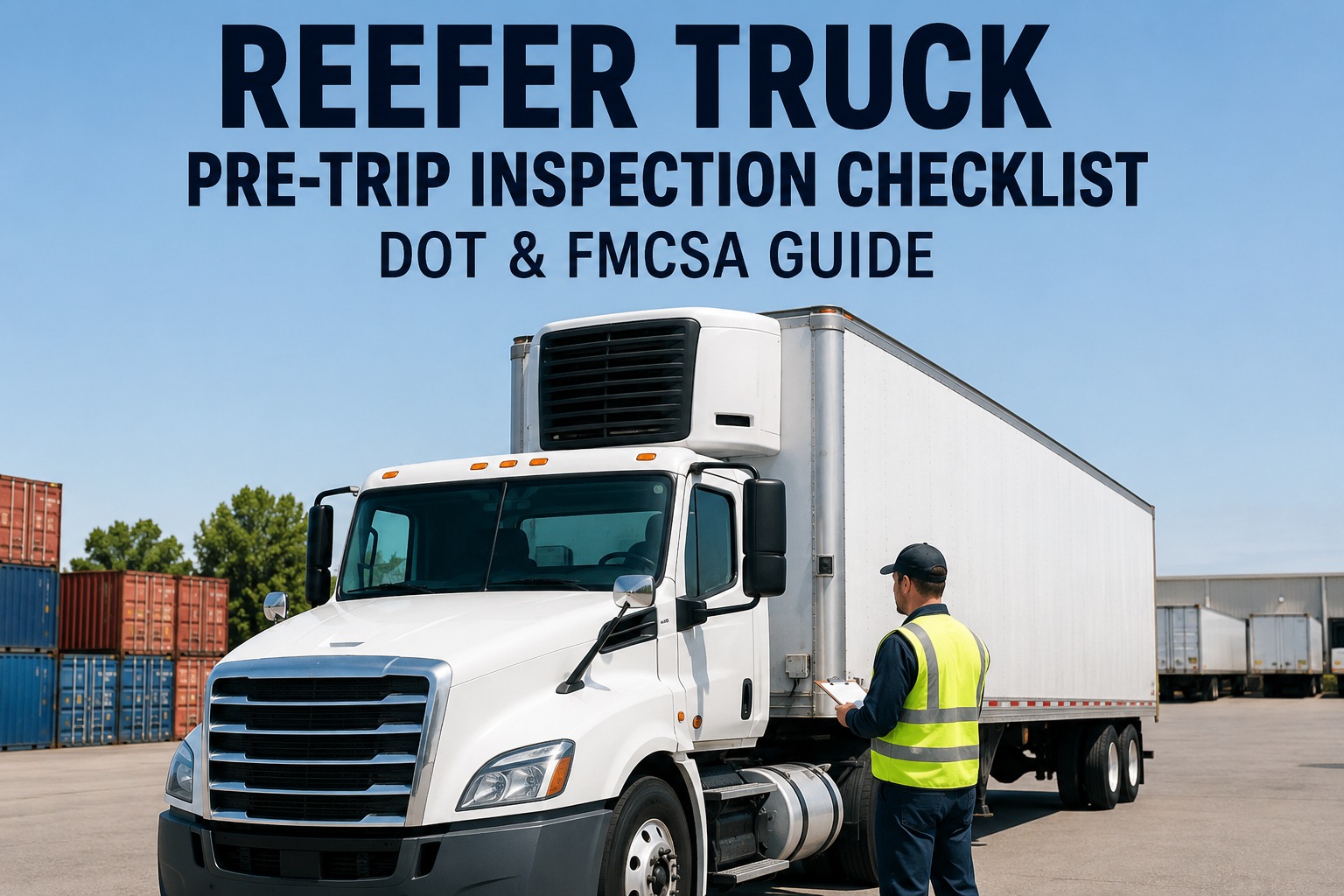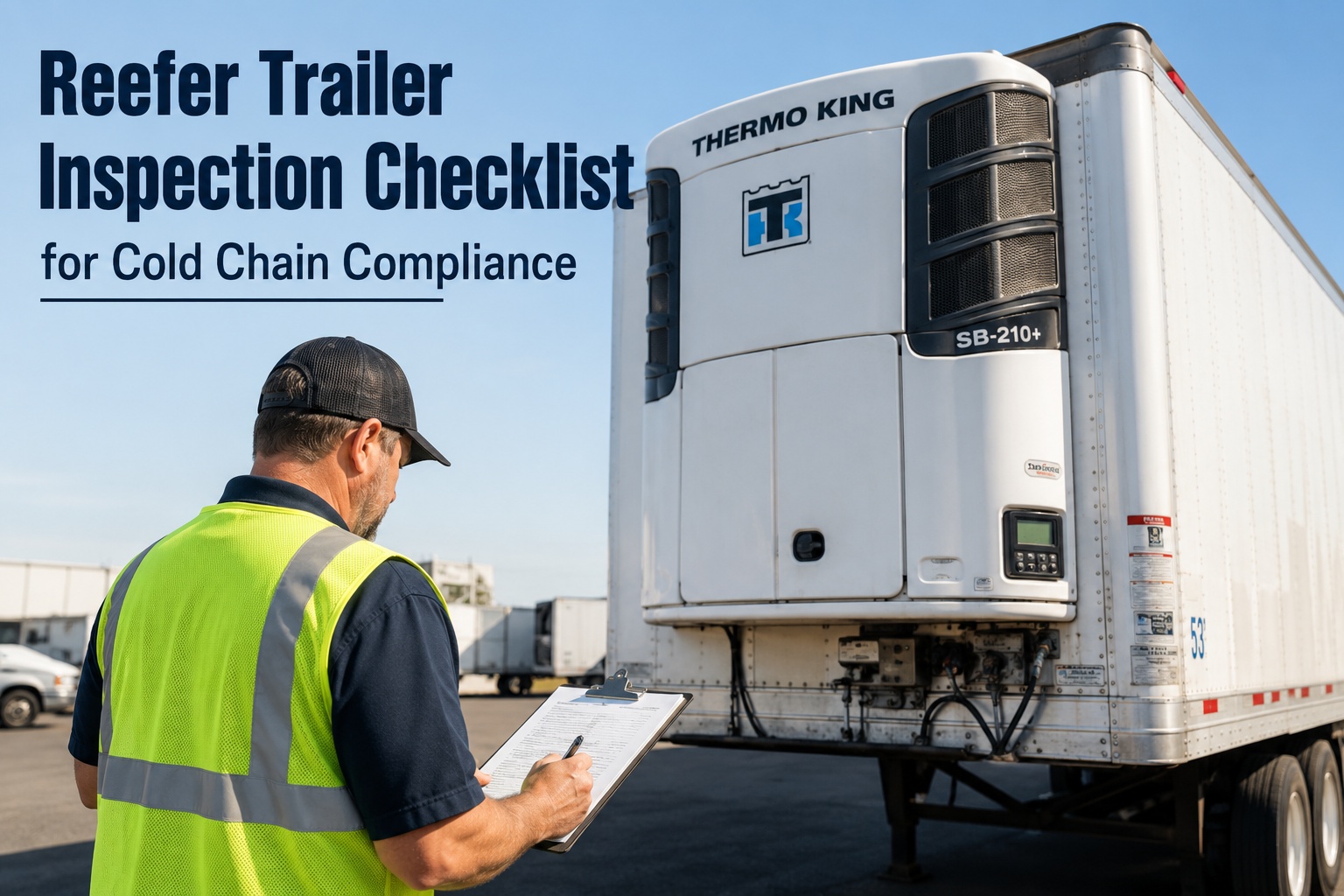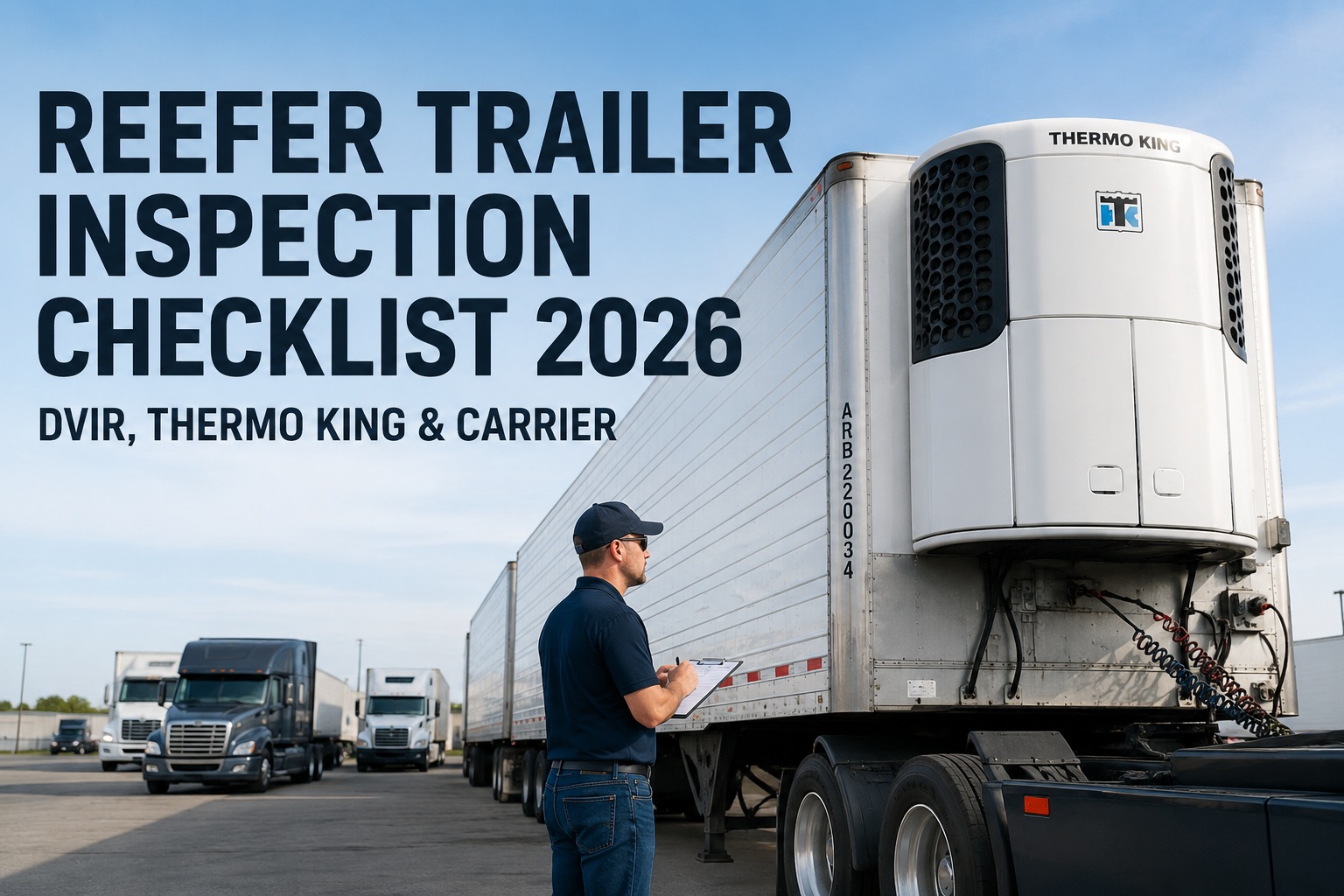
Your driver arrives at a Kroger dock with a $180,000 load of leafy greens. Receiver's probe reads 44°F. Setpoint was 34. Rejection. When the FSMA audit asks for pre-cool verification and 12 months of transit logs, "we had a working reefer" is not the answer. That's cold-chain reality in 2026. This reefer trailer inspection checklist covers the 8-zone DVIR, Thermo King and Carrier model-specific checks, FSMA Rule 204 documentation, and the digital workflow that keeps loads accepted. Book a 15-min HVI demo.
Setpoint Matters. So Does Everything That Keeps It.
A rejected reefer load isn't just downtime — it's spoilage, insurance disputes, FSMA compliance risk, and a shipper relationship on the line. Here's what the 2026 pre-trip actually needs to cover.
A working compressor isn't proof of anything. Under FSMA Sanitary Transport, you have to document each of these — every load, every time — and produce the records to FDA within 24 hours of request.
Why a Reefer Failure Isn't Like a Tractor Failure
When a tractor breaks down, you lose the run. When a reefer fails, you lose the load — and often the shipper contract. Reefer failures cascade in ways engine failures don't. A $180,000 rejected produce load hits three ledger lines simultaneously: the cargo write-off, the customer relationship, and the FSMA compliance investigation that follows any spoilage claim. The average reefer engine logs 1,800 operating hours per year, running while stationary at loading docks and while the truck idles at every stop. That's the wear equivalent of driving a car 100,000 highway miles annually, on an engine that most fleets treat as an afterthought to the primary powertrain.
Modern reefer inspection is a different discipline than tractor DVIR. It's an equipment inspection, a sanitation audit, and a temperature verification event all in one workflow — and FSMA makes each of them a documented compliance requirement. Start a free HVI trial to see how one digital workflow captures all three at once.
The 8-Zone Reefer Trailer Inspection Sequence
A systematic pre-trip covers eight distinct zones. Skip any one and the load is running exposed to whatever failure that zone was supposed to catch.
Thermo King vs Carrier: What to Check on Each
Thermo King and Carrier Transicold dominate the North American reefer market, and each has a distinct operational profile. Same inspection zones, different failure points and telematics behaviors.
- Modes: Continuous Run vs Cycle-Sentry
- Cycle-Sentry sensitive to battery health — verify cranking voltage every pre-trip
- TK connected hardware for OEM telematics integration
- Common failure point: starter solenoid on high-cycle Cycle-Sentry duty
- Alarm codes accessible via HMI on unit face
- Pre-trip diagnostic available directly from controller
- Modes: Continuous vs Start-Stop (equivalent to Cycle-Sentry)
- Carrier Lynx telematics module standard on newer units
- Common failure point: condenser coil fouling in dust-heavy operating environments
- APX controller with graphical display for diagnostics
- Vector series is diesel-electric hybrid — verify inverter operation separately
- Remote defrost initiation available via Lynx-enabled dashboards
FSMA Rule 204 and the 12-Month Records Requirement
The Food Safety Modernization Act's Sanitary Transportation Rule requires four categories of records every carrier hauling FSMA-listed foods must maintain. Failing on any of these categories during an FDA audit is not a paperwork issue — it's a compliance failure that can suspend operating authority.
All four categories must be retrievable and provided to FDA within 24 hours of a written request. Paper or electronic format is acceptable. The 12-month clock starts from the date each individual record is generated — not from the end of the calendar year. Electronic records that generate automatically from digital DVIR workflows meet this standard cleanly; paper systems typically don't survive the first serious audit.
Your Reefer DVIR Should Generate the FSMA Record. Not Be One More Thing to Log.
HVI's digital reefer DVIR captures pre-cool verification, setpoint match, sanitation confirmation, and continuous temperature logs in a single workflow — then archives them for the 12-month FSMA retention window automatically. FDA-ready within 24 hours because you never have to assemble the records.
Cycle-Sentry vs Continuous Run: When Each Mode Actually Fails
Choice of operating mode is where fleets lose loads without realizing they made the wrong call. Both modes work — on the right load. Both fail on the wrong one.
Reefer PM Intervals by Engine Hours, Not Miles
The single biggest mistake fleets make on reefer maintenance is scheduling PM by trailer mileage. Reefer engines accumulate hours while the trailer sits at a loading dock — often more than during actual transit. Use the hour meter on the reefer controller, not the trailer's odometer.
The 6 Warning Signs of an Impending Reefer Failure
Reefer units almost never fail without warning. Six specific signals show up 2-14 days before the load-losing event. Train drivers and dispatchers to escalate any of them immediately.
What a Single Rejected Load Actually Costs
Cold-chain fleets under-price the true cost of a reefer failure because the direct spoilage number is the smallest line on the invoice. Here's what one rejection actually adds up to.
How HVI Digitizes the Reefer DVIR & Cold Chain Compliance
Manual reefer inspection generates the compliance records only if the driver remembers to log every step. HVI's digital workflow captures the record automatically as the inspection happens — and archives it for the 12-month FSMA window.
Frequently Asked Questions
What does a reefer trailer pre-trip inspection actually cover?
A complete reefer pre-trip covers eight zones: (1) reefer unit external and drive belts, (2) reefer fuel and battery system, (3) setpoint and controller function, (4) airflow path and return air, (5) door seals and rear latching, (6) interior sanitation, (7) temperature probe calibration, and (8) pre-cool verification with timestamped documentation. Beyond the equipment inspection, FSMA Sanitary Transport rules require the DVIR to also document sanitation between loads and probe calibration history. The 2026 standard for FSMA-listed foods is continuous digital temperature logs, not manual clipboard checks. A working compressor and a set thermostat are the starting point, not the finish line.
How often should reefer trailers receive preventive maintenance?
Reefer PM intervals are measured in engine hours, not trailer mileage — the reefer engine accumulates hours while the trailer sits at a loading dock. Standard intervals: every 250 hours for high-utilization units running 18+ hours per day (multi-stop delivery), every 500 hours for units averaging 8-12 hours daily (regional haul), and a full annual major service every 1,800 hours or once yearly, whichever comes first. Add seasonal service in spring and fall for heater and cooling-only mode verification. Both Thermo King and Carrier Transicold units have integrated hour meters that feed directly into telematics for automated PM scheduling — use those readings, not the trailer odometer.
Why do I need to check the reefer fuel tank separately from the tractor?
The reefer refrigeration unit has its own dedicated diesel fuel tank on the trailer, completely independent of the tractor's fuel supply. Reefer fuel is consumed by the reefer engine (Thermo King or Carrier) at a rate of approximately 0.5-1 gallon per hour during active refrigeration, which adds up fast on multi-day hauls. Running out of reefer fuel mid-transit is one of the most common causes of temperature excursion — the compressor stops, setpoint is lost, and the load can be rejected on delivery. Reefer fuel level verification at pre-trip and at every fuel stop for the tractor is non-negotiable. Water contamination in the reefer tank is a secondary risk that fouls injectors and eventually seizes the fuel system.
What does FSMA require from a refrigerated carrier in 2026?
The FDA Food Safety Modernization Act's Sanitary Transportation Rule requires four categories of records: (1) temperature control documentation from pre-cool through delivery, (2) sanitation and cleaning logs between loads, (3) corrective action records for any deviation or process failure, and (4) temperature monitoring device calibration history. All records must be retained for 12 months from the date of record generation and produced to FDA within 24 hours of a written request. Records may be paper or electronic. FSMA Rule 204 adds heightened traceability requirements for specific listed foods (leafy greens, certain seafood, others). The 2026 enforcement trend is toward continuous automated documentation — manual clipboard systems typically don't survive first-serious-audit review.
What's the difference between Cycle-Sentry and Continuous Run modes?
Continuous Run keeps the reefer engine running 24/7 to maintain tight temperature tolerance — used for frozen loads, ice cream, pharmaceuticals, and any cargo with a ±2°F tolerance window. Fuel-heavy but temperature-stable. Cycle-Sentry (Thermo King branding; Carrier calls the equivalent "Start-Stop") automatically starts and stops the engine to maintain setpoint while saving fuel. Used for chilled loads with wider tolerance (dairy, produce, meat) at approximately ±5°F, and short-haul routes with frequent door openings. Cycle-Sentry is sensitive to battery health — a weak battery can fail to restart the engine overnight, causing temperature drift by morning. Always verify cranking voltage above 12.4V at rest when running Cycle-Sentry or Start-Stop mode.
Turn Every Pre-Trip Into a 12-Month FSMA Record
Photo-verified 8-zone reefer DVIR, Thermo King and Carrier telematics integration, continuous temperature logs, and automatic 12-month archive — all in one workflow drivers use in under 8 minutes. Setup in under 30. FDA-ready without the scramble.