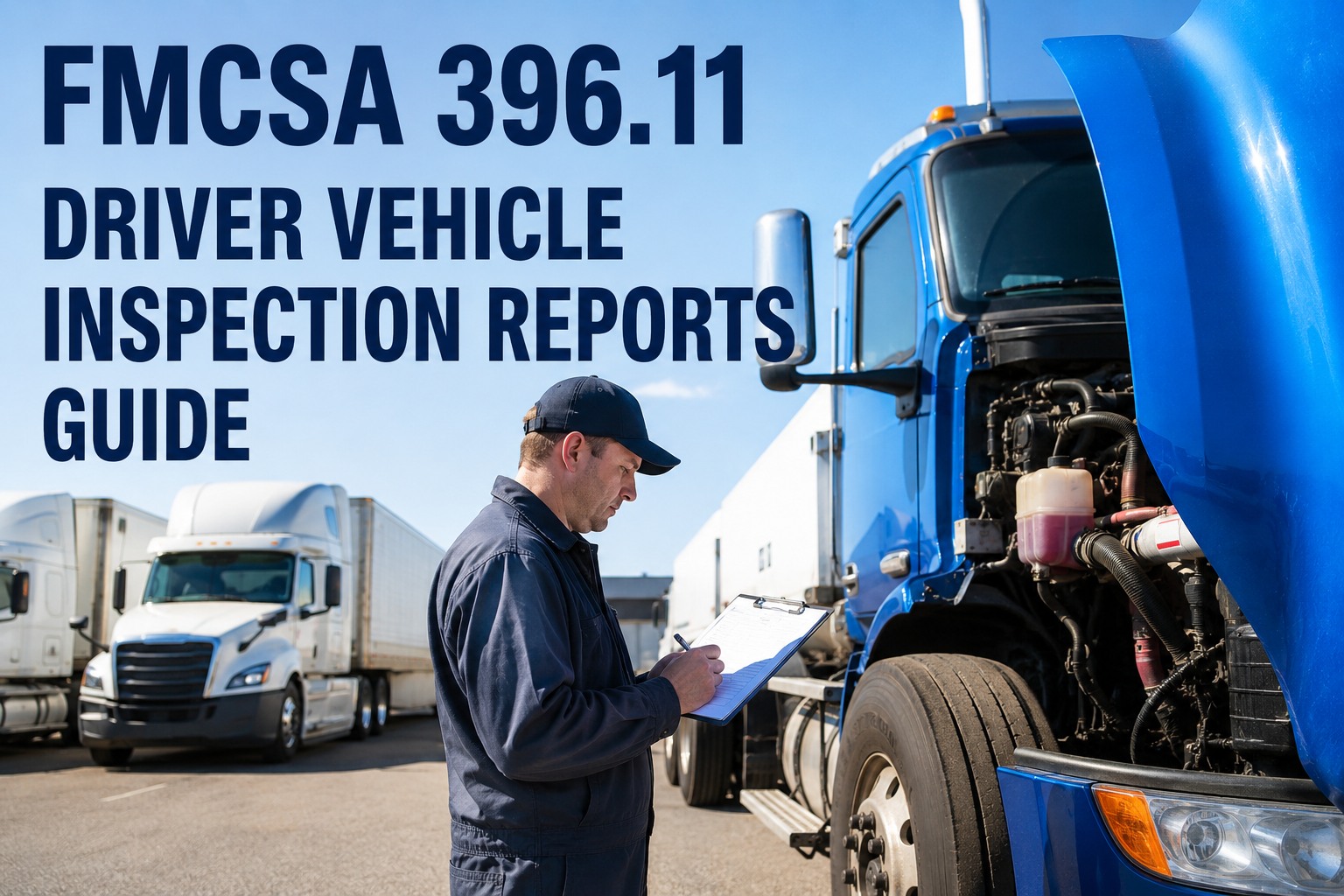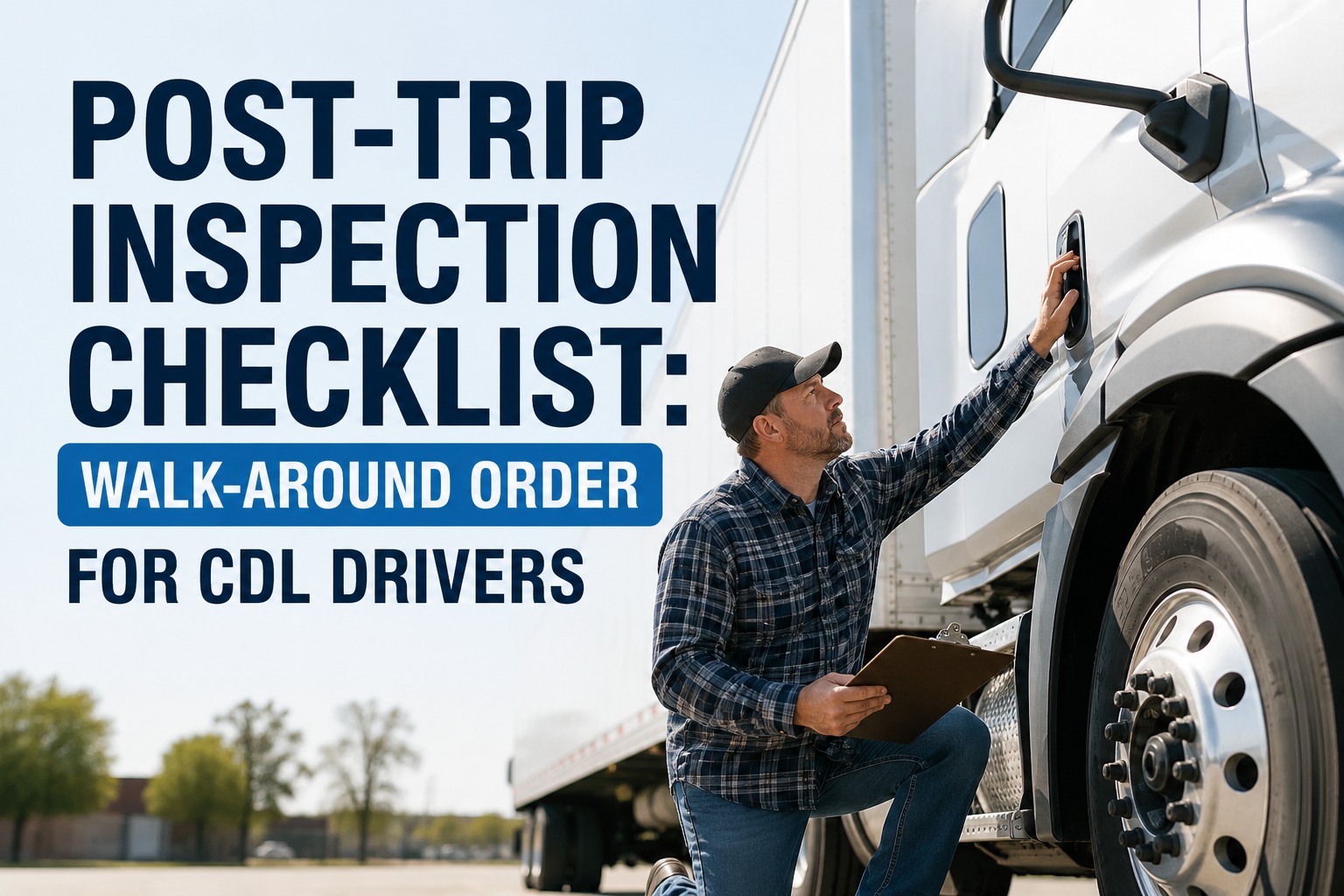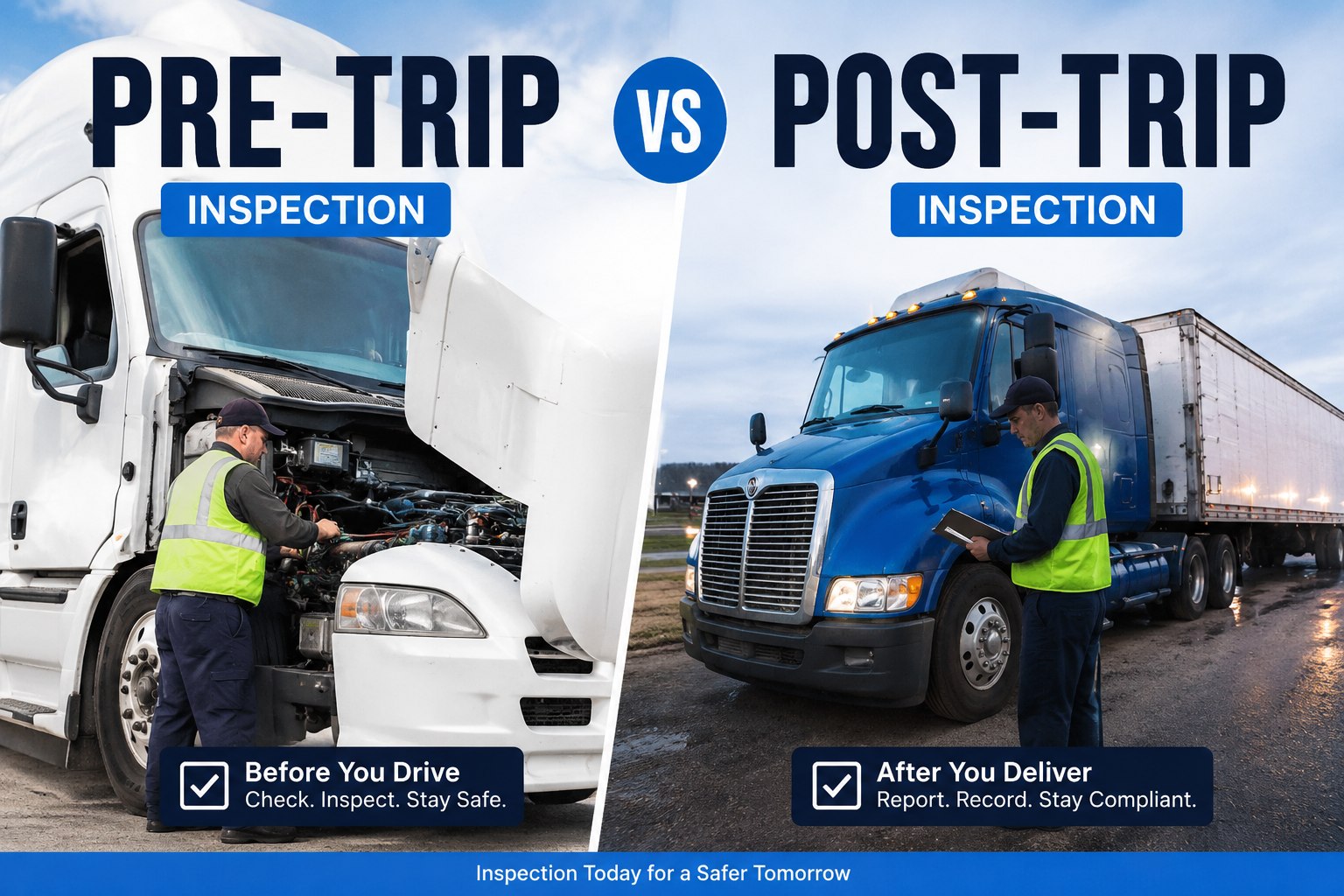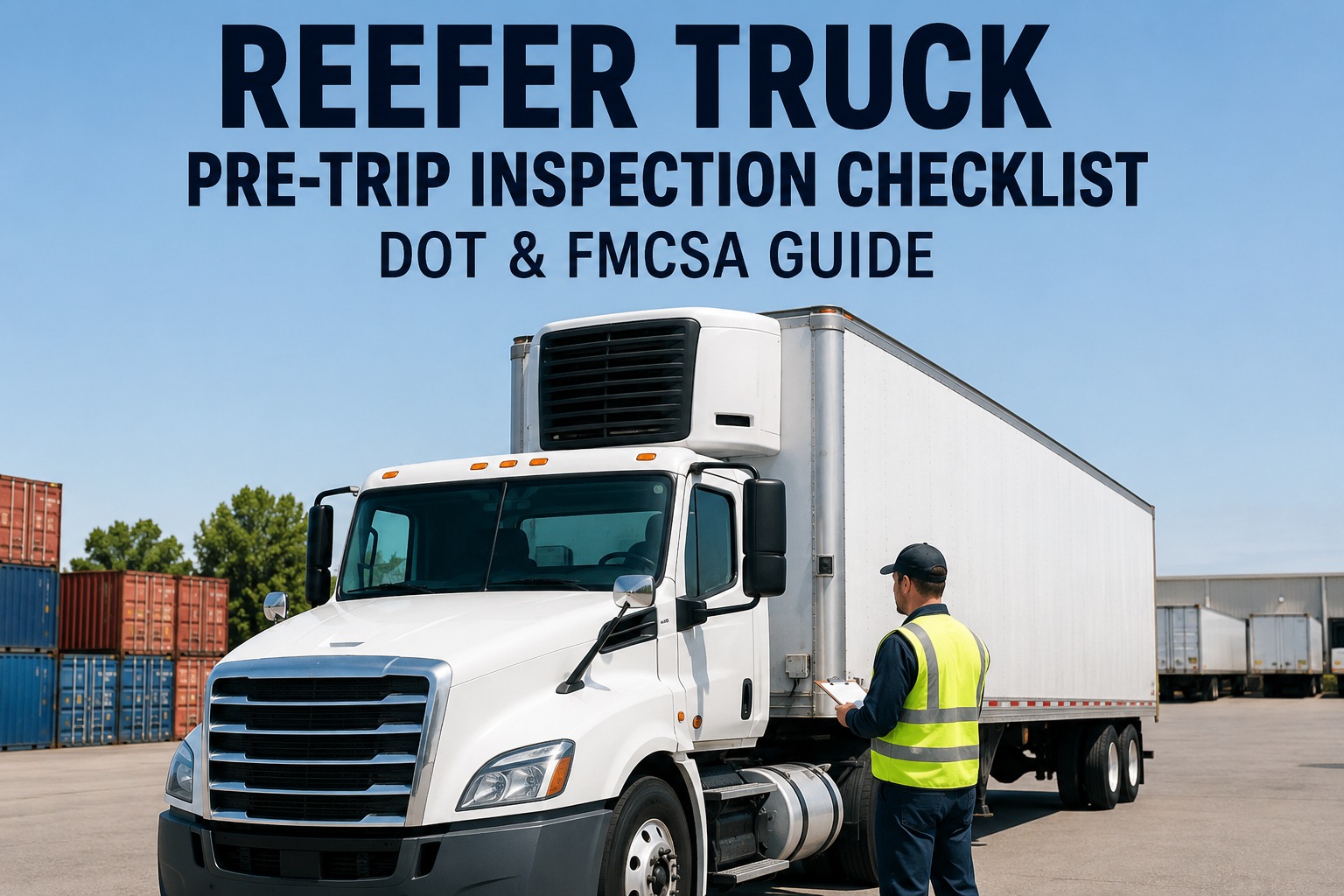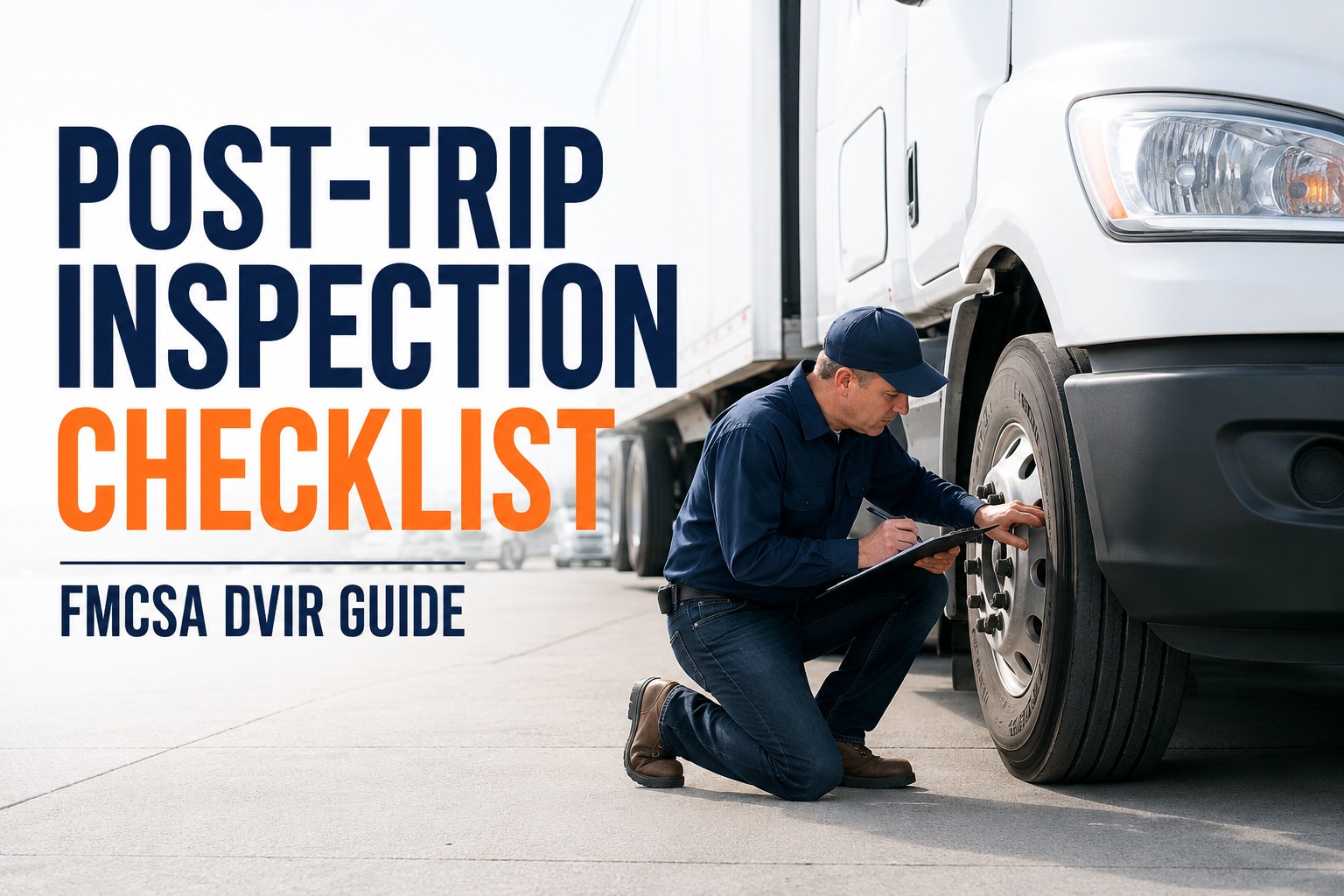
A proper post trip inspection isn't about the checklist — it's about the 3-signature chain of custody under 49 CFR §396.11 that keeps unsafe vehicles from being dispatched next shift. Break any signature and the carrier owns the citation, the insurance exposure, and any plaintiff-attorney discovery. This guide covers FMCSA-2025-0115 (the Feb 2026 eDVIR final rule), the 11 required components, and the 5 places the chain actually breaks in real fleets. Book an HVI demo to see it enforced digitally.
3 signatures. 3 people. 1 legally binding chain.
The post-trip DVIR is not a form — it's the sequential accountability workflow that keeps unsafe vehicles from being dispatched the next shift. Break any signature and the carrier owns the exposure.
- Complete walk-around inspection at end of shift
- Document all defects found during day's driving
- Sign DVIR — even "no defect" report on passenger CMVs
- Submit to carrier or mechanic for repair evaluation
- Review each defect reported on prior DVIR
- Repair all defects affecting safe operation
- Certify repair completion (or document "repair not needed")
- Sign the original DVIR before vehicle can be dispatched
- Review prior day's DVIR before operating vehicle
- Confirm all reported defects have been repaired
- Sign to acknowledge repair status and safe operation
- Retain acknowledgment as part of DVIR record
What §396.11 actually requires — and what most fleets get wrong
The regulatory text is short but heavily-interpreted. Three specific misreadings account for most of the compliance gaps that show up in DOT audits. Understanding each removes the ambiguity that trips up even experienced Safety Managers.
Since the 2014 FMCSA rule change (77 FR 76773), property-carrying CMV drivers are NOT required to submit a DVIR when no defects are found or reported. Passenger-carrying CMVs still require daily DVIRs regardless of defect status. Fleets running mixed operations must understand which rule applies to which vehicle class.
FMCSA Guidance Question 25 on §396.11 clarifies that the regulation requires a written report at completion of each day's work — not a distinct physical inspection separate from §392.7 pre-trip requirements. In practice the driver performs one thorough walk-around at end of shift and produces the DVIR from what was observed during and after operation.
Under §396.13, the driver about to operate a vehicle must review the most recent DVIR and sign to acknowledge repair status. This applies whether the DVIR shows defects or not (when one exists). Missing the next-driver acknowledgment is one of the most commonly cited DVIR violations in DOT compliance reviews.
The regulatory framework is intentionally sequenced: the report exists to trigger repair, the repair certification exists to authorize dispatch, and the next-driver acknowledgment exists to close the accountability loop. Skipping any step compromises the whole design. Book an HVI demo to see 3-signature enforcement running on your fleet
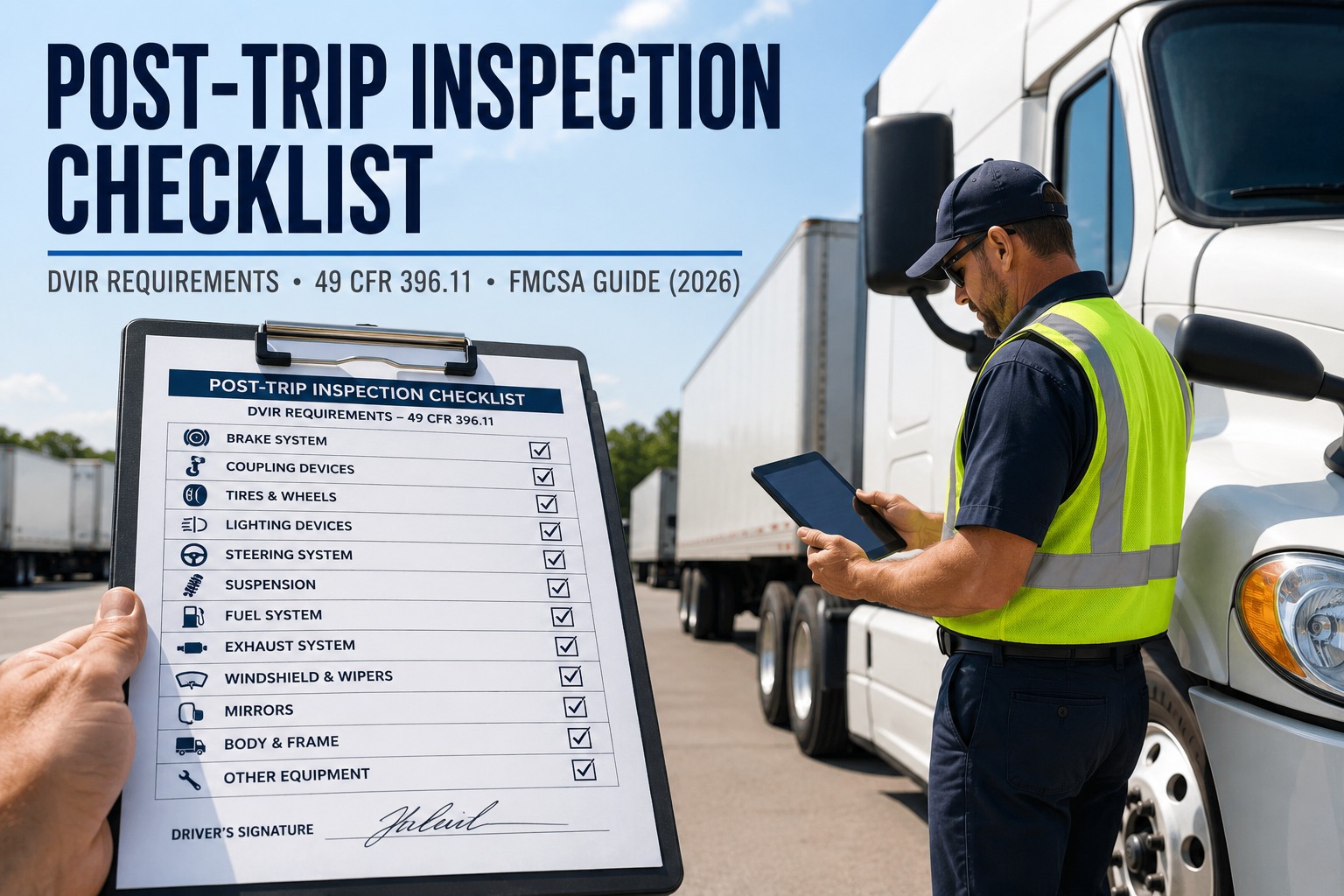
The 11 FMCSA-mandated components under §396.11(a)(1)
FMCSA specifies 11 minimum categories that must be covered in every DVIR — harmonized in the 2014 rulemaking with the pre-trip inspection requirements of §392.7. Any defect affecting safe operation or likely to cause mechanical breakdown must be documented. Smart fleets add company-specific items beyond these 11, but never below.
Ten of the eleven items align exactly with the pre-trip walkaround under §392.7 — drivers cover the same physical checkpoints at both ends of the shift. The workflow difference is documentation: the pre-trip requires no written report, the post-trip DVIR creates the legal record. Start a free trial to configure a digital post-trip DVIR with all 11 categories pre-loaded.
Extended checklist — what smart fleets add beyond the 11 required
The §396.11(a)(1) list is the legal floor. Fleets serious about maintenance economics and pre-empting roadside inspection findings extend the post-trip DVIR into a broader operational scan that catches wear before it becomes a defect.
- Engine oil level & condition
- Coolant level & overflow tank
- Windshield washer fluid
- Power steering fluid
- DEF (Diesel Exhaust Fluid) level
- Visible leaks under the vehicle
- Seat belt condition & retractor function
- Dashboard warning lights (all clear)
- Air pressure buildup & low-air warning
- HVAC function (heat, A/C, defrost)
- Interior lighting, dome lights
- Radio, CB, hands-free communication
- Cab & sleeper body damage assessment
- Mud flaps & fenders intact
- Fuel tank straps, caps, no leaks
- Exhaust system, DPF externally intact
- Air lines, glad hands, trailer connections
- License plate lamp function
- Load securement devices returned/stowed
- Cargo doors & latches functional
- Load bar & strap condition
- Reefer unit function log (if applicable)
- Cargo area cleanliness for next load
- Hazmat placard removal (if applicable)
Extending the DVIR into the operational scan above turns post-trip from a compliance checkbox into a maintenance-driving asset — recurring defects on specific units become visible over 30-60 days and drive predictive PM instead of reactive breakdown response. Book an HVI demo to see extended-checklist post-trip DVIRs feeding directly into your maintenance planning
The 5 places the DVIR chain of custody breaks
Every fleet safety review conducted post-audit reveals the same recurring failure points. Not the checklist — the workflow around it. These five gaps account for the overwhelming majority of DVIR violations that turn up in DOT compliance reviews.
Signature at end of shift is treated as a formality. Driver signs a pre-filled "no defect" DVIR without walking around the vehicle. Discovered during accident investigation when a defect that existed at end of shift becomes the root cause of the next-day incident — and the DVIR shows the driver certified no defects.
Compliance impact: high · Litigation impact: severeDriver A documents a defect. DVIR goes into the shop folder. Vehicle is dispatched next morning because "maintenance was busy last night" and the driver was pressured to run the load. Direct §396.11(a)(4) violation — carrier may not dispatch a vehicle with unrepaired safety-affecting defects.
Compliance impact: severe · Litigation impact: catastrophicMechanic fixed the defect but forgot to sign the DVIR. Or signed a different copy. Or the paper DVIR got lost between the shop and the dispatch office. During audit the DOT officer asks for the repair certification and it can't be produced. Auditor treats the record as if the repair never happened.
Compliance impact: high · Documentation gapDriver B takes the keys from the board and drives out. §396.13 required them to review the prior DVIR and sign to acknowledge repair status — but nobody enforced it. This is the single most commonly-cited DVIR violation in DOT compliance reviews per FMCSA audit data.
Compliance impact: most common violationDVIRs get pulled from the truck, thrown in a filing cabinet, misfiled, or shredded before the 90-day retention window closes. Auditor requests DVIRs for a specific date range; carrier cannot produce them. §396.11(c) violation with automatic citation exposure.
Compliance impact: recordkeeping violationEvery one of the five is a workflow failure, not a knowledge failure. Drivers, mechanics, and next-shift drivers all know what they're supposed to do — they miss it because the system doesn't force them to complete each step in sequence. Book an HVI demo to see workflow-enforced DVIR compliance in action
The February 2026 FMCSA final rule explicitly authorized electronic DVIRs
On February 19, 2026, FMCSA published its final rule under docket FMCSA-2025-0115 explicitly authorizing electronic DVIRs under both §396.11 and §396.13 — formalizing what many carriers had already practiced under the broader §390.32 electronic records authorization since 2018. The final rule is what removes the last regulatory hesitation for paper holdouts.
All three DVIR signatures (Driver A, mechanic, Driver B) may be captured electronically with timestamps and GPS coordinates. Digital signatures are legally equivalent to wet-ink under the final rule.
DVIRs may be stored electronically and produced digitally during FMCSA audits — no paper record required. Audit-ready retrieval within 48 hours remains the FMCSA expectation for record production.
Despite public comments requesting the change, FMCSA confirmed the no-defect DVIR remains unrequired for property-carrying CMVs. Passenger-carrying CMVs continue to require daily DVIRs regardless of defect status.
Paper DVIRs remain fully compliant — the rule authorizes electronic without deprecating paper. However digital records produce better audit trails, litigation defense, and workflow enforcement than paper can match.
The final rule is the regulatory tailwind that pushes fleets over the line from paper to digital. Combined with the workflow-enforcement benefits digital DVIRs bring to the 3-signature chain of custody, most Safety Managers implementing post-trip programs in 2026 are starting digital-first rather than migrating from paper later. Start a free trial to see FMCSA-2025-0115-compliant digital DVIR configured on your fleet in the same afternoon.
From a Fleet Safety Manager who moved 340 tractors to digital DVIR
We run 340 tractors and 890 trailers across the Southeast — mostly regional dry van, some reefer, dedicated grocery. Our DVIR compliance under paper was around 68% pre-trip acknowledgment and roughly 55% mechanic repair-certification signature. We were passing DOT audits by explaining rather than by proving. Two roadside inspections in the same quarter cited us for driver-side DVIR violations and the pattern started showing up on our CSA scorecard.
We rolled out digital DVIR with the 3-signature chain enforced — Driver A can't clock out until they submit, mechanic can't dispatch until they certify, Driver B can't operate until they acknowledge. First quarter compliance rate hit 96% on all three signatures. CSA driver-side violations went to zero. The workflow was always the problem, not the drivers. Once the system enforced the sequence, everybody complied — because they couldn't not comply.
Frequently asked questions
Is a post trip inspection legally required by FMCSA?
The specific legal requirement is nuanced. Under 49 CFR §396.11, every CMV driver must prepare a written report — the Driver Vehicle Inspection Report (DVIR) — at the completion of each day's work documenting defects discovered during that day. FMCSA Guidance on §396.11 (specifically Question 25) clarifies this does NOT require a separate "post-trip inspection" of the kind described in §396.15; rather, it requires the written report itself covering defects observed during and after operation. Practically, drivers perform a walkaround at end of shift to identify defects, and produce the DVIR from what was found. As of the 2014 FMCSA rule change, property-carrying CMV drivers are NOT required to submit a DVIR when no defects are found — only when defects exist. However, passenger-carrying CMVs (buses, motorcoaches) still require daily DVIRs regardless of defect status. Most safety-conscious fleets require daily post-trip DVIRs on every unit as company policy because the audit-trail and litigation-defense value of consistent no-defect reports far exceeds the two-minute per-driver time cost, particularly with digital DVIR platforms that make submission take under two minutes.
What are the 11 items covered in a post-trip DVIR under §396.11?
FMCSA specifies 11 minimum categories under 49 CFR §396.11(a)(1) that every DVIR must cover: (1) Service brakes, including trailer brake connections; (2) Parking brake; (3) Steering mechanism; (4) Lighting devices and reflectors — including headlamps, marker lights, brake lights, and turn signals; (5) Tires — condition, tread depth, sidewall integrity; (6) Horn; (7) Windshield wipers; (8) Rear vision mirrors; (9) Coupling devices — including fifth wheel, kingpin, pintle hitch; (10) Wheels and rims; (11) Emergency equipment — including warning triangles, fire extinguisher, spare fuses. These 11 items are harmonized with the pre-trip inspection requirements of §392.7 (updated in the 2014 rulemaking) — drivers cover the same physical checkpoints at both ends of the shift. Any defect affecting safe operation or likely to cause mechanical breakdown must be documented. Beyond the 11 required items, well-run fleets typically extend the checklist to include fluid levels (engine oil, coolant, washer fluid, DEF), cab warning lights and air pressure buildup, exterior body damage and mud flap condition, load securement equipment returned/stowed, and reefer function logs where applicable. The extended items are not federally required but they turn the post-trip DVIR into a maintenance-driving asset instead of just a compliance checkbox.
What is the "chain of custody" on a post-trip DVIR?
The DVIR chain of custody is the sequential 3-signature accountability workflow that FMCSA §396.11 and §396.13 collectively create. Signature 1 (Driver A) comes at end of shift when the driver who operated the vehicle completes the post-trip DVIR and signs to document any defects found. Under §396.11(a)(1) this is required at completion of each day's work. Signature 2 (Carrier or Mechanic) comes overnight or before next dispatch when a qualified mechanic or carrier official reviews each defect, performs required repairs, and certifies repair completion on the original DVIR. Under §396.11(a)(3) this signature is required before the vehicle may be dispatched again. Signature 3 (Driver B) comes before next dispatch when the driver about to operate the vehicle reviews the most recent DVIR and signs to acknowledge that they've reviewed the report and confirmed repair status. Under §396.13 this signature is required before operating any vehicle covered by a prior DVIR. The three signatures create a legally binding chain: defect found → repair certified → repair acknowledged → dispatch authorized. Missing any signature breaks the chain and creates FMCSA citation exposure. Under recent CSA scoring changes, "driver-observed" violations from this chain are a distinct scoring category that impacts insurance rates and safety ratings.
Are electronic DVIRs (eDVIRs) legal in 2026?
Yes. Electronic DVIRs have been permissible under the general electronic records authorization of 49 CFR §390.32 since 2018, but on February 19, 2026, FMCSA published a final rule under docket FMCSA-2025-0115 adding explicit electronic DVIR authorization language to §396.11 and §396.13 — removing all ambiguity for carriers previously hesitant about digital. Under the final rule: all three DVIR signatures (Driver A, mechanic, Driver B) may be captured electronically with timestamps and GPS coordinates and are legally equivalent to wet-ink signatures; DVIRs may be stored electronically and produced digitally during FMCSA audits with no paper record required; the 3-month retention requirement under §396.11(c) applies identically to electronic records; audit-ready retrieval within 48 hours remains the FMCSA expectation. Paper DVIRs remain fully compliant — the final rule authorizes electronic without deprecating paper. However carriers moving to digital consistently report DVIR compliance rates rising from 55-70% under paper to over 95% within the first month of digital rollout, driven by workflow enforcement (can't submit incomplete forms), photo-evidence attachment on critical items, GPS-timestamped signatures, automatic defect routing to maintenance, and instant audit retrieval. The Feb 2026 final rule effectively formalizes what the industry had already been moving toward for six years.
How long must post-trip DVIRs be retained?
Under 49 CFR §396.11(c), motor carriers must retain the original DVIR, the repair certification, and the next-driver acknowledgment for a minimum of 3 months from the date of the original report. This 90-day retention requirement applies to all three components of the DVIR chain: the initial driver report, the mechanic or carrier repair certification, and the acknowledging signature from the next driver who operated the vehicle. Most safety-conscious fleets extend retention well beyond the FMCSA minimum for two practical reasons: litigation defense (accident lawsuits typically emerge 6-18 months after the incident, and DVIRs from that period become critical evidence), and internal audit (fleet safety reviews benefit from a full year of trailing data to identify recurring defect patterns per unit or per shop). Digital DVIR platforms typically retain records for the life of the fleet by default at zero incremental cost, which eliminates the retention-window compliance risk that paper systems introduce. During DOT audits, compliance officers routinely request DVIRs for specific date ranges within the 90-day window and expect production within 48 hours — a bar paper systems frequently fail (records scattered across office locations, filed by driver rather than by date, or physically inaccessible during audit hours) but digital systems meet trivially through search-and-export functionality.
Turn every post-trip DVIR into an unbreakable chain of custody — digitally enforced.
HVI's digital DVIR module captures Signature 1 (Driver A) with timestamps and photo evidence, routes defect work orders to the shop automatically, requires Signature 2 (mechanic repair certification) before dispatch, forces Signature 3 (next driver acknowledgment) before operation, and retains everything for the FMCSA 3-month window and beyond. FMCSA-2025-0115 compliant. Live for your fleet in under two weeks — Safety Managers typically see DVIR compliance rates climb from 55-70% under paper to over 95% inside the first month.
FMCSA-compliant · ELD-integrated · CSA-safe · SOC 2 Type II