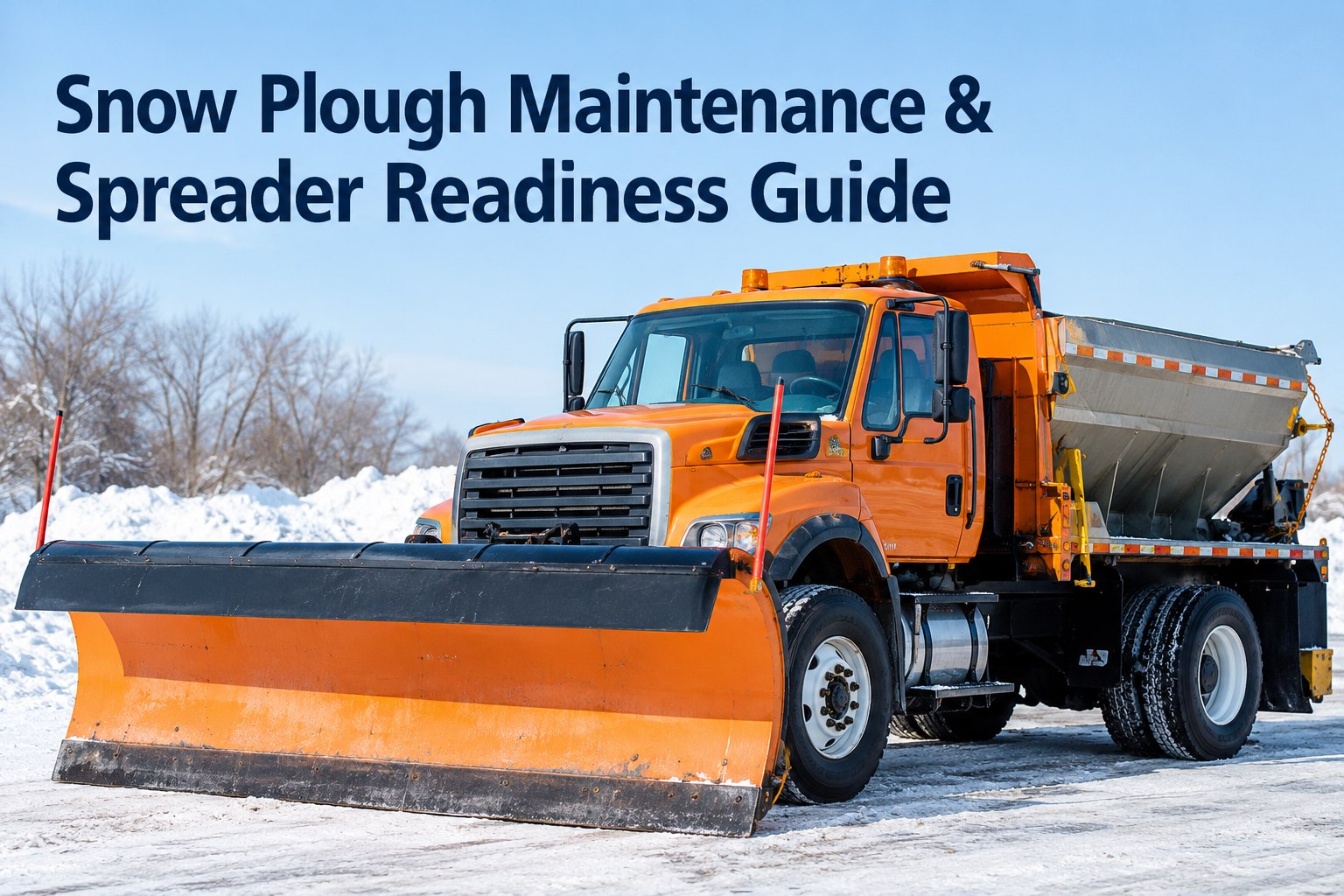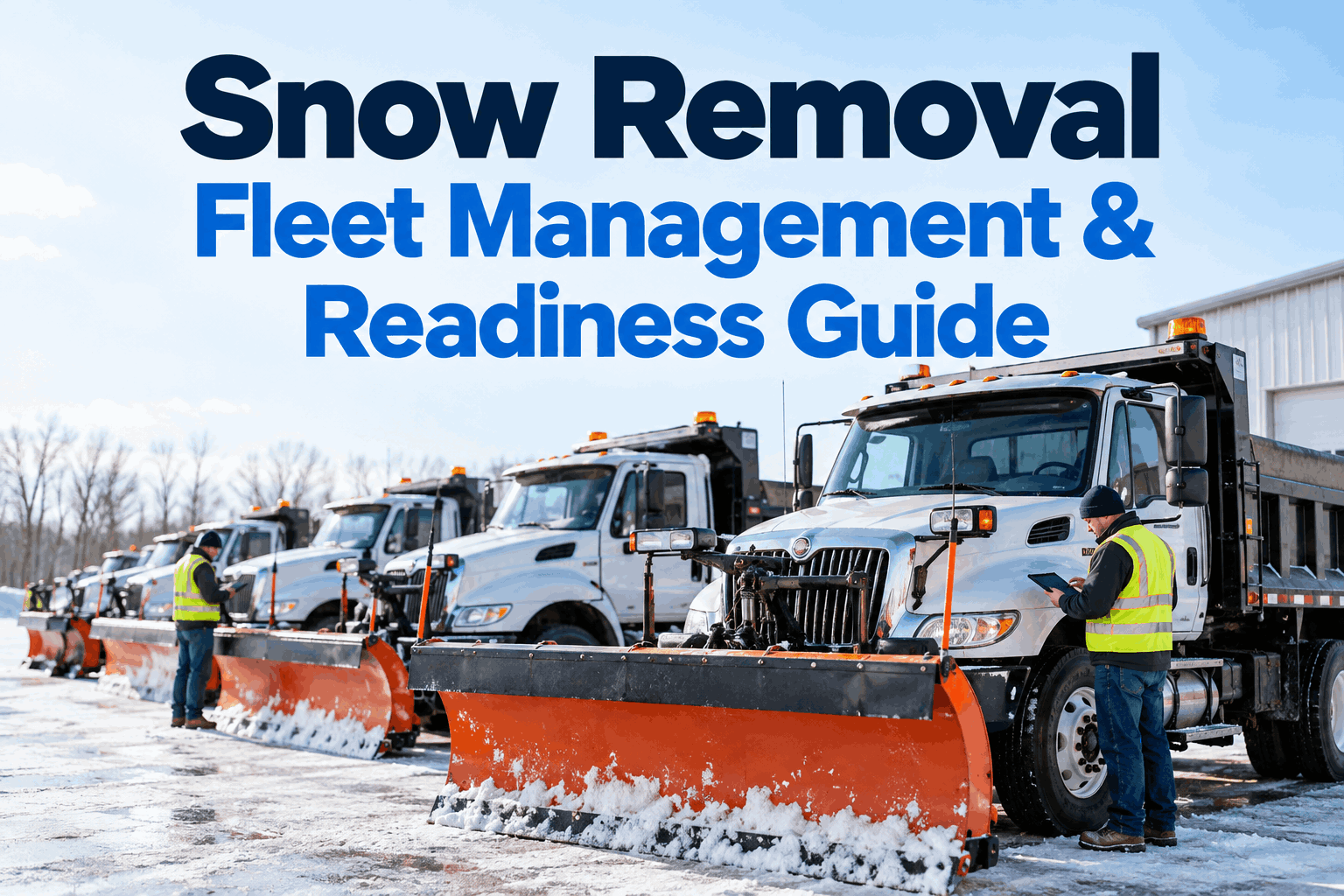
Snow removal fleet management is a business where your whole year rides on a handful of nights. When the storm hits at 2am, every plow has to drop and every truck has to turn over cold — the client doesn't care that a solenoid failed, they care that their lot is clear by 6. A plow down mid-event isn't a repair bill; it's a missed route, an angry account, and a reputation you spend all summer rebuilding. There's a way to walk in ready — see every truck storm-ready at a glance.
Walk into every storm with the whole fleet green.
Track plow, spreader and truck readiness on one live dashboard. Preventive maintenance, pre-storm inspections and a service record on every unit — so nothing gets grounded when the flakes start flying.
Here's what makes snow different from every other fleet: there's no slack and no second chance. A landscaper can push a mow to tomorrow; you can't push a storm. Your equipment sits idle for weeks, then has to perform flawlessly on the coldest, worst night of the month — plows, spreaders, cutting edges, hydraulics and cold-start batteries all at once. Managing that isn't about knowing what to service; it's about knowing, at a glance, that every unit is ready before the first flake — and having the records to prove the prep was done. That's what a readiness program looks like, and it's exactly what snow removal fleet management software is built to run.
Your whole fleet's readiness, on one screensnow removal fleet management as a live readiness dashboard
Instead of walking the yard with a clipboard the morning before a storm, you see it at a glance: what's ready, what's due, and what's still in the shop — across every plow, spreader and truck.
That readiness tracking is the whole point: it turns a frantic pre-storm scramble into a status you can trust. See the readiness dashboard live on your own fleet.
The 72 hours before a storma winter fleet readiness workflow that runs itself
A good readiness program isn't a mad dash when the forecast turns — it's a sequence that fires on its own as the storm approaches, so nothing is left to the last cold hour.
Forecast window
Readiness check kicks off; any open PM or defect is flagged while there's still time to fix it.
Pre-storm inspection
Crews run the digital pre-storm check on every unit — plow, spreader, fluids, lights, cutting edges.
Final staging
Flagged items closed or swapped; units fueled, loaded and staged. The board goes green.
Drop & go
Every route covered by a unit you already know is ready — no 2am surprises in the yard.
The difference is calm: the prep is documented, preventive maintenance fires on its own, and the storm is just execution. See how pre-storm prep gets tracked across the fleet.
Every unit that has to perform in the coldsnow removal equipment maintenance across the fleet
Snow fleets are more than plow trucks. Each class of equipment has its own cold-weather failure points — and its own way of being the one thing that strands a route.
Plow trucks
Hydraulics, solenoids, cutting edges and cold-start batteries — the frontline unit.
Salt & brine spreaders
Spinners, augers, chains and controllers — corrosion-prone and easy to overlook.
Loaders & pushers
Box plows and pushers on loaders — hydraulics, tires and attachment pins.
Blowers & handhelds
Snowblowers, shovels crews and backpack gear — small units, real route impact.
Support & staging
Fuel, light towers and material loaders — the backbone a long event runs on.
All on one list
Every asset with its own hours, PM schedule and inspection — nothing forgotten.
With asset management built for mixed seasonal fleets, each unit carries its own history — so the spreader that sat all summer gets the same attention as the flagship plow. Start a free fleet list.
The pre-storm check — run the same way, every unita snow plow inspection checklist HVI turns digital
This is the core of a pre-storm inspection. On HVI it's a digital inspection each unit passes before it stages — with photos on anything flagged and proof the prep was done, not a paper sheet that freezes to a clipboard. The existing plow & spreader maintenance guide goes deeper on each item.
- Cutting edge & shoes — wear within limits
- Hydraulic fluid, hoses & cylinders
- Lift, angle & float all functioning
- Solenoids, pins & springs sound
- Spinner, auger & chain condition
- Controller & wiring tested
- Hopper clean, no caking or corrosion
- Calibration & spread pattern checked
- Battery, charging & cold-start
- Tires, chains & 4WD engagement
- Brakes, fluids & coolant strength
- Fuel & water separator drained
- Beacons, plow & work lights
- Wipers, defrost & washer fluid
- Mirrors, backup alarm & camera
- In-cab heat & emergency kit
Every unchecked box is a flagged defect that routes to the shop as a work order — not a line someone initials at midnight and forgets. Turn this into a digital pre-storm inspection your whole crew runs the same way.
What a storm looks like now
No surprises in the yard
Readiness is verified days ahead, so every route launches on a unit you know is good.
Less storm downtime
Catching a weak solenoid or worn edge before the event beats a breakdown mid-route.
Proof for every account
Inspection and service records back your service levels — and protect you in a dispute.
The contractors who run this way sleep before a storm instead of dreading it. Add your plows and spreaders free and be ready before the first flake.
From a snow & ice contractor
Every November it was the same gamble — we'd think the fleet was ready, then the first real storm would find the one plow with a dead solenoid and the spreader nobody flushed last spring. At 3am, with sixty accounts waiting, that's not a maintenance problem, it's a lost client.
Now the whole fleet's on a readiness board. The pre-storm inspection goes out to every driver, I can see what's green and what's flagged from my phone, and the stuff that used to bite us gets caught days early. Last season we went into every event fully staged. That peace of mind before a storm is worth the whole subscription.
Snow removal fleet management — FAQs
What is a snow fleet readiness program?
It's a system for making sure every unit is storm-ready before an event — not scrambling during one. In practice it means preventive maintenance by hours, a pre-storm inspection every plow and spreader passes, and a live readiness view of what's ready, due or down. Software ties it together so "is the fleet ready?" is a one-glance answer instead of a yard walk with a clipboard.
Does it track spreaders and loaders, not just plow trucks?
Yes — every asset you add. Salt and brine spreaders, loaders with pushers, blowers and support equipment each get their own profile, PM schedule and inspection template alongside the trucks. Spreaders especially get overlooked because they're corrosion-prone and sit all summer; putting them on the same list is exactly how you stop one from stranding a route.
How does this help during an actual storm?
The heavy lifting happens before the storm — readiness is verified in the days ahead, so you launch every route on a unit you already know is good. If something does go down mid-event, the defect is logged and routed to the shop instantly, and you can see the whole fleet's status from a phone instead of calling around in the dark.
We're a smaller contractor — is this worth it?
Especially so. With a small fleet there's no spare plow to swing in when one goes down at 2am — a single failure can blow a whole route and an account. The readiness and pre-storm checks are where smaller operations see the fastest payback. You can start free with a few units and keep it simple.
How fast can we set it up before the season?
Days, not weeks. Build your asset list once, set PM intervals and your pre-storm inspection template, and crews can be checking units on their phones before the first forecast. Start free to get your fleet in and try the workflow, then book a demo to configure the readiness board and roll it out before the season starts.
Be the contractor whose fleet is always ready
One live dashboard for every plow, spreader and loader. Preventive maintenance, a pre-storm inspection each unit passes, and a record on all of it — so you walk into every storm with the board green and sleep the night before. See it mapped to your fleet in 30 minutes.
Every unit on one board · PM by the hour · Pre-storm check → work order → record