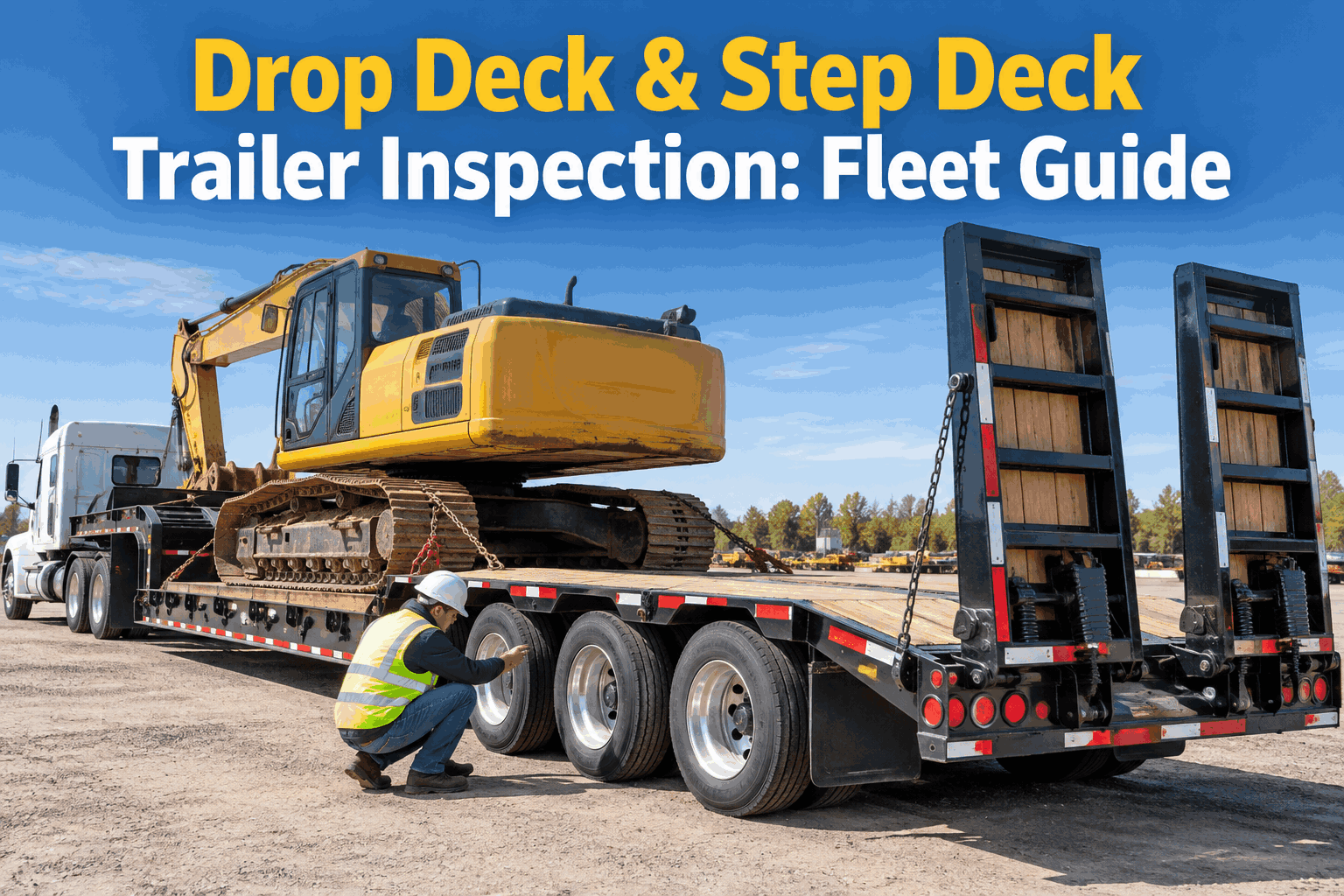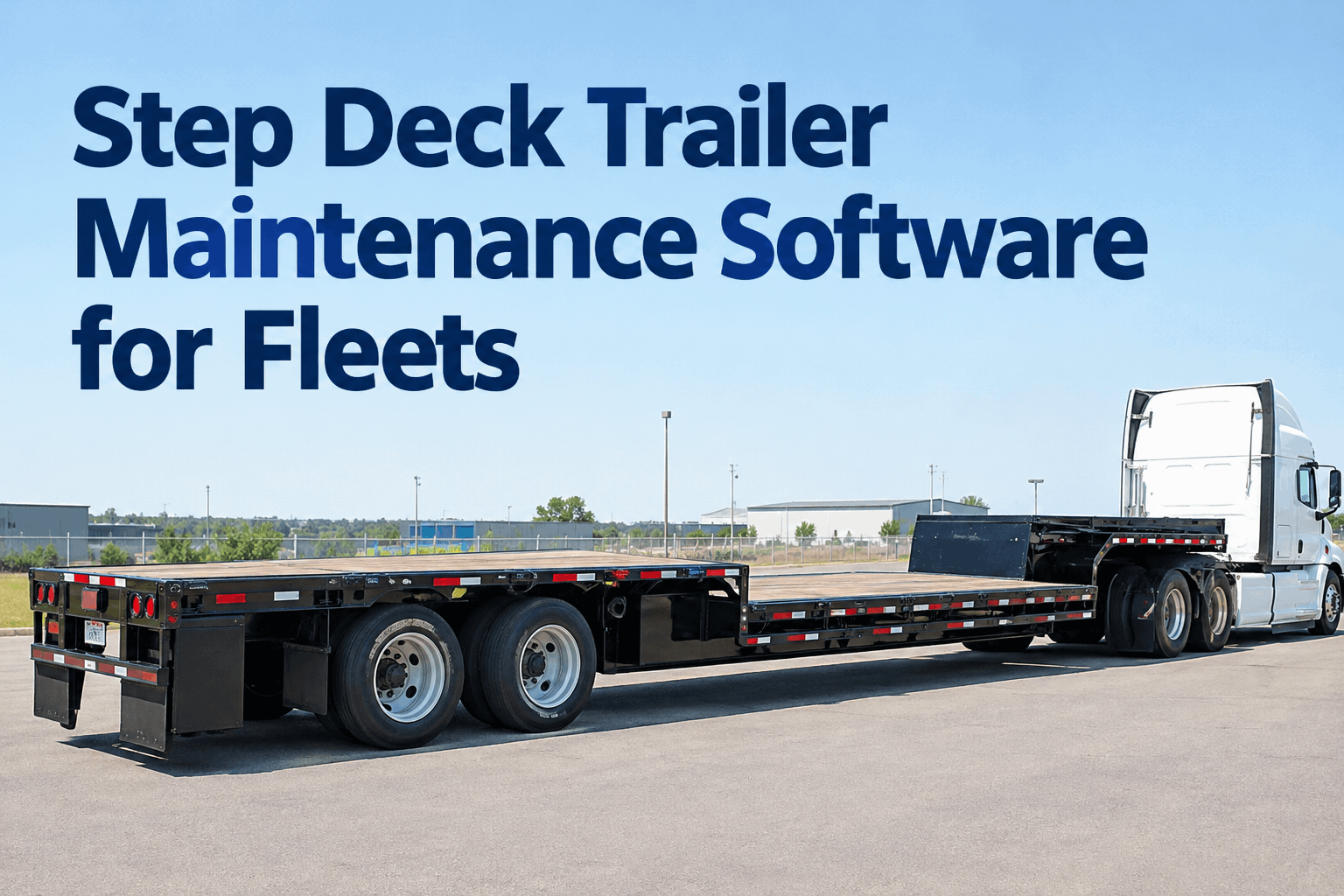
A step deck earns its keep hauling the tall, heavy, awkward freight a flatbed can't take legally — and that job punishes the exact parts a generic fleet app never checks: the deck floor, the step transition welds, the ramps, and a pile of chains and straps that have to out-rate the load. Step deck trailer software built for specialized freight puts those on a schedule, before the load, not after a securement violation or a cracked crossmember. Book a demo to see it on your decks.
Step Deck Trailer Software That Keeps the Deck, Ramps and Securement Load-Ready
Inspections, preventive maintenance, defects and repairs for step deck and drop deck trailers — in one system, so a cracked step weld or under-rated strap is caught before the freight goes on.
A dry van is one box on wheels. A step deck is two decks and a step, built to carry freight that's too tall or too heavy for a standard flatbed — which means more structure under load, more securement gear, and more that has to be right before you pull. That's why specialized trailer maintenance software can't just be a brakes-and-lights app: the deck, the step and the securement each need their own inspection lines, schedules and history.
The deck that defines itthe step deck zones a generic trailer app never checks
What makes a step deck a step deck — the drop from upper to lower deck — is also where the stress concentrates. Map the trailer and the welfare of every load comes down to a handful of zones a dry van template has no line for.
Upper deck, the step, lower deck, tie-down track and ramps — each a zone with its own wear, its own service interval and its own history. A purpose-built digital inspection puts every one on the checklist with a photo on any flag. Book a demo of a step deck template.
Your gear has to out-rate the loadwhy step deck trailer software tracks securement, not just the trailer
A step deck hauls heavy, tall, oddly shaped freight, and the securement rules scale with it. The aggregate working load limit of your chains and straps has to beat the cargo weight — and a worn strap or stretched chain quietly drops below the line the load needs.
- Chains and straps rated and logged against cargo weight
- Worn, cut or heat-damaged gear pulled before it fails
- Tie-down points and winches checked for cracks and distortion
- Aggregate WLL confirmed to beat the load every time
- Straps used past their rating because they were on the truck
- Chain stretch nobody measured, hooks worn thin
- Anchor points cracked under past heavy loads
- No record of what rated gear held which load
A securement failure on a step deck isn't just a violation — it's a shifted load of heavy equipment on the highway. Tracking the gear's condition and rating is the kind of thing flatbed load securement checklist work defines, now logged and scheduled per trailer. Book a demo of securement tracking.
A hairline now or a failed deck laterwhy step deck trailer software catches the weld before the load
The step transition takes the most stress on the trailer, so that's where cracks start — small, at a weld, easy to miss on a busy day. Caught early it's a weld repair. Left to spread under heavy loads, it becomes a deck you can't trust and a trailer out of service.
A short crack at a weld, flagged on a pre-load check with the deck empty.
A weld repair, on your scheduleHeavy freight, cycle after cycle, grows the crack along the crossmember. The deck starts to flex.
A bigger weld and lost daysA structural crack pulls the trailer out of service — or worse, it lets go under a load.
Out of service, load strandedSame weld, caught at three very different costs. Scheduled structural checks are what preventive maintenance scheduling is built to produce — the step gets looked at on a cadence, not at a roadside scale. Book a demo on your own step deck fleet.
The step deck checklistwhat the software runs on every drop deck trailer, by zone
A step deck is best checked by zone — the structure and deck, the securement gear, and the road-legal basics. Each line ties to the trailer, takes a photo on a flag, and opens a work order on a fail.
- Step transition and crossmember welds free of cracks
- Upper and lower deck floor sound — no rot, rust or soft boards
- Tie-down tracks and stake pockets undamaged
- Ramps or beavertail deploy, latch and hold
- Chains and straps free of cuts, abrasion and heat damage
- Chain stretch and hook wear within limits
- Winches, ratchets and anchor points sound, no cracks
- Aggregate working load limit confirmed against the cargo
- Tires, tread and inflation across all positions
- Brakes, slack adjusters and air lines within limits
- Lights, reflectors and electrical connection working
- Kingpin, suspension and landing gear sound under load
Run this on paper and the structural and securement lines are the first skipped on a tight load day. In the software, a flagged weld or strap can hold the trailer from dispatch until it's cleared. Start a free trial and load this checklist on your fleet this week.
Every trailer, one recordwhat a step deck looks like inside the platform
Open any trailer and the whole story is there — last check, open defect, next service, parts on hand and cost to date — instead of a clipboard in one truck and a service log in the office.
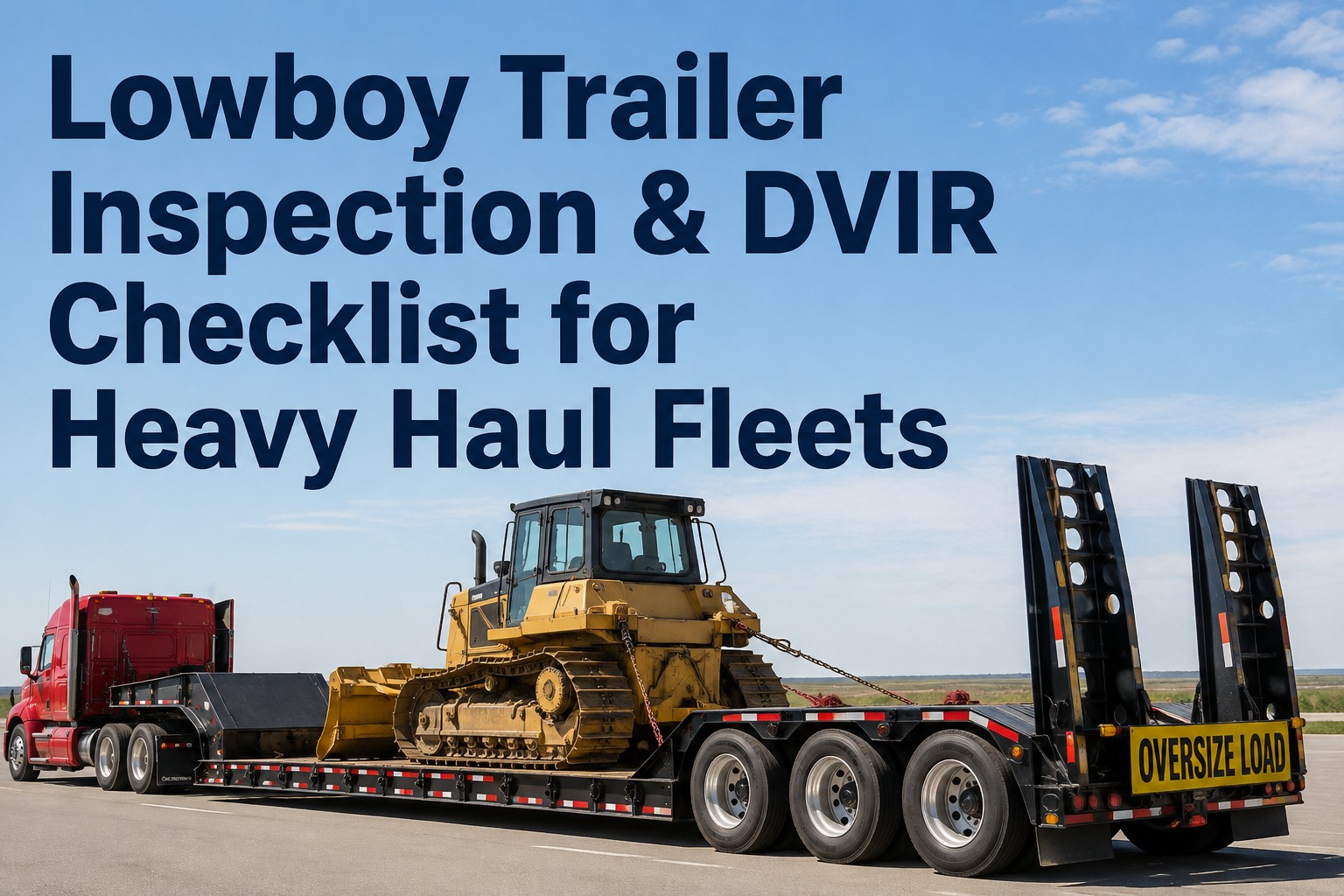
When a shipper disputes freight damage, or an officer asks for your inspection history, you open the trailer, not a filing cabinet. It all ties into the maintenance management workflow, with rated straps and chains tracked in inventory. For fleets also running heavy haul, it sits alongside your lowboy DVIR and inspection records. Book a demo on a trailer from your own fleet.
From a specialized carrier that stopped finding cracks at the scale
We run step decks and drop decks hauling machinery, and the stuff that hurt us was never the engine — it was a crack at the step we didn't catch until a crossmember was half gone, or a strap used past its rating because it was what the driver had. Once the welds, decks and securement gear were on a scheduled check the app flagged, we started catching the hairlines as small welds and pulling the worn straps before a scale did. The office finally sees every trailer's structure without a walk through the yard.
Step deck trailer software FAQs
What is step deck trailer software?
Does it work for drop deck and lowboy trailers too?
Can it schedule deck and securement maintenance automatically?
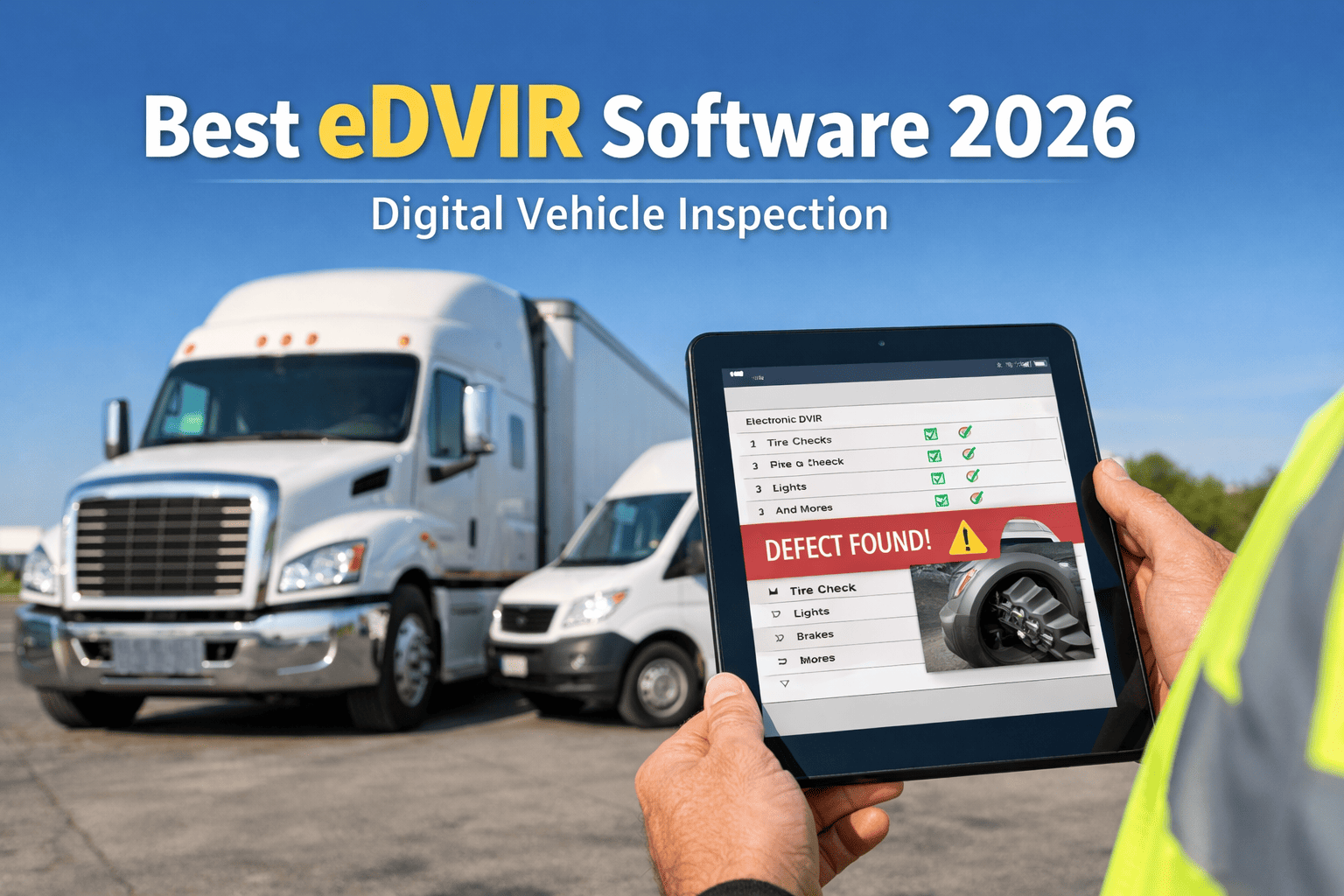
Does it handle the DOT pre-trip and defect reporting too?
How long until it's running on our fleet?
Keep every step deck load-ready
Step deck trailer software should track the deck structure and securement gear, not just the brakes and lights. Put inspections, PM, defects and repairs on one platform and catch the step crack before it spreads.
- Deck & step structural templates
- Securement gear & WLL tracking
- Defect-to-work-order in one tap
- Per-trailer cost & history