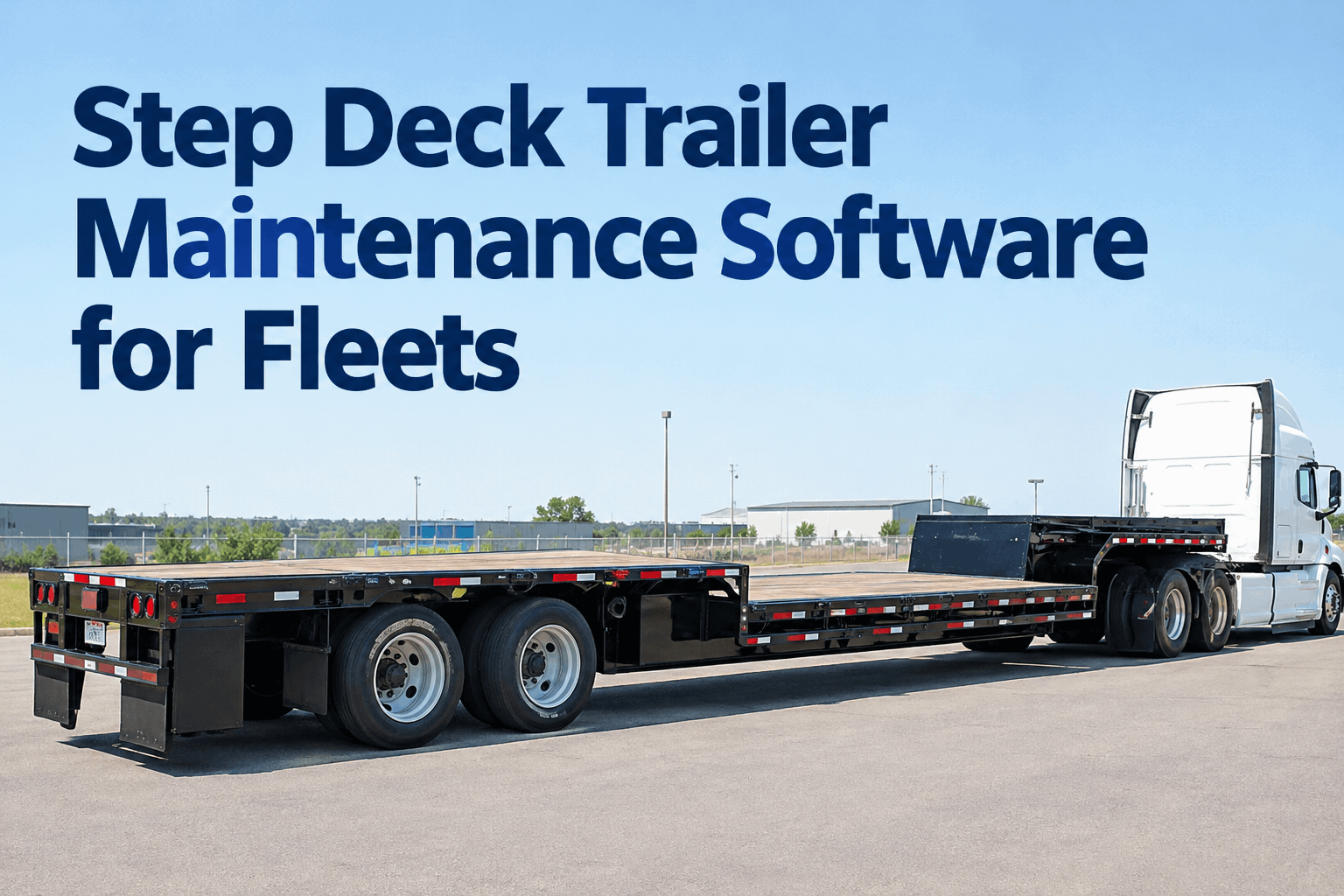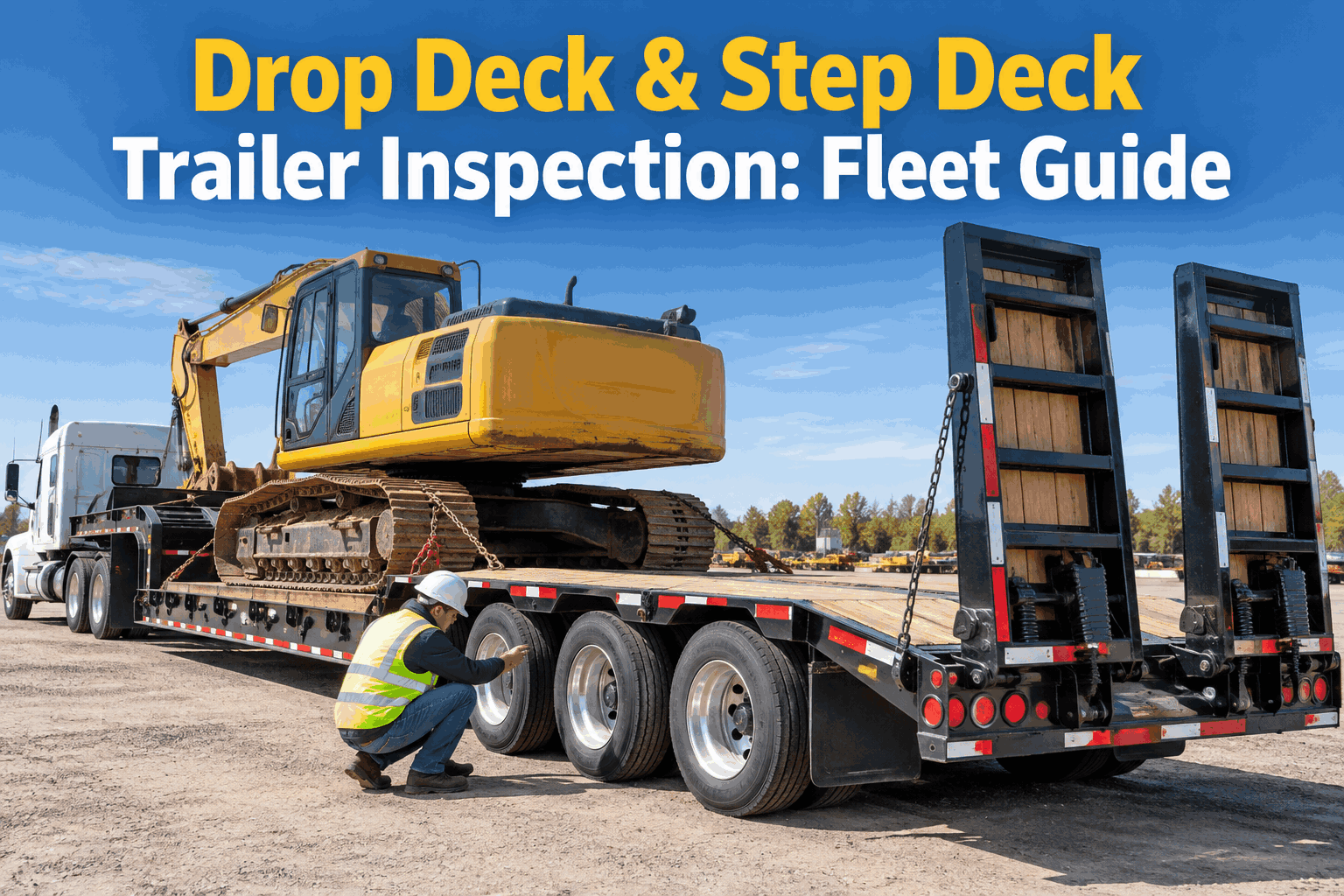
A drop deck trailer inspection lives or dies at one spot most walkarounds skip: the step where the upper deck drops to the lower. That transition, behind the kingpin, is where the trailer's stress concentrates — and where cracks start. Add a low deck that clips driveway aprons and a full set of rated tie-down points, and a step deck needs a structural eye a flat trailer never does. Book a demo to see it on a structural template.
The Step Is Where a Step Deck Cracks
Two deck levels, one stress point. The transition behind the kingpin carries the load a flatbed spreads flat — so it's the first place to inspect, not the last.
Here's the full picture — why "drop deck" and "step deck" are the same trailer, why the transition is the crack-prone stress point, how to inspect the deck and structure, the rated securement points that must hold, the ramp and low-deck clearance risks, and how to keep it all on a documented structural record.
Drop deck or step deck? Same trailer.
They're two names for one trailer — a two-tier flatbed with a raised upper deck over the gooseneck and a dropped lower deck behind it. "Step deck" is common in the Midwest and on load boards; "drop deck" shows up more in the Southeast. Same structure, same inspection — so whichever term your team happens to use, every check in this guide applies to your trailer.
The transition is the stress pointwhy cracks start at the step, not the flat
On a flatbed the load spreads across one level plane. On a step deck the frame has to step down, and that change in geometry concentrates bending and twisting loads right at the transition and its crossmembers. It's simple engineering: where the shape changes, the stress gathers — so that's where fatigue cracks appear first.
A crack here isn't a cosmetic defect — it's the beginning of a structural failure under a heavy load. Catching it early with a photo on record is the difference between a weld repair and a dropped deck, the same evidence-first logic behind proper flatbed securement and deck maintenance. Book a demo to trend transition cracks with photos
Know your deck heights before you inspectthe numbers that drive clearance and load planning
Step deck heights vary by several inches between manufacturers, and those inches decide what fits and what scrapes. Confirm the actual measurements of the trailer in front of you rather than assuming a standard — it changes both the clearance risk and the legal load height.
| Deck section | Typical height off ground | What it means |
|---|---|---|
| Upper deck (over gooseneck) | ~58–62 in | Near flatbed height — standard load-height headroom above it |
| Lower deck (main platform) | ~34–42 in | Extra vertical clearance for taller freight than a flatbed allows |
| The difference | ~18–24 in drop | The height the transition structure has to carry and resist |
Because the lower deck sits close to the road, its measurement isn't just a load number — it's a damage risk you'll see in the next section. Measure it, record it on the asset, and inspect against it every time. Start free and store deck specs on each trailer.
Deck surface and structural conditionthe platform that actually carries the freight
Beyond the transition, the whole two-level deck has to be sound enough to carry and anchor heavy loads. The lower deck takes the brunt of loading and chain abrasion, so its boards, plates and supporting steel get a close look.
Hardwood or apitong boards checked for rot, splits, cupping and loose or missing fasteners across both levels. A soft or springy board underfoot is a warning the support beneath it is failing too.
Any steel deck sections and patch plates for cracks, thinning, and weld integrity where they meet the frame. Previous repair patches deserve extra scrutiny — they mark spots that already failed once.
Under-deck crossmembers along the length for cracks, sag and corrosion, not just the transition ones. A sagging crossmember shows as a dip in the deck line long before it breaks.
Main rails, suspension mounts and hangers for cracks and wear that a heavy, low load punishes fast. Air-ride and spring components take extra abuse carrying concentrated heavy-haul weight.
Deck damage rarely appears all at once — a split board or a hairline plate crack widens load by load until it's a hazard, which is why the surface gets inspected as carefully as the structure under it. Book a demo to log deck wear board by board
Every securement point is a rated parttie-downs are only as strong as their weakest anchor
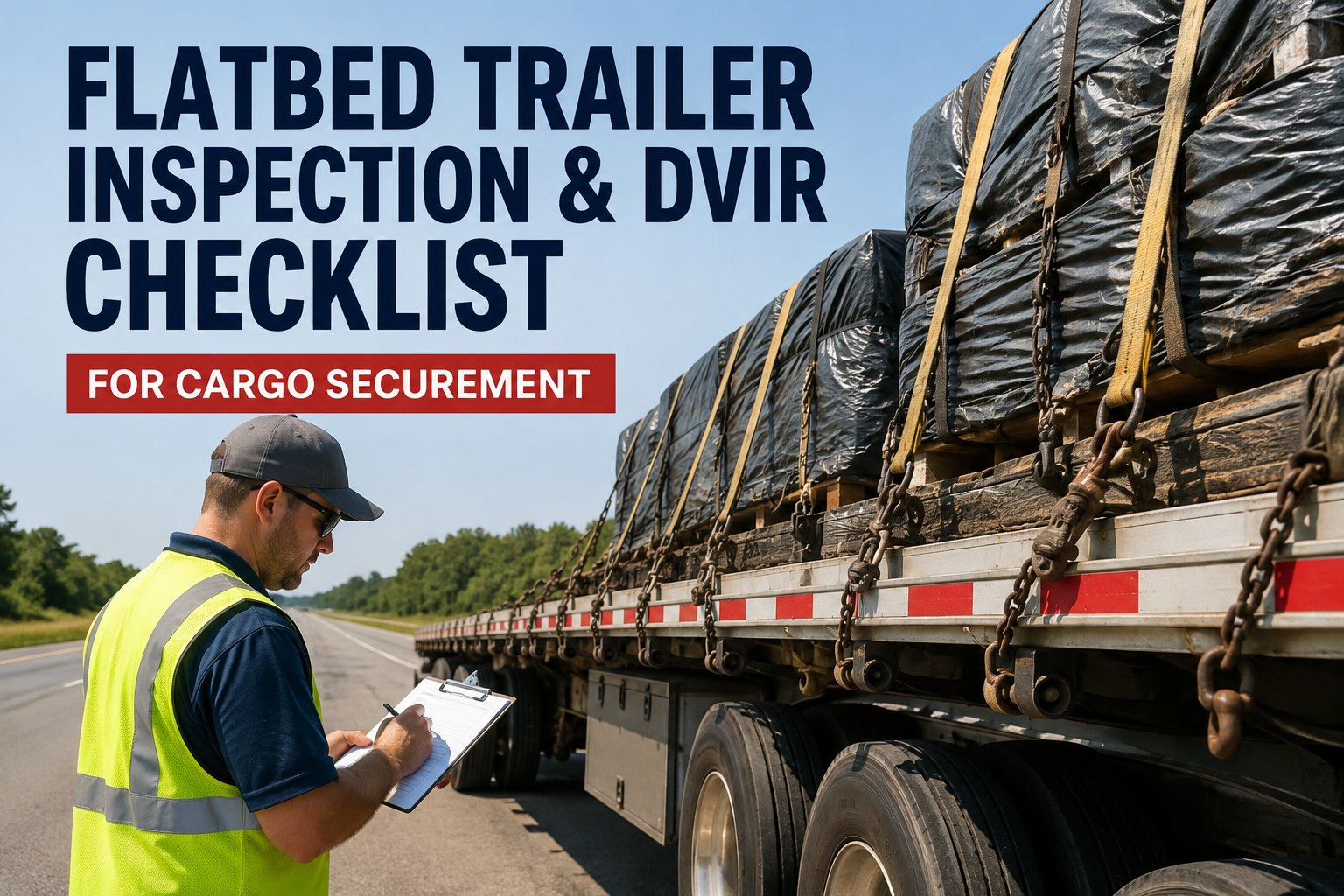
A step deck's load is held by its attachment points, and each one carries a working load limit that a bent, cracked or corroded anchor no longer meets. Inventory and inspect every point — a securement chain is only as good as what it hooks to.
Winches turn freely and lock under load; sliding tracks clear of debris with end stops intact so a winch can't slide off.
RatedWelds sound, ring not elongated or bent, mounting to the frame secure — an ovaled ring has already been overloaded once.
RatedNot cracked or torn from the rail; edges square, no elongation from repeated chain tension pulling against them.
RatedContinuous, straight and firmly attached along both deck edges; they protect the deck sides and back up the anchor points.
RatedAnchor points and any built-in chain slots free of cracks and wear, with no gouging where chains have dragged over time.
RatedRecessed or removable anchors seat and lock fully with no play; a loose insert transfers load unevenly to the deck around it.
RatedThe rule is federal: total tie-down working load limit must meet at least half the cargo weight, so a single failed anchor can put the whole load out of compliance. It's the same securement math covered for any rated car-carrier or specialized haul. Start free and check every anchor point.
Ramps and the low-deck clearance trapthe risk that comes free with a dropped deck
The lower deck's whole advantage — height for tall freight — comes with its whole hazard: it sits close to the road, so it grounds out where a flatbed clears. Two things need inspecting because of it: the ramps that load it, and the underside that keeps clipping things.
Ramp surface, hinges, latches and lift assists sound; storage location and retention devices secure so a ramp never drops in transit.
Lower-deck underside, air lines and lighting checked for grounding damage from driveway aprons, railroad crossings and dock ramps.
Grounding damage is easy to miss because it's underneath — but a scraped air line or crushed light on the lower deck is a defect that started as a clearance mistake. Building an underside check into the routine catches it before it becomes a brake or lighting failure on the road. Book a demo to record underside damage with photos
From a heavy-haul fleet manager
We found a crack in the transition of a step deck during a routine check — right at the crossmember behind the kingpin, exactly where you'd expect it once someone points it out. On a flatbed checklist that whole area doesn't exist. We built a structural template that makes the driver photograph the transition and the tie-down points every inspection, and it's caught two more cracks since, both repaired as welds instead of write-offs.
How HVI documents a step-deck inspectioncustom structural templates, alerts and photo history
A step deck only stays safe when its structure is tracked over time, not eyeballed once. HVI's custom inspection templates, annual-inspection alerts and photo capture turn the transition, deck, securement and clearance checks into a documented history per trailer.
Build the structural template
Transition, crossmembers, deck, securement and clearance become required lines.
Photograph cracks & wear
Transition cracks, deck damage and anchor wear logged against the asset with photos.
Trend structure over time
Recurring alerts and history show a crack growing before it becomes a failure.
See how a custom step-deck template and its structural history live inside HVI's inspection and maintenance platform. Line it up in a quick demo
Drop deck & step deck inspection: quick answers
Are drop deck and step deck trailers the same thing?
Yes — they're two names for the same trailer: a two-level flatbed with a raised upper deck over the gooseneck and a dropped lower deck behind it. "Step deck" is more common in the Midwest and on load boards, "drop deck" in the Southeast, but the structure and the inspection are identical.
What is the most important part of a step-deck inspection?
The deck transition — the step where the upper deck drops to the lower, just behind the kingpin. The change in frame geometry concentrates stress there, so it's the first place fatigue cracks appear. Inspect the transition welds, crossmember connections and the main beam around the drop for cracks, deformation and corrosion every time. Because the step also traps water and road debris, corrosion in that pocket is a second failure mode to watch alongside the cracking.
What securement points does a step deck have?
Typically winches and sliding tracks, D-rings, stake pockets, rub rails, chain tie-down slots and sometimes recessed deck inserts. Each is a rated attachment point with a working load limit, so every one is inspected for cracks, elongation, corrosion and secure mounting — a single failed anchor can put the whole load out of compliance. Federal rules require the combined working load limit of all tie-downs to reach at least half the cargo weight, which is why a weak point matters even when the others look fine.
Why does the low deck create extra inspection concerns?
The lower deck sits close to the road, giving a tighter breakover angle than a flatbed, so it can ground out on driveway aprons, railroad crossings and dock ramps. That means inspecting the underside, air lines and lower-deck lighting for grounding damage — problems that start as a clearance mistake and hide underneath the trailer. Deck heights also vary by several inches between manufacturers, so confirm the actual measurement of the trailer you're running before planning a tall or tight-clearance load.
How does HVI help inspect drop deck trailers?
HVI lets you build a custom inspection template with the transition, crossmember, deck, securement-point and clearance checks built in, capture photo evidence and defects against the specific trailer, and keep it recurring with annual-inspection alerts and maintenance history. The structural checks a generic form skips become required steps, and a growing crack shows up before it fails.
Give your step decks a checklist that knows the transition exists
HVI builds a custom structural template for every drop deck — transition welds, crossmembers, deck, rated tie-downs and clearance — captures cracks and wear with photos against the asset, and keeps it recurring with annual-inspection alerts. The step that carries the load finally gets inspected like it.
No credit card · Custom step-deck templates on day one
- Transition & crossmember condition
- Deck boards, plates & frame
- Every rated securement point
- Ramps, latches & retention
- Low-deck clearance & underside damage