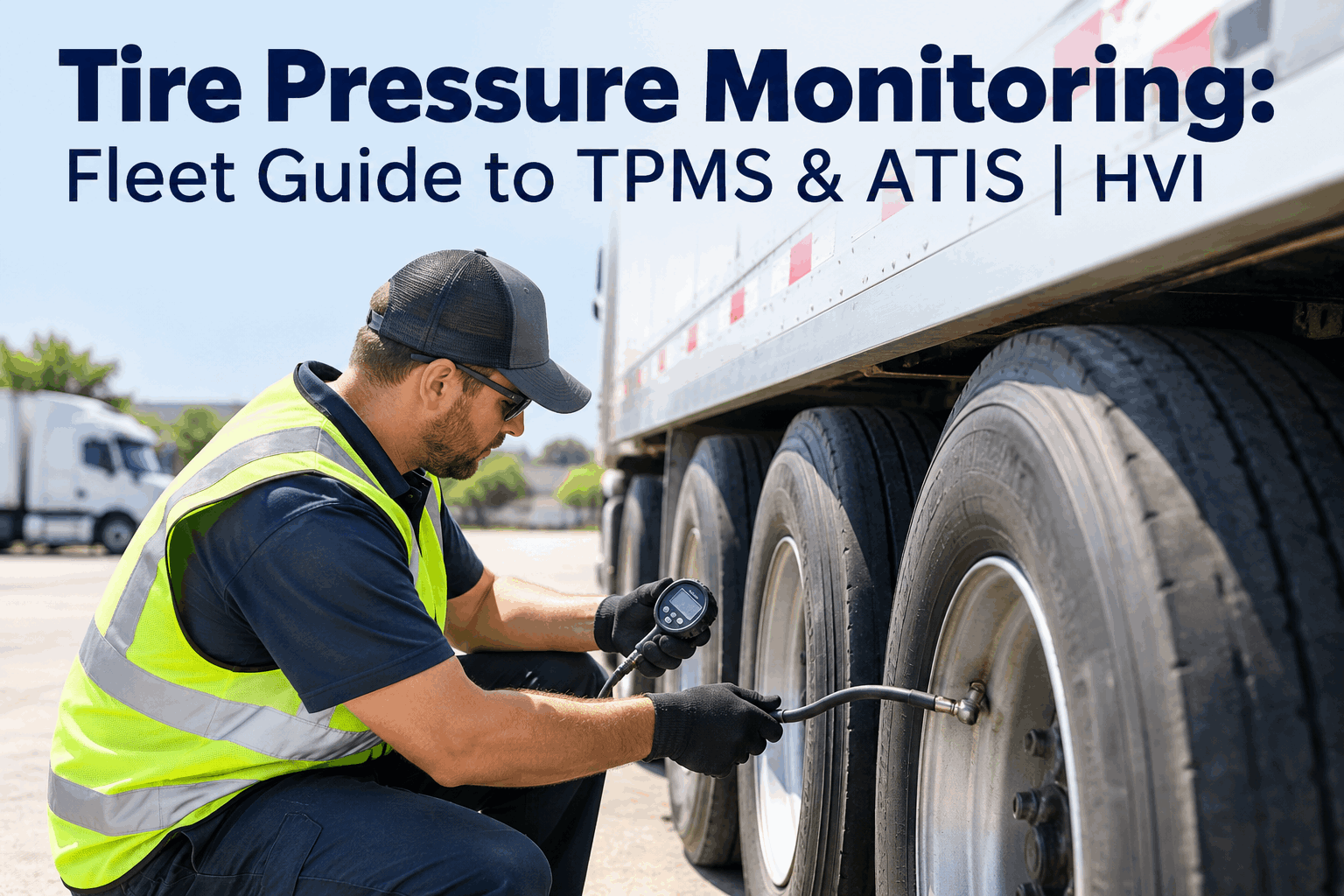
Tire pressure monitoring is the cheapest tire program a fleet can run and the one most often left to a gauge nobody picks up. Under-inflation quietly burns fuel, shortens tread and cooks casings — and because a low tire still rolls, it hides until it fails.
Tire pressure monitoring, from a gauge to automatic
Most fleet tires run low and nobody knows it. A pressure program — manual checks, then TPMS alerts, then automatic inflation — cuts fuel waste, casing damage and roadside failures you can't see coming.
Pressure is the single setting that touches fuel, tread life and casing survival at once. Track it cold, by position, over time, and a slow leaker shows as a trend instead of a blowout. The real question isn't whether to monitor — it's how far up the ladder to go.
Why under-inflation is the most expensive invisible problem
A tire doesn't have to be flat to cost you — it just has to run low. And most do: on roadside surveys, only a minority of fleet tires are actually at target. Here's what running low quietly takes:
Under-inflation also burns extra fuel through rolling resistance on every mile. See under-inflation flagged against each position before it becomes a casing or a tow bill.
The three levels of tire pressure monitoring
Pressure control is a ladder, not a single product. Each rung catches more, sooner, with less human effort — and most fleets land on a mix across tractor and trailer:
A calibrated gauge, cold, on a schedule. Cheapest and essential — but only as good as the discipline behind it, and a leak between checks goes unseen.
Sensors on each wheel report pressure and temperature in real time and alert on a low tire. You find out while it's rolling, not at the next yard check — the leak still needs a human to fix.
Automatic tire inflation draws from the trailer air supply to hold pressure on its own — and some systems bleed off over-inflation too. It fixes the slow leak before anyone sees the alert.
Higher rungs don't replace the lower ones — you still check cold pressure even with ATIS. See how HVI ties every rung to the tire record.
Monitoring tells you — inflation fixes it
The two are often lumped together, but they do different jobs. TPMS is your eyes on pressure; ATIS is the hand that corrects it — and a quick demo shows both feeding one tire record. Most fleets run TPMS on the tractor and ATIS on the trailer:
TPMS · monitors & alerts
- Sensor per wheel reports pressure + temperature
- Alerts the driver or office on a low tire
- Works across tractor, drive and trailer positions
- Still needs a person to add air and fix the leak
ATIS · maintains automatically
- Draws from the trailer air supply to hold pressure
- Corrects slow leaks without driver action
- Some systems also bleed off over-inflation
- Mostly a trailer-axle system; pairs with TPMS
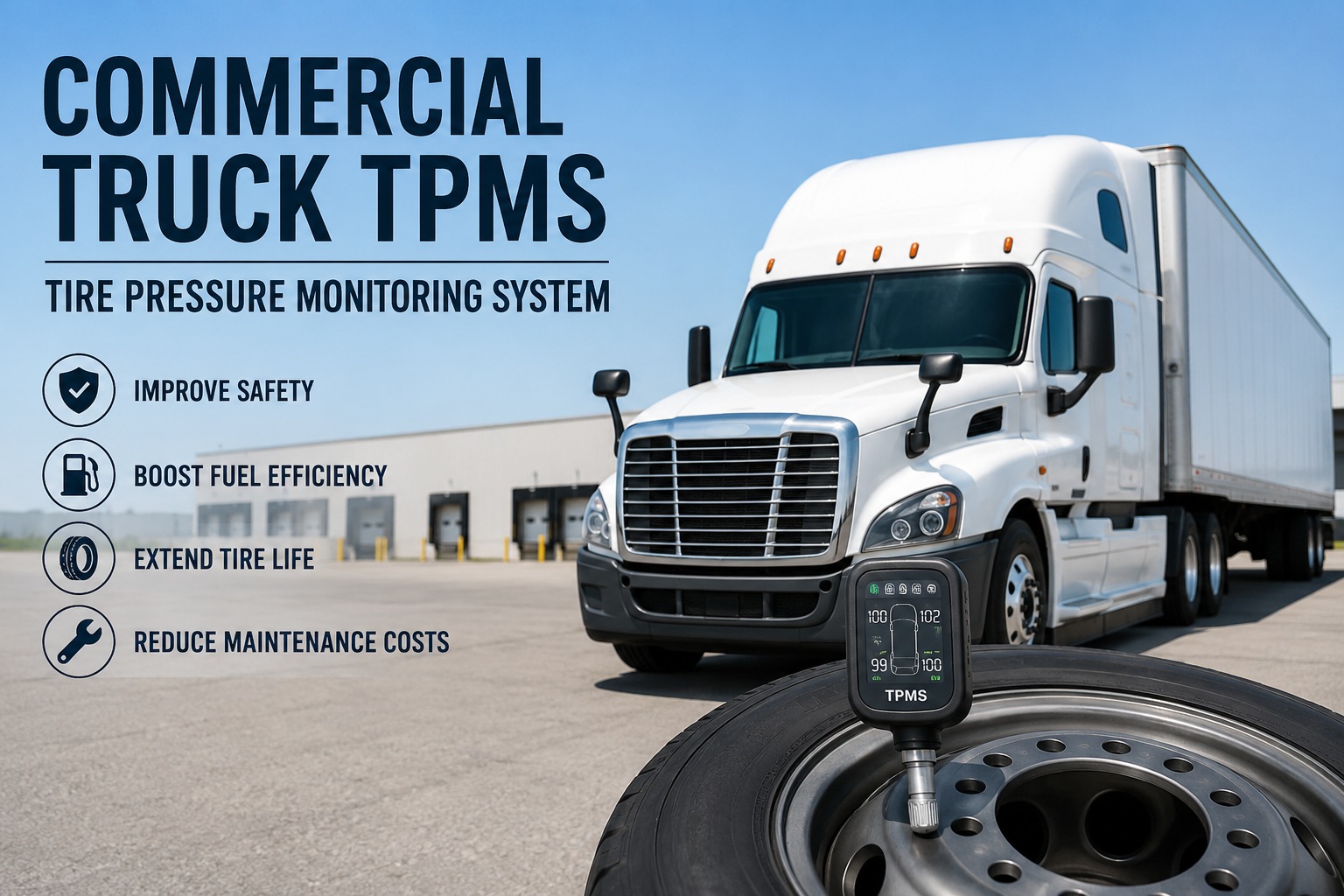
For the sensor-and-ROI side of TPMS specifically, our fleet TPMS guide and commercial truck TPMS guide go deeper on systems and payback.
Turn pressure alerts into a tracked history
See how HVI logs cold pressure by position, keeps TPMS and inspection readings on one record, and turns a repeat low-pressure tire into a flagged pattern.
Four rules that make a pressure program actually work
Technology only helps if the basics are set — and you can build these into your inspection free. Whatever rung you're on, these four keep the numbers honest:
Steer, drive and trailer carry different loads — each gets its own cold-pressure spec, not one fleet number.
Pressure climbs as tires heat up. Set and read against the cold spec, or you'll chase a number that isn't real.
A tire that keeps needing air is a slow leak or a bad valve — only position history makes that pattern visible.
Every TPMS alert needs an action and a sign-off, or alert fatigue sets in and real lows get ignored.
"We added TPMS and thought we were done — then we actually looked at the data. The same trailer positions were throwing low-pressure alerts over and over, and techs were just airing them up and moving on. Nobody connected the dots because the readings lived in the TPMS app, not the tire's record. Once pressure history sat with each tire, we found the slow leakers and the bad valves. ATIS on the trailers took the rest off our plate."
How HVI runs tire pressure monitoring
Whatever rung you're on, HVI is where the pressure story lives — inspections, TPMS alerts and position history on one record. Watch a slow leaker surface from the history:
Cold pressure by position
Record every tire's cold pressure against its position spec on the inspection — not one number for the whole truck.
Alerts with a history
TPMS and inspection lows land on the tire's record, so a repeat low-pressure position shows up as a pattern, not noise.
Pressure into cost
Pressure trends feed the fuel, tire-life and cost-per-mile picture so the savings are something you can see.
It sits with the rest of your tire program, so pressure shows up next to tire cost-per-mile and your wider fleet tire management on the same record.
Tire pressure monitoring FAQ
What is the difference between TPMS and ATIS?
TPMS (tire pressure monitoring system) watches pressure and temperature on each wheel and alerts you to a low tire — but a person still has to add air and fix the cause. ATIS (automatic tire inflation system) goes a step further and maintains pressure on its own, usually drawing from the trailer air supply, with some systems also bleeding off over-inflation. Most fleets use TPMS on the tractor and ATIS on the trailer, and still check cold pressure manually.
Why does under-inflation cost so much if the tire still rolls?
A low tire flexes more, builds heat and increases rolling resistance, so it burns extra fuel on every mile and wears faster. Running about 20% under-inflated can cut tire life roughly 30% and overheats the casing from the inside, which is what causes many roadside blowouts. Because the tire still rolls, the damage accumulates invisibly until it fails — which is why monitoring beats waiting for a flat.
Why check tire pressure cold?
Pressure rises as a tire heats up in service, so a hot reading looks higher than the tire's true state. Manufacturer specs are cold-inflation values, so set and check pressure before the truck has run or after it's sat. Temperature also matters seasonally — pressure drops roughly 1–2 psi for every 10°F the ambient temperature falls, which is why tires that were fine in summer run low in winter.
Do I still need manual checks if I have TPMS or ATIS?
Yes. TPMS and ATIS reduce how often a low tire goes unnoticed, but they don't replace a cold-pressure verification and a visual tire check. Sensors can fail, batteries die, and ATIS can mask a leak it's quietly feeding air to. A scheduled manual check confirms the systems are telling the truth and catches damage the sensors can't see.
How does HVI help with tire pressure monitoring?
HVI records cold pressure by position on every inspection, keeps TPMS and inspection lows on each tire's record, and surfaces a repeat low-pressure position as a pattern instead of a one-off. Because pressure history lives with your tires, maintenance and cost-per-mile, you can spot slow leakers and bad valves, prove the program is working, and see the fuel and tire savings — whether you're on manual checks, TPMS or ATIS.
Make tire pressure monitoring a program, not a guess
Put tire pressure monitoring on the record with HVI — cold pressure by position, TPMS alerts with a history, and the fuel-and-casing savings in view — so low tires stop costing you quietly.