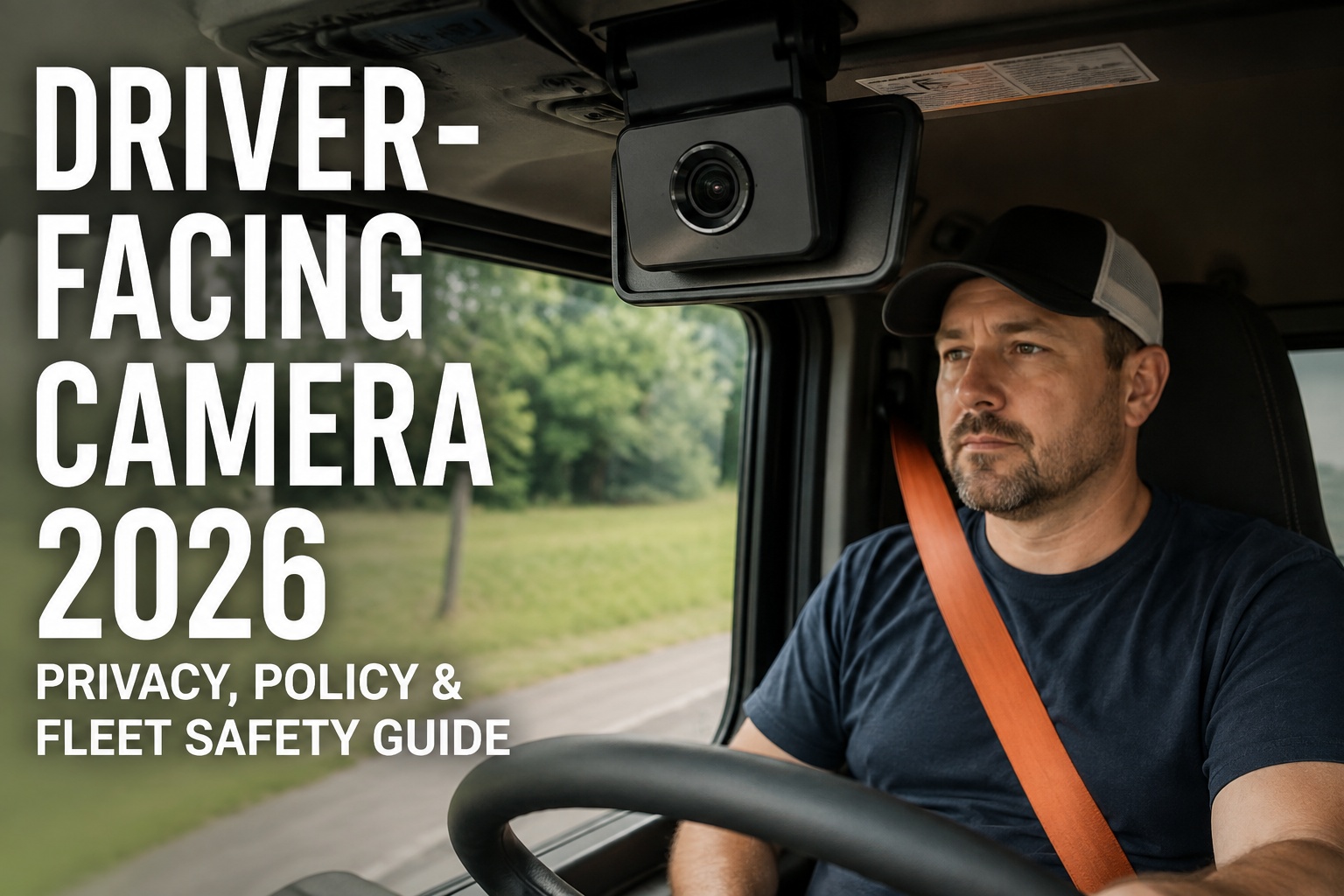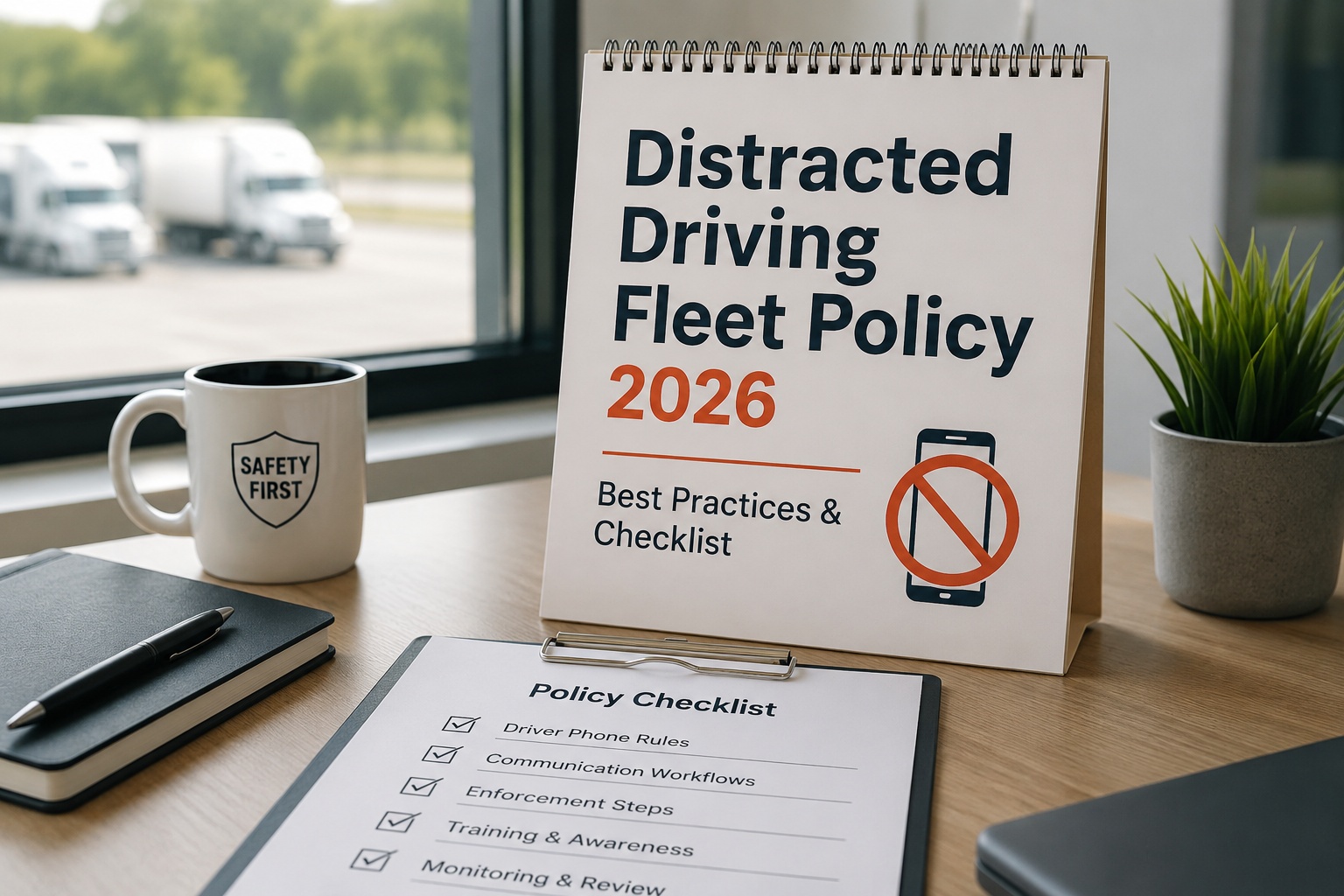
A written distracted driving fleet policy sits in most driver handbooks in the country. It says the right things — no handheld phones, no texting. Then dispatch calls the driver at 2:47pm asking for an ETA, the driver picks up because dispatch is who assigns loads, and the policy becomes theater. NHTSA data shows 3,208 died in distraction-affected crashes in 2024. FMCSA reports texting a commercial vehicle increases safety-critical event odds 23 times. This distracted driving fleet policy playbook walks the four real workflow gaps written policies miss. Book a demo
Three categories of distraction. Texting hits all three at once.
A policy that only addresses one of the three misses two-thirds of the problem. This is what the model should cover.
Texting is the uniquely dangerous distraction because it engages all three categories simultaneously. FMCSA research: texting while driving a commercial vehicle increases the odds of a safety-critical event 23 times. Dialing a phone increases odds 6 times. Hands-free reduces manual and visual load but does not eliminate cognitive distraction.
The distraction taxonomy matters because it exposes what most fleet policies get wrong. A policy that bans "handheld phone use" addresses only manual distraction. A policy that permits "hands-free calls for dispatch" ignores cognitive distraction. A policy that has no rule about GPS entry while moving ignores visual and manual both. The three-category model is the diagnostic tool for evaluating a policy — if any of the three categories has a loophole, the policy has a gap the road will find.
The 5-second cost — what 55 mph does to reaction time
The stat that shifts most fleet safety conversations is deceptively simple: sending or reading a text takes eyes off the road for an average of 5 seconds. At highway speed, that translates into a distance no driver would consciously accept if they saw it laid out on the road.
Add commercial vehicle braking distance to the blind distance and the picture worsens. A loaded Class 8 tractor-trailer at 65 mph needs approximately 525 feet to stop under best conditions — and every foot of that stopping distance assumes the driver initiated the brake response the moment they saw the hazard. A 5-second glance shifts the reaction start point by nearly 500 feet. For CMV drivers, that gap is often the difference between a controlled stop and a fatal crash. Book a demo to see driver behavior analytics that catch phone-use patterns before an incident
The 4 policy-vs-reality gaps — what written policies miss
Most fleet distracted driving policies address the driver's phone. What they miss is the fleet's own workflow — the dispatchers, work-messaging apps, GPS tools, and hands-free assumptions that create the operational pressure driving the exact behavior the policy prohibits. Four gaps show up repeatedly across fleet safety audits.
The gap: Policy prohibits handheld phone use, but dispatch initiates calls to drivers who are moving. Driver picks up because dispatch controls load assignment. Written policy loses to operational reality.
The gap: Driver's phone rings for personal calls (policy addressed), but pings for work-messaging apps (Slack, WhatsApp groups, dispatch platforms) throughout the day. The alert response is identical to a personal notification.
The gap: Driver enters a delivery address into GPS while rolling because "just a quick tap." Manual + visual distraction simultaneously. No policy covers it because most policies focus on phone calls.
The gap: Policy permits hands-free calls, treating them as safe. Cognitive distraction remains — NHTSA research shows even hands-free calls impair reaction time. Complex conversations (customer disputes, dispatch problems) are worst.
The four gaps share a pattern: the written policy addresses driver behavior, but the fleet's own workflow generates the pressure that drives the violation. Closing the gaps requires fixing dispatch protocols, work-app configuration, and destination-entry rules — not just retraining the driver. Fleets that only work the driver-behavior side of the equation see policy compliance climb during audits and drop back at the six-month mark. Start free and get dispatch-side workflow rules alongside driver-side policy enforcement
The 8-item written policy framework — what a functional policy actually says
A policy has to be specific enough that a driver in the cab, a dispatcher on the desk, and a safety manager reviewing an incident can each look at it and know exactly what applies. These 8 items constitute the minimum content of a policy that survives contact with real fleet operations.
Explicit prohibited behaviors
Handheld phone use, texting, emailing, and reaching for any mobile device while operating a CMV. Cite 49 CFR 392.80 and 49 CFR 392.82 by section number, not just "federal regulations."
When the policy applies
From engine start to engine stop. Includes traffic lights, stop signs, and momentary stops in traffic. "Moving" and "stopped in traffic" have the same policy status.
Approved communication methods
Hands-free for brief operational calls only. Complex conversations require pull-over. Voice-command destination changes acceptable; manual destination entry only when parked.
Dispatch-side rules
Dispatch does not initiate voice calls to drivers who may be driving. Text/message with "reply when stopped" convention. Emergency-tagged calls only for genuine emergencies.
Work-app configuration standard
All work messaging apps (dispatch platform, Slack, WhatsApp groups) configured for GPS-triggered silence above 5 mph. Notification silence during vehicle motion.
Enforcement mechanism
Named consequences per violation tier. First violation: coaching + retraining. Second: written warning + probation. Third: termination. Consistent across drivers.
Detection method
Named tools: dashcam, telematics, phone-use analytics, roadside inspection, customer complaint. Which tools apply to which violations. How evidence is preserved.
Driver acknowledgment & training
Signed acknowledgment at hire and annually. Distracted-driving training completed and documented. Refresher training after any related incident.
These 8 items give a fleet a policy that reads consistently to drivers, dispatchers, safety managers, and outside reviewers. Missing any one creates a gap that eventually shows up in incident data. The single most common gap in real fleet policies is item 4 — dispatch-side rules — because it requires the fleet to constrain its own operational workflow, not just the driver's phone. That constraint is exactly what makes the policy work. Book a demo to see the 8-item policy framework configured in HVI
The enforcement workflow — what happens when a violation is detected
Detection without enforcement is worse than no policy at all — it signals to the whole roster that the policy is theater. A functioning enforcement workflow has six steps, applied consistently regardless of driver seniority or delivery pressure.
Dashcam event, telematics phone-use alert, roadside inspection finding, customer complaint, or peer report.
Video clip, telematics log, or citation copy saved to driver's file with timestamp. Never delete or modify.
Same day or next business day. Present evidence. Allow driver response. Document the conversation.
First / second / third violation per driver's history. Trigger corresponding enforcement action per policy tier structure.
Coaching, retraining, written warning, probation, or termination per tier. Same action for same violation across drivers.
Full record in driver file: detection method, evidence, interview notes, corrective action, driver sign-off. Auditable trail.
What tempts fleets to bend the workflow is a top driver or veteran with a first violation. Making an exception "just this once" signals to every driver and dispatcher that the policy is negotiable — and the next violation, from any driver, will be measured against the exception. Consistent enforcement is what makes the policy real. Inconsistent enforcement is what makes it theater. Book a demo to see enforcement workflow with automatic evidence preservation and audit trail
From a Safety Manager who cut phone-related events 73% in eight months
Our written policy was strong. Every driver signed it at hire. Every year they signed a renewal. And our dashcam data showed 41 phone-related events per month across 52 tractors — drivers on calls, texting at lights, entering GPS while rolling. The policy was strong; the workflow was contradicting it every single day.
What changed the number wasn't a stricter policy. It was rewriting dispatch protocol so nobody on our team calls a driver between 6am and 8pm unless it's flagged emergency. It was reconfiguring our dispatch app to silence notifications when GPS shows movement. And it was enforcing the tier structure consistently — including on drivers we'd have historically let slide. Eight months later, we're at 11 events per month. That's a 73% reduction with the same policy language we had at the start. The policy wasn't the problem. The workflow around it was.
Frequently asked questions
What are the FMCSA rules on distracted driving for commercial drivers?
FMCSA prohibits commercial motor vehicle drivers from texting and from using handheld mobile phones while operating a CMV, under 49 CFR 392.80 (texting) and 49 CFR 392.82 (restricted mobile phone use). "Using" includes dialing, holding, reaching for, or pressing more than one button on the phone. Hands-free operation using a headset or an integrated system is permitted, but the phone cannot be held. Violations carry civil penalties of up to $2,750 for drivers and up to $11,000 for employers per violation. Beyond the direct fine, distracted driving violations impact the fleet's CSA (Compliance, Safety, Accountability) score, which affects DOT compliance ratings, insurance premiums, and shipper/broker selection. FMCSA research underlying the rules shows texting while operating a CMV increases the odds of a safety-critical event 23 times, and dialing a phone increases those odds 6 times. In 2024, FMCSA reported over 7,000 distracted driving violations issued to commercial drivers during roadside inspections. The rules apply to all interstate commercial motor vehicle operation and to any drivers holding a CDL. Fleet policies must explicitly cite these sections and align enforcement with federal requirements, plus any additional state law that applies to the routes and jurisdictions the fleet operates in — 48 states currently ban texting while driving, over 30 ban handheld calls, and 20 ban all electronic device holding regardless of function.
What should a distracted driving fleet policy include?
A functional distracted driving fleet policy includes 8 items minimum. (1) Explicit prohibited behaviors — handheld phone use, texting, emailing, and reaching for any mobile device while operating a CMV, citing 49 CFR 392.80 and 49 CFR 392.82 by section number. (2) When the policy applies — engine start to engine stop, including traffic lights, stop signs, and momentary stops in traffic. (3) Approved communication methods — hands-free for brief operational calls only, complex conversations require pull-over, voice-command destination changes acceptable but manual destination entry only when parked. (4) Dispatch-side rules — dispatch does not initiate voice calls to drivers who may be driving, text/message with "reply when stopped" convention, emergency-tagged calls only for genuine emergencies. (5) Work-app configuration standard — all work messaging apps (dispatch platform, Slack, WhatsApp groups) configured for GPS-triggered silence above 5 mph. (6) Enforcement mechanism — named consequences per violation tier: first violation coaching + retraining, second written warning + probation, third termination, applied consistently across all drivers. (7) Detection method — named tools including dashcam, telematics, phone-use analytics, roadside inspection, customer complaint, plus how evidence is preserved. (8) Driver acknowledgment and training — signed acknowledgment at hire and annually, distracted-driving training completed and documented, refresher training after any related incident. Missing any one of the 8 items creates a gap that eventually shows up in incident data. The single most common gap in real fleet policies is dispatch-side rules — because it requires the fleet to constrain its own operational workflow, not just the driver's phone. That constraint is exactly what makes the policy work.
Why do written policies fail to prevent distracted driving?
Written fleet policies fail because they address driver behavior but not the fleet's own workflow that generates the pressure driving the violation. Four gaps show up repeatedly across fleet safety audits. Gap 1: dispatch calls the driver. Policy prohibits handheld phone use, but dispatch initiates calls to drivers who are moving, and drivers pick up because dispatch controls load assignment. Written policy loses to operational reality. Gap 2: work-messaging apps in cab. Driver's phone rings for personal calls (policy addressed), but pings for work-messaging apps (Slack, WhatsApp groups, dispatch platforms) throughout the day, and the alert response is identical to a personal notification. Gap 3: GPS entry while moving. Driver enters a delivery address into GPS while rolling because "just a quick tap." Manual plus visual distraction simultaneously, and no policy covers it because most policies focus on phone calls. Gap 4: "hands-free" isn't distraction-free. Policy permits hands-free calls, treating them as safe, but cognitive distraction remains — NHTSA research shows even hands-free calls impair reaction time, and complex conversations like customer disputes or dispatch problems are worst. Closing the gaps requires fixing dispatch protocols, work-app configuration, and destination-entry rules, not just retraining the driver. Fleets that only work the driver-behavior side of the equation see policy compliance climb during audits and drop back at the six-month mark. The pattern breaks when the fleet constrains its own workflow, not just the driver's phone.
How dangerous is texting while driving a commercial vehicle?
FMCSA research shows texting while operating a commercial vehicle increases the odds of a safety-critical event 23 times compared to attentive driving. Dialing a phone increases those odds 6 times. The reason texting is uniquely dangerous is that it engages all three categories of distraction simultaneously: visual (eyes off the road while reading the message), manual (hands off the wheel while typing), and cognitive (mind off the driving task while composing the message). NHTSA data shows sending or reading a text takes eyes off the road for an average of 5 seconds. At highway speeds, that translates into significant blind distances: at 35 mph (urban delivery), 5 seconds = 256 feet blind; at 55 mph (NHTSA benchmark speed), 5 seconds = 403 feet, roughly the length of a full football field; at 65 mph (interstate cruising), 5 seconds = 477 feet; at 70 mph (max interstate speed), 5 seconds = 513 feet. Add commercial vehicle braking distance to the blind distance and the picture worsens — a loaded Class 8 tractor-trailer at 65 mph needs approximately 525 feet to stop under best conditions, assuming the driver initiated the brake response the moment they saw the hazard. A 5-second glance shifts the reaction start point by nearly 500 feet. For CMV drivers, that gap is often the difference between a controlled stop and a fatal crash. In 2024, NHTSA data attributed 3,208 traffic fatalities and 315,167 injuries to distracted driving. Insurance industry data shows a distracted-driving ticket raises full-coverage auto premiums 9% to 51%.
How does HVI support fleet distracted driving policy management?
HVI runs distracted driving policy management as a fleet-wide workflow rather than a document sitting in a handbook. Driver policy acknowledgment is tracked digitally — every driver signs at hire and annually with timestamp and version reference, so the fleet can prove exactly which version of the policy each driver acknowledged and when. Distracted-driving training completion is documented per driver with dates, refresher training triggered automatically after any related incident. Enforcement documentation captures the 6-step workflow — detection, evidence preservation, driver interview, violation classification, corrective action, and closure — with all evidence (dashcam clips, telematics logs, citation copies, customer complaints) tied to the driver's file with full audit trail. Behavior analytics surface risk patterns before they become incidents: drivers with elevated phone-use patterns, unusual event frequencies, or missed acknowledgment cycles get flagged for proactive coaching. When FMCSA compliance reviews or insurance renewals request policy records, export produces the complete file: policy version, driver acknowledgment, training completion, enforcement history. For Safety Managers like Reggie N., building the policy into a workflow (not just a document) is what enabled the 73% phone-event reduction over 8 months without changing policy language — because the constraint moved from the driver alone to the whole fleet workflow. Published customer data shows fleets on HVI report approximately 25% lower annual maintenance cost with typical payback around 3 months; for safety-heavy operations, the cost avoidance from prevented distraction-related events (FMCSA data shows non-injury CMV crashes average $49,000 and injury crashes average $331,000) typically pays back the software within the first prevented incident.
A policy on paper is a starting point. Fleet workflow is what turns it into behavior change.
HVI runs the 8-item policy framework as a live workflow — digital acknowledgment, training completion, enforcement documentation, and analytics that catch risk patterns before incidents. Live in under two weeks. Non-injury CMV crashes average $49,000 per FMCSA data. One prevented event covers years of software cost.
No credit card · Policy management templates ready on day one