A driver-facing camera program either produces safer drivers and lower liability — or it produces union grievances, wiretapping lawsuits, and 40% first-year turnover. The difference is not the hardware. It's whether the deployment stacks three layers: legal framework compliance (2-party consent, GDPR, biometric law), operational policy discipline (data minimization, retention, access controls), and driver trust building (transparency, coaching-not-punishment). Skip any layer and the program fails. This playbook walks the 3-layer stack — book a demo to manage driver safety records and camera incidents in HVI.
The 3-Layer Stack — Why Some Fleet Camera Programs Succeed and Others Collapse
Hardware is not the program. Compliance, policy, and driver trust are. Miss any one and the camera becomes a liability rather than an asset.
- Audio off in 2-party consent states (CA, IL, PA, MA, FL, MD, MI, MT, NV, NH, WA)
- FMCSA windshield placement (4" upper / 7" lower)
- GDPR Legitimate Interests Assessment (EU/UK operations)
- BIPA explicit written consent for facial/biometric AI (IL)
- Written camera policy signed by every driver at onboarding
- Event-triggered recording (not continuous surveillance)
- 30-90 day retention with automatic purge after
- Role-based access controls with full audit trail per footage request
- Deployment framed as coaching, not surveillance, from day one
- Driver council or union consultation before rollout
- Positive feedback for improvement, not only negative for events
- Driver can review own footage on request, no manager gatekeep
All three layers required. Fleets that focus on hardware and skip the stack routinely produce measurable damage — turnover, litigation exposure, and insurance coverage risk — without capturing the safety gains that motivated the program.
The rest of this page walks the state-by-state audio consent map, GDPR compliance for EU/UK operations, the fair camera policy template that produces driver acceptance, incident review protocols that preserve trust, and how to structure a rollout that produces measurable safety gains without the turnover and litigation risks. Book a 30-minute demo to see per-driver safety records, incident reviews, and corrective-action tracking in HVI.
Audio consent map — the state law layer that trips up most fleets
Video recording of the cab interior is generally legal in commercial vehicles with proper notice. Audio recording is a different legal question entirely, governed by state wiretapping statutes that predate the modern telematics era but apply directly to in-cab microphones. Two-party consent states require every recorded individual (driver, passenger, dispatcher on speakerphone) to consent to audio capture; violations carry criminal exposure plus per-incident civil penalties. Most fleets simply disable audio by default to sidestep the entire question.
| Consent type | States (representative) | Practical implication for fleets |
|---|---|---|
| Two-party (all-party) | CA, IL, PA, MA, FL, MD, MI, MT, NV, NH, WA | Audio recording without every party's explicit consent is a criminal violation. Signed audio-specific waiver required at onboarding, or disable audio. |
| One-party | Majority of remaining states | Recording legal if any single party consents. Driver's signed policy acknowledgment typically sufficient. |
| Mixed / unclear | Statutes ambiguous or narrowly defined | Treat as two-party until confirmed by counsel. Safer to default audio-off across fleet. |
| Cross-state operations | Any fleet running lanes across multiple states | Recording occurs wherever the truck is. Fleets crossing 2-party states must comply with the strictest applicable rule. |
| Biometric AI (facial, gaze) | IL (BIPA), TX, WA specifically regulate | Explicit written consent required. BIPA suits routinely settle in the $1M-$10M+ range. |
| EU / UK operations | GDPR / UK GDPR jurisdictions | Legitimate Interests Assessment required; data minimization mandatory; deletion timelines enforceable. |
Practical default across most fleets: audio disabled at the device level, confirmed in writing with the camera vendor, and documented in the driver policy. This decision alone eliminates the vast majority of legal exposure without significantly reducing safety data quality — the visual data (distraction, drowsiness, phone use, seatbelt) is what drives coaching outcomes; audio adds little safety value and enormous legal risk. Fleets that need audio for specific commercial reasons should obtain explicit signed audio-specific consent separate from the general camera policy. Book a demo to see driver policy acknowledgment and consent tracking per unit in HVI.
The fair camera policy — what makes drivers sign willingly
Written camera policy is not a legal formality. It is the primary tool for setting the coaching culture that determines whether drivers accept the program or fight it. Well-crafted policies produce 90%+ driver acceptance and sub-5% turnover attributable to the camera; poorly-crafted policies produce grievances, quit rates, and the recruiting cost death spiral. The elements that separate the two are specific.
Explicit purpose statement
Policy opens with "This camera exists to protect drivers with clear evidence when incidents occur, and to support coaching that reduces preventable crashes." Not "monitor driver behavior." Framing is 50% of driver acceptance.
Event-triggered recording
Recording activates only on defined triggers (hard braking, collision, lane departure, distraction detection) with 8-12 second pre/post buffer. No continuous surveillance except during active incident. Documented in policy.
Retention + purge schedule
30-day retention for non-incident footage, 90 days for coaching events, permanent only for confirmed collisions or claims. Automatic purge documented and auditable. Prevents overreach and reduces storage cost.
Driver access to own footage
Driver may request review of any own-footage clip within 30 days of event, no manager gatekeep. Preserves trust and demonstrates the program is not surveillance-in-disguise. Documented in policy.
Additional policy elements that matter: named tamper-consequence (typical: written warning first offense, suspension second, termination third); explicit statement that footage will not be used for HR discipline unrelated to safety; sleeper-berth privacy note (camera disabled or blurred when truck parked and engine off in many fleets); footage-request process for drivers involved in incidents. Union consultation matters where a CBA is in place — unilateral rollout without bargaining commonly triggers unfair labor practice charges. Book a demo to see policy acknowledgment tracking per driver in HVI.
Incident review protocol — the workflow that preserves driver trust
How the fleet handles the first camera-triggered incident sets the culture for every subsequent one. A punitive first-response protocol destroys the coaching framing and validates every driver fear. A structured, transparent, coaching-first protocol preserves trust and produces the safety gains the program was designed for. Four discipline steps make the difference.
Notify driver same day
- Automated notification of event within 24 hours
- Driver knows footage was captured; no surprises later
- Access to review own clip immediately available
- Timeline transparency is the trust foundation
Coaching conversation, not audit
- Safety manager reviews with driver, not against them
- Focus on what could improve, not what went wrong
- Documented coaching plan with driver input
- Termination-track only after progressive discipline
Recognize positive events
- Defensive-driving events triggered by camera flagged too
- Weekly recognition of drivers avoiding preventable events
- Bonus program tied to camera-verified safety metrics
- 50/50 positive-to-negative event ratio is the target
Track corrective actions
- Every event to coaching-plan record
- Repeat-event patterns surface for structured intervention
- Termination decisions traceable to full documentation
- Insurer and litigation records ready on demand
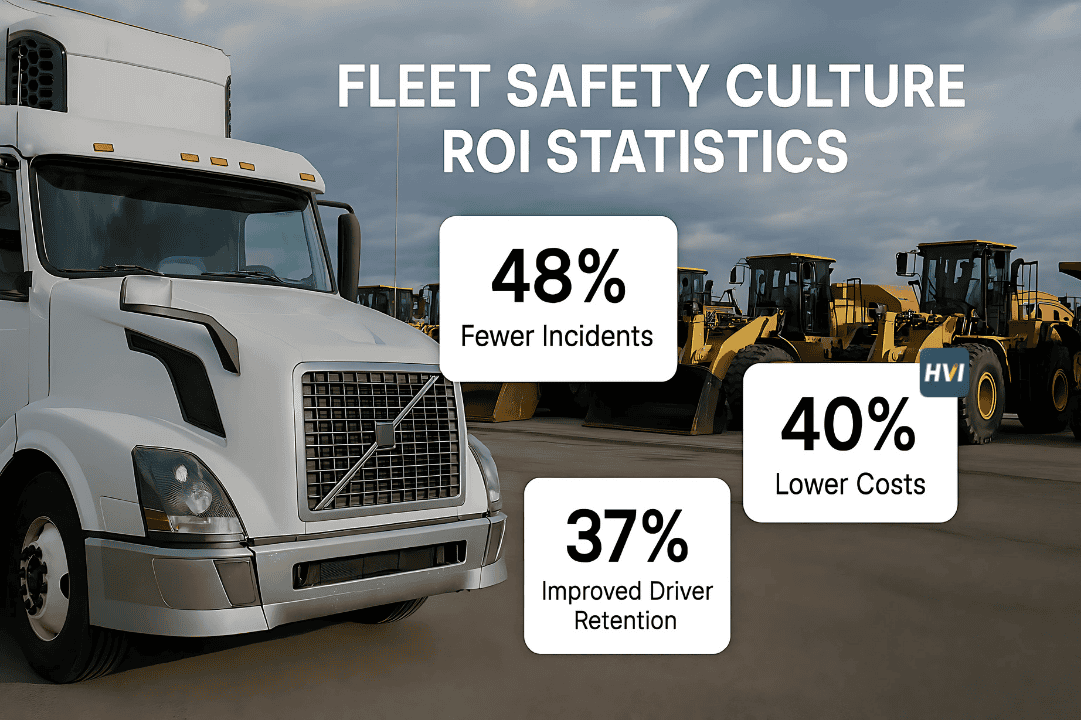
Fleets running the 4-step protocol routinely report 30-45% reduction in preventable incidents within 12 months, insurance premium reductions of 8-15% at renewal on documented safety programs, and driver retention rates equal to or better than pre-camera baseline. Fleets skipping the coaching-first framing typically report initial safety gains offset by increased turnover, unfair-labor-practice grievances (in union environments), and program-abandonment costs when the ROI reverses. The workflow, not the hardware, is what determines outcome. Start a free HVI trial to run structured incident review and corrective-action tracking per unit.
A safety director on rolling cameras across 240 tractors without a grievance
We're a 240-tractor LTL carrier, mixed union and non-union, operating primarily US Northeast and Great Lakes. Rolled out driver-facing cameras in Q3 2024 after a $3.2M nuclear-verdict crash exposure the prior year made camera evidence a board-level ask. The union side made the rollout more complex — we had to bargain the deployment before installing anything, and our first proposal was rejected outright because it looked like surveillance.
We rebuilt the policy from scratch with the driver council. Audio disabled by default across the fleet regardless of state (we operate in PA and MA which are two-party, so this was legally required anyway, but we standardized across the whole fleet for consistency). Event-triggered recording only, 8-second pre/post buffer, no continuous surveillance. 30-day retention on non-incident clips, purged automatically. Driver can request own-footage review within 30 days, no manager gatekeep, response within 48 hours guaranteed. Positive-event recognition explicitly funded — drivers with 4+ weeks of clean event-free driving get a $50 fuel card, publicly recognized in weekly all-hands.
Union ratified the second proposal in one meeting. Rollout took 90 days. 12-month results: preventable incidents down 38%, insurance premium down 11% at renewal, driver turnover 14% vs pre-camera 16% (actually improved). Zero unfair-labor-practice grievances, zero wiretapping complaints, zero BIPA issues (we don't run any biometric AI, only event-triggered visual). The camera did not change the driver relationship — the policy and the coaching workflow did. Cameras were the enabler; the trust framework was the program.
Frequently asked questions
Are driver-facing cameras legal in commercial vehicles?
Yes, driver-facing cameras are generally legal in commercial vehicles across the United States, Canada, EU/UK, and Australia, but each jurisdiction imposes different requirements around notice, consent, audio recording, biometric data, and retention. In the US, video recording of the cab interior is legal in all 50 states with proper driver notice and signed policy acknowledgment. FMCSA regulates hardware placement (windshield-mounted cameras must sit no more than 4 inches below the upper edge of the swept area or 7 inches above the lower edge). Federal Electronic Communications Privacy Act (ECPA) prohibits audio recording without consent, and state wiretapping statutes vary sharply: California, Illinois, Pennsylvania, Massachusetts, Florida, Maryland, Michigan, Montana, Nevada, New Hampshire, and Washington are two-party (all-party) consent states requiring every recorded individual to explicitly consent to audio capture. Illinois BIPA imposes strict written-consent requirements on facial recognition and biometric AI features (drowsiness detection, gaze tracking); BIPA violations routinely settle in the $1M-$10M+ range for class actions. EU and UK operations require GDPR compliance including Legitimate Interests Assessment, data minimization, and enforced deletion timelines. Canada and Australia impose similar privacy-first frameworks. Most fleets default to audio-off across the entire fleet to sidestep wiretapping exposure while capturing the visual data that drives safety outcomes.
Do drivers have to consent to driver-facing cameras?
Video-only driver-facing cameras generally require written notice and signed policy acknowledgment from every driver, not affirmative consent in the legal sense. The driver signs a document stating they understand cameras are installed, what triggers recording, how footage is retained, and who can access it. Continued employment after signing constitutes the practical consent framework in most jurisdictions. However, three scenarios elevate the requirement to explicit written consent. First, audio recording in two-party consent states (California, Illinois, Pennsylvania, Massachusetts, and others) requires signed audio-specific waiver separate from the general camera policy; without it, audio capture is a criminal wiretapping violation. Second, biometric AI features (facial recognition, drowsiness detection, gaze tracking) fall under state biometric information laws including Illinois BIPA; explicit written consent specifying what biometric data is collected and how is required. Third, EU/UK operations under GDPR require formal consent or a documented Legitimate Interests Assessment establishing lawful basis for processing. Union environments add another dimension: unilateral rollout of driver-facing cameras without bargaining under a collective bargaining agreement commonly triggers unfair labor practice charges. Fleets running union operations should consult labor counsel and bargain deployment as part of the standard CBA process, not roll out cameras and address grievances afterward.
Should driver-facing cameras record audio?
Almost never, based on legal risk versus safety value. Audio recording adds enormous legal exposure (two-party consent state violations, ECPA federal wiretapping claims, per-incident civil penalties of $5,000-$10,000 per intercepted communication, criminal exposure in some jurisdictions) while adding minimal safety value. The visual data captured by driver-facing cameras (distraction, drowsiness detection, phone use, seatbelt compliance, hands-off-wheel events, aggressive driving posture) is what drives coaching outcomes and insurance-defensible evidence. Audio adds a marginal ability to hear conversations, radio use, and passenger interactions, none of which meaningfully improve safety programs. The recommended default across the vast majority of commercial fleets is audio disabled at the device level, confirmed in writing with the camera vendor for each device model deployed, and documented explicitly in the driver policy. Fleets with specific commercial need for audio (dispatch verification, coaching-with-audio for specific driver behaviors) should obtain explicit signed audio-specific consent separate from the general camera policy, treat every operating state as two-party until confirmed otherwise by counsel, and provide clear opt-out or termination-of-audio process for drivers who withdraw consent. The default should always be audio-off unless a specific business case justifies the legal exposure.
How long should fleet camera footage be retained?
Best-practice retention follows a tiered schedule matched to footage type. Non-incident footage: 30 days automatic retention then automatic purge. This covers the window during which most incidents surface for review and provides audit trail for the program while minimizing data storage cost and litigation-discovery exposure. Coaching-event footage (hard braking, distraction detection, lane departure without collision): 90 days retention, then automatic purge unless flagged for extended review. This window supports weekly and monthly coaching cycles while eventually clearing routine events from storage. Confirmed collision or insurance claim footage: permanent retention as evidence supporting the claim and legal defense. GDPR jurisdictions (EU/UK operations) require documented retention policy with enforceable deletion timelines; keeping footage longer than the documented policy creates GDPR non-compliance exposure. Illinois BIPA has specific retention limits on biometric data (typically shorter than general video retention). The two failure modes are keeping too much and keeping too little. Keeping too much: opposing counsel in incident cases can discover months or years of footage showing behavior patterns the fleet didn't intend to disclose; program-credibility damage plus discovery cost. Keeping too little: incident footage needed for defense is purged before claim surfaces; insurer coverage denied or plaintiff prevails. Tiered retention with automatic purge is the disciplined middle path both litigation defense and GDPR compliance require.
Do driver-facing cameras actually reduce crashes?
Yes, when deployed with a structured coaching program, driver-facing cameras consistently reduce preventable incidents by 30-45% within 12 months and produce insurance premium reductions of 8-15% at renewal on documented safety programs. The mechanism is behavioral: cameras capture distraction, drowsiness, phone use, and hard-event driving patterns that drivers commit unconsciously; coaching conversations grounded in specific captured footage change behavior in ways that verbal safety training rarely does. Nuclear-verdict crash exposure (single-crash verdicts exceeding $10M or $100M) has made camera evidence board-level for large fleets, since camera footage frequently establishes driver innocence in ambiguous incidents and preserves the fleet's insurance coverage. Two failure modes prevent camera programs from delivering the safety gains. First, punitive deployment (cameras used primarily for termination rather than coaching) produces initial safety gains offset by driver turnover, unfair-labor-practice grievances, and the recruiting cost death spiral; year-two ROI often turns negative. Second, hardware-only deployment (cameras installed without policy discipline, incident review protocol, or driver-trust workflow) captures footage nobody reviews and produces neither behavior change nor documented safety records. The safety gains materialize when the 3-layer stack (legal framework compliance + operational policy discipline + driver trust building) is deployed together. Hardware alone is not the program.
The trust framework. The audit trail. The safety records that defend the program.
HVI captures signed driver policy acknowledgments, tracks per-driver safety events and coaching sessions, logs footage-request audit trails, records corrective actions per incident, and produces the structured safety-program records that support insurer negotiations and litigation defense. The camera is the sensor. HVI is the system of record. Live in under two weeks. No hardware. No credit card.
Trusted by safety-first fleet programs across USA, Canada, UK, EU & Australia · Ready on day one