Workplace motor vehicle accidents cost U.S. employers over $50 billion annually. Semi-trailers are involved in 53% of all fatal crashes involving large trucks. Nuclear verdicts — jury awards exceeding $10M — rose 27% in median value between 2010-2019. Litigated claims represent 50%+ of total payouts despite being less than 1% of claim volume. Claims involving attorney representation cost 14x more than non-represented claims. For heavy vehicle fleets, the driver training program is the primary defense against crashes, DOT violations, insurance premium escalation, and CSA score damage. In 2025, FMCSA removed over 3,000 CDL schools from the Training Provider Registry. Over 190,000 CDL drivers are under Clearinghouse "prohibited status" (3-4% of all CDL holders). Driver qualification, training documentation, and ongoing competency verification are under more regulatory scrutiny than at any point in the past decade. This guide covers the complete 5-stage driver training framework for U.S. heavy vehicle fleets. Book a demo to see how HVI connects driver training with inspection compliance for heavy fleets, or start your free trial of HVI's inspection, training tracking, and fleet compliance platform.
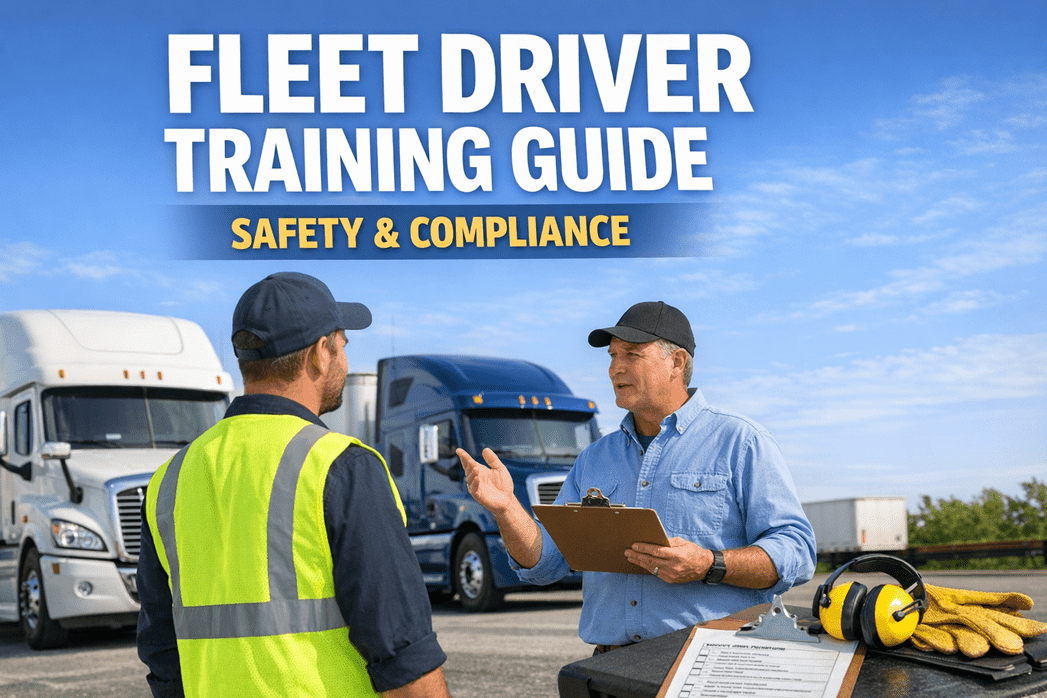
Fleet Driver Training Guide: Safety and Compliance for Heavy Vehicle Operations
Orientation, pre-trip inspection mastery, defensive driving, FMCSA compliance education, and ongoing coaching — the complete training program that protects drivers, your CSA score, and against nuclear verdicts.
Day 1
Week 1
Week 2
Week 3
Monthly
Stage 1: New Driver Orientation
Every element covered here creates documentation that becomes your defense in audits, litigation, and insurance reviews.
CDL with proper class/endorsements, medical certificate (electronically verified via NRII since June 2025), MVR (annual minimum), Clearinghouse pre-employment full query, road test certificate, and previous employer safety history (3 years). Missing DQ file items accounted for thousands of 2025 audit violations.
49 CFR 382.601 educational materials on testing requirements and consequences. 49 CFR 382.603 reasonable suspicion training for supervisors (60 min alcohol + 60 min drugs). Over 190,000 CDL drivers currently under Clearinghouse prohibited status. FMCSA tightening reporting to 24 hours in 2026.
Fleet-specific safety policies, reporting procedures, accident protocols, communication chains, and equipment assignment. Drivers sign acknowledgment of receipt. This signed document becomes critical evidence in litigation — proving the driver was informed of standards before operating equipment.
Vehicle-specific training: controls, ABS/EBS, AEB systems (mandate coming Class 7-8 by 2027), dash cams, ELD operation, telematics. For heavy equipment operators: machine-specific controls, ROPS/FOPS, attachment operation, load charts (cranes), site safety per OSHA 29 CFR 1926.
Stage 2: Pre-Trip Inspection Mastery — Highest ROI Training
FMCSA estimates proper DVIRs prevent ~14,000 accidents annually. Under 2026 CSA, the "Driver Observed" category directly scores violations drivers should catch during walk-arounds. Inspection training competency is now a direct CSA score factor.
Every CVSA Level I component: brakes (pushrod stroke measurement), tires (tread depth with gauge — minimum 4/32" steer, 2/32" drive), lights (every position), steering, suspension, coupling, exhaust, frame, cargo securement, emergency equipment. 43% of vehicles have critical issues missed on paper checklists. Digital checklists with photo requirements reduce this dramatically.
Correct angle, adequate lighting, reference points for scale, component context and specific defect detail. Photo evidence is the difference between "driver checked OK" (no proof) and "driver photographed brake chamber showing 2.25-inch stroke" (indisputable). During litigation, photos prove due diligence.
Distinguish advisory (monitor), operational (schedule repair), and safety-critical (out of service immediately). Most common gap: drivers who notice defects but classify them as "not that bad." A brake at 2.25-inch stroke is 0.25 inches from OOS limit — that is not fine, that is imminent failure.
Complete FMCSA 3-signature chain: driver reports → mechanic repairs and certifies → next driver confirms. eDVIR authorized March 23, 2026 (FMCSA-2025-0115). Train on HVI's digital workflow: complete inspection, document defects with photos, verify repairs before operating. See how inspection training prevents DOT violations.
Stage 3: Defensive Driving
Semi-trailers are in 53% of fatal large truck crashes. NSC research shows violation rates drop significantly after defensive driving training. Quarterly refreshers maintain skills that naturally decay.
Scan 12-15 seconds ahead. Following distance: 1 second per 10 feet of vehicle at under 40 mph + 1 additional second above 40. Identify escape routes. Heavy vehicles need 40% more stopping distance than passenger cars. Every driving decision must account for this reality.
Speed is a primary factor in large truck fatal crashes. Fatigue recognition: lane drift, heavy eyelids, difficulty remembering last few miles. The 14-hour window is physiological, not just regulatory. HOS violations were #1 driver OOS at 2025 CVSA Roadcheck (32.4%).
Disproportionate incidents occur during backing, turning, and parking. Train GOAL (Get Out And Look) before every backing maneuver. Mirror use, spotter communication, and route pre-planning to avoid complex maneuvers. Property damage claims accumulate and drive insurance premiums upward.
Region-specific: ice/snow (North), hydroplaning (Southeast), high wind (Plains), extreme heat on tires/brakes (Southwest). Emergency: tire blowout (accelerate slightly, steer straight, gradually decelerate), brake failure, jackknife prevention. Post-accident evidence preservation protocols for litigation defense.
Stage 4: Compliance Education
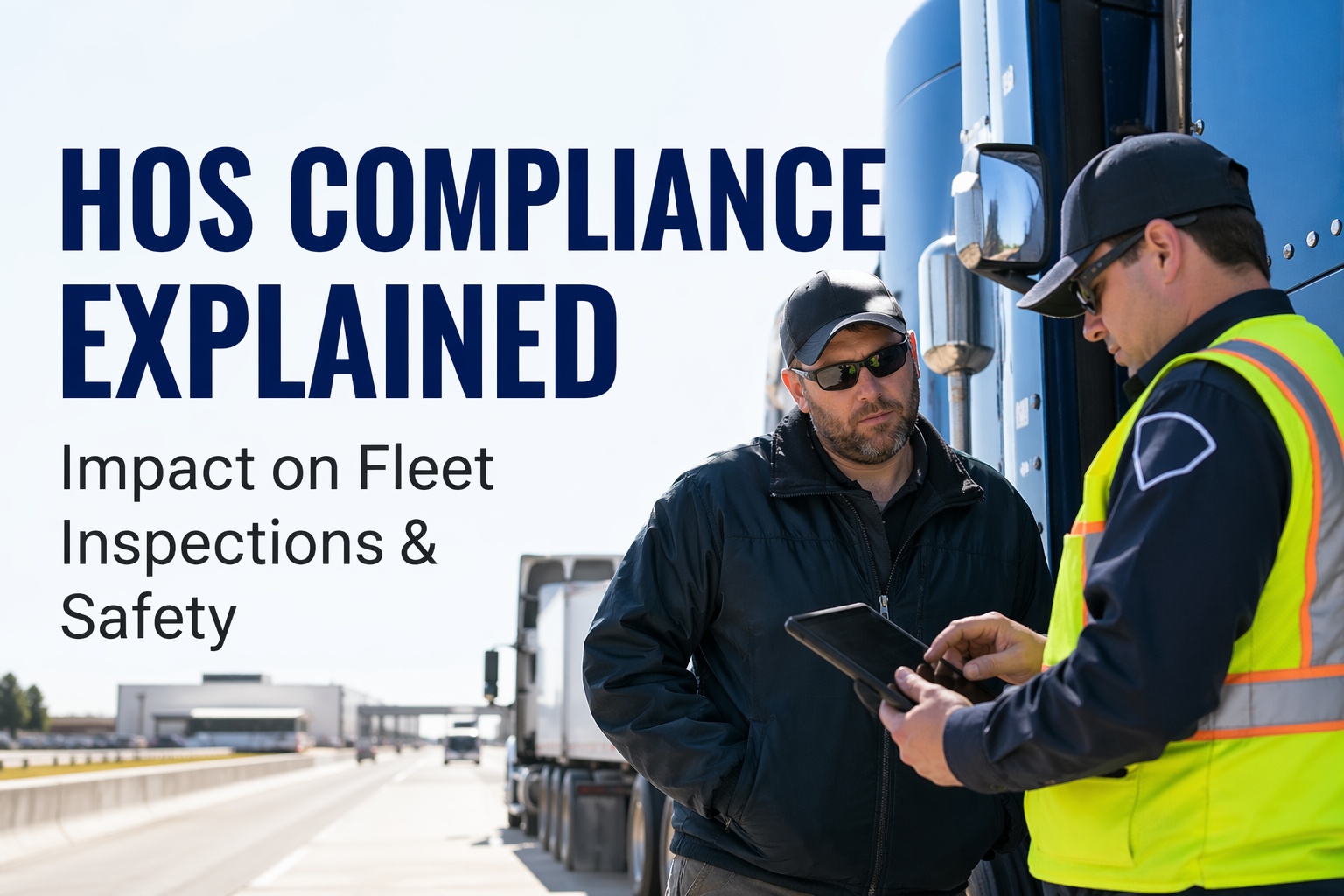
HOS was #1 driver OOS at 2025 Roadcheck (32.4%). 14-hour window, 11-hour driving, 30-min break, 60/70-hour limits. ELD operation and proper status changes. False log violations: 58,382 nationwide in 2025. 2026 Roadcheck focus: ELD tampering and falsification.
49 CFR 392.7, 396.11 (DVIRs), 396.13 (driver review before operating). The 11 FMCSA component categories. OOS conditions vs violations vs advisory. eDVIR authorized March 2026. Train on specific digital platform.
11.4% of vehicle OOS at 2025 Roadcheck. 2026 Roadcheck vehicle focus area. 49 CFR Part 393 Subpart I. One tiedown per 1,100 lbs under 5 ft, two for 5-10 ft. Blocking, bracing, chocking. Load shift re-inspection protocols.
Post-accident: secure scene, check injuries, do NOT admit fault, photograph everything (damage, road conditions, weather, signage, skid marks, load condition), obtain witnesses, notify fleet management immediately. In nuclear verdict litigation, the first 30 minutes determine evidence quality for defense.
Single positive test = prohibited status until return-to-duty process. Medical certification now fully electronic (NRII June 2025). Paper waiver expired Jan 10, 2026. No medical card = 14.9% of driver OOS at 2025 Roadcheck.
H endorsement requires training per 49 CFR 172.704 every 3 years: general awareness, function-specific, safety, security. Hazmat OOS at 2025 Roadcheck: 177 violations — loading (28.8%), shipping papers (20.3%), placarding (18.1%).
Stage 5: Ongoing Coaching
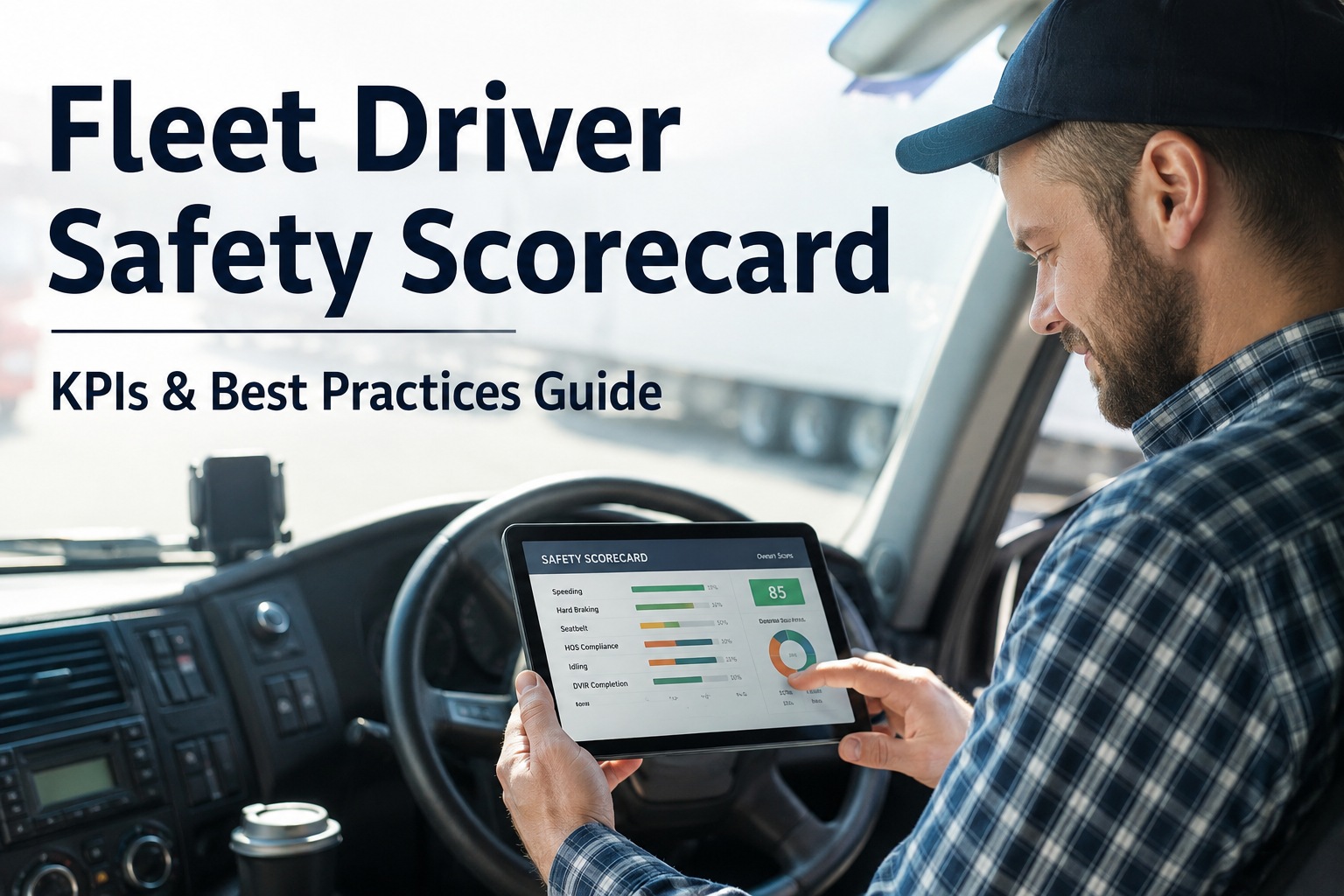
Use ELD, dash cam, and telematics data to identify hard braking, speeding, rapid acceleration, following distance, lane departure. Targeted coaching improves specific behaviors by 20% within 90 days. Frame corrections as skill development, not discipline.
4-hour sessions covering seasonal hazards, recent incidents, regulatory updates, and fleet-specific risk areas. NSC and NTSI offer flexible scheduling. Insurance carriers increasingly require documented ongoing training.
Per-driver analytics: completion rate, defect detection rate, photo quality, inspection duration. Low detection = training need. Consistently fast completion = possibly skipping steps. High detection = safety leader — recognize publicly. HVI provides per-driver inspection analytics.
CDL renewal, medical cert expiration, hazmat endorsement (5 years), TWIC, defensive driving certifications, company-required training. Automated alerts before expiration. One expired certification at roadside = immediate violation and potential OOS.
How HVI Connects Training with Inspection Compliance
Step-by-step checklists serve as continuous training reinforcement. New drivers learn proper technique from day one. Experienced drivers maintain consistency. The checklist IS the training — embedded in the daily workflow. See work order integration.
Inspection completion rates, defect detection rates, photo quality, duration per driver. Converts subjective coaching into objective, measurable performance management. Identify training needs and safety leaders with data.
CDL, medical cert, hazmat, defensive driving, all company training — tracked per driver with automated alerts before expiration. No driver operates with expired certification because the system flags it first.
180+ documented, photo-verified inspections over 6 months demonstrates habitual safety practice no training certificate can match. This is what plaintiff attorneys cannot attack — daily proof of competency.
Frequently Asked Questions
ELDT for new CDL applicants (since Feb 2022), drug/alcohol education per 49 CFR 382.601, reasonable suspicion training per 382.603 (60+60 min), inspector training per 396.19. Plus 49 CFR 390.3(e) requires drivers be knowledgeable of all applicable FMCSRs — making comprehensive training a de facto requirement. Book a demo to see how HVI tracks FMCSA training documentation for heavy fleet drivers.
Average fleet accident costs $25,000+. Nuclear verdicts exceed $10M (27% median increase 2010-2019). Litigated claims = 50%+ of payouts despite less than 1% of volume. A single prevented serious crash offsets entire annual training cost. Fleets using telematics coaching see 20% behavior improvement within 90 days. One fleet cut emergency costs by $127,000 in year one. Start your free trial to document training quality that reduces claims.
Best practice: quarterly defensive driving (4 hrs), monthly safety meetings, immediate coaching when telematics flags concerns. Hazmat: every 3 years. Insurance carriers increasingly require ongoing training documentation. NSC, NTSI, and Smith System all offer flexible fleet programs. Book a demo to see certification and training tracking for heavy fleets.
The new "Driver Observed" Vehicle Maintenance category scores violations drivers should catch during walk-arounds. Trained drivers catch defects internally instead of at roadside — every internal catch is a violation that never reaches your CSA record. HVI's guided workflows serve as continuous training reinforcement. See how HVI inspection training protects your CSA score.
DQ file per driver (CDL, medical cert, MVR, Clearinghouse, road test, employer history), drug/alcohol acknowledgments, supervisor reasonable suspicion training, ELDT certs, hazmat records, defensive driving completions, safety meeting documentation. HVI tracks certifications alongside inspections — unified driver compliance profile. Start your free trial of HVI's driver compliance platform.
Plaintiff attorneys attack: was the driver trained, and can you prove it? Certificates prove attendance. HVI's 180+ photo-verified daily inspections prove daily competency — evidence no certificate can match. This documented habitual due diligence is the deciding factor in mitigating liability in trucking litigation. Book a demo to see litigation defense documentation for heavy fleets.
Trained Drivers Who Document Competency Every Day Are Your Best Defense.
Every photo-verified inspection is evidence of training in action. Every completed DVIR proves due diligence. Every defect caught internally is a violation that never reaches your CSA record. HVI connects driver training with daily inspection practice.
No credit card • FMCSA eDVIR compliant • Certification tracking • Per-driver analytics • Audit-ready