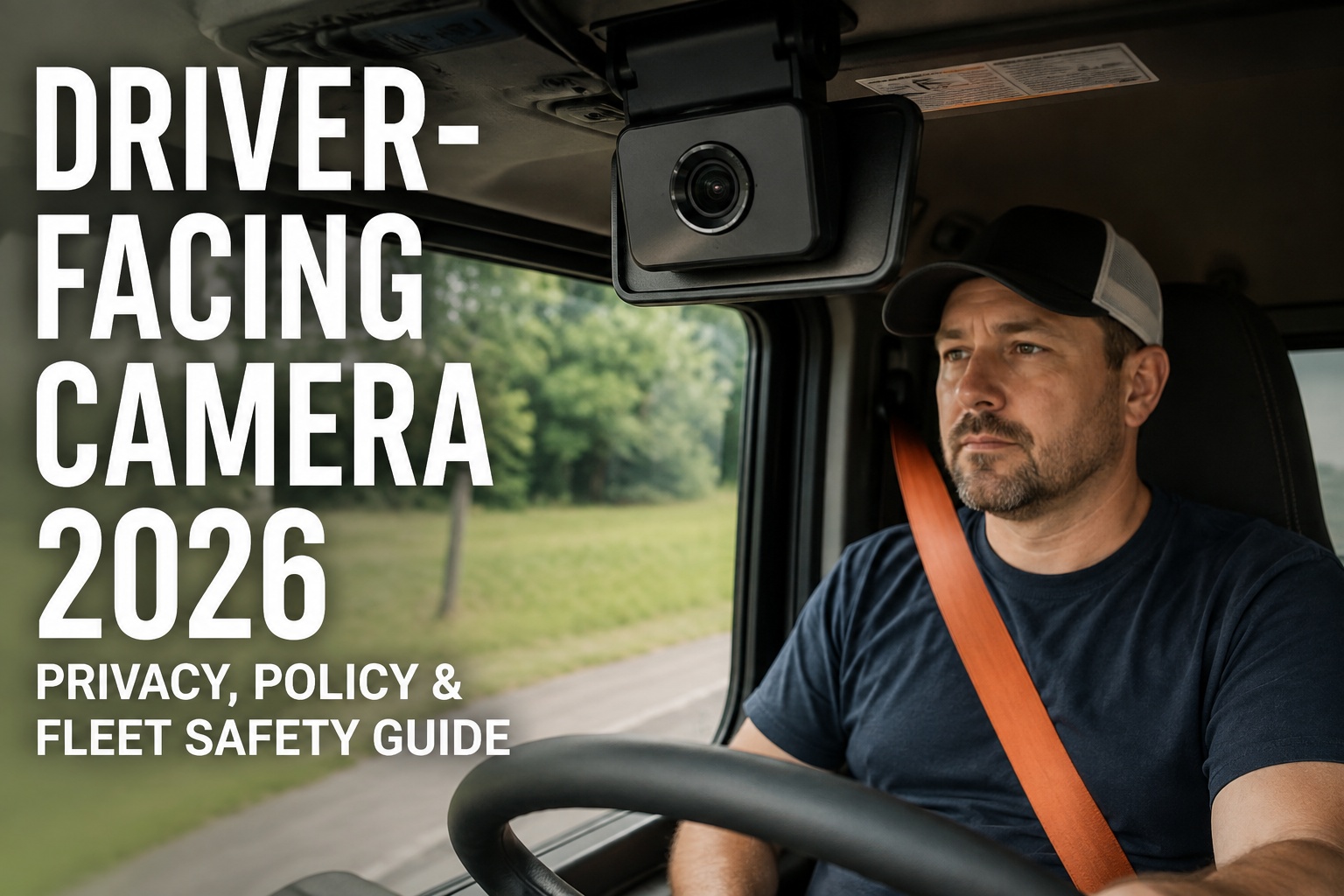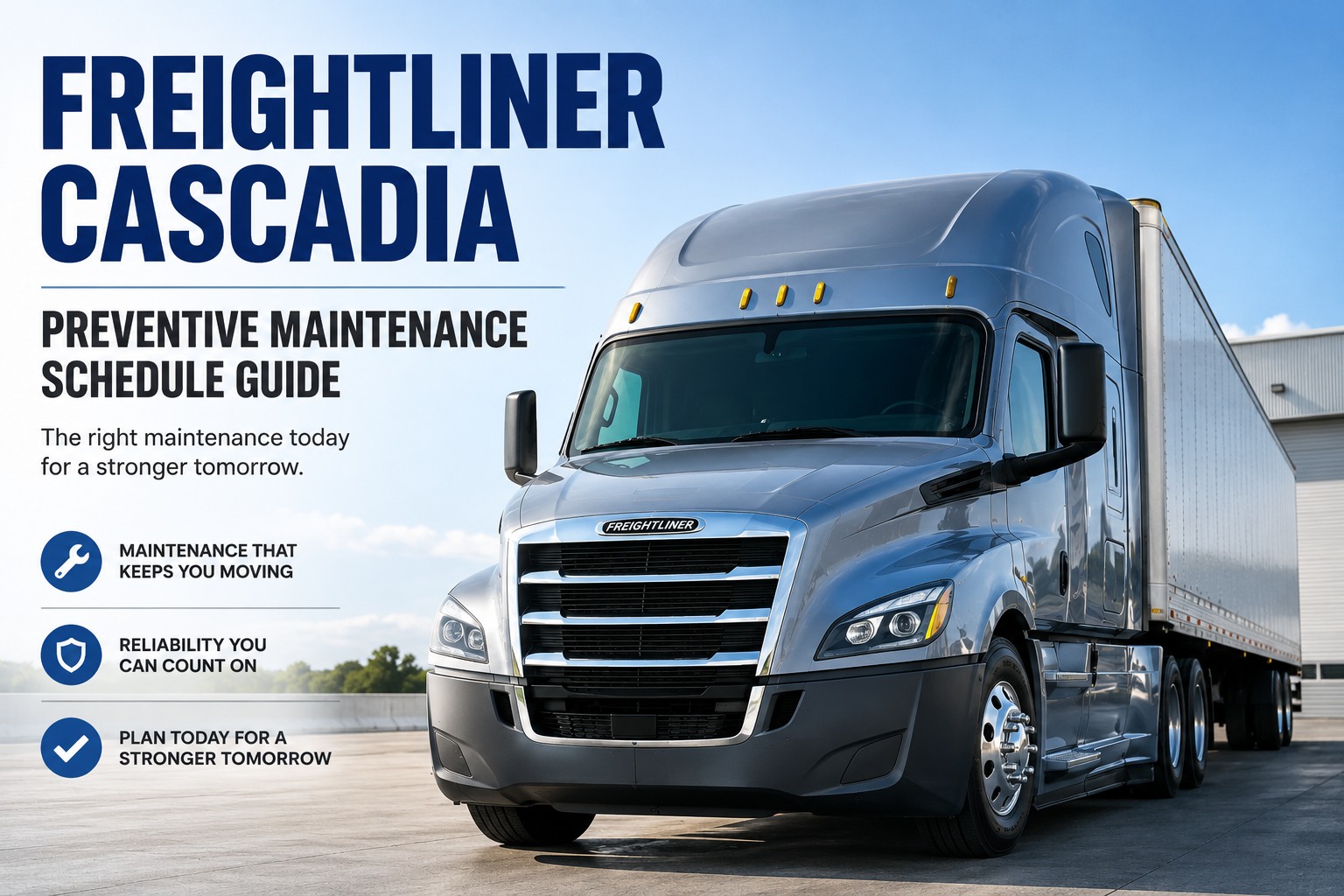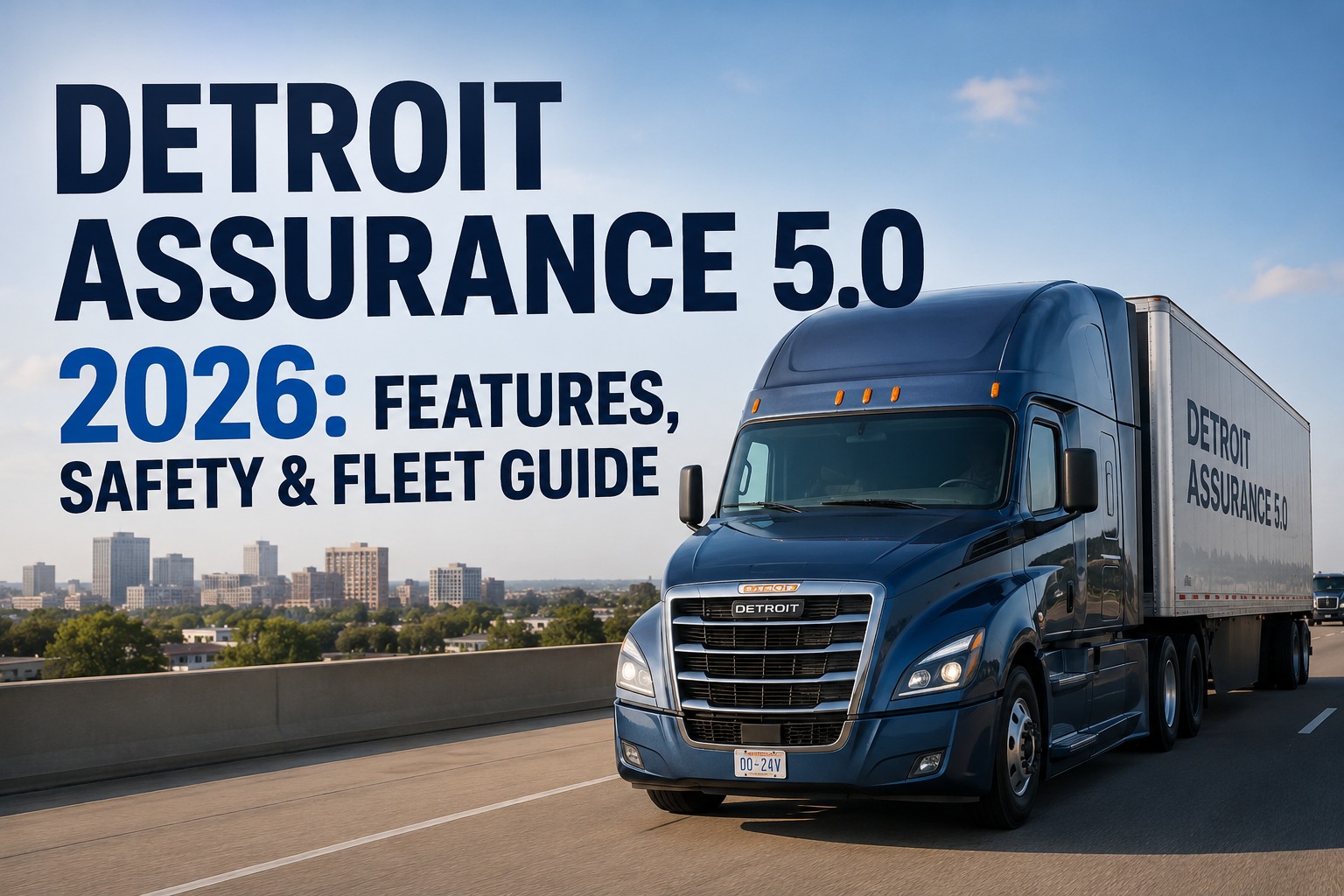
Detroit Assurance 5.0 (ABA5) is the ADAS suite on 4th Generation Freightliner Cascadias built 2019-2026: 1 forward radar + 1 windshield camera, full braking on pedestrians, ACC to 0 MPH. Detroit Assurance with ABA6 is the Fifth Generation Cascadia suite (Dec 2026 forward): 5 radars + camera + VRDU 3, 270° monitoring, Cross Traffic Assist, ASGA2. Fleets running mixed generations must identify which system is on which asset before writing inspection procedures — book a demo to manage ADAS inspections and safety records in HVI.
Detroit Assurance 5.0 vs ABA6 — The Generation Split That Determines Your Inspection & Calibration Workflow
Same brand family. Two dramatically different sensor stacks. Different coverage. Different features. Different service story. Identify your asset first.
- ABA5 — full braking on moving/stopped/stationary + pedestrians
- Adaptive Cruise Control (ACC) down to 0 MPH
- Active Lane Assist · steering to lane center
- Side Guard Assist (SGA) · passive alert
- Tailgate warning · brake hold mode
- ABA6 · stopped vehicles in curves + adjacent lanes + pedestrians
- Active Lane Assist 2 (ALA2) · controlled stop if driver unresponsive
- Cross Traffic Assist · intersection collision mitigation (2027)
- Active Side Guard Assist 2 (ASGA2) · left-turn protection (2027)
- Side Guard Alert 2 (SGA2) · both sides, front-of-cab to trailer end
The generation split matters for inspection, calibration, and coaching. Physical identification: count radar sensors on the chassis. 1 forward + 1 camera = ABA5 (Detroit Assurance 5.0). 5 radars + camera = ABA6. Mixed fleets need per-unit tracking.
The rest of this page walks the Detroit Assurance 5.0 feature stack in depth (ABA5, ACC, LDW, Active Lane Assist, SGA), the sensor inspection points that catch degradation before it disables the system, the calibration workflow when service work triggers recalibration, and how to identify per-unit which Detroit Assurance generation is installed for mixed-generation fleets during the 4th-to-5th-Gen Cascadia transition. Book a 30-minute demo to see per-unit ADAS inspection and calibration tracking in HVI.
Detroit Assurance 5.0 feature stack — what ABA5 actually delivers
Detroit Assurance 5.0 was the ADAS platform that made the 4th Generation Freightliner Cascadia the first Level 2 automated heavy-duty truck when it launched in model year 2020. It combines one forward radar and one windshield camera in a fused-data architecture, delivering active braking, adaptive cruise, lane keeping, and side alerts through a coordinated feature stack. Understanding the layered response is what separates a spec-and-forget install from a maintenance program that keeps the system delivering its designed collision reduction.
| Feature | What it does | Trigger / operation |
|---|---|---|
| Active Brake Assist 5 (ABA5) | Automatic braking on moving pedestrians (new to 5.0), moving vehicles, stopped vehicles, stationary obstructions | Warning first, then partial braking, then full braking if driver does not respond |
| Adaptive Cruise Control to 0 MPH | Maintains following distance in stop-and-go traffic, full-stop and seamless restart (new to 5.0) | Driver-engaged cruise, radar-tracked lead vehicle, no lower speed floor |
| Active Lane Assist | Steering intervention to keep truck centered in marked lane | Above 37 MPH with lane markings visible to windshield camera |
| Lane Departure Warning (LDW) | Audible warning on unintended lane crossing without turn signal | Camera-detected lane crossing above minimum speed threshold |
| Side Guard Assist (SGA) | Passive alert for objects, pedestrians, cyclists on passenger side | Side-mounted sensors during turns or lane changes |
| Tailgate Warning / Brake Hold Mode | Alert when following distance falls below threshold; brake hold on incline stops | Radar-tracked following gap; brake pedal at complete stop |
Two optional à la carte features round out the standard suite: Traffic Sign Display projects detected speed limit signs onto the dash cluster, and Highbeam Assist auto-toggles high beams based on oncoming vehicles detected by the windshield camera. Detroit Assurance 5.0 remained the standard suite on 4th Generation Cascadia production through late 2026 before the 5th Generation transition to ABA6. Fleets currently operating 4th Gen Cascadias will continue to run ABA5 through the useful life of those assets. Book a demo to see per-unit ADAS feature-set tracking in HVI.
Sensor inspection — the four points that catch silent degradation
Detroit Assurance 5.0's collision mitigation depends on both radar and camera delivering clean data. When either sensor degrades, the fused-decision layer loses the cross-check that reduces false alerts, and system behavior gets noticeably worse before any dash warning appears. Structured inspection catches the degradation early; ad-hoc "walkaround and go" misses it until drivers stop trusting the alerts and disable the system entirely.
Forward radar face
Mud, ice, insect residue, road spray, and aftermarket bumper accessories block the 77 GHz radar signal. Detection range drops sharply; the system may declare itself unavailable via dash icon or degrade silently. Daily walkaround should include radar-face wipe. Winter operators need heated cover or frequent manual clearing.
Windshield camera field
Camera mounted behind windshield behind rearview mirror. Cracks, chips, cleaner residue, or aftermarket dash items in the field of view all degrade lane tracking and traffic sign detection. Windshield replacement requires camera recalibration. Inspect camera view during pre-trip; wipe interior windshield in the camera zone.
Side Guard Assist sensors
Passenger-side sensors mounted behind cladding, exposed to road spray and debris. Damage from curb strikes or trailer swing can misalign the coverage arc. Side Guard alerts may appear normal but with reduced coverage. Physical inspection of sensor housings during PM catches damage before alert coverage gaps appear.
Post-service calibration missed
Bumper repair, front-end alignment, windshield replacement, or camera/radar removal all trigger required recalibration. Skipping calibration produces accumulating drift errors. Detroit dealer calibration typically runs $400-$900 per event; downtime cost $448-$760 per truck per day out of service.
The pattern most fleets miss: Detroit Assurance 5.0 degrades gracefully. The system rarely fails outright — it just gets worse, with more false warnings and later actual detections, until drivers stop trusting the alerts. Structured pre-trip inspection covering radar face, camera view, and side sensor housings plus post-service calibration discipline keeps the system delivering the collision reduction it was designed for. Ad-hoc inspection fails silently over 6-18 months. Book a demo to see structured ADAS pre-trip inspection templates per unit in HVI.
Identifying ABA5 vs ABA6 per unit — the fleet spec discipline for mixed-generation yards
Fleets running Freightliner Cascadias across model years 2020-2028 will end up with mixed Detroit Assurance generations on the yard. ABA5 units and ABA6 units require different inspection templates, different calibration workflows, different coaching data interpretation, and different insurer documentation. Getting per-unit identification right is not optional if the safety records are to hold up under insurer or litigation review. Four checkpoints identify the generation.
Cascadia generation
- 4th Gen Cascadia (MY2019-2026 build) = ABA5
- 5th Gen Cascadia (Dec 2026 build+) = ABA6 standard
- Check VIN model year + Freightliner build date
- DTNA spec sheet by VIN available from dealer
Physical sensor count
- 1 forward radar + 1 camera = ABA5
- 5 radars (4 short + 1 long) + 1 camera = ABA6
- Walk the chassis; count radar housings visible
- ABA6 side/corner radars visible behind cladding
Dash feature set
- ACC to 0 MPH indicator = ABA5 or newer
- Cross Traffic Assist icon = ABA6 (2027+)
- Active Side Guard Assist 2 = ABA6 (2027+)
- Instrument cluster shows active feature suite
Diagnostic tool readout
- Detroit Diesel Diagnostic Link (DDDL) identifies
- Jaltest ADAS + TEXA ADAS also read generation
- VRDU 3 module = ABA6; earlier VRDU = ABA5
- Software version confirms subfeature availability
Once identified per unit, the generation drives everything downstream: which pre-trip inspection template to use, which calibration workflow applies after service work, which coaching data to expect from the system, and which insurer documentation the safety program can produce. Fleets that skip per-unit identification and treat all Detroit Assurance the same routinely miss calibration requirements on 5th Gen units and over-service 4th Gen units, producing both safety gaps and unnecessary cost. Start a free HVI trial to build the per-unit ADAS generation registry and inspection template library.
A fleet spec engineer on running mixed Detroit Assurance across a Cascadia refresh cycle
We're a 145-tractor regional carrier running exclusively Freightliner Cascadias, Southeast US lanes, primarily dry van. Fleet is mid-refresh: 88 units are 4th Gen (MY2022-2025) with Detroit Assurance 5.0, 22 are early 5th Gen (Q4 2026 build) with ABA6, and the remaining 35 are on order for 2027 delivery all-in on ABA6 with Cross Traffic Assist and ASGA2.
The mixed-generation problem hit us in Q1 2027. Our maintenance team was running the same ADAS pre-trip on all trucks — radar face wipe, windshield check, dash icon verify. That worked for the ABA5 units. On the ABA6 units it missed the four corner radars entirely. We found one 5th Gen tractor with an impact-damaged rear-corner radar that the driver hadn't been alerted to (the SGA2 coverage gap didn't trigger a fault code, just reduced the coverage arc) for approximately 8 weeks. No incident, but the coverage gap was there the whole time.
Rebuilt inspection templates by generation. ABA5 units run the 4-point pre-trip we always used. ABA6 units run an 8-point template that includes all four corner radars, the long-range front radar, camera, and the additional Side Guard Alert 2 sensor housings. Post-service calibration workflow forked the same way — ABA6 calibration checklist has more sensors to align than ABA5. Since making the per-unit generation registry the source of truth for inspection templates, zero coverage-gap findings escaping walkaround, and the insurer conversation at renewal was noticeably different when we could produce per-unit ADAS inspection records rather than fleet-average summaries. The paperwork discipline matters as much as the technology.
Frequently asked questions
What is Detroit Assurance 5.0?
Detroit Assurance 5.0 is the advanced driver assistance system (ADAS) suite launched by Daimler Trucks North America in 2019 for the model year 2020 4th Generation Freightliner Cascadia, and it remained the standard suite through 4th Generation Cascadia production ending in late 2026. Detroit Assurance 5.0 made the 4th Gen Cascadia the first Level 2 automated heavy-duty truck on the road. Its sensor stack consists of one forward-facing 77 GHz radar and one windshield-mounted multi-purpose camera, with data fused for coordinated collision-mitigation decisions. Standard features include Active Brake Assist 5 (ABA5) with full braking on moving pedestrians (new to 5.0), moving vehicles, stopped vehicles, and stationary obstructions; Adaptive Cruise Control (ACC) down to 0 MPH with full-stop and seamless restart (new to 5.0); Active Lane Assist providing steering intervention to keep the truck centered in the marked lane above 37 MPH; Lane Departure Warning; Side Guard Assist (SGA) providing passive alerts for objects, pedestrians, and cyclists on the passenger side during turns and lane changes; and Tailgate Warning and Brake Hold Mode. Optional à la carte features include Traffic Sign Display (projecting detected speed limit signs onto the dash cluster) and Highbeam Assist (auto-toggling high beams based on oncoming vehicles). Fleets currently operating 4th Gen Cascadias will continue running Detroit Assurance 5.0 through the useful life of those assets.
How is Detroit Assurance 5.0 different from ABA6?
The differences are architectural, not incremental. Detroit Assurance 5.0 (ABA5) uses one forward radar and one windshield camera, focused primarily on the forward field of view. Detroit Assurance with ABA6, standard on the 5th Generation Freightliner Cascadia beginning December 2026 production, uses five radars (four short-range positioned around the sides and corners, one long-range front radar) plus one multi-purpose camera, all fused through the new Video Radar Decision Unit 3 (VRDU 3) processor. The result is 270-degree monitoring around the truck plus a standard 53-foot trailer, with objects tracked 14 times per second. Feature-set differences: ABA6 adds detection of stopped vehicles in visible curves, stopped vehicles in adjacent lanes, stationary offset vehicles commonly present after roadway incidents, and moving or stationary pedestrians and bicyclists in the truck's path. ABA6 introduces Active Lane Assist 2 (ALA2) which can bring the vehicle to a controlled stop if the driver becomes unresponsive, and Side Guard Alert 2 (SGA2) which monitors both driver-side and passenger-side blind spots from the front of the cab to the end of a standard trailer. Cascadias built beginning in 2027 add Cross Traffic Assist (radar-based intersection collision mitigation) and Active Side Guard Assist 2 (ASGA2) with left-turn protection. These 2027 additions specifically address the collision scenarios ABA5 could not.
How can I tell which Detroit Assurance generation is on my Cascadia?
Four identification checkpoints. First and simplest: check the Cascadia generation. 4th Generation Cascadia (model year 2019-2026 build dates) came with Detroit Assurance 5.0 (ABA5). 5th Generation Cascadia (December 2026 build and forward, with January 2027 full production) comes with ABA6 standard. Second: physical sensor count on the chassis. Walk around the truck. If you see one radar mounted behind the front bumper cover and one camera behind the windshield in the rearview mirror area, that's ABA5. If you see five radar housings (one long-range at the front bumper, plus four short-range positioned around the sides and corners of the truck) plus the windshield camera, that's ABA6. Third: dash feature set. The instrument cluster displays active feature icons. Look for Cross Traffic Assist and Active Side Guard Assist 2 indicators — both are ABA6-only features available on 2027-build Cascadias forward. Fourth: diagnostic tool readout. Detroit Diesel Diagnostic Link (DDDL) identifies the installed ADAS module and software version; Jaltest ADAS and TEXA ADAS with TRUCK IDC5 also read the generation. VRDU 3 processor module indicates ABA6; earlier VRDU versions indicate ABA5. The DTNA spec sheet for any given VIN, available through the Freightliner dealer network, provides the definitive per-unit configuration.
Does Detroit Assurance 5.0 require calibration?
Yes. Detroit Assurance 5.0 requires ADAS calibration after any of five scenarios: windshield replacement (mandatory camera recalibration), radar removal or replacement, front bumper repair that could affect radar mounting, front-end alignment work that could shift sensor positions, and post-collision service before returning the truck to lane. Calibration is typically performed by a Freightliner dealer using Detroit Diesel Diagnostic Link (DDDL) with truck-specific calibration targets, or by an independent ADAS-capable shop using Jaltest ADAS or TEXA ADAS with TRUCK IDC5. Single-system calibrations (camera or radar alone) commonly run $400-$700 per event; multi-system work (both camera and radar together, or additional sensor alignment) commonly runs $600-$1,200. Truck downtime cost while out of service for calibration averages $448-$760 per day. Fleets should build calibration into every relevant maintenance workflow: any windshield replacement triggers camera recalibration; any front bumper impact triggers radar alignment check; any post-collision service should include full ADAS calibration before the truck returns to service. Skipping calibration leaves accumulating drift errors that quietly degrade collision-mitigation performance over subsequent operating hours — more false alerts, later actual detections, and drivers eventually losing trust and disabling the system entirely.
Can Detroit Assurance 5.0 be retrofitted or upgraded to ABA6?
No, ABA6 cannot be retrofitted to a 4th Generation Cascadia. ABA6 requires the 5th Generation Cascadia's advanced electrical architecture, higher-bandwidth data network, and provisioned mounting points for the five-radar sensor array — capabilities engineered into the 5th Gen chassis and not present in the 4th Gen platform. Fleets running 4th Gen Cascadia units will continue to run Detroit Assurance 5.0 (ABA5) through the useful operational life of those trucks. This is not a limitation unique to Detroit Assurance; ADAS platform upgrades between vehicle generations across virtually every truck OEM require the underlying chassis platform to have been designed for the newer sensor and processing architecture. Software updates within a generation remain possible — Detroit Assurance 5.0 has received software refinements over its 2020-2026 production run, and the specific software version installed on any given unit affects feature availability. Fleets planning refresh cycles should factor the ABA5-to-ABA6 transition into replacement timing decisions: if the collision-mitigation feature gains of ABA6 (Cross Traffic Assist, Active Side Guard Assist 2, 270-degree coverage, controlled-stop capability) match a specific safety exposure the fleet is trying to close, that consideration may accelerate the 5th Gen replacement schedule. For fleets running lanes and duty cycles where the ABA5 feature set is adequate, riding the 4th Gen through full service life remains reasonable.
Right template. Right calibration. Right documentation. Per unit. Every time.
HVI captures per-unit ADAS generation (ABA5 vs ABA6), applies the correct inspection template based on installed sensors, tracks calibration events with full technician + tool + time records, logs software version history, and produces safety-record audit trails insurers and litigation counsel actually ask for. Works alongside Detroit Assurance, Meritor OnGuard, Bendix Wingman, and any other ADAS vendor. Live in under two weeks. No hardware. No credit card.
Trusted by Freightliner Cascadia fleet safety programs across USA & Canada · Ready on day one