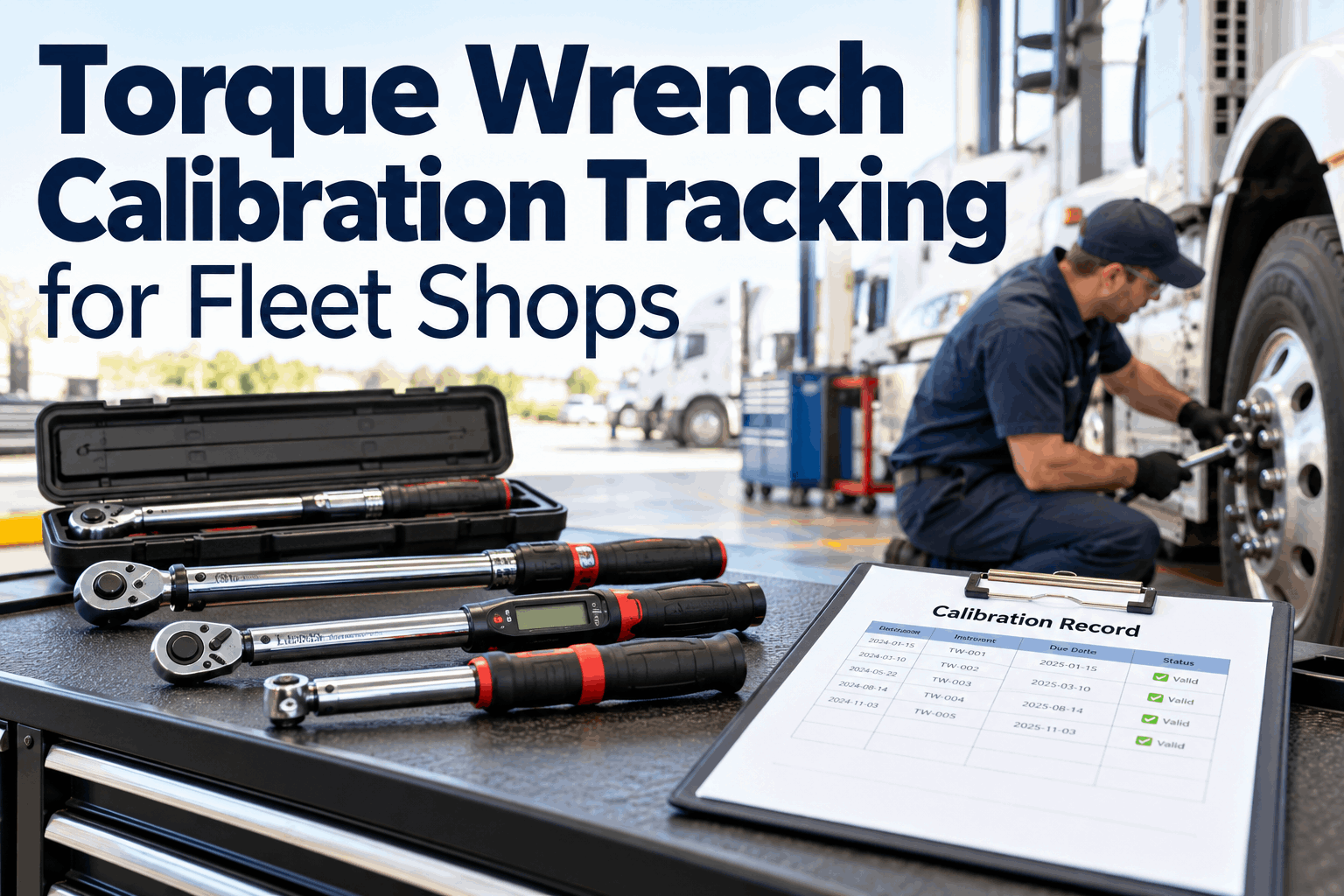
You torque a set of wheel nuts to spec, the wrench clicks, the job's signed off — but when was that wrench last calibrated, and can anyone show it? In a busy fleet shop the answer usually lives on a faded sticker. Torque wrench calibration tracking keeps every wrench's dates, due dates and certificates in one place, so the number on the fastener is one you can stand behind.
SHOP TOOL MANAGEMENT · TORQUE TOOL CALIBRATION
Know every wrench's due date before it clicks wrong
Torque wrench calibration tracking keeps each wrench's last-cal date, next-due date and certificate on one record — so techs grab a wrench knowing it's in spec, and nothing gets used past due.
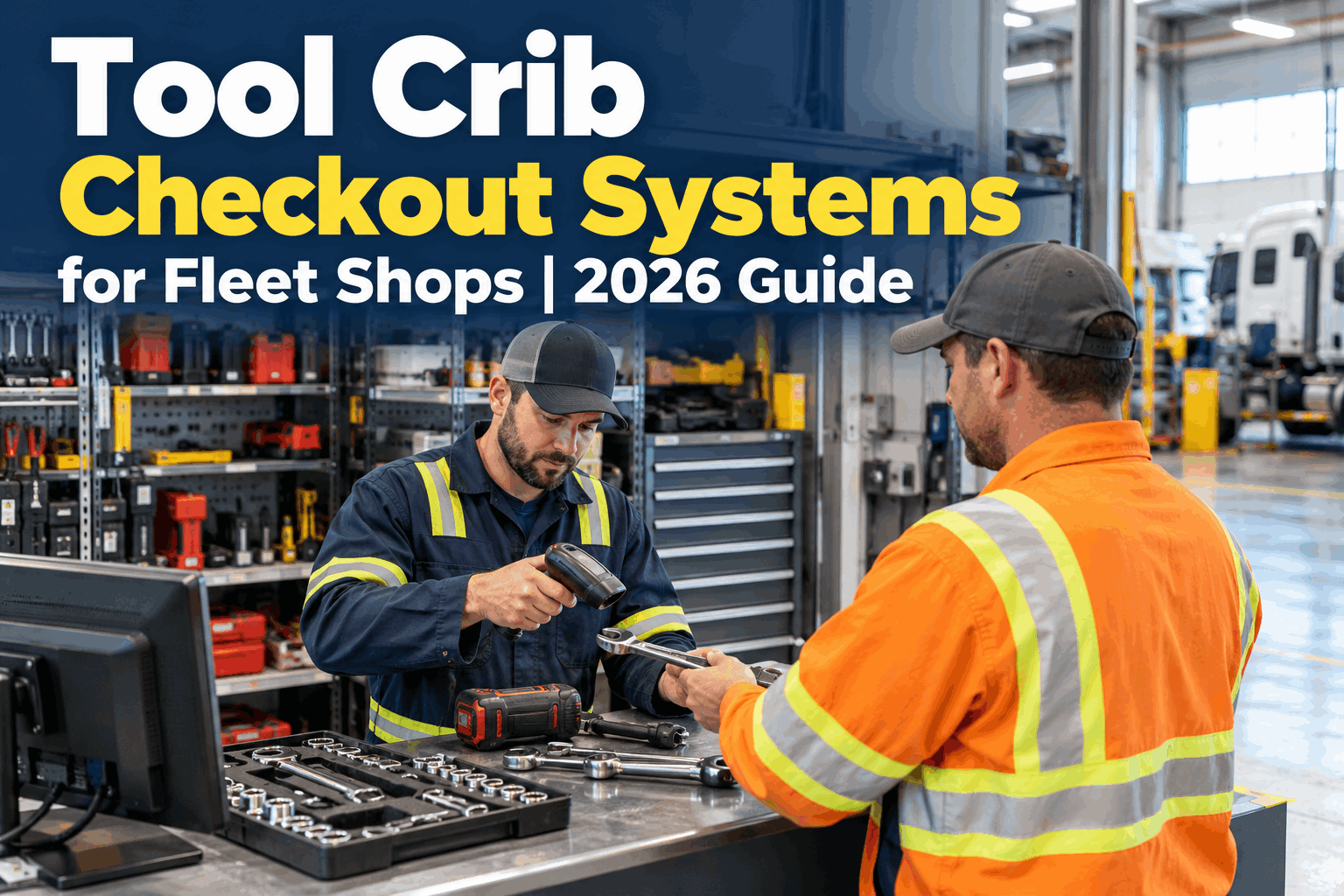
Scan the wrench — its whole calibration history is right there.
Why torque wrench calibration tracking matters on the floor
A torque wrench is one of the few tools in the shop whose whole job is to be accurate. When it drifts, it doesn't warn you — it still clicks, it still feels right, and the fastener it just set is quietly under- or over-torqued. On a wheel-end, a driveline, or a suspension component, that's not a paperwork problem; it's a comeback or a roadside failure waiting to happen.
Tracking is what makes the difference between hoping a wrench is in spec and knowing it. Instead of a sticker that fades and a spreadsheet nobody updates, every wrench carries its own live record — last cal, next due, certificate attached. You can start tracking your torque tools free and have the whole set on a schedule in an afternoon.
When a torque wrench needs to come out of service now
A calendar due date isn't the only trigger. A wrench can go out of spec long before its next scheduled check, and a tech who knows the signs keeps a bad reading off a critical fastener — and in a system you can flag a wrench out of cal in seconds. These are the moments a wrench should be pulled and flagged for recalibration — no matter what the sticker says:
Put every torque wrench on a tracked schedule
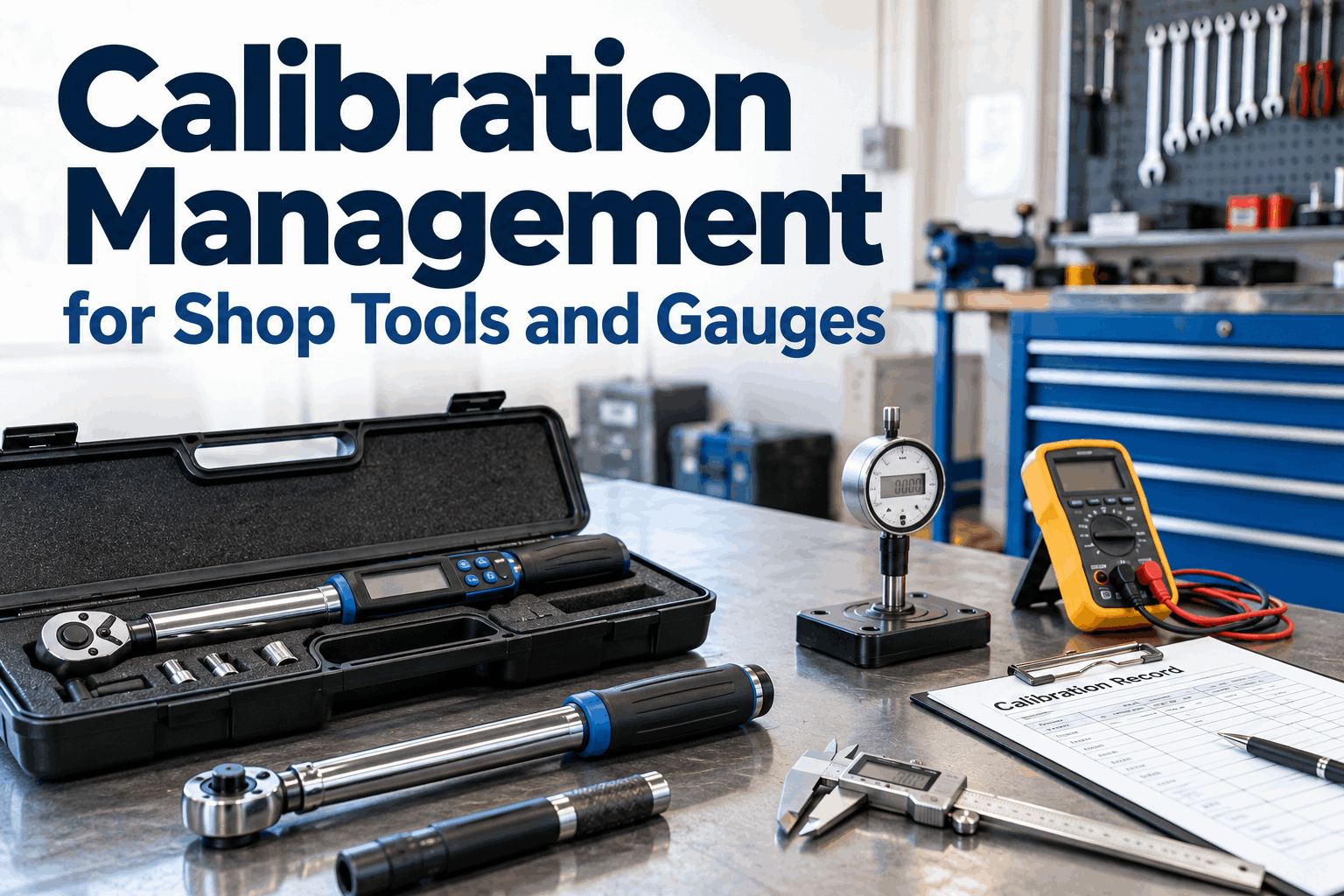
Give each wrench a due date and a certificate on file, so techs see at a glance which tools are in cal and which need to go out — no stickers, no guessing.
Shop bench check vs. accredited lab calibration
Not every check is a calibration, and tracking both for what they are keeps your records honest. A quick bench check tells a tech whether a wrench is roughly on between lab visits; an accredited calibration gives you the certificate that actually holds up. Here's the difference worth logging:
Shop bench check
- ~20 minutes, done in-house with a known weight
- Three test points across the wrench's range
- Great for a go/no-go call between lab visits
- Produces no certificate — not a formal record
Accredited lab calibration
- Checked against traceable reference standards
- Records as-found and as-left readings
- Issues a defensible, dated certificate
- ISO/IEC 17025 accreditation, traceable to NIST
The bench check is genuinely useful between visits, but it isn't a substitute for an accredited calibration — and a tracking system should hold both, so the certificate and the quick checks live on the same wrench record alongside your shop tool management. If you'd rather see it walked through live, you can book a quick demo.
What to keep in a torque wrench calibration record
The point of tracking isn't a longer spreadsheet — it's having the right few facts on each wrench so you can prove it was in cal when it was used. For a torque wrench, a useful record holds:
Wrench identity
A unique ID, type (click, beam, digital), drive size and torque range — so the record ties to one specific wrench.
Dates & interval
Last-cal date, next-due date, and the interval it runs on — by calendar, cycle count, or whichever comes first.
Certificate & readings
The calibration certificate plus as-found/as-left readings — the proof it was in spec, attached to the wrench.
Status & location
In cal, due soon, or out of cal — plus where the wrench lives and who's using it right now.
"I dropped a torque wrench off a workbench once and just kept using it — figured it was fine. Weeks later a bench check showed it was reading way low. No way to know how many wheel-ends I'd set with it. Now every wrench on my bench has a tag and a due date in the system, and the second one takes a hit it gets pulled and logged. It's less to remember, honestly — I'm not keeping dates in my head anymore."
Start tracking torque wrench calibration in three steps
Getting set up doesn't take a quality department — just a pass through the bench. Pull your torque wrenches, give each one a record, and let the due dates run themselves from there:
Register each wrench
Add every torque wrench with its ID, type, range and current cal date — one record per tool.
Set its interval
Choose calendar, cycle count, or both, and the next-due date tracks itself and flags before it lapses.
Log cal & attach cert
Each time it's calibrated, log the date and attach the certificate — the history stays on the wrench.
From there it's self-maintaining, and it sits naturally alongside how you track the rest of the crib — the same place you'd handle shop tool inventory and accountability and keep the whole bench documented. If you also run digital inspections, calibrated tools and fleet inspection records end up in the same system.
How HVI handles torque wrench calibration tracking
HVI keeps each torque wrench on its own schedule inside your tool register, so calibration isn't a separate binder — it's part of the same platform you use for maintenance scheduling and work orders. Set the interval, and the rest runs on its own.
A record per wrench
Scan or pull up any wrench to see its ID, range, last cal, next due and certificate in one place.
Flags before it lapses
Each wrench flags as due soon and drops to out-of-cal when overdue, so a past-due tool never stays in quiet use.
Certificates stay attached
Every certificate and reading history lives on the wrench record, so you can prove cal without a filing-cabinet hunt.
Torque wrench calibration tracking FAQ
What is torque wrench calibration tracking?
It's the practice of keeping each torque wrench's calibration dates, due dates and certificates on a record you can check at any time — rather than relying on a sticker or memory. In a fleet shop with many wrenches, tracking makes sure each one is used only while it's in spec and can be proven in calibration when it mattered.
How often should a torque wrench be calibrated?
A common baseline is every 5,000 cycles or 12 months, whichever comes first, and under ISO 6789 the interval is halved once a wrench fails a check. Safety-critical work is often calibrated more frequently. A wrench should also be recalibrated immediately if it's dropped, overloaded well past its rated range, or a bench check reads off — regardless of the calendar.
What should a torque wrench calibration record include?
A useful record holds the wrench's identity (ID, type, drive size, range), its last-cal and next-due dates and interval, the calibration certificate with as-found/as-left readings, and its current status and location. Keeping all of that on the wrench's own record is what makes its calibration easy to track and prove.
Is a shop bench check the same as calibration?
No. A bench check is a quick in-house verification across a few test points — useful for a go/no-go call between lab visits, but it produces no certificate. An accredited calibration checks the wrench against traceable standards, records as-found and as-left readings, and issues a defensible certificate. A good tracking system stores both on the same wrench record.
How does HVI track torque wrench calibration?
HVI gives each torque wrench a record with its interval, flags it as due soon before it lapses, drops it to out-of-cal when overdue, and stores the certificate and reading history on the tool. Because it's in the same platform as your inspections, work orders and preventive maintenance, torque wrench calibration is tracked alongside everything else instead of in a separate file.
Keep every wrench in spec — and provable
Start torque wrench calibration tracking that keeps dates, due dates and certificates on each tool, flags what's due, and pulls overdue wrenches before they ever set a fastener wrong.