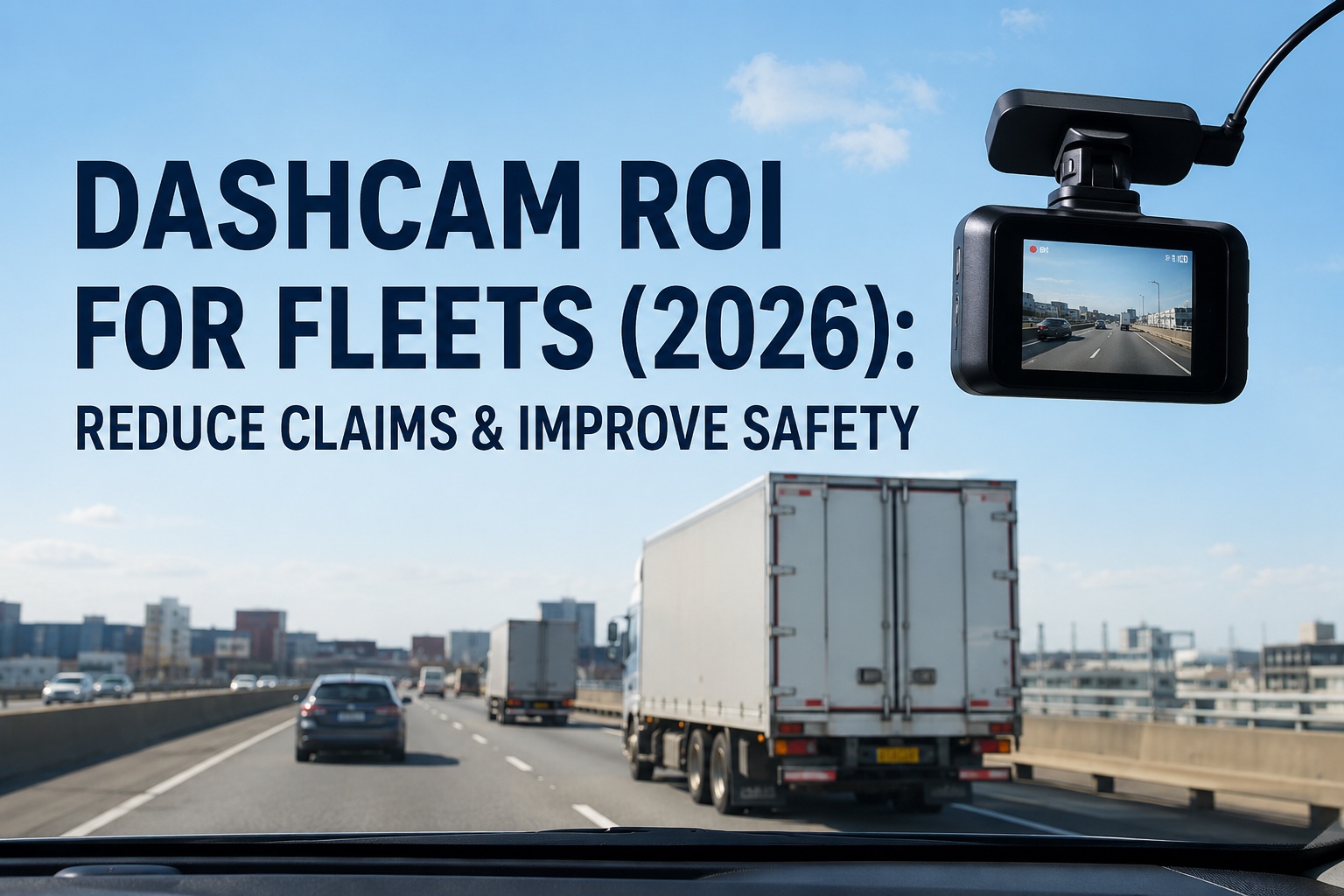
Every dashcam sales deck ends with the same slide: "positive ROI in year one." Every fleet buyer squints at it and asks the same question: which ROI, and how do I prove that to my CFO on next month's budget call? This dashcam ROI for fleets guide walks the four real revenue streams behind the payback number, the cost lines that get hidden until the second invoice, and the integration move that turns a stand-alone camera program into a fleet-wide risk platform — or book a 15-min HVI demo to see it live.
The 4-Source Payback Stack
The payback isn't one line item. It's four, stacked, compounding — and every fleet's number is different depending on which one they lean into hardest.
Dashcam ROI for fleets comes from four stacked sources: insurance premium reductions (10–25%), claim defense wins ($15K–$38K per exonerated claim), crash rate reductions (up to 60% with AI + coaching), and documented behavior improvements (40% hard-brake reduction in 6 months). Typical payback lands at 6–12 months. First-year ROI on a well-run program routinely reaches 3–5×. The variable isn't the technology — it's whether the footage actually gets reviewed and coached against.
The 4 Sources of Dashcam ROIWhat actually pays the invoice back. In order of predictability.
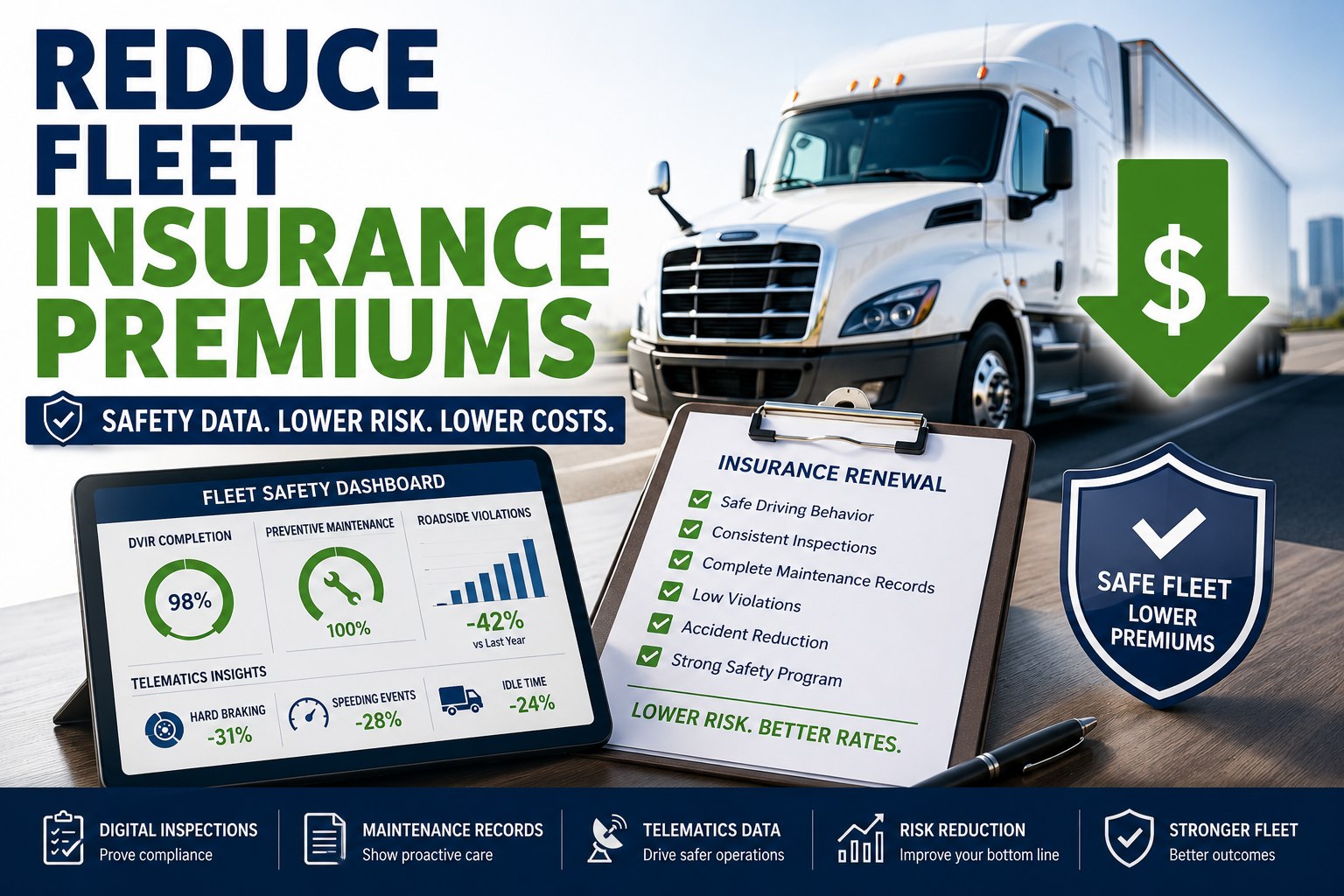
Munich Re documents 15% premium rebates for fleets running AI dashcams with active coaching programs. Sentry Insurance offers up to 5% for fleets sharing camera data via their Motive partnership. Dual-facing (forward + interior) AI systems typically qualify for 20–25% at renewal. The rebate hits every truck, every year, whether or not any single incident occurs. This is the ROI line CFOs believe first because it shows up on the renewal invoice.
Average at-fault claim: $15,000–$38,000. Exonerating a single driver on a disputed claim pays for the entire program. Forward-facing footage kills staged-collision fraud. Interior-facing footage proves no distraction at the moment of impact. In the nuclear verdict era — median trucking verdict at $51M in 2025 — the footage is the single strongest defense against reptile-theory arguments that turn a routine incident into a catastrophic judgment.
Fleets running AI dashcams paired with coaching workflows have shown crash rate reductions of up to 60–73%. This isn't the camera doing it — it's the coaching loop the camera enables. Drivers who know they're being reviewed adjust behavior within 30 days. Fewer crashes = fewer claims = better loss runs = better renewal = compounding ROI. This is where the "3–5× first-year" number comes from.
One documented fleet achieved a 40% reduction in hard braking events within six months through a weekly coaching cycle. Hard braking, tailgating, and distraction events all correlate directly with rear-end collision odds — the single most common claim category. The coaching-and-review cadence, not the camera itself, is what moves this number. Fleets that install cameras and never review footage see almost none of this ROI.
The Real Cost BreakdownThe invoice line every buyer misses at least once
Vendor quotes highlight the monthly-per-truck number. The rest of the cost sits under it. Here's what the actual annual commitment looks like on a 50-truck fleet running a full dual-facing AI program.
Watch for: data overage charges when alert frequency spikes, storage retention limits that force early footage deletion (kills claim-defense value), and multi-year contracts that lock in the wrong hardware before AI capability matures.
The Claim Defense MathA worked example on a 50-truck fleet
Every ROI conversation eventually lands on the same worked example. Here's what the numbers look like when a 50-truck fleet actually runs them.
The insurance discount alone recovers 80% of the investment. Two exonerated claims — a routine number for a 50-truck fleet — recovers all of it. Everything above that is compounding ROI. Book a demo to run this math on your fleet size and premium baseline.
Where Dashcam Programs UnderperformThe honest section every ROI pitch deck skips
Not every program hits 3× ROI. Roughly a third of fleet dashcam deployments end up "installed but ignored" — drawing the subscription cost with almost none of the return. The failure modes are consistent.
Footage captured, nobody watches. No coaching cadence. Insurance carriers see no behavior change and don't discount. This is the #1 reason ROI cases fail.
Interior cameras deployed without change management. Driver turnover spikes. Coaching workflow collapses. Program cost stays, program value evaporates.
Camera event happens on a truck with a known bad brake DVIR flag from three weeks earlier — but the safety manager never sees the connection because the two systems don't talk.
Litigation surfaces 6 months post-incident. Footage was on a 30-day retention plan. Case argues from missing evidence — and the plaintiff wins the framing.
Isolated Dashcam vs Integrated ProgramSame cameras. Very different ROI.
- Camera portal separate from CMMS
- Events reviewed in a silo
- Driver history & DVIR not linked
- Manual coaching workflow
- Underwriter package is a screenshot
- Typical ROI: 1.5–2.5×
- Camera events flow into HVI incident record
- Linked to truck's DVIR & maintenance history
- Linked to driver's DQ file & scoring
- Coaching workflow auto-routes to supervisor
- Underwriter package one-click export
- Typical ROI: 3–5×
Try HVI free and the dashcam integration is a checkbox during setup. Major AI dashcam vendors sync via API.
Quick Questions
What's the typical dashcam ROI for a fleet?
Typical first-year ROI on a well-run AI dashcam program lands at 3–5× investment, with a payback period of 6–12 months. The return stacks from four sources: insurance premium reductions of 10–25%, claim defense wins averaging $15,000–$38,000 per exonerated event, crash rate reductions of up to 60% when paired with coaching, and documented behavior improvements like 40% hard-brake reductions within 6 months. Fleets that install cameras but skip the coaching workflow typically see only 1–1.5× ROI — the difference is not the technology, it's the review cadence.
How much do fleet dashcams cost per truck?
Dual-facing AI camera hardware runs $400–$900 per truck as a one-time cost. Monthly subscription for the monitoring platform, LTE connectivity, and coaching tools runs $30–$60 per truck. Installation adds $100–$300 per truck depending on wiring complexity. On a 50-truck fleet, year-one all-in cost typically lands at $45,000–$75,000. Beyond year one, the subscription is the ongoing spend. Watch for data-overage charges when alert frequency spikes and cloud storage retention limits that force early footage deletion — both erode ROI silently.
Which insurers actually give dashcam discounts?
Munich Re documents 15% premium rebates for fleets running AI dashcams with active driver coaching programs. Sentry Insurance offers up to 5% via their Motive partnership for fleets sharing AI camera data. Progressive Commercial, Nationwide, and Great West Casualty all factor documented camera programs into renewal underwriting, though specific discount amounts are broker-negotiated and vary by loss history. The pattern across carriers: a basic dashcam earns minimal discount; a documented AI + coaching program with data shared at renewal earns the meaningful rebate.
Are AI dashcams worth the extra cost over basic ones?
For fleet applications, yes — and the delta has grown in 2026. Basic dashcams record video, which is useful when a claim happens. AI dashcams detect events in real time (distraction, following distance, hard braking) and generate the coaching triggers that drive the crash-rate reduction ROI source. Insurance carriers discount AI programs meaningfully more than basic camera programs precisely because the behavior-change data is what changes claim frequency. On any fleet above 10 units, the AI premium pays for itself inside 12 months through the additional insurance rebate alone.
Should driver-facing cameras be part of a fleet dashcam program?
Dual-facing (forward + driver-facing) is the 2026 standard for maximum insurance discount and full evidentiary context, but it carries higher driver resistance. Most fleets phase in: forward-facing only in year 1 to build acceptance and unlock the base 10–15% discount; add driver-facing in year 2 with a change-management plan and formal coaching policy to earn the 20–25% discount tier. Driver-facing-only deployments are rare in 2026 because the additional evidentiary value doesn't offset the additional resistance without the forward-facing view for context.
Connect the video to everything else the fleet already knows.
HVI integrates AI dashcam events with inspection records, driver files, and maintenance history — so every hard-brake event, every disputed claim, and every underwriter package pulls from one connected data set. Same cameras. Higher ROI. Faster payback.