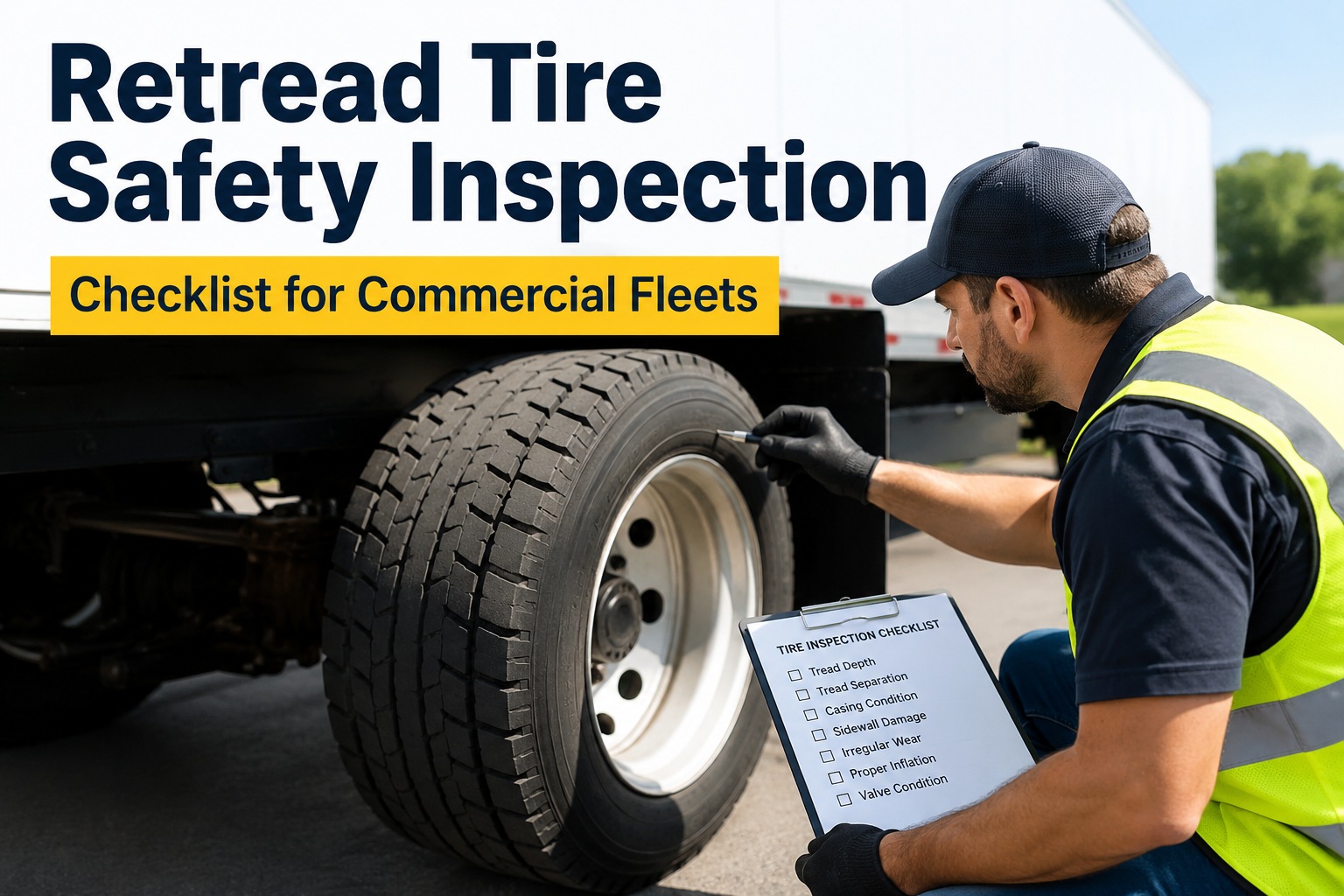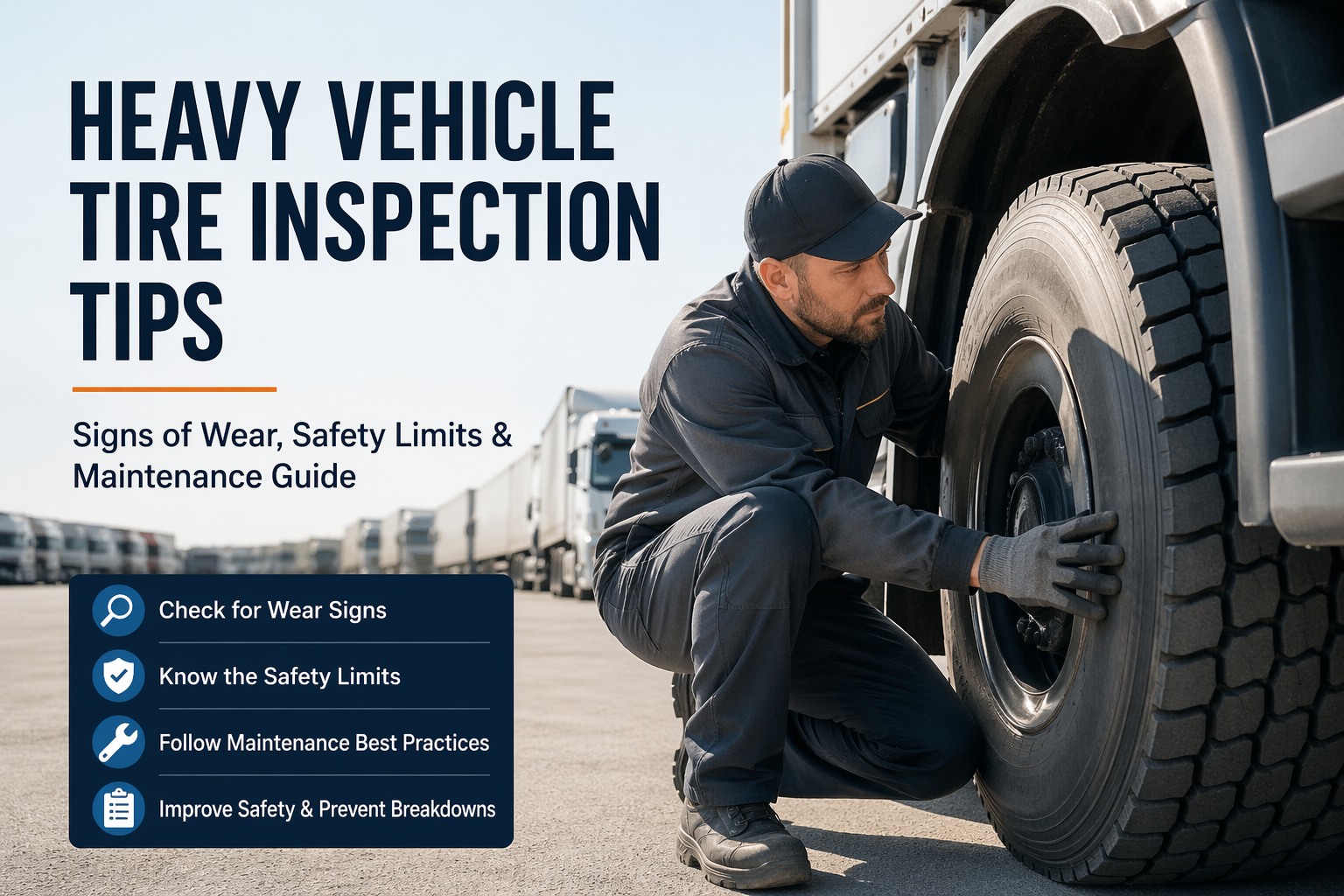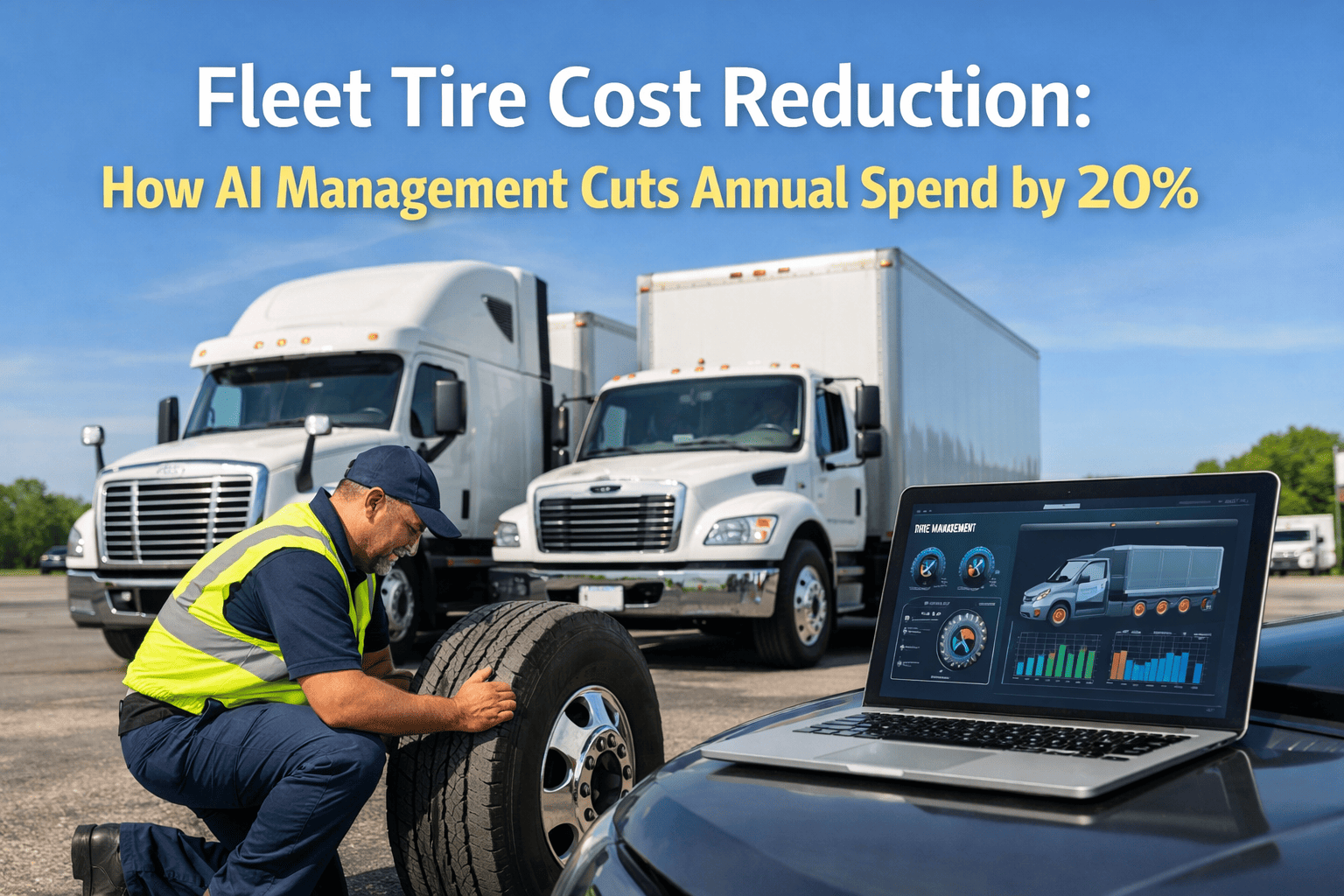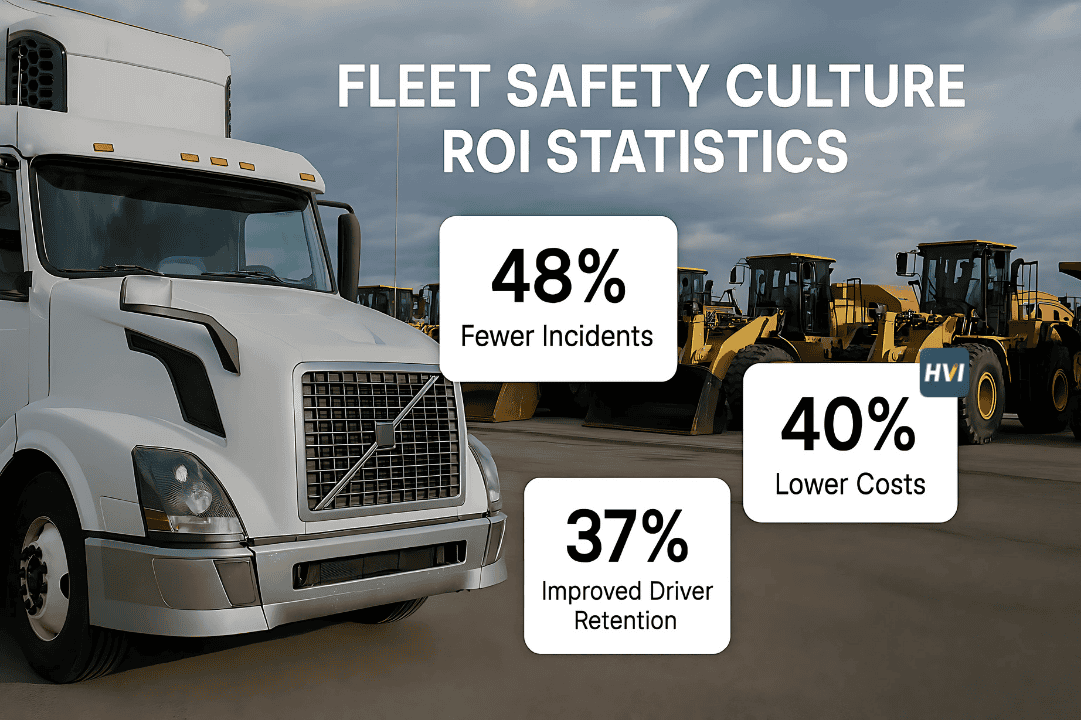
Tires are the third-largest expense line on a commercial fleet's P&L, behind labor and fuel — and improper tire management quietly costs the average fleet $2,500–$4,000 per vehicle per year in premature replacement, fuel-economy losses, and roadside breakdowns. Worse, tire defects account for 21.4% of all vehicle out-of-service orders nationally, and under the 2026 CSA scoring update, each tire OOS violation now carries a severity weight of 2 — twice the impact of most maintenance violations. But here's the operational reality every veteran fleet technician knows: tires don't fail randomly. They fail in patterns. Each pattern is a fingerprint pointing to a specific upstream maintenance problem — and the technician who reads the patterns correctly catches alignment issues, suspension wear, inflation discipline failures, and driver-behavior problems weeks before they become roadside breakdowns. This guide walks fleet managers and technicians through the 8 tire wear patterns defined in TMC RP 219, the root cause hierarchy (always fix the upstream cause BEFORE replacing the tire, or the pattern repeats), the hand-rub diagnostic technique that catches feathering 10 seconds before visual inspection, the 3-point tread depth measurement method, and the prevention levers that move the cost-per-mile needle. HVI is purpose-built inspection and maintenance software for commercial fleets — guided tire inspection workflows, tread depth tracking per VIN, defect-to-work-order routing, and audit-ready records covering both the 49 CFR 393.75 federal tire requirements and the upstream maintenance causes. Sign up for a free HVI trial and deploy guided tire inspections across every vehicle in your fleet, or schedule a 30-minute walkthrough with the HVI team to see how HVI inspection and maintenance software turns tire wear pattern recognition into a daily operational discipline.
Tires don't fail randomly. They fail in patterns — each one pointing to a specific upstream maintenance problem.
Per vehicle per year
Of vehicle OOS orders
Largest fleet expense
CSA severity weight
The 8 tire wear patterns and what each one really means
TMC Recommended Practice RP 219 (Wear Pattern Analysis Guide) defines 8 distinct wear signatures every fleet technician should recognize. Each one is diagnostic — pointing to a specific upstream cause that must be corrected before the tire is replaced, or the pattern will repeat on the next set. Reading the patterns correctly transforms tire spend from a recurring expense into a structural diagnostic system.
01 · Center wear
Cause: Overinflation
The center of the tread wears faster than the shoulders. Tire is rounded and contact patch reduced. Reduces traction and increases stopping distance.
02 · Both shoulders worn
Cause: Underinflation
Both outer edges wear before the center. The most common pattern and easiest fix — but most costly if missed. Drops fuel economy ~3% and accelerates casing damage.
03 · One-sided wear
Cause: Alignment (toe or camber)
Only one shoulder wears. Inner or outer side worn unevenly. Indicates toe-in/toe-out misalignment or camber angle out of spec. Requires alignment service.
04 · Cupping / scalloping
Cause: Worn shocks, suspension, or unbalanced
Wavy, dipped pattern around the tread surface. Tire bounces instead of rolling smoothly. Indicates failing shocks, struts, or wheel imbalance.
05 · Feathering
Cause: Toe misalignment
Tread blocks worn smooth on one side, sharp on the other. Often invisible to the eye — use the hand-rub test. Caught 10 seconds before any visual inspection.
06 · Flat spots
Cause: Hard braking or locked brakes
Localized worn area on the tread. Caused by emergency braking, locked-up brakes, or extended parking under heavy load. Permanent — requires replacement.
07 · Heel / toe wear
Cause: Drive axle issues
Tread blocks worn unevenly from front to back. Higher on one edge, lower on the other. Indicates drive axle wear, worn bushings, or rotation overdue.
08 · Alternate lug wear
Cause: Mismatched duals
Inner and outer tires of a dual assembly show different wear rates. Caused by mismatched diameters, pressures, or load distribution. One tire carries more weight.
Each pattern is a diagnostic signal. Pattern recognition is what separates fleets that spend $4,000/vehicle/year on tires from fleets that spend $2,500 — and the difference is documented, repeatable inspection discipline. Sign up for a free HVI trial and deploy guided tire inspections with photo-verified wear pattern flags across your entire fleet in under an hour.
The root cause hierarchy — always fix upstream BEFORE replacing
The most expensive mistake a fleet can make with tires is replacing them without fixing the upstream cause. The new tire will wear in the same pattern, on the same timeline, with the same cost. Industry best practice follows a 7-tier hierarchy — fix the upstream cause first, then replace the tire.
Inflation discipline
Most common cause, cheapest fix. Daily PSI check, target OEM-spec pressure, eliminate over/underinflation patterns. Tire pressure monitoring at every shift.
Alignment (toe, camber)
Second-most-common. Toe-in/toe-out misalignment causes feathering and one-sided wear. Camber misalignment causes single-shoulder wear. Alignment service every 50K miles or after suspension work.
Suspension (shocks, struts, bushings)
Worn shocks cause cupping. Failed bushings transmit vibration. Inspect shocks every 30,000–50,000 miles. Replace in pairs (front or rear).
Wheel balance
Out-of-balance wheels cause cupping at specific speeds. Rebalance any time a tire is dismounted, after impact damage, or when cupping appears.
Driver behavior
Curbing damages casings permanently — pinch shock from contact at any speed. Hard braking creates flat spots. Coaching and behavior scoring reduce these patterns.
Mismatched duals
Dual tires must match in diameter, brand, tread depth, and inflation. A 2/32" difference between inner and outer transfers all load to one tire — the cause of alternate lug wear.
Bearing adjustment
Loose or improperly adjusted wheel bearings cause vibration and irregular wear. Verify bearing adjustment whenever cupping or irregular wear appears without explanation by causes 1–6.
The hand-rub test — catching feathering 10 seconds before your eyes
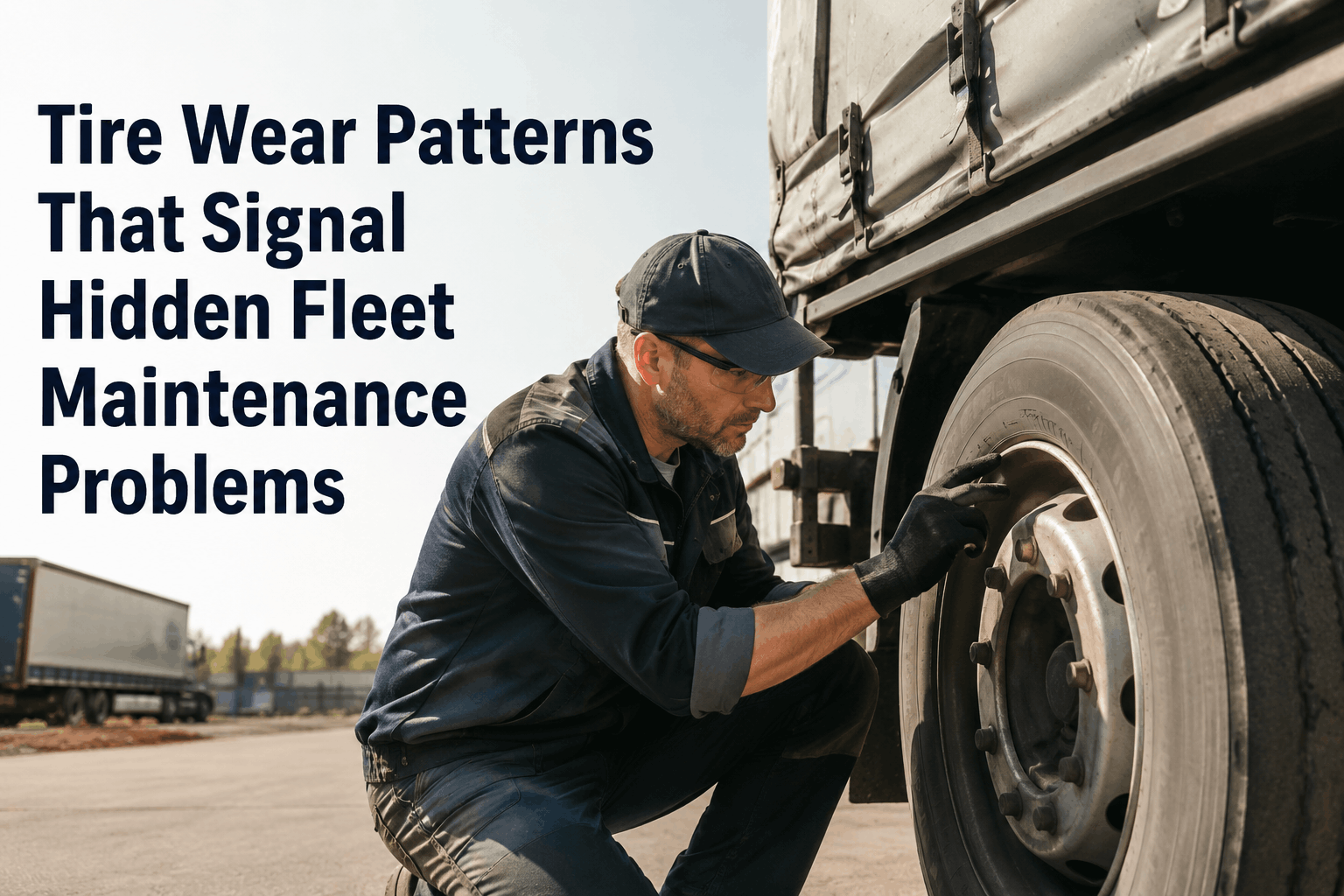
Feathering (wear pattern #5) is the diagnostic signal for toe misalignment — and it's the pattern most often missed during visual inspection. Tread blocks worn smooth on one side and sharp on the other look identical from a distance. The hand-rub test catches it instantly.
Brush palm forward across tread
Slide your open palm across the tread blocks in the direction of vehicle travel. Note the texture — smooth or grippy?
Brush palm backward across tread
Now slide your palm in the opposite direction. Compare the feel — should be identical to forward direction.
Diagnose by sensation difference
One direction smooth, the other direction sharp/grippy = feathering present = toe misalignment. Schedule alignment service before replacement.
The 3-point tread depth measurement method
A single tread depth reading is misleading — it doesn't reveal the wear pattern. The 3-point method (inner shoulder, center, outer shoulder) shows the pattern at a glance, and any 2/32" difference between the three points is the diagnostic signal.
Auto-OOS tire thresholds — 49 CFR 393.75
The 5 prevention levers that cut tire cost-per-mile
Reading wear patterns is diagnostic. Acting on them is operational. These five levers — implemented consistently — separate the $2,500/vehicle/year fleets from the $4,000/vehicle/year fleets.
Daily PSI verification
Pressure check at every pre-trip. Target OEM spec, not what looks right. The single highest-ROI tire-management action — cuts wear acceleration, prevents fuel-economy loss, and catches slow leaks before they become roadside blowouts.
3-point tread depth logging
Inner shoulder, center, outer shoulder — recorded per tire, per VIN, every PM cycle. Pattern visible at a glance. Trend data identifies the alignment, suspension, or inflation issue before tire replacement is needed.
Quarterly alignment checks
Toe and camber verified every 50,000 miles or after any suspension work. Caught early, alignment is a $200 service. Caught after feathering develops, it's a $200 service plus tire replacement.
Dual-tire matching protocol
Inner and outer dual tires matched in brand, tread depth (within 2/32"), and inflation. Mismatched duals destroy themselves in months — the most preventable category of premature replacement.
Hand-rub test on every PM
Two-second technique that catches feathering 10 seconds before visual inspection would. Standard step on every PM service across drive and steer tires. The simplest discipline in the entire tire-management workflow.
The fleets running these 5 levers consistently aren't paying more for tire management — they're paying less, because the upstream causes get fixed before they accelerate wear. Schedule a 30-minute tire-management consultation with the HVI team to walk through your current tire spend and identify which of the 5 levers are missing in your operation. Or sign up for a free HVI trial and put guided tire inspections with 3-point tread logging on every driver's smartphone.
HVI inspection & maintenance software — built for tire management discipline
HVI is purpose-built inspection and maintenance software for commercial fleets, with tire management as a core platform feature. Every wear pattern, every tread depth reading, every alignment service, every dual-tire match — indexed per VIN, photo-verified, and audit-defensible. The platform that turns the 8 wear patterns from a technician's memory into the fleet's standard operational discipline.
Guided tire inspection workflows
Mobile inspections include the 8 wear patterns, photo capture per defect, and 3-point tread depth fields. Drivers can't skip the tire section — and can't submit without flagging visible wear patterns.
Tread depth tracking per VIN
Inner shoulder, center, outer shoulder logged at every PM cycle. Trend data per tire position per VIN — identifying the alignment, suspension, or inflation issue weeks before tire replacement is needed.
Defect-to-work-order routing
Any wear pattern flag auto-creates a maintenance work order with photo evidence and vehicle ID. The "I noticed feathering but never told the shop" failure mode is structurally eliminated.
Tire lifecycle & cost per VIN
Every tire replaced, every alignment service, every rotation logged against the machine. Cost-per-mile per VIN surfaces automatically — identifying the vehicles costing more than fleet average.
49 CFR 393.75 OOS gates
Steer <4/32", drive <2/32", exposed cord, sidewall damage, bulges, inflation <50% max — all coded as inspection failure conditions. Vehicle can't be cleared for service until corrected.
Audit-ready tire compliance records
Every tire inspection, photo, work order, and tread reading indexed per VIN. The FMCSA "show me 90 days of tire DVIRs" request becomes a one-click export — not a fire drill.
Tire management isn't a tire problem — it's a maintenance problem with tires as the visible symptom. Sign up for a free HVI trial and deploy guided tire inspections, 3-point tread tracking, and wear-pattern recognition across your entire fleet in under an hour, or schedule a 30-minute walkthrough with the HVI team to see the tire-management workflow on a fleet your size with a live cost-per-VIN projection.
Frequently asked questions
Q: What are the 8 tire wear patterns every fleet should recognize?
Q: How much does improper tire management cost a fleet per vehicle?
Q: What's the hand-rub test for tire feathering?
Q: What are the auto-OOS tire thresholds under 49 CFR 393.75?
Q: Why does replacing a worn tire without fixing the upstream cause fail?
Q: What's the 3-point tread depth measurement method?
Q: How does inspection & maintenance software improve tire management?
Tires fail in patterns. The fleets that read the patterns spend $2,500 per vehicle on tires. The ones that don't spend $4,000.
HVI is purpose-built inspection and maintenance software for commercial and heavy equipment fleets. Guided tire inspections, 3-point tread depth tracking, wear-pattern recognition, defect-to-work-order routing, and audit-ready records covering 49 CFR 393.75. The platform behind the diagnostic discipline that protects both tire spend and CSA score.
No credit card required · Inspection & maintenance software for commercial fleets · TMC RP 219 & 49 CFR 393.75 compliant