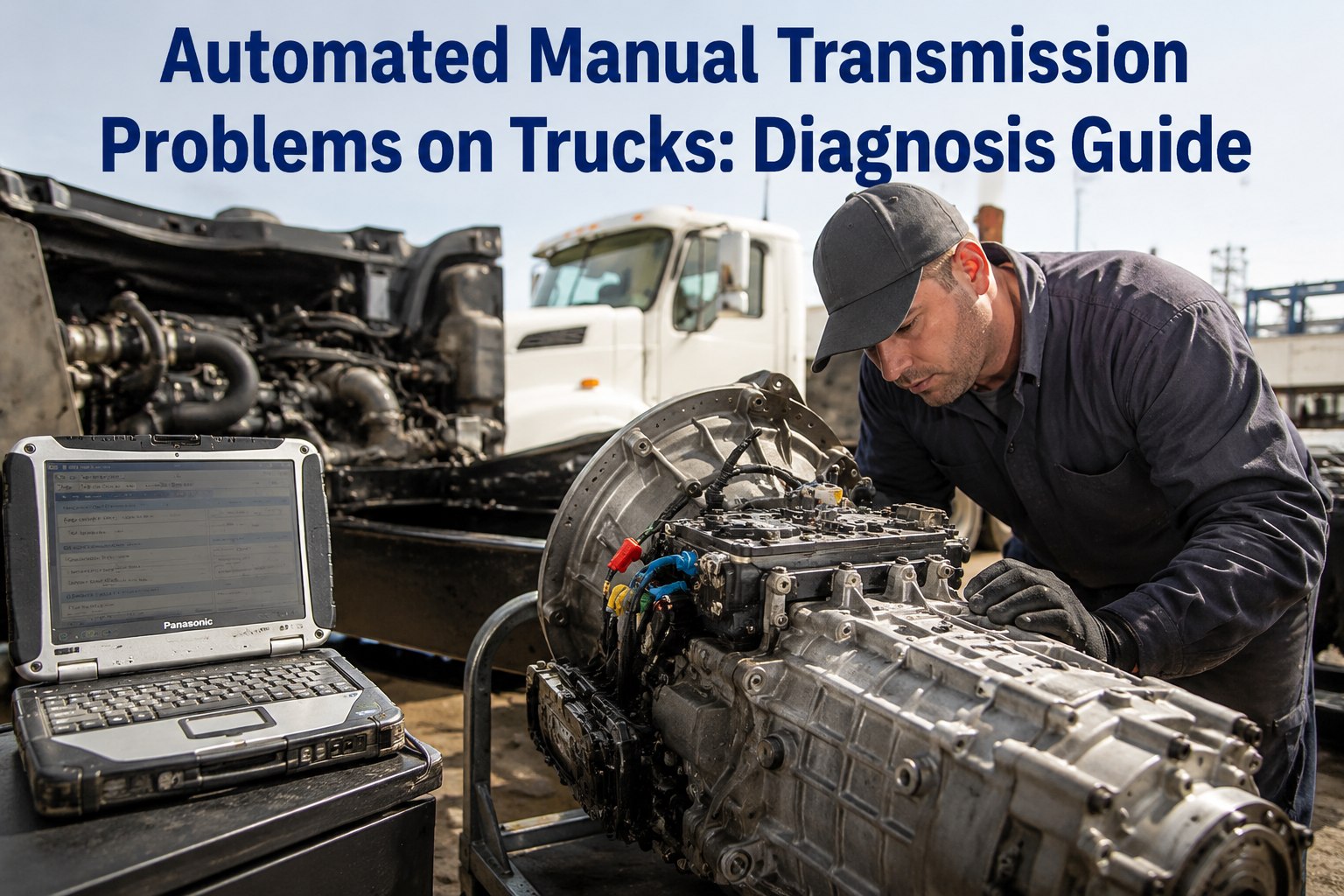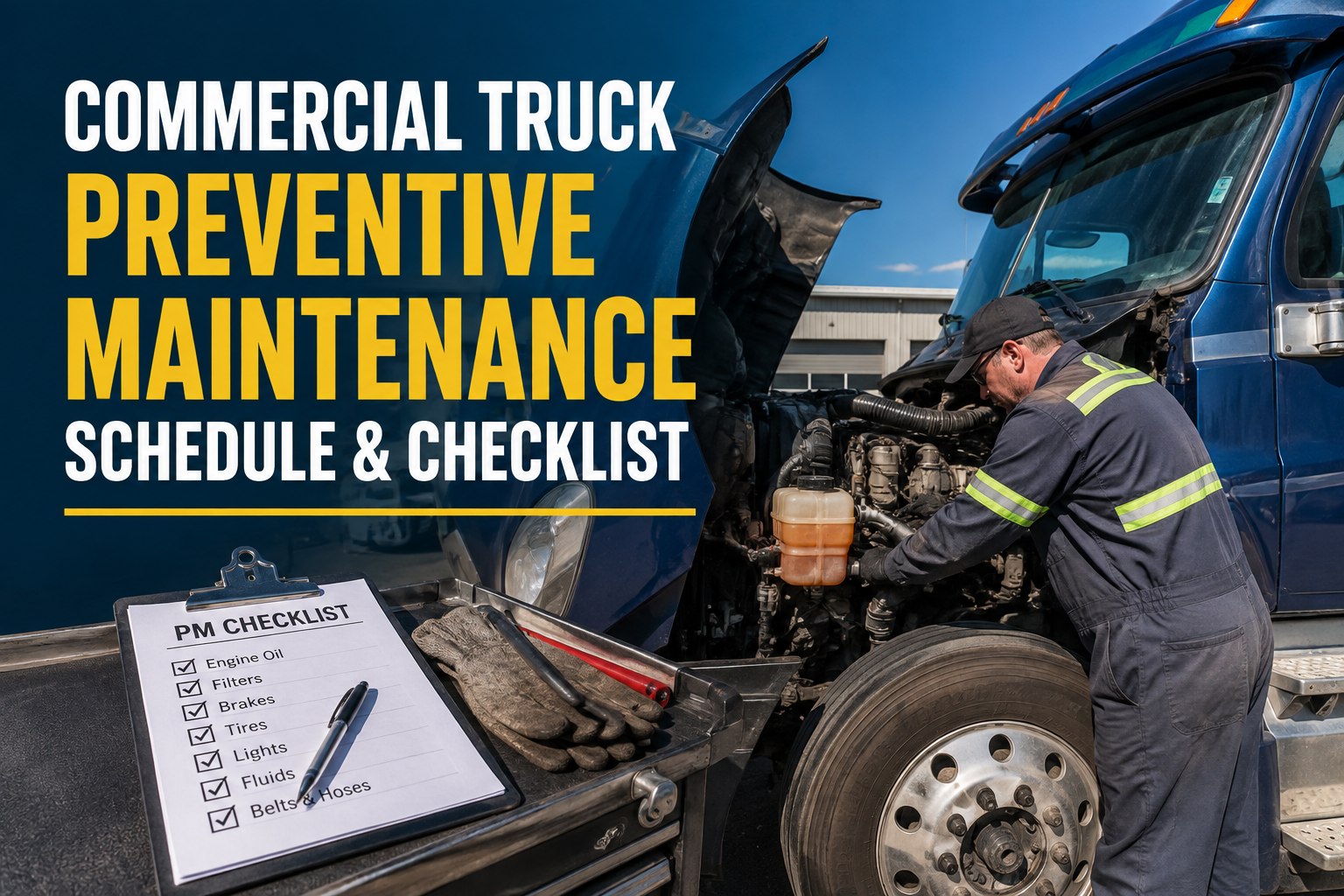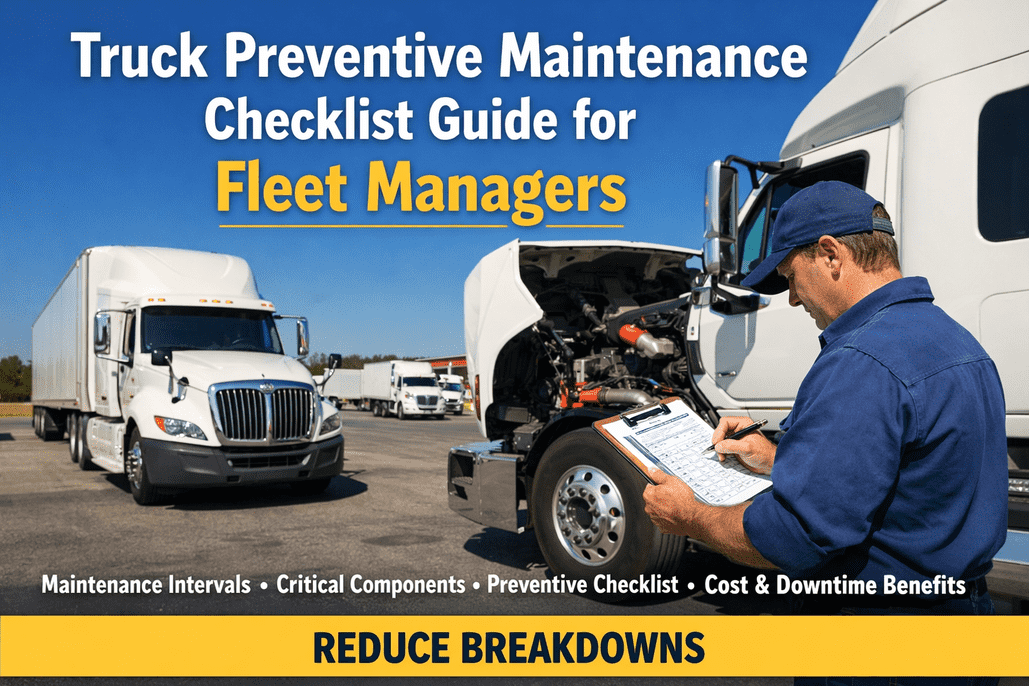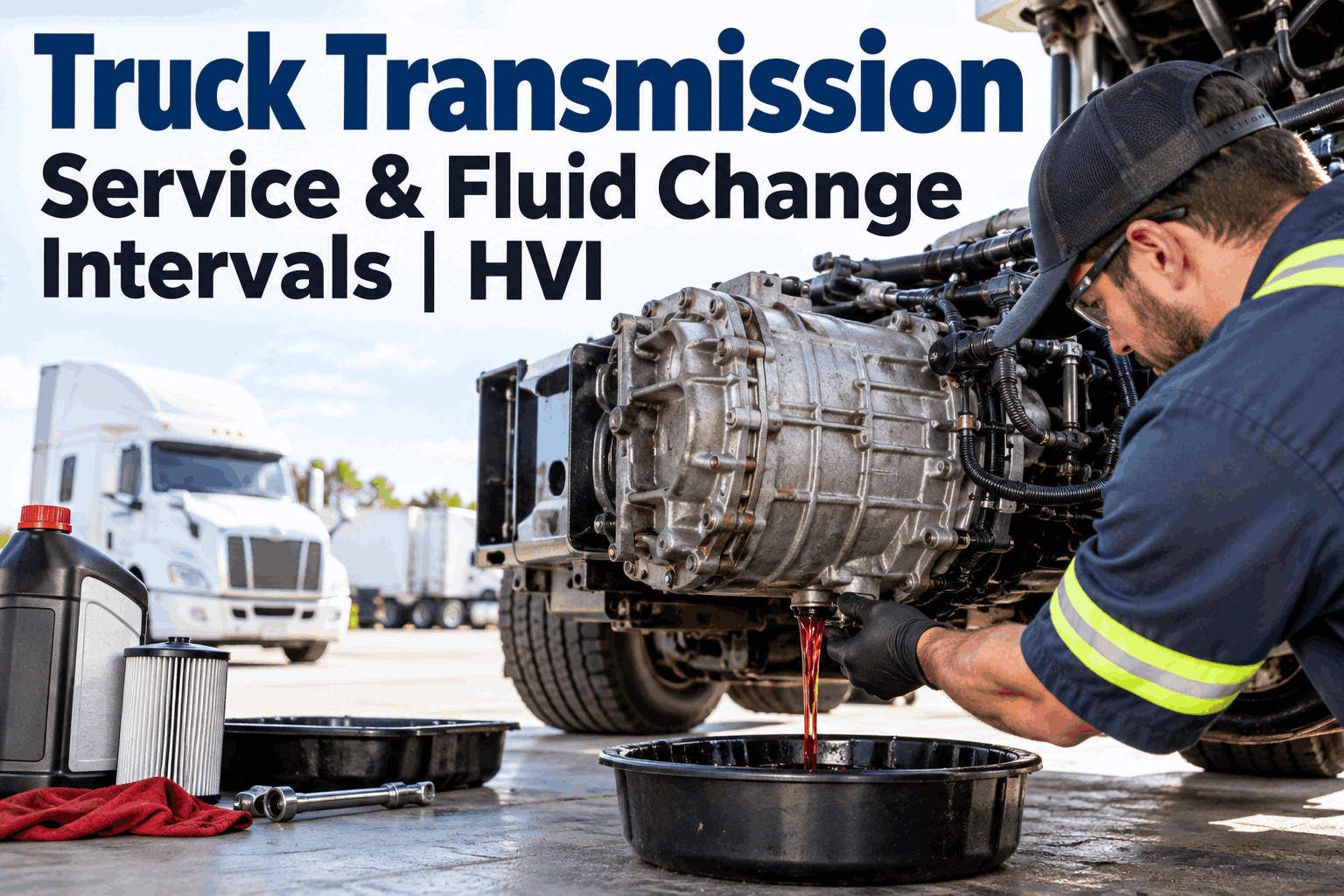
The transmission is the most expensive component on a truck that most fleets never service until it acts up — and the rules changed when automated manual transmissions took over. Modern truck transmission service isn't the old clutch-pedal-adjustment routine; on an AMT the clutch adjusts itself, there's an actuator and software in the loop, and the fluid spec is so critical that the wrong oil throws shift faults, not just wear. This guide covers what transmission service actually means today — fluid, filter, intervals, and the manual-versus-AMT split. Book a demo to see transmission PM scheduled by mileage or hours.
Two Transmissions, Two Service Worlds
Half your fleet may still be manual; the rest are automated manuals that adjust their own clutch and run on software. The fluid is king in both — but everything else forks. Service them the same way and the AMT is the one that surprises you.
- Clutch pedal & linkage
- Fluid & filter
- Shift linkage
- Self-adjusting clutch
- Fluid & filter
- Actuator + software
A heavy-truck transmission takes every bit of torque the engine makes and multiplies it, thousands of times a day, under heat and load. Rebuilding one is a five-figure job and days of downtime. Yet it's routinely the component that gets a fluid check "when we're in there anyway" instead of a real interval — which is backwards, because it's exactly the kind of expensive, slow-to-fix failure a simple fluid-and-interval discipline prevents.
The Fluid Is the Heart of Transmission Service
Whatever the transmission, the single most important thing in truck transmission service is the fluid — the right fluid, at the right level, changed on the right interval. Get this one thing wrong and nothing else you do matters.
Any gear oil will do
Filling a transmission with a fluid that isn't the maker's specified type is the fastest way to wreck it. On a manual it accelerates gear and synchro wear; on an AMT the wrong fluid changes how the clutch and shifts behave — and throws shift fault codes. The transmission looks serviced and quietly fails.
Exact spec, level, interval
Use the exact fluid the transmission OEM specifies, check the level at the fill plug, and change it on the OEM interval — with an initial break-in change on a new unit. Pin the correct spec to each transmission so the right fluid goes in every time.
The break-in change trips people up: many transmissions call for an early first fluid change to flush the metal from initial wear-in, and skipping it leaves that grit circulating for the life of the gearbox. Matching the exact fluid spec to each unit — and holding the interval — is the whole foundation, and it's the part a preventive maintenance schedule exists to enforce.
Manual vs AMT: What Actually Changes
Fluid aside, servicing an automated manual transmission is a different job from servicing a legacy manual. If your fleet runs both — and most do now — the service checklist has to fork.
The trap is treating an AMT like an automatic that needs nothing, or like a manual with a computer bolted on. It's neither: the fluid discipline of a manual, plus an actuator, sensors, and software that report faults you have to read and act on. Which type each unit is — and how they compare when you spec new trucks — is worth understanding before you build the service plan; HVI's AMT-versus-automatic breakdown in a demo covers that choice. Start free and run separate manual and AMT service templates.
Service Intervals: Fluid, Filter, and Duty
There's no single transmission service interval — it depends on the transmission, the fluid, and how hard the truck works. But the structure is consistent, and it's built from the OEM's numbers, not a rule of thumb.
The early first change
Many transmissions specify an initial fluid change early in a new unit's life to flush wear-in metal. It's the highest-value change there is — and the easiest to skip and forget.
The regular drain interval
Change fluid and any filter on the OEM interval by mileage or hours. Synthetic fluids typically carry much longer drain intervals than conventional — match the interval to the oil in the box.
Shorter under hard work
Heavy haul, heat, steep grades, stop-and-go, and PTO work all shorten the interval. Severe-duty service means the fluid comes out sooner than the highway number suggests.
The severe-duty point is where fleets lose transmissions without realizing it: a truck on a punishing vocational cycle hits the wear of a highway interval far sooner, and a calendar-only reminder never catches up. Scheduling by actual mileage or hours — and shortening for duty — is what keeps the fluid ahead of the wear.
Temperature, Leaks, and the Cooler
After fluid, heat is the transmission's biggest enemy — overheated fluid breaks down and takes the gearbox with it. Between fluid changes, temperature and leaks are the signals to watch.
Running temperature
Overheating is a top killer of transmissions. A unit running hot — from heavy load, a failing cooler, or low fluid — cooks the fluid and accelerates wear. Watch temperature as an early warning, especially on vocational and heavy-haul trucks.
Cooler & lines
Where a transmission cooler is fitted, check it and its lines for leaks, blockage, and damage. A clogged or leaking cooler lets the fluid overheat — solving a temperature problem often starts here.
Seals, leaks & breather
Check input, output, and shift-cover seals for leaks, and confirm the breather is clear — a plugged breather pressurizes the case and pushes fluid past the seals, the same failure chain that hits axles.
These signals cross-check each other: a low fluid level plus a rising temperature plus a weeping seal is a transmission telling you it's losing lube and heating up. Caught together and logged, that's a planned repair; ignored, it's a rebuild. A leak found early is almost always cheaper than the overheating it eventually causes. Start free and log transmission leaks and temperature with photos.
Oil Analysis: The Same Window Into Wear
Like a differential, a transmission can be read through its fluid. An oil-analysis sample turns the sealed gearbox into a trend you can watch — and it's the best early warning there is.
A sample reads the wear metals and contamination in the fluid: rising iron points to gear or bearing wear, brass or bronze to synchros and bushings, water or coolant to a cooler breach, and dirt to a seal or breather letting the outside in. As with the axle, the power is in the trend — several samples over time show whether wear is climbing and how fast.
That lets you plan a rebuild in your own shop instead of reacting to a failure on the road. Trended analysis only pays off stored where the history is visible, which is what an asset maintenance record is for — and on an AMT it pairs with the fault-code history for the full picture.
AMT-Specific: Clutch, Actuator, and Software
The automated manual adds three things a legacy manual never had, and each needs its own attention in AMT transmission service.
Self-adjusting, but not maintenance-free
An AMT clutch adjusts itself and there's no pedal to set — but it still wears, and the system reports its remaining life and clutch performance. Monitor the wear reading and the shift actuator's operation; a tired clutch or a lazy actuator shows up as rough or missed shifts before it strands the truck.
Calibration and codes are part of service
An AMT runs on software that can need calibration or updates, and it logs fault codes when a sensor, actuator, or shift event goes wrong. Reading and clearing those codes — and recording them — is now part of transmission service, not a separate diagnostic afterthought.
The mindset shift for AMTs is that the transmission talks to you now — through wear readings, shift quality, and fault codes — and those messages belong in the maintenance record alongside the fluid history. A recurring shift fault on one unit is a pattern you can catch and fix, but only if the codes are being captured, not cleared and forgotten. Book a demo to see AMT fault codes captured against the unit.
How HVI Manages Transmission Service
Every part of transmission service comes down to the same discipline: the right fluid on the right interval, the signals read, and the history kept — for two different kinds of transmission. Three capabilities make it manageable.
Fluid PM by mileage or hours
Schedule the break-in, routine, and severe-duty fluid and filter changes by mileage or hours, with the exact fluid spec pinned to each transmission — so the right oil goes in on the right interval, manual or AMT.
Separate manual & AMT templates
Run distinct inspection templates for manuals and automated manuals — clutch adjustment and linkage on one, clutch wear, actuator, and fault codes on the other — so each unit is serviced for what it actually is.
Fault codes, oil analysis & defects
Log AMT fault codes, oil-analysis results, leaks, and temperature against the unit and turn them into work orders — with the full fluid and defect history on the transmission asset.
The result is a transmission program that fits the fleet you actually run: manuals serviced as manuals, AMTs serviced as AMTs, the fluid held to spec and interval on both, and every fault code and sample kept where a trend can surface. The most expensive component nobody watches becomes the one on a schedule with a history. Book a demo to see it on your fleet.
From a maintenance manager running a mixed fleet
When we started buying automated manuals, we serviced them like our old manuals — and got burned. A tech topped one up with the wrong fluid and it started throwing shift faults within a week; that's a tow and a diagnostic, not a wear problem you catch later. Now the AMTs and the manuals have separate templates and the exact fluid is locked to each unit. Nobody guesses at the oil anymore, and the fault codes get logged instead of cleared and forgotten.
Key takeaways
Truck transmission service today is a fluid-first, two-worlds job: use the exact OEM fluid at the right level and interval, don't skip the break-in change, and shorten for severe duty. Service manuals as manuals — clutch and linkage — and AMTs as AMTs — clutch wear, actuator, software, and fault codes. Watch temperature and leaks, trend the oil analysis, and keep it all on the unit's record. Do that and the priciest, slowest-to-fix box in the drivetrain becomes a predictable asset instead of a five-figure surprise.
Frequently asked questions
How often should a truck transmission be serviced?
On the transmission maker's specified interval, which depends on the fluid type and duty cycle rather than one universal number. Most transmissions call for an initial break-in fluid change early in a new unit's life, then routine fluid and filter changes by mileage or hours — synthetic fluids typically carry much longer drain intervals than conventional. Severe service (heavy haul, heat, steep grades, stop-and-go, PTO work) shortens the interval, sometimes significantly. Follow the OEM schedule for your specific transmission and track it by actual mileage or hours, not the calendar alone, so hard-working units get serviced when they've earned it.
What transmission fluid does a heavy truck need?
Only the exact fluid the transmission manufacturer specifies — the correct type, viscosity, and specification for that gearbox. This is the single most important part of transmission service: the wrong fluid accelerates gear and synchro wear on a manual, and on an automated manual (AMT) it changes how the clutch and shifts behave and can trigger shift fault codes. Synthetic and conventional fluids also carry different service intervals. Never substitute a generic gear oil, and pin the correct fluid spec to each unit so the right fluid goes in every time.
How is servicing an AMT different from a manual transmission?
Both need the exact spec fluid on interval, but the rest forks. A manual has a clutch pedal and linkage to adjust and shift linkage to maintain. An automated manual (AMT) has a self-adjusting clutch with no pedal — you monitor its wear reading instead — plus a shift actuator, sensors, and a control unit running software that can need calibration or updates. An AMT also reports fault codes when something goes wrong, so reading, recording, and acting on those codes becomes part of service. Treat an AMT as neither a maintenance-free automatic nor a plain manual with a computer added.
What are the signs a truck transmission needs service?
Watch the fluid and heat first: a low fluid level, fluid that's dark or smells burnt, a transmission running hot, and leaks at the input, output, or shift-cover seals. Rising wear metals in an oil-analysis sample are an earlier warning still. On a manual, hard shifting, grinding, or slipping point to clutch or synchro wear; on an AMT, rough or missed shifts and logged fault codes signal a clutch, actuator, or sensor issue. Audible or feel symptoms usually mean wear is already advanced, which is why fluid condition, temperature, and (on AMTs) fault codes are the signals to monitor proactively.
Why do transmissions overheat, and why does it matter?
Transmissions overheat from heavy load, steep grades, stop-and-go or PTO work, low fluid, or a clogged or leaking cooler. It matters because heat is one of the top killers of transmissions: overheated fluid breaks down, loses its protective properties, and accelerates gear, bearing, and (on AMTs) clutch wear — so an overheating problem quietly becomes a rebuild. Where a cooler is fitted, checking it and its lines for blockage and leaks is often where a temperature problem is solved. Monitoring running temperature, especially on vocational and heavy-haul trucks, catches the problem while it's still a cooler or fluid fix.
Service Both Transmissions Right, on One System
Schedule fluid and filter changes by mileage or hours with the exact spec per unit, run separate manual and AMT templates, trend oil analysis, and log fault codes, leaks, and temperature into work orders — so the most expensive box in the drivetrain is serviced for what it actually is, on a schedule with a history. Live in under two weeks, trusted by 25,000+ users worldwide.
No credit card · No hardware · Transmission PM templates ready on day one