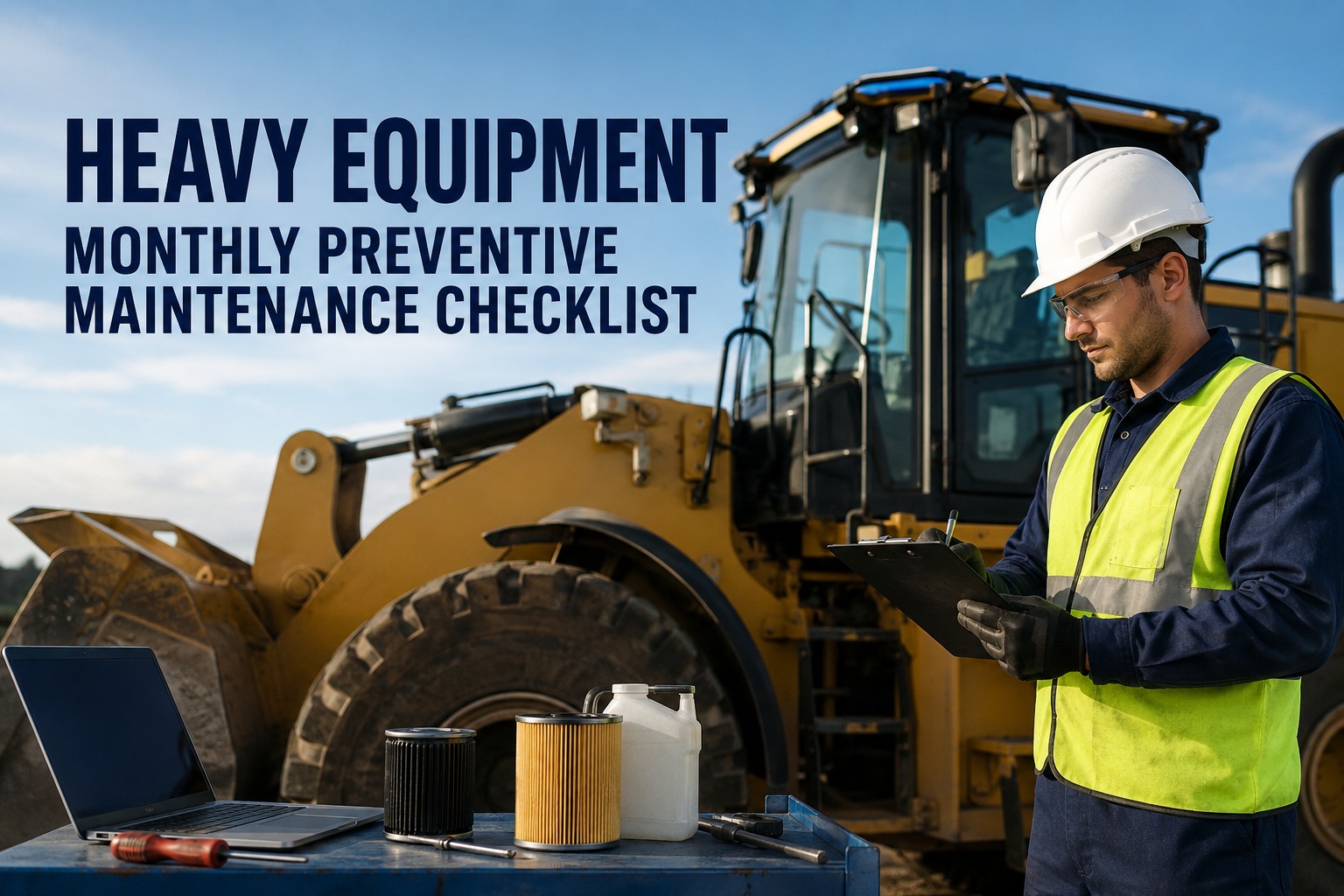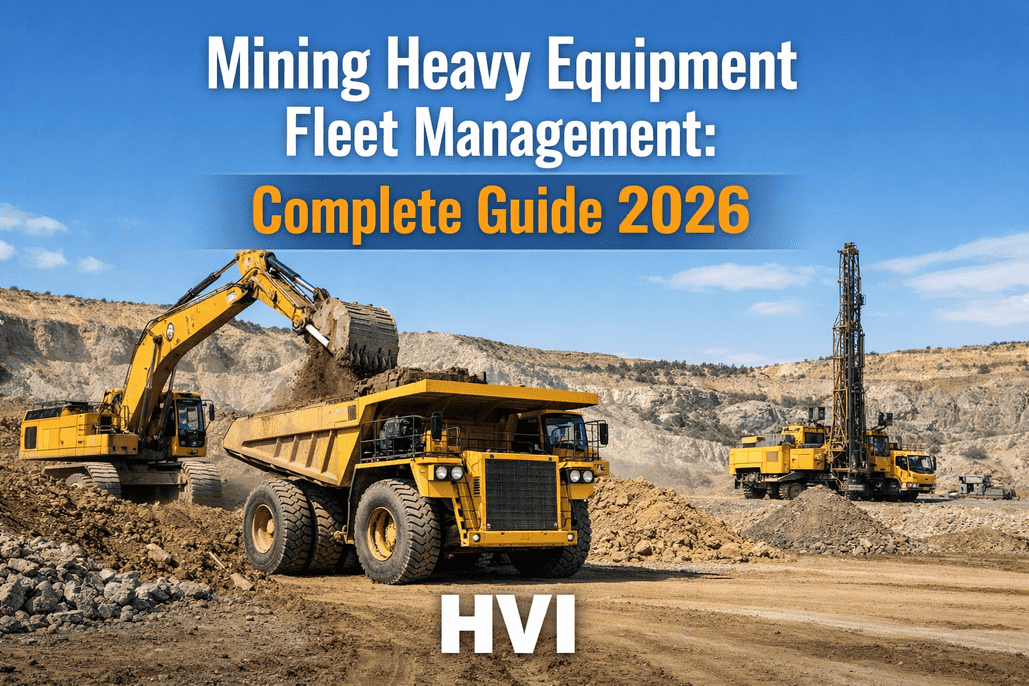
Heavy equipment vibration analysis is the machine telling you something is wrong before anything looks wrong. A final drive, a swing gearbox, a hydraulic pump — each one starts shaking in a slightly different way weeks before it strands the unit on a haul road. Reading that shake, and trending it, is how you turn a surprise failure into a planned repair. Book a vibration-analysis demo to see a reading become a work order.
Heavy Equipment Vibration Analysis: Catch the Fault While It's Still a Reading, Not a Breakdown
Every bearing, gear, and pump leaves a vibration signature. The question isn't whether the machine is talking — it's whether anyone is trending what it says.
Vibration analysis isn't a lab exercise reserved for turbines in a power plant. On a yard full of excavators, haul trucks, dozers, and loaders, it's the one check that sees inside a sealed gearbox or a bearing housing without opening it. Below is what the shaking actually means, why waiting makes the repair bigger, and how HVI turns a number on a meter into a tracked trend and a scheduled work order.
4 signatureswhat the vibration is actually telling you
Vibration isn't one problem — it's four different machines of information riding on the same signal. The pattern, not just the size, names the fault. This is why a bare "it's vibrating" reading is useless and a frequency reading is a diagnosis. Each fault shows up at a frequency tied to how fast the shaft turns.
| What you feel / read | Signature | Likely fault | Where it hits on the machine |
|---|---|---|---|
| Strong shake once per revolution | 1× RPM | Unbalance | Cooling fan, drive coupling, worn flywheel |
| Shake twice per revolution, often axial | 2× RPM | Misalignment | Pump-to-motor coupling, driveline, final drive |
| Many harmonics, rattly, directionless | Multiple × | Mechanical looseness | Mount bolts, worn pins, bearing housing fit |
| High-frequency impacts, non-synchronous | Bearing freq. | Bearing / gear defect | Swing gearbox, wheel/track bearings, hydraulic pump |
The practical takeaway for a maintenance manager: you don't have to be a certified analyst to use this. You need a baseline reading when the machine is healthy, and a system that flags when a point drifts off that baseline. HVI's preventive maintenance scheduling is where those readings get logged against each unit instead of living in a technician's notebook. Book a demo of baseline tracking to see it per asset.
The window shrinkswhy waiting makes every repair bigger
A defect doesn't fail the day it appears. It rides a curve — detectable long before functional failure — and vibration is the earliest warning on that curve. The longer the signal goes untrended, the less runway you have to plan the repair, order the part, and pick the downtime window instead of having it picked for you.
-
Stage 1First tremorWeeks of runway
Only high-frequency vibration shows it. Machine runs normal. Schedule the fix on your terms.
-
Stage 2Reading climbsDays to weeks
Velocity RMS crosses into the alert zone. Operator may start to notice. Part can still be ordered ahead.
-
Stage 3Heat and noiseDays
Audible, hot to the touch, metal in the oil. Now it's an emergency repair, not a planned one.
-
Stage 4FailureZero runway
Seized gearbox, wrecked housing, collateral damage. The machine chose the downtime, and the invoice.
Industry condition-monitoring research consistently puts roughly 40–50% of rotating-equipment failures down to bearings — the exact fault vibration analysis sees first. The point of trending isn't a prettier chart; it's staying in Stage 1 and 2 where a repair is cheap, planned, and doesn't take a machine off a job midday. HVI analytics and reporting keeps each point's history so a slow climb gets caught before it's a spike.
Where it livesthe rotating parts worth a vibration point on heavy equipment
Vibration analysis earns its keep on the components that are expensive to replace, sealed from view, and critical to the machine making money. On heavy equipment, that's a short, specific list — and each one has its own normal and its own warning signature.
Swing & travel gearboxes
Gear-mesh and bearing frequencies climb as teeth and races wear. First to go on excavators that swing all day.
Hydraulic pumps
Pressure pulsation, cavitation, and bearing wear each have a signature. A failing main pump can take the whole machine down.
Final drives & wheel ends
Misalignment (2×) and bearing defects show here first on haul trucks and loaders under heavy, cyclic load.
Engine & cooling fans
Unbalance (1×) from a chipped fan blade or worn damper is a classic early catch before it shakes mounts loose.
Drivetrain couplings
The cheapest fix on the list and the loudest warning — misalignment caught here protects everything downstream.
Treat each of these as a tracked asset, not a vague "the engine." HVI's asset management lets you keep a vibration point and its history on each component, so a swing gearbox's trend doesn't get buried in the machine's overall record. Sign up free and list your rotating assets to start watching them.
The routea field vibration-check checklist you can actually run
You don't need a vibration analyst on staff to start. You need a repeatable route — the same points, the same conditions, the same intervals — so readings are comparable over time. Run this on your critical units and log every point.
- Machine at normal operating temperature and typical load/RPM
- Same measurement points marked on each unit (housing, not guard)
- Sensor mounted firmly — loose contact fakes high readings
- Baseline on file for a known-healthy reading to compare against
- Read in all three directions — horizontal, vertical, axial
- Record velocity (mm/s RMS) for overall condition
- Capture high-frequency/envelope for bearing points
- Note machine ID, point, date, load — a reading with no context is noise
- Log each reading against the asset, not on paper that walks off
- Compare to baseline and severity zone, flag anything rising
- Raise a work order on any point past its alert threshold
- Set the next route interval by criticality — weekly to monthly
This is the exact gap HVI closes: the route is only as good as what happens to the readings afterward. When a point is logged in HVI maintenance management, the comparison, the flag, and the work order are one connected flow instead of three disconnected steps. Book a demo of a full vibration route walked end to end.
Reading to work orderwhat a tracked vibration point looks like inside HVI
Here's the moment the whole thing pays off — a point crosses its threshold, and instead of a note that might get read next week, HVI raises a work order with the unit, the component, and the reading already attached.
That's the difference between measuring and managing. The sensor is the eyes; HVI is the memory and the follow-through. Pair it with a direct OEM telematics feed and some of those readings arrive on their own. Book a demo of the threshold-to-work-order flow to see it live.
From a maintenance manager who runs the route
We weren't catching bearings early — we were catching them the morning they let go. I started a simple monthly route on the swing boxes and main pumps, nothing fancy, just a handheld meter. The change wasn't the meter. It was finally having the readings sit next to each other on the same machine so I could see one climbing. Caught a travel-motor bearing three weeks out last quarter. Three weeks is the difference between a Saturday swap and a stranded machine.
Heavy equipment vibration analysis — common questions
Do I need a certified vibration analyst to start?
No. You can start with a handheld meter, a fixed route, and a baseline for each point. A certified analyst helps with complex spectrum diagnosis, but basic overall-level trending against a baseline catches most developing faults early. The key is logging readings consistently so drift is visible.
How often should I run vibration checks on heavy equipment?
It depends on how critical the machine is. Weekly or monthly routes suit high-value units whose failure stops a job; quarterly can work for less critical assets. Measure under the same load and temperature each time so readings stay comparable.
What's a "good" vibration reading?
There's no single number — it depends on the machine, speed, and mounting. The ISO 10816 / ISO 20816 severity zones (A through D) give a general velocity-based guide, but the most reliable signal is change from that unit's own healthy baseline. A point climbing off baseline matters more than any one reading.
Does vibration analysis replace preventive maintenance?
No — it sharpens it. PM keeps intervals and inspections on schedule; vibration analysis tells you when a specific component needs attention sooner than the calendar says. Used together inside a system like HVI, they let you plan repairs on evidence instead of guesswork.
How does HVI fit in if I already own a vibration meter?
HVI doesn't replace your sensor — it gives the readings a home. Log each point against the asset, trend it against baseline, set alert thresholds, and auto-raise a work order when a point breaches. It's the layer that turns measuring into managing.
Turn heavy equipment vibration analysis into tracked, planned repairs
HVI logs every vibration point per unit, trends it against baseline, flags the drift, and raises the work order before a bearing becomes a breakdown. Your meter reads the machine — HVI makes sure someone acts on it in time.
No hardware lock-in · Works with your existing meters · Baselines and alerts ready on day one